Master The Graph Theory Algorithms

  • Instructor Unique
  • Original
  • Video Training

Master Graph Theory Algorithms and build strong problem-solving skills. Learn essential concepts, shortest paths, trees, and networks to tackle complex challenges and enhance your computational thinking for real-world applications advanced.

Master The Graph Theory Algorithms
cpdacree aoth ukrlp 24hs fullonline 14days

Get access to 5000+ courses including this for only £49. Learn More.

Overview of Master The Graph Theory Algorithms

Master The Graph Theory Algorithms is a comprehensive course designed to help learners understand the principles of Graph Theory, Graph Algorithms, and advanced problem-solving techniques in Computer Science. Explore essential Data Structures, algorithmic concepts, and computational methods while developing strong foundations in graph-based thinking, network analysis, and efficient algorithm design for real-world applications.

This course covers key graph traversal techniques, including Depth First Search (DFS) and Breadth First Search (BFS), alongside advanced shortest path algorithms such as Dijkstra, Bellman-Ford, and Floyd-Warshall. Learners will explore trees, topological sorting, minimum spanning trees, and other important concepts that strengthen their understanding of algorithmic thinking and computational problem-solving.

Through practical lessons on Tarjan Algorithm, Bridge and Articulation Points, Travelling Salesman Problem (TSP), Eulerian Paths and Circuits, Prim’s Algorithm, and Network Flow, this course builds advanced skills in graph-based solutions. Ideal for aspiring developers, programmers, and computer science learners seeking to master algorithm design and improve their technical expertise.

The course was audited and updated on: 5th August, 2026

Learning Outcomes of Master The Graph Theory Algorithms

Certification

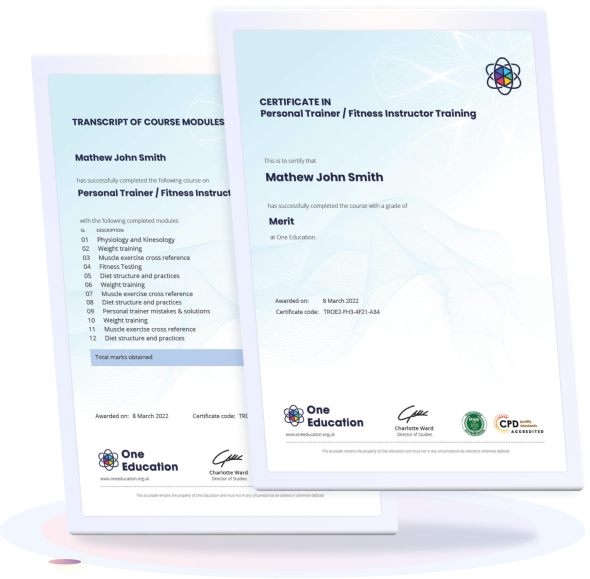
one education Certificate

After completing the Master The Graph Theory Algorithms course assessment, you will be eligible to receive a CPD-accredited certificate worth £9 from One Education to demonstrate your achievement.

The certificate is also available as a printed hard copy delivered by post for £15.

Why Study This Master The Graph Theory Algorithms Course?

Master The Graph Theory Algorithms introduces learners to the fundamental concepts and advanced techniques used in graph-based problem solving. This course explores Graph Theory, Graph Algorithms, Data Structures, Algorithm Design, Network Analysis, Graph Traversal, Shortest Path Algorithms, Computational Methods, Graph Representation, and Algorithmic Thinking to build strong foundations in computer science and mathematical modelling.

Studying Master The Graph Theory Algorithms develops advanced problem-solving, analytical reasoning, and algorithm design skills. The course supports students, programmers, and computer science learners by enhancing their understanding of graph traversal methods, optimisation techniques, network structures, and practical applications of graph algorithms in technology, data science, and computational systems.

Course Duration

The Master The Graph Theory Algorithms course has a total study time of 8 hours, 34 minutes. This comprehensive programme is designed for flexible learning, allowing learners to progress at their own pace while developing graph theory and algorithmic skills, including graph algorithms, data structures, algorithm design, network analysis, graph traversal, shortest path algorithms, computational methods, computer science concepts, algorithmic thinking, and problem-solving techniques.

Requirements

The Master The Graph Theory Algorithms course requirements are simple and suitable for learners with a basic background in mathematics and computer science. Participants should have an interest in graph theory, algorithms, data structures, network analysis, and problem-solving, and a willingness to explore graph traversal, shortest path algorithms, algorithm design, and computational methods. Access to an internet-enabled device and commitment to regular study and practice are recommended for effective learning and successful course completion.

Career Path

Frequently Asked Questions

This course focuses on graph theory concepts and algorithmic problem-solving, covering graph structures, graph algorithms, data structures, graph traversal, shortest path algorithms, network analysis, algorithm design, computational methods, and techniques used in computer science and real-world applications.

No. It is suitable for students, programmers, computer science learners, software developers, and anyone interested in improving algorithmic thinking, problem-solving skills, and understanding graph-based computational techniques.

The course is delivered online, allowing you to learn at your own pace and develop practical knowledge of graph theory, algorithm implementation, and advanced problem-solving approaches through structured lessons.

Yes. Algorithm exercises, graph-based problems, coding activities, practical examples, data structure tasks, case studies, knowledge checks, and quizzes may be included to reinforce learning.

You will receive a certificate of completion after successfully finishing the course.

This course supports career development in software engineering, computer science, data structures, artificial intelligence, machine learning, network analysis, data science, algorithm development, and technology roles requiring strong computational skills.

Course Curriculum

Module 01: Introduction
Introduction 00:14:00
Module 02: Common Problem
Common Problem 00:10:00
Module 03: Depth First Search
Depth First Search 00:11:00
Module 04: Breadth First Search
Breadth First Search 00:08:00
Module 05: Breadth First Search Shortest Path on a Grid
Breadth First Search Shortest Path on a Grid 00:17:00
Module 06: Trees
Storage and Representation of Trees 00:10:00
Beginner Tree Algorithms 00:10:00
Rooting Tree 00:05:00
Center(s) of a Tree 00:06:00
Isomorphisms in Trees 00:11:00
Isomorphisms in Trees Source Code 00:10:00
Lowest Common Ancestor 00:17:00
Module 07: Topological Sort
Topological Sort 00:14:00
Shortest and Longest Paths on DAGs 00:10:00
Khan’s Algorithm 00:13:00
Module 08: Dijkstra
Dijkstra’s Shortest Path Algorithm 00:25:00
Dijkstra’s Shortest Path Algorithm Source Code 00:09:00
Module 09: Bellman-Ford Algorithm
Bellman-Ford Algorithm 00:15:00
Module 10: Floyd-Warshall Algorithm
Floyd-Warshall Algorithm 00:16:00
Floyd-Warshall Algorithm Source Code 00:09:00
Module 11: Bridge and Algorithm Points
Algorithm to Find Bridges and Articulation Points 00:20:00
Algorithm to Find Bridges and Articulation Points Source Code 00:09:00
Module 12: Tarjan Algorithm
Tarjan’s Algorithm for Finding Strongly Connected Components 00:17:00
Tarjan’s Algorithm for Finding Strongly Connected Components Source Code 00:07:00
Module 13: Travelling Salesman Problem (TSP)
Travelling Salesman Problem (TSP) with Dynamic Programming 00:21:00
Travelling Salesman Problem (TSP) with Dynamic Programming Source Code 00:14:00
Module 14: Eulerian Paths and Circuits
Existence of Eulerian Paths and Circuit 00:10:00
Finding Eulerian Paths and Circuits 00:16:00
Eulerian Paths Source Code 00:08:00
Module 15: Prim’s Minimum Spanning Tree Algorithm
Prim’s Minimum Spanning Tree Algorithm (Lazy Version) 00:15:00
Prim’s Minimum Spanning Tree Algorithm ( Eager Version) 00:15:00
Prim’s Minimum Spanning Tree Algorithm Source Code ( Eager Version) 00:09:00
Module 16: Network Flow
Max Flow Ford-Fulkerson Method 00:13:00
Max Flow Ford-Fulkerson Method Source Code 00:17:00
Network Flow: Unweighted Bipartite Graph Matching 00:11:00
Network Flow: Mice and Owls 00:08:00
Network Flow: Elementary Math 00:11:00
Network Flow: Edmond-Karp Algorithm Source Code 00:06:00
Network Flow: Edmond-Karp Algorithm Source Code 00:10:00
Network Flow: Capacity Scaling 00:10:00
Network Flow: Capacity Scaling Source Code 00:06:00
Network Flow: Dinic’s Algorithm 00:12:00
Network Flow: Dinic’s Algorithm Source Code 00:09:00
Assignment
Assignment – Graph Theory Algorithms 00:00:00
Master The Graph Theory Algorithms
top
Copyright © 2026 One Education © Edukators London Ltd.