7 Key Exam Tips for Functional Skills Level 2

March 25, 2026 | 10 minutes | 454 Readers

Functional Skills Level 2 exams play an important role in building strong Maths and English abilities that are widely valued in education and employment. Many employers and training providers consider this qualification equivalent to a GCSE pass, which means achieving it can significantly improve career opportunities. Whether you are aiming for an apprenticeship, a promotion, or further study, passing Functional Skills Level 2 can help you move forward with greater confidence. Success in these exams is not only about knowledge but also

rating

Bestselling Course

View Details SAVE 94% NOW
https://www.oneeducation.org.uk/7-key-exam-tips-for-functional-skills-level-2/

Functional Skills Level 2 exams play an important role in building strong Maths and English abilities that are widely valued in education and employment. Many employers and training providers consider this qualification equivalent to a GCSE pass, which means achieving it can significantly improve career opportunities. Whether you are aiming for an apprenticeship, a promotion, or further study, passing Functional Skills Level 2 can help you move forward with greater confidence.

Success in these exams is not only about knowledge but also about preparation and exam strategy. Learners who follow effective revision plans, practise regularly, and understand the exam format often find the experience less stressful and more manageable. With the right approach, you can improve both your performance and your self-belief.

Understand the Exam Format

Understanding the exam format is an important step in preparing effectively for both Maths and English assessments. Each subject follows a structured pattern designed to test different skills and levels of understanding. Maths exams often focus on numerical reasoning, calculations, data interpretation, and real-life problem solving. English exams, on the other hand, usually assess reading comprehension, grammar, vocabulary, writing skills, and the ability to analyse texts.

Learners can expect a variety of question types in these exams. These may include multiple-choice questions that test quick understanding, written responses that require clear explanations, and problem-solving tasks that assess logical thinking and application of knowledge. Becoming familiar with these formats helps reduce exam anxiety and improves confidence during the test.

Another key factor is understanding the timing and marks allocation. Knowing how much time to spend on each section and which questions carry more marks allows learners to plan their approach wisely. Effective time management ensures that all questions are attempted and helps maximise overall performance in the exam.

Create a Simple Study Plan

Creating a simple study plan can make learning more organised and less stressful. Instead of studying randomly, planning your revision helps you stay focused and cover all important topics on time. A well-structured plan also improves confidence and reduces the pressure before exams. Consistent effort each week is far more effective than last-minute cramming.

  • ♦  Set a weekly revision schedule by allocating specific days and times for each subject.
  • ♦  Break larger topics into smaller sections to make learning easier and more manageable.
  • ♦  Focus on regular and consistent study sessions rather than revising everything at the last moment.
  • ♦  Include short breaks and review sessions to strengthen memory and avoid burnout.
  • ♦  Track your progress weekly and adjust the plan if certain topics need more time.
Practicing with past papers for success

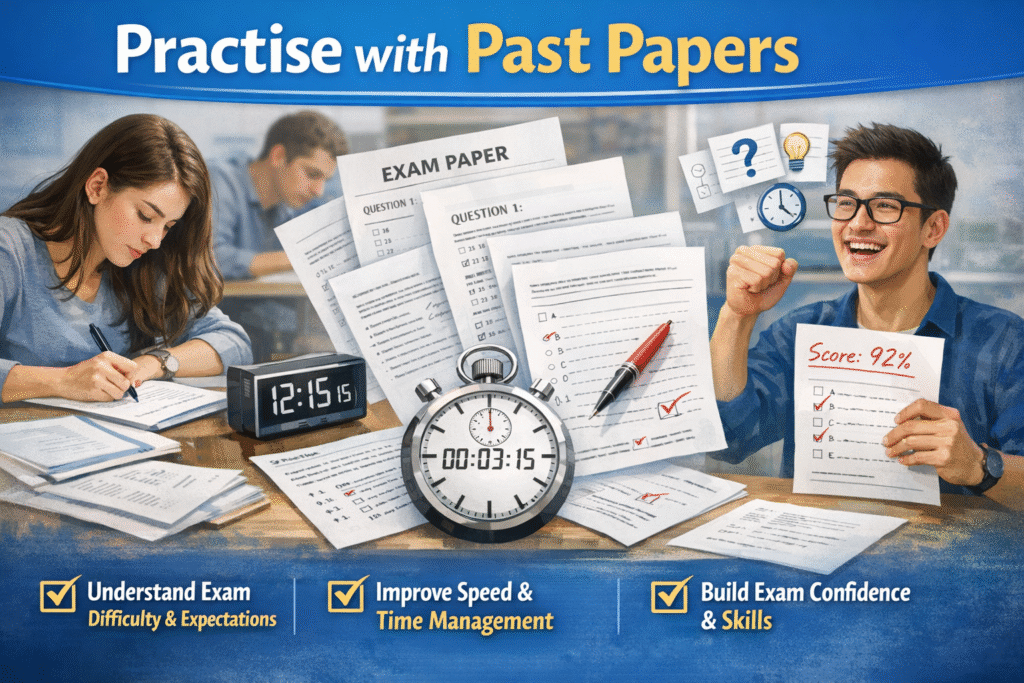
Practise with Past Papers

Practising with past papers is one of the most effective ways to prepare for any exam. It allows learners to become familiar with the real exam format, question styles, and time pressure. Regular practice not only strengthens subject knowledge but also helps identify weak areas that need improvement. By simulating real exam conditions, students can build confidence and develop better strategies to manage their time and performance on the actual test day.

  • ♦  Helps understand the real level of exam difficulty and expectations.
  • ♦  Improves speed, accuracy, and effective time management during exams.
  • ♦  Builds strong exam confidence through regular practice and familiarity.

Find the Course That Suits You!

We create outstanding professionals in Employability, Business, Health Care, Marketing, Language, and Functional Skills. Whether you're starting or advancing your career, we turn your passion into success as the UK’s most trusted e-learning course provider.
5000+ course

Focus on Weak Areas First

Focusing on weak areas first is one of the most effective strategies for improving overall performance in exams or skill-based learning. Identifying difficult topics early allows you to allocate more time and effort where it is needed most. This targeted approach helps build confidence, strengthens understanding, and prevents last-minute stress. By addressing challenges step by step and using the right support tools, learners can gradually turn their weak points into strengths and achieve better results.

  • ♦  Identify difficult topics early to avoid confusion during final revision.
  • ♦  Spend extra revision time practising questions from weaker subject areas.
  • ♦  Break complex topics into smaller sections for easier understanding.
  • ♦  Use online learning resources, videos, or practice tests for support.
  • ♦  Seek guidance from tutors or mentors when concepts remain unclear.
  • ♦  Track progress regularly to ensure weak areas are steadily improving.

Improve Time Management Skills

Strong time management skills can make a significant difference in productivity, performance, and overall success in exams or daily tasks. Learning how to manage your time effectively helps you stay focused, reduce stress, and complete tasks with greater confidence. Developing a clear strategy ensures that you make the best use of the time available.

Start by practising answering questions within set time limits. This helps you understand how long you should ideally spend on each task and improves your speed and accuracy. It also prepares you to stay calm and organised under pressure.

Another useful technique is learning when to skip difficult questions and return to them later. This prevents you from getting stuck and allows you to secure marks from easier questions first. Avoid spending too long on one question, as it can reduce the time available for the rest of the paper or task.

By consistently applying these time management strategies, you can improve efficiency, maintain better concentration, and achieve stronger overall results.

Read Questions Carefully

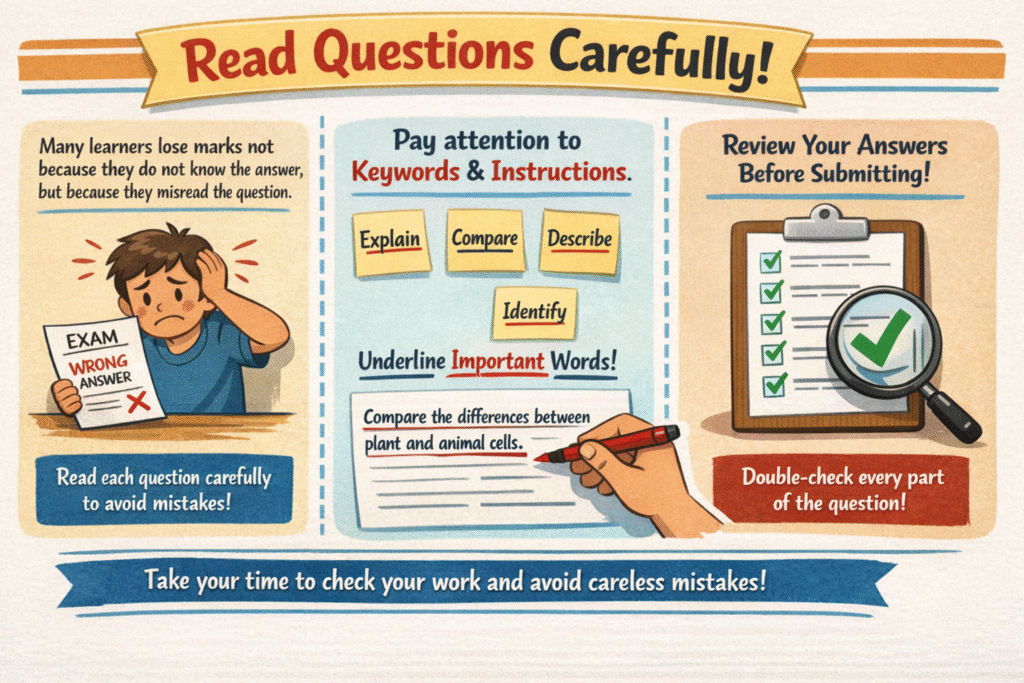
Read Questions Carefully

Many learners lose marks not because they do not know the answer, but because they misread the question. Reading each question carefully helps you understand exactly what is being asked and prevents avoidable mistakes in exams.

Pay close attention to keywords and instructions. Words such as explain, compare, describe, and identify tell you how to shape your answer. Underlining important words can help you stay focused and respond correctly.

Before submitting your work, take a moment to review your answers. Double-check that you have answered every part of the question clearly and accurately. This simple habit can improve your confidence and help you gain more marks.

Stay Calm and Confident on Exam Day

Exam day can feel stressful, but staying calm and confident plays a major role in achieving the best results. Preparation is not only about studying the content but also about taking care of your mind and body. One of the most important steps is getting proper sleep the night before the exam. A well-rested brain improves concentration, memory recall, and problem-solving ability. Avoid late-night cramming and focus instead on relaxing activities that help you unwind.

Arriving early at the exam venue can also make a big difference. It gives you enough time to settle down, organise your materials, and mentally prepare without feeling rushed. Being organised reduces anxiety and helps you focus fully on the questions ahead. Carry all necessary items such as pens, identification, and any permitted resources to avoid last-minute panic.

Maintaining a positive mindset is equally important. Believe in your preparation and remind yourself that you are capable. Deep breathing techniques and positive self-talk can help control nervousness. Confidence boosts performance by improving focus and reducing careless mistakes. By staying calm, organised, and optimistic, you can approach your exam with clarity and give your best effort.

Common Mistakes to Avoid in Functional Skills Exams​

Common Mistakes to Avoid in Functional Skills Exams

Preparing for Functional Skills exams requires more than just basic knowledge. Many learners struggle not because they lack ability, but because they overlook simple exam strategies. Understanding common mistakes can help you stay confident, organised, and focused during the test.

Not practising enough

One of the biggest mistakes learners make is not completing enough practice questions. Regular practice helps you understand exam formats, question styles, and marking expectations. It also builds confidence and improves accuracy.

Poor time management

Spending too long on one question can leave you with little time to complete the rest of the paper. Always keep an eye on the clock and divide your time wisely across all sections.

Ignoring exam instructions

Many learners lose marks because they do not read instructions carefully. Pay close attention to command words such as explain, describe, or calculate, as they guide what the examiner expects.

Rushing answers

Working too quickly can lead to careless mistakes. Always review your answers if time allows to correct errors and improve clarity.

Conclusion

Success in Functional Skills Level 2 exams largely depends on smart preparation and a clear revision strategy. Planning your study time, practising past questions, and focusing on key topics can significantly improve your chances of passing. Consistent revision not only strengthens understanding but also builds the confidence needed to perform well under exam conditions.

Most importantly, learners should remember that Functional Skills Level 2 is an achievable goal. With the right approach, positive mindset, and regular effort, you can overcome exam challenges and move closer to better education and career opportunities.

FAQs – 7 Key Exam Tips for Functional Skills Level 2

  1. 1. Is Functional Skills Level 2 hard to pass?
    Functional Skills Level 2 is achievable with the right preparation and regular practice. Understanding exam formats, revising key topics, and improving time management can significantly increase your chances of passing.
  2. 2. How long should I revise before the exam?
    Most learners benefit from revising for at least 2–4 weeks before the exam. Creating a structured revision plan and studying consistently each day helps build confidence and knowledge.
  3. 3. Are past papers helpful for Functional Skills exams?
    Yes, practising past papers is one of the most effective revision methods. They help you understand question styles, improve speed, and identify areas where additional study is needed.
  4. 4. Can I retake the exam if I fail?
    Yes, Functional Skills exams can usually be retaken if you do not pass on the first attempt. Many training providers allow multiple attempts, giving you the opportunity to improve your score.
  5. 5. What is the best way to prepare for Functional Skills Maths?
    The best preparation method includes practising real-life maths problems, revising key formulas, and completing mock tests. Regular practice and reviewing mistakes can greatly improve exam performance.

Find the Course That Suits You!

We create outstanding professionals in Employability, Business, Health Care, Marketing, Language, and Functional Skills. Whether you're starting or advancing your career, we turn your passion into success as the UK’s most trusted e-learning course provider.
5000+ course
Sam Walker

Article by

Sam Walker

Sam Walker is an education specialist and author at One Education, bringing over 4 years of experience in creating practical resources and strategies to support teachers and enhance student learning.

top

Hear What Our Learners Say About Us

Home Courses Search