WebGL 2D/3D Programming and Graphics Rendering For The Web

WebGL 2D & 3D Programming and Graphics Rendering for the Web introduces the fundamentals of creating interactive graphics and visual content using WebGL. This course covers 2D and 3D rendering concepts, shaders, animations, and browser-based graphics techniques, helping learners understand how rich visual experiences are built for the modern web.

WebGL 2D/3D Programming and Graphics Rendering For The Web
h h h

Get access to 5000+ courses including this for only £49. Learn More.

Overview of WebGL programming course online

This course introduces WebGL programming for real-time web graphics, combining HTML5 canvas WebGL with GPU-accelerated rendering to create smooth 2D graphics rendering and visually engaging interactive browser-based experiences.

Learners explore 3D graphics rendering, shader programming and GLSL shaders, mastering colours, textures, lighting and shading techniques essential for building responsive, high-performance visual scenes directly within modern web environments.

The curriculum supports interactive 3D web applications and web-based game development, covering object movement, camera control and transformations to create dynamic visuals powered by efficient, browser-ready rendering pipelines.

Learning Outcomes of WebGL programming

Method Of Assessment​

Learners complete an assignment designed to evaluate their understanding of the course content. The assignment is reviewed by qualified tutors who provide personalised feedback, allowing learners to demonstrate their applied knowledge and skills.

Certification

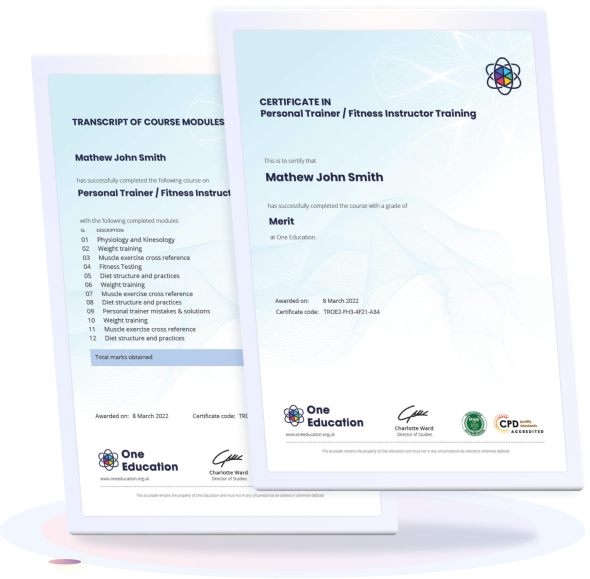
one education Certificate

After completing the WebGL programming assessments, learners qualify for a CPD QS accredited certificate from One Education.

The certificate is available in two formats: a PDF version for £9 or a printed hard copy delivered by post for £15.

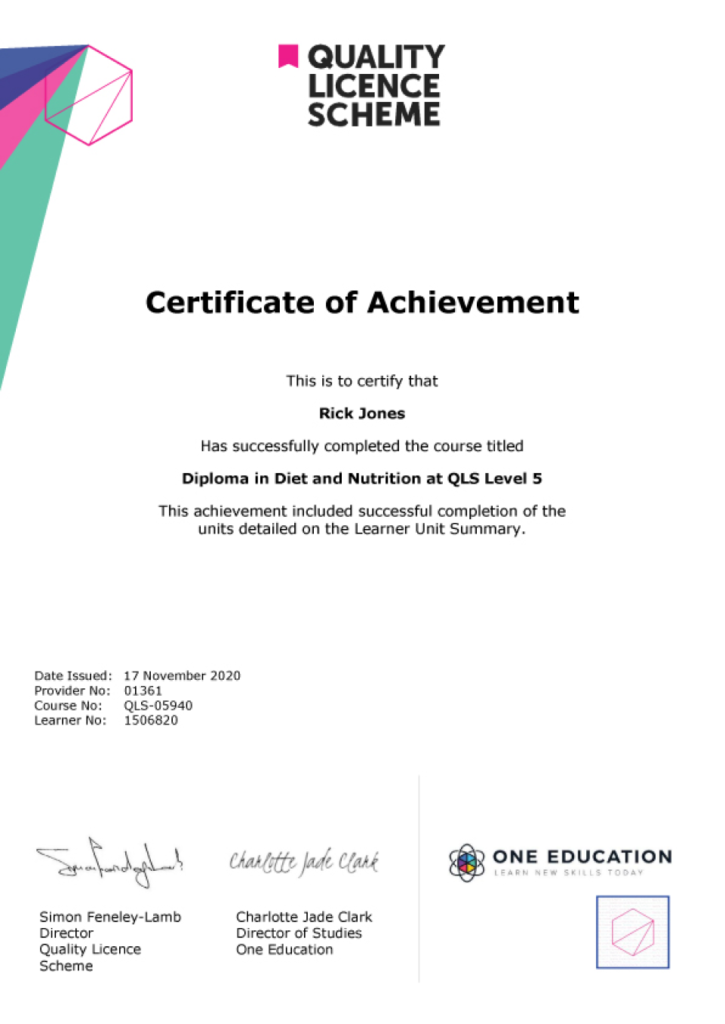
EXAMPLE - QLS Certificate 2020 1

Quality Licence Scheme Endorsed Certificate

Learners also have the option to order a Quality Licence Scheme (QLS) Endorsed Certificate as additional proof of achievement. The QLS Endorsed Certificate can be delivered by post for £89, with an additional £10 postage charge for international students.

Endorsement

This course has been endorsed by the Quality Licence Scheme for its high-quality, non-regulated provision and training programmes. This course is not regulated by Ofqual and is not an accredited qualification. Your training provider will be able to advise you on any further recognition, for example progression routes into further and/or higher education. For further information please visit the Learner FAQs on the Quality Licence Scheme website.

Why Study This WebGL programming?

Demand for interactive, high-performance web graphics continues to rise as modern websites, applications, and digital platforms move beyond static design. WebGL enables browsers to render advanced 2D and 3D visuals efficiently, making it a key technology for immersive user experiences, data visualisation, and interactive media.

Studying WebGL 2D/3D Programming and Graphics Rendering for the Web builds a strong understanding of browser-based graphics, shader logic, and GPU-accelerated rendering. The course supports professional development in web and graphics programming while demonstrating technical credibility through CPD certification, adding clear value to digital and creative career pathways.

Course Duration

The Diploma in WebGL 2D/3D Programming and Graphics Rendering for the Web is structured over a total duration of 2 weeks and 1 day. The course content is arranged in clear, progressive sections, allowing learners to move through each topic steadily while managing study time alongside other commitments. Completion within the stated period depends on individual engagement and consistency, ensuring a focused yet manageable learning timeline.

Requirements

The WebGL 2D/3D Programming and Graphics Rendering for the Web course has straightforward entry requirements. Learners should have a basic understanding of web technologies such as HTML and JavaScript, along with an interest in computer graphics and visual rendering. Prior experience with programming concepts is helpful but not essential. The course is delivered entirely online and can be accessed from any internet-enabled device, allowing learners to study from a location and schedule that suits their routine.

Career Path

Frequently Asked Questions

WebGL is used to render high-performance 2D and 3D graphics directly in web browsers using the GPU, without requiring additional plugins.

No prior graphics programming background is required. Basic knowledge of JavaScript and HTML5 is sufficient to understand WebGL concepts and workflows.

2D rendering focuses on flat visuals such as charts and interfaces, while 3D rendering involves depth, perspective, lighting, and camera control for immersive scenes.

Shaders control how objects are drawn on the screen. Written in GLSL, they manage lighting, colour, texture, and transformations on the GPU.

Yes, WebGL supports real-time rendering, making it suitable for interactive graphics, simulations, data visualisation, and browser-based games.

WebGL is supported by all major modern browsers, including Chrome, Firefox, Edge, and Safari, across desktop and mobile devices.

Course Curriculum

Section 01: Introduction
WebGL vs OpenGL vs OpenGL ES 00:05:00
Setup Server (Mac, Windows and Linux) 00:05:00
Setup WebGL Project 00:08:00
Section 02: Drawing Objects
WebGL Rendering Pipeline 00:04:00
Drawing A Point 00:22:00
Normalised Coordinates vs Device Coordinates 00:10:00
Drawing A Simple Triangle 00:06:00
Drawing A Line Using gl.LINES 00:03:00
Drawing A Line Using gl.LINE_STRIP & gl.LINE_LOOP 00:03:00
Drawing A Triangle With Lines Using gl.TRIANGLE_STRIP & gl.TRIANGLE_FAN 00:03:00
Drawing A Quad 00:07:00
Drawing A 3D Cube 00:24:00
Setup Three.js 00:06:00
Loading & Drawing A Model Using Three.js 00:16:00
Section 03: Colours and Textures
Applying Color To Shapes 00:09:00
One Color Per Triangle 00:15:00
One Color Per Vertex Using Interpolation 00:02:00
Applying A Texture To Shapes 00:23:00
Texture Coordinates 00:08:00
Section 04: Moving & Transforming Objects
Moving Objects Using Translation 00:06:00
Left Handed vs Right Handed Coordinate System 00:06:00
Sizing Objects Using Scaling 00:06:00
Combining Transformations 00:07:00
Section 05: Movement & Camera
Mouse Input 00:11:00
Keyboard Input 00:09:00
Fixing Rotation and Adding Individual Rotation 00:08:00
Section 06: Lighting & Shading
Ambient Lighting 00:13:00
Section 07 Resource
Resource 00:00:00
Assignment
Assignment – WebGL 2D/3D Programming and Graphics Rendering For The Web 2 weeks, 1 day
Order Your Certificate
Order Your Certificate QLS 00:00:00
top

Hear What Our Learners Say About Us

OE Footer