


Table of Content
Share this Resource


Many people hit the gym consistently, push through intense workouts, and still struggle to see real muscle growth—often because they misunderstand one crucial factor: protein intake. While training provides the stimulus, protein supplies the building blocks your body needs to repair damaged muscle fibres and grow them stronger and bigger over time.
Protein plays a central role in muscle recovery, helping to rebuild tissues after exercise and support lean muscle development. Without the right amount, even the most effective workout routine can fall short of delivering visible results.
In this complete guide, you’ll find a clear, science-backed answer to how much protein you actually need to gain muscle fast—free from confusion, myths, and guesswork—so you can maximise your progress with confidence.
What Is Protein and Why It Matters for Muscle Growth
Protein is often called the building block of muscles, and for good reason. It is made up of amino acids, which act like tiny repair units in your body. Whenever you train or perform physical activity, your muscles rely on these amino acids to maintain strength, structure, and growth. Without enough protein, your body simply cannot repair or build muscle effectively.
At the centre of this process is something known as muscle protein synthesis (MPS). In simple terms, MPS is the process where your body uses protein to repair and build new muscle tissue. Think of it as your body’s natural “muscle-building mode.” When MPS is higher than muscle breakdown, your muscles grow stronger and larger over time.
When you work out—especially during strength training—you create tiny tears in your muscle fibres. This might sound harmful, but it’s actually a key part of muscle growth. After your workout, your body gets to work repairing these fibres. Protein provides the essential nutrients needed for this repair process, rebuilding the fibres thicker and stronger than before. Over time, this cycle of breakdown and repair leads to visible muscle growth and improved strength.
In short, protein isn’t just important—it’s essential. Without it, your workouts won’t translate into real progress. By supporting muscle repair and boosting muscle protein synthesis, protein plays a critical role in helping you achieve faster and more effective muscle growth.
Find the Course That Suits You!
How Much Protein Per Day to Gain Muscle Fast
Building muscle efficiently starts with getting your protein intake right. Protein plays a vital role in repairing and growing muscle tissue after workouts, making it one of the most important nutrients for anyone aiming to gain muscle quickly. Without adequate protein, even the best training programme will struggle to deliver results.
Recommended Daily Protein Intake
For optimal muscle growth, the standard recommendation is:
♦ 1.6 to 2.2 grams of protein per kilogram of body weight per day
This range is widely supported for maximising muscle protein synthesis while supporting recovery and performance.
Practical Examples
To make this easier to understand, here are some real-world calculations:
- ♦ 60 kg individual → needs approximately 96–132 grams of protein per day
- ♦ 80 kg individual → needs approximately 128–176 grams of protein per day
These ranges allow flexibility depending on training intensity, goals, and experience level.
Beginners vs Advanced Lifters
Protein needs can vary depending on your training experience:
- ♦ Beginners:
Those new to resistance training typically respond well to the lower end of the range (around 1.6–1.8 g/kg). Their bodies are more sensitive to training stimulus, meaning they can build muscle efficiently without extremely high protein intake. - ♦ Advanced Lifters:
More experienced individuals often benefit from the higher end (around 2.0–2.2 g/kg). As progress slows over time, slightly increased protein intake can support continued muscle growth and recovery.
Cutting vs Bulking Phases
Your goal also affects how much protein you should consume:
- ♦ Bulking Phase (Muscle Gain):
When eating in a calorie surplus, protein intake can stay moderate within the range (around 1.6–2.0 g/kg), as extra calories support muscle growth. - ♦ Cutting Phase (Fat Loss):
During a calorie deficit, protein intake should be higher (closer to 2.0–2.2 g/kg) to help preserve lean muscle mass while losing fat.
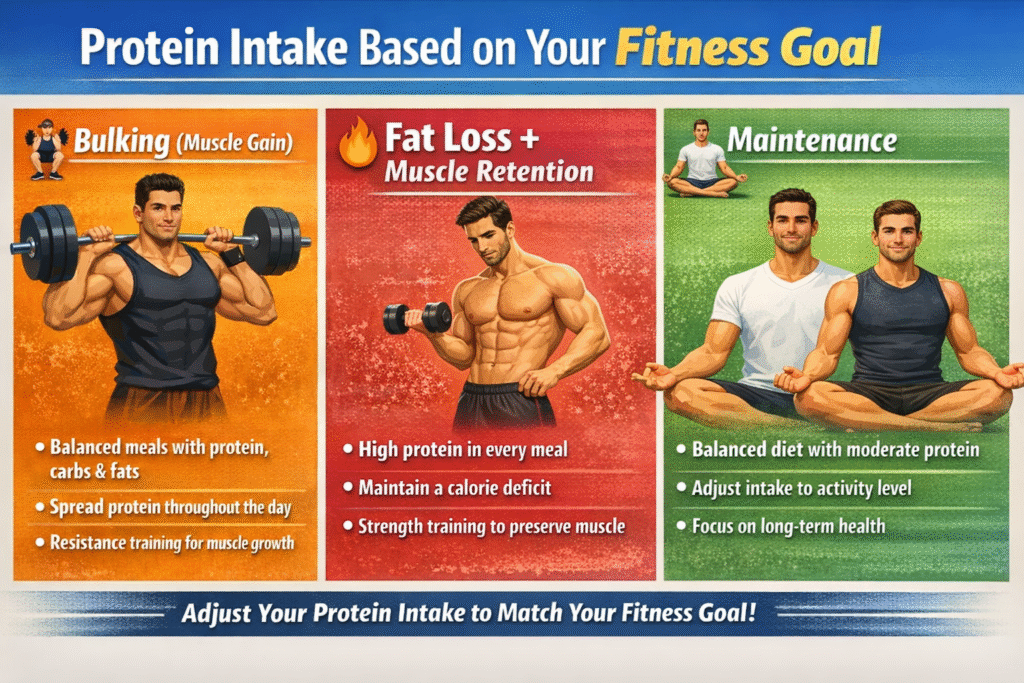
Protein Intake Based on Your Fitness Goal
Your ideal protein intake isn’t one-size-fits-all—it depends heavily on what you’re trying to achieve. Whether you’re building muscle, losing fat, or simply maintaining your physique, adjusting your protein intake can make a significant difference in your results.
Bulking (Muscle Gain)
When your goal is to build muscle, your body needs both energy and protein to support growth. A slight calorie surplus ensures you have enough fuel for intense training and recovery, while moderate to high protein intake helps repair and build muscle fibres.
For bulking, protein supports muscle protein synthesis—the process responsible for muscle growth. However, simply eating excessive protein won’t accelerate gains; it works best when combined with progressive strength training and adequate calories.
Recommended approach:
- ♦ Aim for balanced meals with protein, carbs, and healthy fats
- ♦ Spread protein intake evenly throughout the day
- ♦ Combine with resistance training for optimal muscle gain
Fat Loss + Muscle Retention
During fat loss, your body is in a calorie deficit, which can lead to muscle breakdown if not managed properly. This is why a higher protein intake becomes essential—it helps preserve lean muscle mass while your body burns fat.
Protein also increases satiety, meaning you’ll feel fuller for longer, making it easier to stick to your calorie goals. Additionally, it has a higher thermic effect, so your body burns more calories digesting it compared to fats or carbohydrates.
Recommended approach:
- ♦ Prioritise protein in every meal
- ♦ Maintain a calorie deficit without cutting too aggressively
- ♦ Include strength training to signal muscle preservation
Maintenance
If your goal is to maintain your current weight and physique, your protein needs are more moderate. At this stage, you’re not actively trying to build new muscle or lose fat, so you can stay at the lower end of the protein range.
Protein still plays an important role in overall health, supporting muscle repair, hormone function, and general wellbeing. The key is consistency rather than excess.
Recommended approach:
- ♦ Maintain a balanced diet with adequate protein
- ♦ Adjust intake based on activity level
- ♦ Focus on long-term sustainability rather than extremes
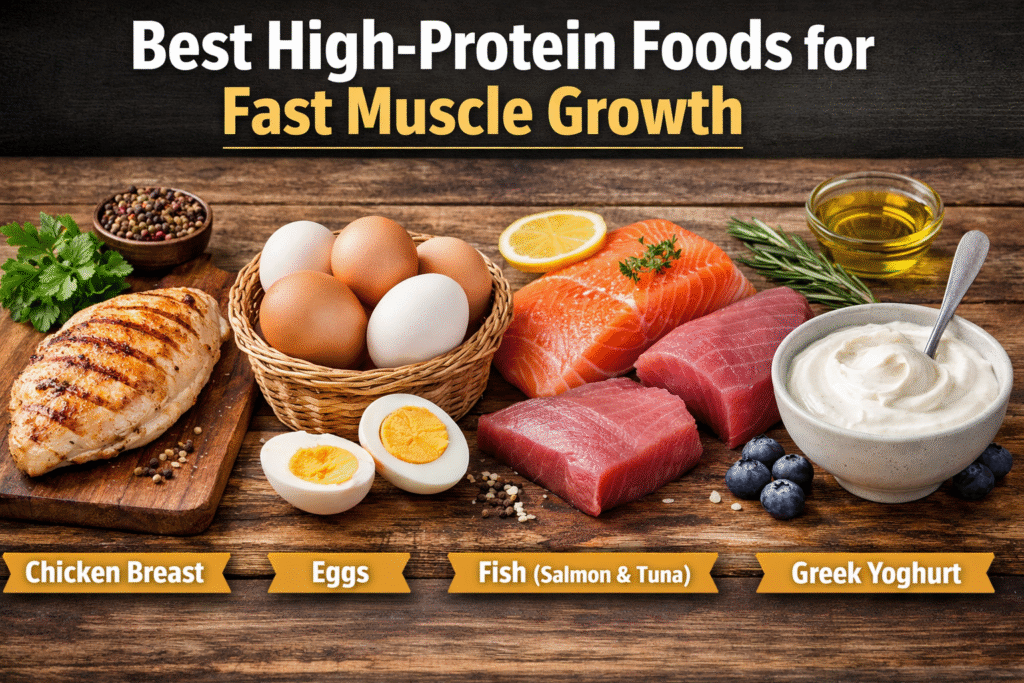
Best High-Protein Foods for Fast Muscle Growth
Building muscle quickly isn’t just about lifting heavier weights—it’s about fuelling your body with the right nutrients. Protein plays a central role in muscle repair, recovery, and growth. Choosing high-quality protein sources from both animal and plant-based foods, alongside effective supplements, can significantly accelerate your progress. Below is a well-structured guide to the best high-protein foods for fast muscle growth.
Animal-Based Protein Sources
Animal-based foods are considered complete proteins, meaning they contain all essential amino acids required for muscle repair and growth.
♦ Chicken Breast
A staple in muscle-building diets, chicken breast is lean, affordable, and packed with protein. It supports muscle recovery while keeping fat intake low.
♦ Eggs
Eggs are one of the most nutrient-dense foods, offering high-quality protein along with essential vitamins. The yolk also contains healthy fats and nutrients beneficial for muscle function.
♦ Fish (Salmon, Tuna)
Fish like salmon and tuna provide not only protein but also omega-3 fatty acids, which help reduce inflammation and support muscle recovery after intense workouts.
♦ Greek Yoghurt
Greek yoghurt is rich in protein and probiotics, promoting gut health while supporting muscle repair. It’s also a great snack or post-workout option.
Plant-Based Protein Sources
Plant-based proteins are excellent alternatives, especially for vegetarians or those looking to diversify their diet. While some are incomplete proteins, combining them ensures adequate amino acid intake.
♦ Lentils
Lentils are rich in protein, fibre, and essential minerals. They support sustained energy levels and muscle recovery.
♦ Chickpeas
Versatile and filling, chickpeas are ideal for muscle growth and can be easily added to salads, curries, or snacks like hummus.
♦ Tofu
Made from soybeans, tofu is a complete plant protein and an excellent meat substitute. It absorbs flavours well, making it easy to incorporate into meals.
♦ Nuts & Seeds
Almonds, chia seeds, and flaxseeds provide protein along with healthy fats, supporting overall strength and recovery.
Protein Supplements
Supplements can be highly effective for meeting daily protein requirements, especially for individuals with intense training routines.
♦ Whey Protein
Whey protein is fast-digesting and ideal for post-workout recovery. It helps quickly deliver amino acids to muscles, promoting faster repair and growth.
♦ Casein Protein
Casein protein digests slowly, making it perfect before bedtime. It provides a steady release of amino acids, supporting muscle recovery overnight.

When Should You Eat Protein?
Timing your protein intake can support muscle growth and recovery, but it’s important to understand one key principle first: your total daily protein intake matters far more than exact timing. Once your daily needs are met, spreading protein wisely throughout the day can help maximise results.
Spread Protein Intake Across the Day
Rather than consuming most of your protein in one meal, aim to distribute it evenly across breakfast, lunch, dinner, and snacks. This approach helps maintain a steady supply of amino acids in your body, which supports continuous muscle repair and growth.
Breakfast: Start Strong
Including protein in your breakfast kickstarts muscle protein synthesis after an overnight fast. A high-protein breakfast—such as eggs, Greek yoghurt, or oats with protein—can also improve satiety and energy levels throughout the day.
Post-Workout: The Important Window
After exercise, your muscles are more receptive to nutrients. Consuming protein within a couple of hours post-workout helps repair muscle fibres and supports growth. While the “anabolic window” isn’t as narrow as once believed, prioritising protein after training remains beneficial.
Before Bed: Support Overnight Recovery
Having a slow-digesting protein source before bed—such as casein protein or cottage cheese—can provide a steady release of amino acids overnight. This may help reduce muscle breakdown and enhance recovery while you sleep.
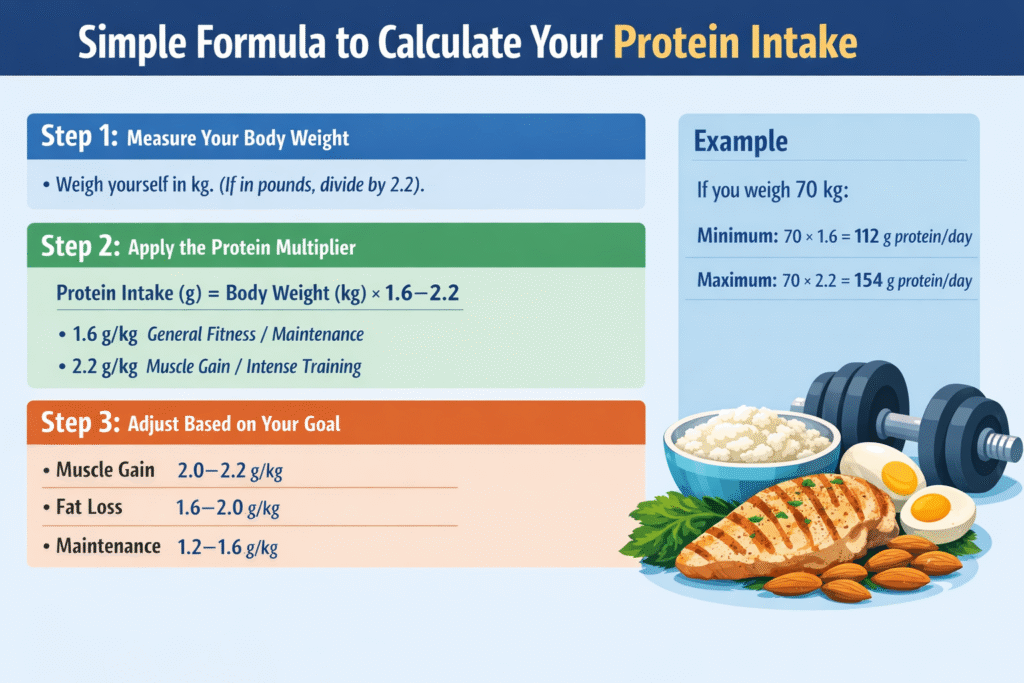
Simple Formula to Calculate Your Protein Intake
To determine how much protein your body needs each day, you can follow a straightforward and effective formula based on your body weight and fitness goals.
Step 1: Measure Your Body Weight
Start by calculating your body weight in kilograms (kg). If your weight is in pounds, divide it by 2.2 to convert it into kilograms.
Step 2: Apply the Protein Multiplier
Use the standard protein intake range:
Protein Intake (g)=Body Weight (kg)×1.6–2.2\text{Protein Intake (g)} = \text{Body Weight (kg)} \times 1.6\text{–}2.2Protein Intake (g)=Body Weight (kg)×1.6–2.2
- ♦ 1.6 g/kg → Suitable for general fitness or maintenance
- ♦ 2.2 g/kg → Ideal for muscle gain and intense training
Step 3: Adjust Based on Your Goal
- ♦ Muscle Gain: Aim closer to 2.0–2.2 g/kg
- ♦ Fat Loss: Stay around 1.6–2.0 g/kg to preserve muscle
- ♦ Maintenance: 1.2–1.6 g/kg is often sufficient
Example
If you weigh 70 kg:
- ♦ Minimum: 70 × 1.6 = 112 g protein/day
- ♦ Maximum: 70 × 2.2 = 154 g protein/day
Does More Protein Mean Faster Muscle Growth?
Eating more protein does not automatically lead to faster muscle growth. Protein is essential for muscle repair, but your body can only use a certain amount effectively. Consuming more than needed won’t result in unlimited gains.
There are diminishing returns—once you meet your daily protein requirement (around 1.6–2.2g per kg of body weight), extra intake offers little added benefit for building muscle.
Muscle growth depends more on training intensity, proper sleep and recovery, and a well-balanced overall diet. Without effective workouts, quality rest, and sufficient nutrients, increasing protein alone will not significantly improve results.
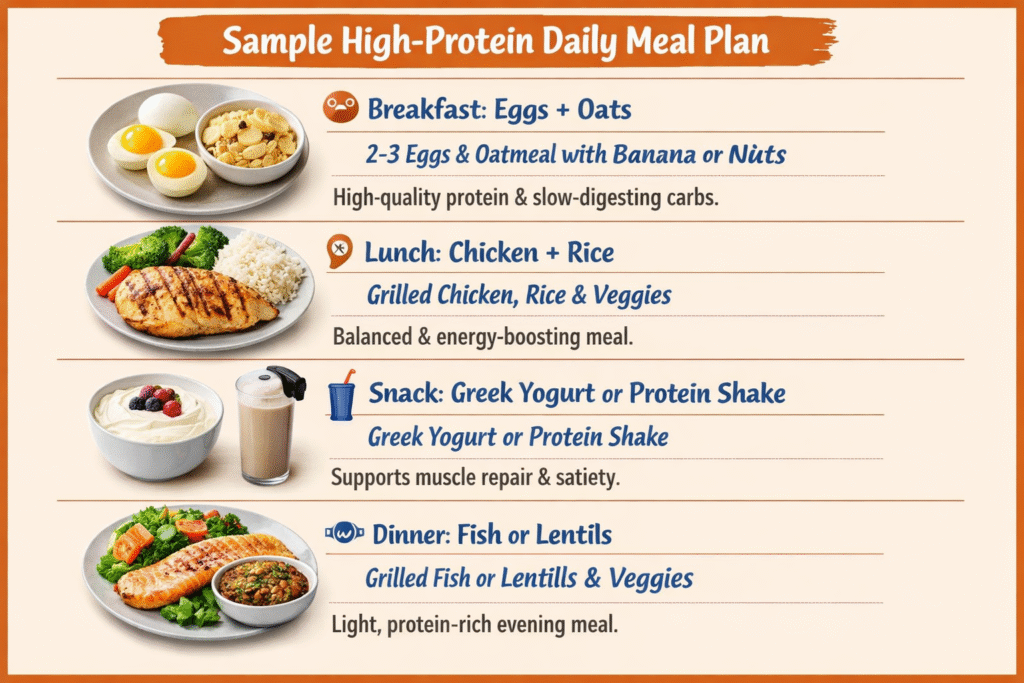
Sample High-Protein Daily Meal Plan
A simple, high-protein meal plan doesn’t need to be complicated or expensive. This easy-to-follow daily structure focuses on balanced nutrition, steady energy, and muscle support—using everyday ingredients that are quick to prepare and practical for busy routines.
Breakfast: Eggs + Oats
Start your day with a protein-rich combination that keeps you full and energised.
- ♦ 2–3 boiled or scrambled eggs
- ♦ 1 bowl of oats (made with milk or water)
- ♦ Optional: add banana or a handful of nuts
Why it works: Eggs provide high-quality protein, while oats offer slow-digesting carbs for sustained energy.
Lunch: Chicken + Rice
A classic, balanced meal that supports muscle growth and recovery.
- ♦ 1 serving grilled or baked chicken breast
- ♦ 1 cup cooked rice (white or brown)
- ♦ Side of vegetables (broccoli, carrots, or salad)
Why it works: Lean chicken is packed with protein, and rice replenishes energy levels.
Snack: Greek Yoghurt or Protein Shake
Keep your protein intake steady between meals.
- ♦ 1 bowl of Greek yoghurt (plain or lightly sweetened)
or - ♦ 1 protein shake (with water or milk)
Why it works: Helps reduce hunger, supports muscle repair, and prevents energy dips.
Dinner: Fish or Lentils
End your day with a lighter but protein-rich meal.
- ♦ Grilled or baked fish (such as salmon or tuna)
or - ♦ Cooked lentils (dal) for a plant-based option
- ♦ Add vegetables or a small portion of rice/roti
Why it works: Provides essential nutrients and protein without feeling too heavy before bed.


Conclusion
gaining muscle fast is less about perfect numbers and more about consistent habits—ensure you track your daily protein intake, align it with your goals, and combine it with effective resistance training for the best results. When you stay disciplined with both nutrition and workouts, progress becomes steady and sustainable, so focus on showing up every day and building routines that drive long-term muscle growth.
FAQs — How Many Litres in a Gallon? Quick Conversion Explained
- 1. How much protein do I need to build muscle fast?
Most people need around 1.6–2.2g of protein per kg of body weight daily to support fast muscle growth alongside proper training. - 2. Can I gain muscle without protein supplements?
Yes, you can build muscle through whole foods like meat, fish, eggs, dairy, and legumes without needing supplements. - 3. Is 100g of protein enough per day?
It depends on your body weight and activity level; it may be enough for lighter individuals but not for heavier or highly active people. - 4. What happens if I eat too much protein?
Too much protein can lead to digestive discomfort and excess calorie intake, which may result in unwanted fat gain. - 5. How much protein per kg for muscle gain?
A daily intake of 1.6–2.2g per kg of body weight is generally recommended for effective muscle development.
Find the Course That Suits You!

Article by
Sam Walker is an education specialist and author at One Education, bringing over 4 years of experience in creating practical resources and strategies to support teachers and enhance student learning.
Get a FREE Course
- Learn useful skills online free
- Get CPD accredited certificate
- Add it to your CV today!