How to Get Started in Teaching Without a Degree

September 09, 2025 | 7 minutes | 1462 Readers

You don’t have a teaching degree but you’re thinking about stepping into education. Maybe you love working with kids. Maybe you want to make a difference. Maybe you’re looking for a new career that actually matters. The good news: You don’t need a traditional education degree to get started in teaching. There are real, legitimate paths into schools that don’t require four years of college up front. Whether you’re fresh out of high school, changing careers, or just testing the

rating

Bestselling Course

View Details SAVE 94% NOW
How to Get Started in Teaching Without a Degree

You don’t have a teaching degree but you’re thinking about stepping into education. Maybe you love working with kids. Maybe you want to make a difference. Maybe you’re looking for a new career that actually matters.

The good news: You don’t need a traditional education degree to get started in teaching.

There are real, legitimate paths into schools that don’t require four years of college up front. Whether you’re fresh out of high school, changing careers, or just testing the waters, there are opportunities available right now.

This guide covers everything you need to know. From entry-level jobs to alternative certifications, you’ll get a straight path forward—no fluff, no false hope, just facts.

Can You Become a Teacher Without a Degree in the UK?

You cannot become a fully qualified classroom teacher in a state school without a degree. That’s a legal requirement. However, that doesn’t mean you cannot work in schools or get involved in teaching.

You can work as a teaching assistant, learning support assistant, or in other education support roles without a degree. Many people start this way and then train later.

Private schools and academies sometimes have more flexible hiring rules. Some hire people without degrees for support roles or specialist teaching roles in areas like music or sport.

You cannot get Qualified Teacher Status (QTS) without a degree, but there are routes to work in schools and eventually train to get QTS.

Teaching Assistant Complete Course

This CPD accredited Teaching Assistant course is designed for aspiring classroom assistant. Grab the opportunity now to open the door of success.

What Are Alternative Routes Into Teaching in the UK?

  • Teaching Assistant to Teacher: Start as a teaching assistant (TA) by completing Teaching Assistant Complete Course from One Education and work while studying part-time for a degree or teacher training qualification.
  • Degree Apprenticeships: These combine working in a school with training for a teaching degree and QTS. They require some university-level study, but you earn while you learn.
  • School Direct (Salaried): For career changers who already have a degree. You work in a school and train at the same time.
  • Assessment Only Route: For those with significant school experience but no formal teacher training.
  • Teach First: Requires a degree, but it’s a fast-track route into teaching, especially in disadvantaged areas.

There are several alternative routes for people without a traditional teaching degree who want to become teachers. Most of these routes require you to have a degree first, but some allow you to start working without one.

If you don’t yet have a degree, the best starting point is usually working as a teaching assistant and studying part-time.

What Qualifications Do I Need to Work in a UK School?

GCSEs in English and maths (grade 4/C or above), an enhanced DBS check, and basic safeguarding training are essential. First aid or SEN training is helpful. Some teaching assistant roles require Level 2 or 3 support qualifications. Employers look for candidates who can support pupils safely and effectively.

  • A good standard of literacy and numeracy – usually GCSEs in English and maths at grade 4 (formerly C) or above.
  • An enhanced DBS check – a criminal record check required for anyone working with children.
  • Basic safeguarding training – usually provided by the employer but important for anyone working with children.
  • Sometimes First Aid training or SENCO training online is needed or beneficial.
  • For some teaching assistant roles, a Level 2 or Level 3 qualification in supporting teaching and learning can help but is not always required.

Employers want to see you can support pupils safely and effectively. These are the basic steps to show that.

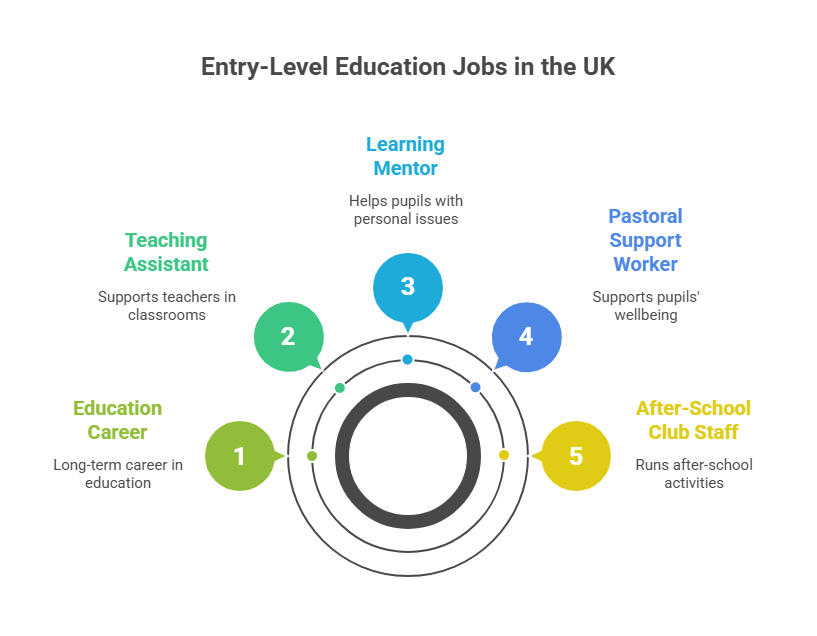
What Are the Best Entry-Level Education Jobs Without a Degree in the UK_ - visual selection

What Are the Best Entry-Level Education Jobs Without a Degree in the UK?

The best entry-level education jobs without a degree in the UK include teaching assistant, learning mentor, pastoral support worker, after-school club staff, and nursery assistant. These roles offer hands-on experience in schools and are ideal starting points for anyone considering a long-term career in education or future teacher training.

  • Teaching Assistant (TA): Supporting teachers in classrooms with general or SEN pupils.
  • Learning Mentor: Helping pupils with personal or behavioural issues.
  • Pastoral Support Worker: Supporting pupils’ wellbeing, attendance, and safeguarding.
  • After-School Club Staff: Running or assisting with after-school activities and clubs.
  • Nursery Assistant: Working in early years settings; childcare qualifications may be needed.
  • Youth Worker or Tutor: Working outside school but supporting education and development.

These jobs provide real experience and sometimes allow you to train while you work.

Can I Teach in Independent or Private Schools Without a Degree?

Independent schools (private schools) in the UK have more flexibility. They do not have to follow the same rules as state schools about teacher qualifications.

Some private schools will hire people without degrees, especially if you have strong skills or experience. This is common in areas like music, sport, drama, or languages.

You might still need to work toward qualifications while employed. Many private schools offer support for staff training.

Getting Qualified Without a Degree (Long-Term)

If you want to become a fully qualified teacher, you will need Qualified Teacher Status (QTS). This usually requires a degree.

If you don’t have one, you can:

  • Start as a teaching assistant.
  • Enrol in a foundation degree or degree-level course part-time, such as through the Open University.
  • Apply for teacher training apprenticeships once you have some higher education qualifications.
  • Use school-based training programmes that allow you to earn and learn.

It takes time and effort, but it is possible to become a qualified teacher without following the traditional university route.

Gaining Experience First

Experience is vital. It helps you understand the classroom environment and shows schools you’re serious.

Ways to gain experience include:

  • Volunteering in schools or youth clubs.
  • Working in summer holiday clubs or after-school programmes.
  • Tutoring children or supporting family members.
  • Supporting pupils with special educational needs.
  • Experience helps build confidence and skills. It also improves your chances when applying for paid roles.

Experience helps build confidence and skills. It also improves your chances when applying for paid roles.

Long-Term Planning

Start in support roles and study part-time. Work toward a foundation degree or teaching apprenticeship. Gain experience, build skills, and move step by step into a qualified teaching role.

Consider these steps:

  • Work while studying part-time for qualifications.
  • Progress from teaching assistant to higher-level roles (HLTA).
  • Apply for apprenticeships or School Direct programmes when ready.
  • Keep updated on government schemes and funding for teacher training.
  • Build networks with schools and education providers.

Many schools support staff who want to train as teachers over time.

Conclusion

You don’t need a degree to start working in education in the UK. Support roles like teaching assistants and learning mentors are excellent entry points.

These roles offer valuable experience and often lead to opportunities for training and career progression.

Qualified Teacher Status still requires a degree, but you can earn your way there step by step.

The important thing is to begin. Get involved, gain experience, and keep learning. Teaching is a journey. Everyone starts somewhere.

josh ashton

Article by

Josh Ashton

Josh is an education specialist and author at One Education, bringing over 4 years of experience in creating practical resources and strategies to support teachers and enhance student learning.

top

Hear What Our Learners Say About Us

Home Courses Search