Life Sciences and Medical Device Regulations Guide

November 23, 2026 | By Emily Parker | 8 minutes | 4 Readers

Explore UK medical device regulations, life sciences, MHRA requirements, compliance skills, quality management and career opportunities in this beginner-friendly guide.

Life sciences professionals examining laboratory equipment and discussing Medical Device Regulations.

Medical devices support healthcare, diagnosis and patient monitoring. However, developing these products involves more than scientific research. Manufacturers must consider safety, performance and legal requirements. For beginners, understanding Medical Device Regulations can feel challenging. Terms such as conformity assessment and quality management may seem unfamiliar. Life Sciences provides scientific knowledge behind many healthcare technologies. Regulatory knowledge explains how applicable requirements affect their development and supply. These subjects connect through testing, documentation and quality processes. Whether you are a student, laboratory technician or regulatory beginner, understanding these connections can support your learning. This guide explains UK medical device rules, essential skills, learning resources and career opportunities. It also outlines practical steps for building your knowledge.

Understanding Medical Device Regulations in the UK

Medical Device Regulations establish requirements for certain healthcare products. These include medical equipment, diagnostic technologies and monitoring devices. The rules address product safety, performance and compliance responsibilities. Manufacturers must identify which requirements apply to their products. Product classification, intended purpose and market location influence these obligations.

In the UK, the Medicines and Healthcare products Regulatory Agency (MHRA) oversees medical device regulation. Great Britain and Northern Ireland have different regulatory arrangements. For example, a blood pressure monitor requires appropriate regulatory consideration before being placed on the market. Manufacturers may need technical documentation, conformity assessment and suitable marking. Understanding these processes helps beginners connect product development with legal responsibilities.

Why Medical Device Regulations Matter in Life Sciences

Life Sciences explores biological processes, healthcare technologies and scientific research. This knowledge contributes to diagnostics, medical devices and laboratory development. However, scientific research alone does not establish regulatory compliance. Medical Device Compliance also involves documentation, risk management and applicable legal requirements.

Laboratory technicians may support testing and record management. Biomedical researchers may contribute scientific evidence during product development. Regulatory teams interpret requirements and coordinate compliance activities. The MHRA guidance on regulating medical devices explains relevant UK responsibilities. Understanding these connections helps learners recognise different professional roles. Life Sciences & Medical Device Regulatory Bundle offers related subjects for exploring scientific and regulatory foundations.

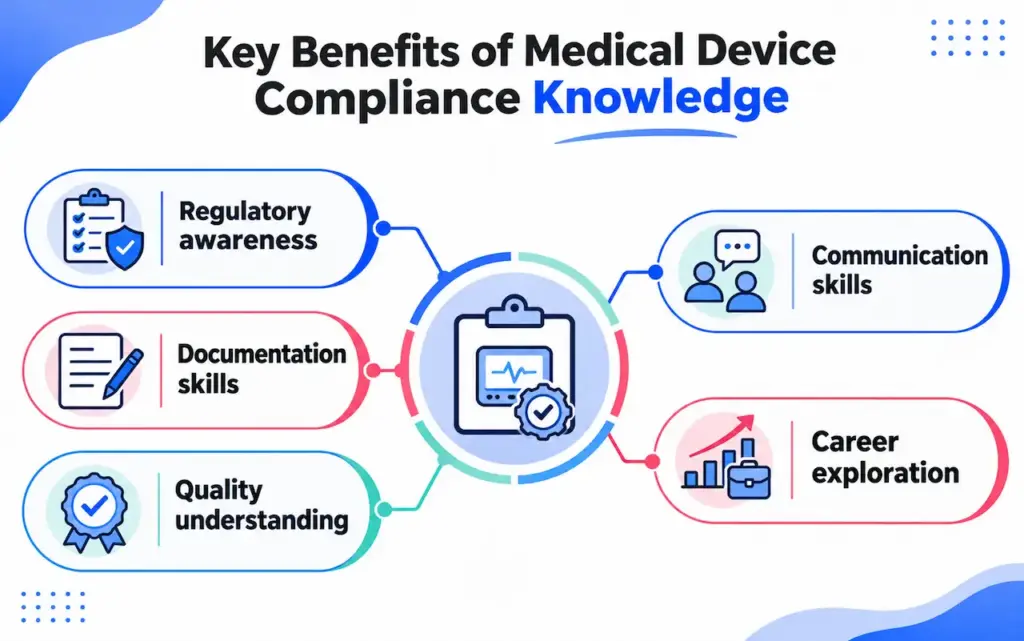
Medical Device Compliance benefits diagram showing regulatory awareness, documentation, quality, communication and career skills.

Key Benefits of Medical Device Compliance Knowledge

Understanding Medical Device Compliance supports more informed scientific and technical work. It helps learners recognise responsibilities beyond laboratory testing. These benefits are particularly relevant to beginners exploring healthcare technology.

  • Regulatory awareness: Understand product classifications and applicable requirements.
  • Documentation skills: Recognise the importance of accurate technical records.
  • Quality understanding: Learn why consistent procedures support product development.
  • Communication skills: Explain scientific information to different workplace teams.
  • Career exploration: Identify knowledge relevant to regulatory and laboratory roles.

For example, accurate testing records can support technical documentation. Clear communication can help teams discuss potential product risks. These skills develop through continued learning and appropriate experience. Introductory training provides foundations rather than professional authorisation.

How to Start Learning Medical Device Regulations

Beginners can approach Medical Device Regulations through structured learning. Start with basic terminology before exploring detailed compliance processes. The following five steps provide a useful starting point.

  1. Understand medical device fundamentals. Learn device definitions, intended purposes and classifications. Identify differences between medical devices and general healthcare products.
  2. Set clear learning goals. Choose between laboratory science, regulatory affairs and quality management. Consider which subjects match your interests.
  3. Select suitable learning resources. Explore official guidance and introductory courses. Essentials of European Medical Device Regulations covers a relevant subject area.
  4. Practise interpreting information. Review hypothetical device descriptions and identify possible requirements. Compare your understanding with authoritative guidance.
  5. Apply and improve your knowledge. Create summaries of important regulatory concepts. Review updates and continue developing relevant skills.

Keeping a learning journal can support your progress. Record definitions, questions and examples for later revision.

Essential Medical Device Regulatory Skills

Medical device work combines technical understanding with organised processes. Different responsibilities require different levels of specialist knowledge. Beginners should focus on foundational concepts and transferable skills.

Core Regulatory and Scientific Knowledge

Important subjects include device classification, conformity assessment and risk management. Classification helps determine which regulatory requirements may apply. Biomedical Science supports understanding of biological and diagnostic technologies. Laboratory Skills provide useful context for testing and documentation. The MHRA guidance on medical device legal requirements explains relevant Great Britain compliance principles.

Supporting Professional Skills

Regulatory work also requires clear writing and careful organisation. Attention to detail supports accurate documentation and record reviews. Critical thinking helps distinguish evidence from unsupported assumptions. Communication skills support cooperation between scientific and regulatory teams. Time management can help organise technical reviews and related activities.

Recommended Life Sciences and Regulatory Courses

Choosing suitable learning resources depends on your existing knowledge. Beginners may start with introductory regulatory and scientific subjects. Laboratory-focused learners can explore Laboratory Technician Diploma. Those interested in biological processes may consider Biomedical Science. Medical writing and biotechnology offer additional related learning areas.

For broader subject coverage, Life Sciences & Medical Device Regulatory Bundle brings together seven courses. These cover European medical device regulations, laboratory science, medical writing, biomedical science, industrial microbiology, biotechnology and EN ISO 13485. This selection introduces several connected disciplines. ISO 13485 Training is relevant to medical device quality management systems. However, studying a standard does not automatically provide professional certification. Review individual course information before selecting your learning pathway.

Biomedical scientists conducting laboratory research using microscopes and scientific equipment.

Career Opportunities in Life Sciences and Medical Devices

Life Sciences and Medical Device Regulatory knowledge connect with several career areas. Opportunities vary according to qualifications, experience and employer requirements. Understanding workplace responsibilities can help learners identify suitable development goals.

Laboratory technicians support testing, equipment use and laboratory documentation. Biomedical researchers investigate biological processes and healthcare technologies. Quality assurance staff may review procedures and investigate quality issues. Regulatory affairs staff support documentation and compliance activities. Medical writers prepare scientific or technical information for specific audiences.

Medical device responsibilities can continue after products reach the market. The MHRA post-market surveillance guidance explains relevant Great Britain requirements. These include monitoring product performance and reporting certain incidents. Specialist roles may require additional qualifications and practical experience.

Common Compliance Mistakes and Best Practices

Medical Device Compliance involves several important distinctions. Beginners sometimes assume every device follows identical requirements. However, classification, intended purpose and market location matter. Another common mistake involves confusing CE and UKCA marking. Their application depends on relevant legislation and market arrangements.

Good practice begins with checking official guidance. Review publication dates before relying on regulatory information. Keep accurate notes and distinguish legal obligations from general recommendations. The MHRA guidance on EU medical device regulations provides useful context for Northern Ireland arrangements. Remember that completing a course does not establish regulatory approval. Similarly, ISO 13485 learning does not automatically certify an organisation.

Final Thoughts on Medical Device Regulations

Understanding Medical Device Regulations requires scientific awareness and regulatory knowledge. Beginners should start with definitions, classifications and compliance principles. These foundations support further study of medical device requirements.

Life Sciences provides valuable context for healthcare technologies. Laboratory knowledge helps explain testing and documentation processes. Quality management introduces additional organisational responsibilities. Together, these subjects provide different perspectives on medical technology development.

Life Sciences & Medical Device Regulatory Bundle offers related learning subjects in one collection. However, official guidance and relevant experience remain essential. Choose learning resources that match your interests and current knowledge. Review regulatory information carefully before applying it professionally. Start with one topic, build your understanding and progress gradually. Consistent learning can help you make more informed educational and career decisions.

Frequently Asked Questions

Life sciences are the scientific fields that study living organisms, life processes, and their interactions with each other and the environment.

Medical device regulation is the system of laws, guidelines, and government oversight used to ensure that instruments, machines, implants, and software meant for medical use are safe and effective before and after they reach the market.

The study of life science is important because it drives breakthroughs in medicine, agriculture, environmental conservation, and our fundamental understanding of how living organisms function.

Medical devices are used to diagnose, prevent, monitor, treat, or alleviate diseases, injuries, and medical conditions without relying on chemical or metabolic actions in the body.

Life Sciences provides scientific knowledge supporting healthcare research and medical technology development. Medical Device Compliance concerns applicable regulatory requirements for relevant products. Both areas connect through testing, technical evidence, documentation and quality processes, although their professional responsibilities differ.

top
Home Courses Search