Online vs Classroom Functional Skills Courses: Which Is Right for You?

March 26, 2026 | 13 minutes | 569 Readers

Balancing work, family responsibilities, and personal commitments can make returning to study feel overwhelming. Many learners also struggle with exam anxiety or lack confidence in their Maths and English skills, which can delay career progress or limit job opportunities. In the UK, Functional Skills Maths and English qualifications are widely recognised as essential for employment, apprenticeships, and further education, making them a crucial step for anyone aiming to improve their prospects. When deciding to enrol, learners often face a common dilemma — should you

Balancing work, family responsibilities, and personal commitments can make returning to study feel overwhelming. Many learners also struggle with exam anxiety or lack confidence in their Maths and English skills, which can delay career progress or limit job opportunities. In the UK, Functional Skills Maths and English qualifications are widely recognised as essential for employment, apprenticeships, and further education, making them a crucial step for anyone aiming to improve their prospects.

When deciding to enrol, learners often face a common dilemma — should you choose an online Functional Skills course or attend classroom-based lessons? Both options offer valuable benefits, but the right choice depends on your learning style, schedule, and goals. This guide will help you clearly understand the differences, advantages, and challenges of each format so you can confidently select the study method that best supports your success.

What Are Functional Skills Courses?

Functional Skills courses are practical English and Maths qualifications that help learners build essential everyday and workplace skills. They focus on real-life tasks such as communicationproblem-solving, and handling numbers confidently.

Level 1 develops basic knowledge and confidence, while Level 2 is more advanced and widely recognised as equivalent to a GCSE pass. These qualifications are important for employment, apprenticeships, and further education opportunities.

Functional Skills courses are commonly studied by school leavers, job seekers, apprentices, and adults who want to improve their core skills and enhance their career prospects.

What Is an Online Functional Skills Course?​

What Is an Online Functional Skills Course?

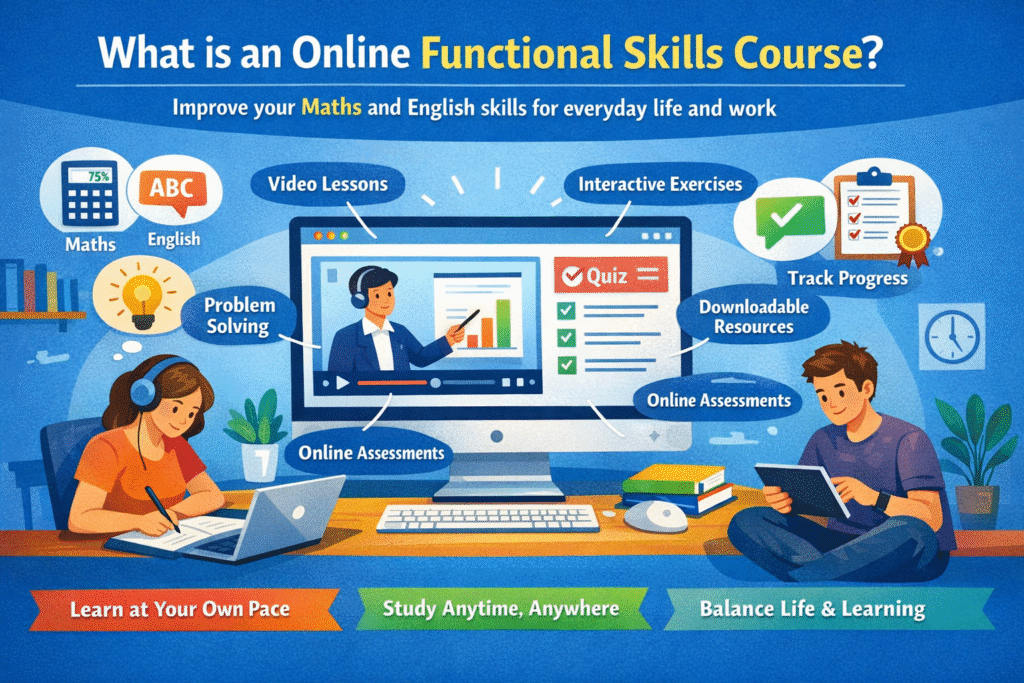
An online Functional Skills course is a digital learning programme designed to help learners improve essential Maths and English skills for everyday life, further education, and employment. These courses focus on practical knowledge such as problem-solving, communication, and numerical understanding. Delivered through online platforms, learners can access structured lessons, activities, and assessments without attending physical classrooms.

Online Functional Skills courses work through a virtual learning environment where students study at their own pace. Course materials typically include video tutorials, interactive exercises, downloadable resources, and digital assessments to track progress. This modern learning method allows individuals to build confidence and gain recognised skills while balancing personal and professional commitments.

Key Features

  • ♦  Self-paced learning: Study at a comfortable speed based on your schedule and learning style.
  • ♦  Video lessons and digital assessments: Learn through engaging tutorials and test your understanding online.
  • ♦  Study from home or anywhere: Access course materials using any internet-enabled device.
  • ♦  Flexible scheduling: Choose study times that fit around work, family, or other responsibilities. 

Benefits of Online Functional Skills Courses

Online Functional Skills courses offer a practical and convenient way to improve essential Maths and English skills without disrupting your daily routine. These courses are designed to support flexible learning, making them ideal for individuals balancing work, family, or other responsibilities. With structured digital resources and guided assessments, learners can build confidence, track their progress, and prepare effectively for recognised Functional Skills qualifications from the comfort of home.

Key Benefits of Online Functional Skills Courses:

  • ♦  Learn anytime alongside work or family commitments – Study at your own pace without fixed classroom schedules.
  • ♦  Often more affordable than classroom learning – Save on travel, materials, and additional tuition costs.
  • ♦  Instant access to materials and mock exams – Begin learning immediately with downloadable resources and practice tests.
  • ♦  Comfortable learning environment – Study in a familiar setting that helps improve focus and confidence.

Challenges of Online Learning

Online learning offers flexibility and accessibility, but it also comes with certain challenges that learners should be prepared to manage. Success in an online environment often depends on personal commitment, effective communication, and reliable technology. Understanding these common difficulties can help learners stay focused and make the most of their learning experience.

  • ♦  Requires strong self-discipline and motivation – Without a fixed classroom schedule, learners must manage their own time and stay committed to completing lessons and assessments.
  • ♦  Limited face-to-face interaction – Reduced in-person communication with tutors and peers can sometimes make collaboration, discussion, and immediate feedback more difficult.
  • ♦  Possible technical or internet issues – Unstable internet connections, software problems, or device limitations may disrupt learning progress and access to course materials. 
Functional Skills classroom in session

What Is a Classroom Functional Skills Course?

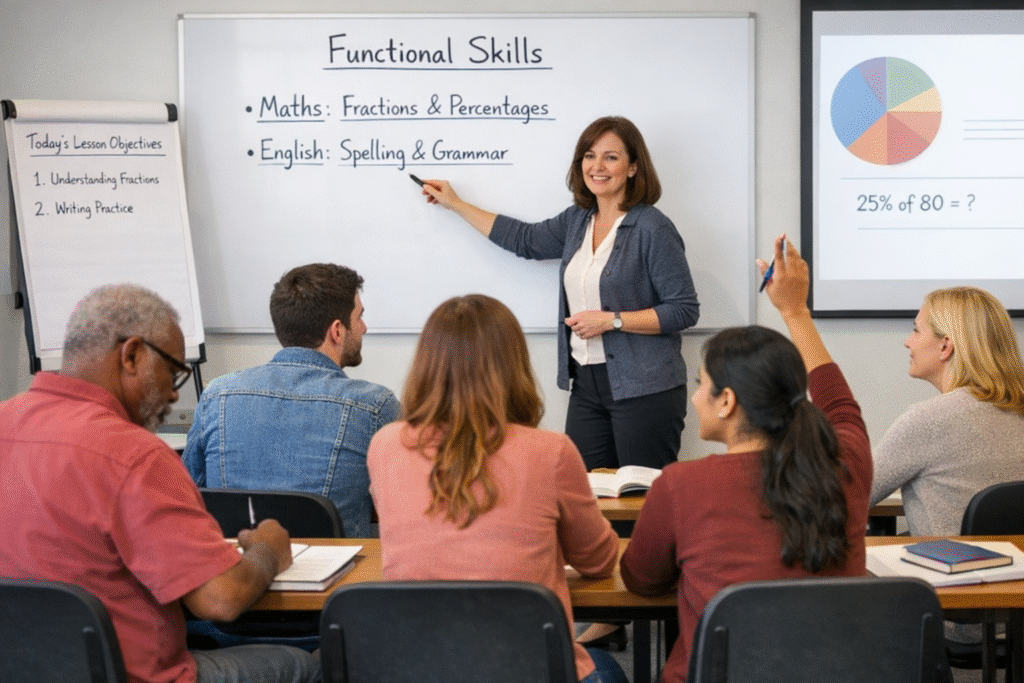
A classroom Functional Skills course is a traditional, tutor-led learning programme where students attend lessons in a physical learning environment such as a college, training centre, or classroom setting. This approach focuses on face-to-face teaching, allowing learners to interact directly with qualified tutors who guide them through essential Maths and English topics step by step. The structured environment helps many learners stay motivated, focused, and consistent with their studies.

These courses usually follow a fixed timetable, meaning classes take place on specific days and times each week. Lessons are carefully planned and delivered in a structured format to ensure learners progress through the syllabus in an organised way. Classroom Functional Skills courses also encourage group discussions, collaborative activities, and real-time feedback, which can improve understanding and build confidence. Learners can ask questions instantly, receive immediate support, and benefit from shared learning experiences with classmates.

Traveling with kids? Discover simple ways to teach mathematics through online learning, travel experiences, and fun daily activities while keeping education consistent on the road.

Benefits of Classroom Functional Skills Courses

Classroom Functional Skills courses offer a structured learning environment that many learners find highly effective for building confidence and improving core skills. Studying in a physical classroom provides routine, real-time guidance, and valuable interaction with both tutors and fellow learners. This traditional approach can help learners stay motivated, overcome challenges quickly, and develop a deeper understanding of key Functional Skills topics.

  • ♦  Direct support from tutors: Learners can ask questions instantly and receive clear, personalised explanations.
  • ♦  Better focus for some learners: A classroom setting reduces distractions and encourages consistent study habits.
  • ♦  Peer learning and group motivation: Working alongside others promotes idea sharing and boosts confidence.
  • ♦  Immediate help with difficult topics: Tutors can quickly identify struggles and provide timely support.
Challenges of classroom learning

Challenges of Classroom Learning

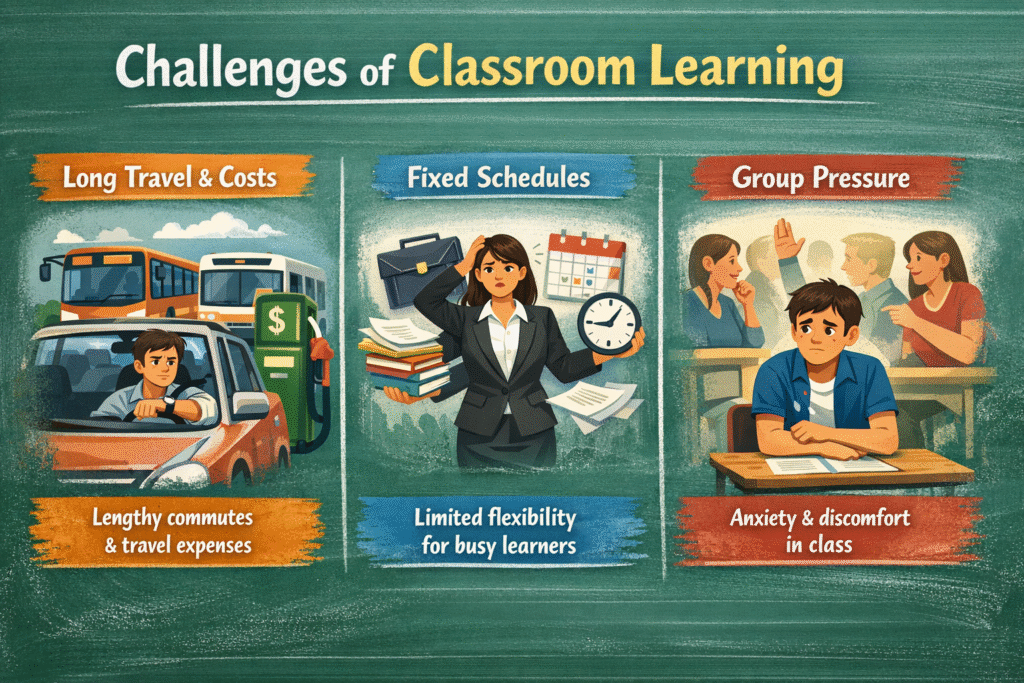
Classroom learning can be valuable, but it also comes with several practical challenges that may affect a learner’s experience and progress. Many students need to travel to attend sessions, which can increase both time commitments and overall expenses. Fixed timetables may not suit individuals who are balancing work, family responsibilities, or other personal priorities. Additionally, some learners may feel uncomfortable or pressured in group environments, making it harder for them to participate confidently or learn at their own pace.

  • ♦  Travel time can be lengthy and involve additional transportation costs.
  • ♦  Fixed schedules offer limited flexibility for busy or working learners.
  • ♦  Group settings may create pressure or anxiety for some students.

Key Factors to Consider Before Choosing

Choosing the right study option depends on your personal situation, learning preferences, and long-term goals. Some learners prefer an independent learning style, where they can study at their own pace and manage their progress without constant supervision. Others benefit more from a guided approach, where tutor support, structured lessons, and scheduled sessions help maintain motivation and clarity. Understanding how you learn best can make a significant difference in your success.

Your work or family commitments should also play a major role in your decision. Flexible online learning may suit busy professionals or parents, while classroom learning can be ideal for those who prefer a routine. Budget considerations are equally important, as course fees, travel costs, and additional materials can affect affordability. Additionally, think about exam deadlines and whether you need a fast-track option to meet career or education requirements. Finally, be honest about your confidence level in Maths or English. If you feel less confident, a guided course with extra support and practice opportunities can help you build skills more effectively.

Online vs classroom_ quick comparison

Online vs Classroom: Quick Comparison Table

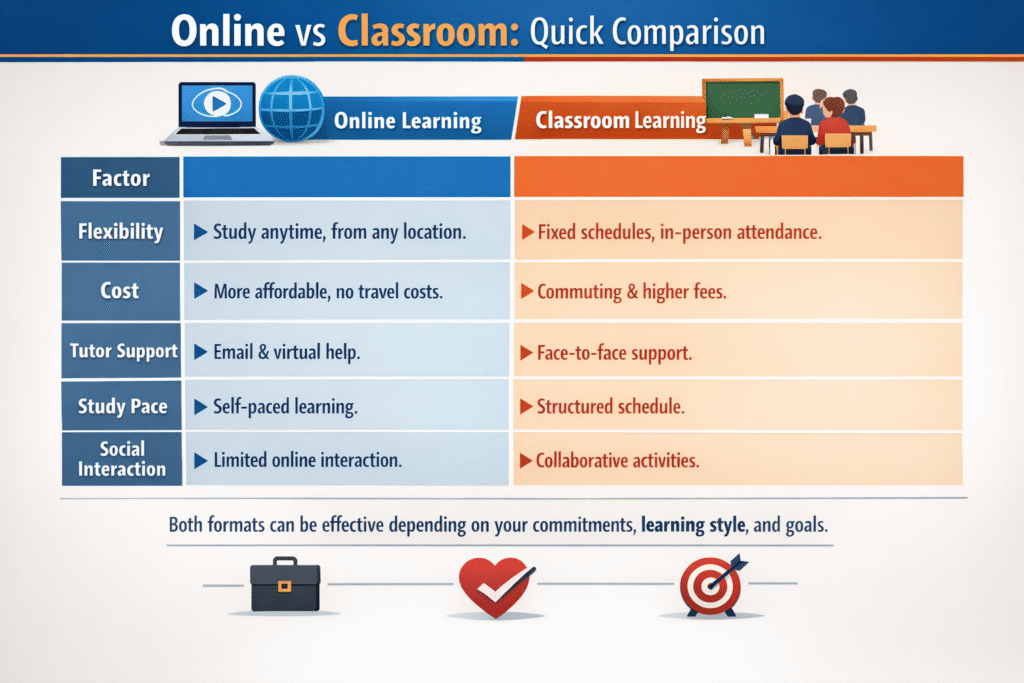
Choosing between online and classroom learning depends on your lifestyle, goals, and preferred learning style. Both options offer valuable benefits, but understanding the key differences can help you decide which suits you best.

Factor Online Learning Classroom Learning
Flexibility Study anytime from any location with internet access. Fixed schedules and physical attendance are usually required.
Cost Often more affordable with no travel or accommodation expenses. May include commuting, materials, and higher course fees.
Tutor Support Support available via email, forums, or virtual sessions. Face-to-face guidance and immediate feedback from tutors.
Study Pace Self-paced learning allows progress based on personal availability. Structured pace set by the tutor or institution timetable.
Social Interaction Limited interaction, mainly through online discussions or groups. Strong peer interaction and collaborative classroom activities.

Both learning formats can be effective depending on your personal commitments, learning preferences, and career objectives.

Who Should Choose Online Functional Skills Courses?

Online Functional Skills courses suit learners who need flexible and convenient study options. They help improve essential Maths and English skills while allowing you to learn at your own pace.

  • ♦  Working professionals can study alongside their jobs and support career growth.
  • ♦  Parents or carers can learn from home while managing family responsibilities.
  • ♦  Remote learners can access quality training without travelling to centres.
  • ♦  Self-motivated students can progress independently with structured online support.
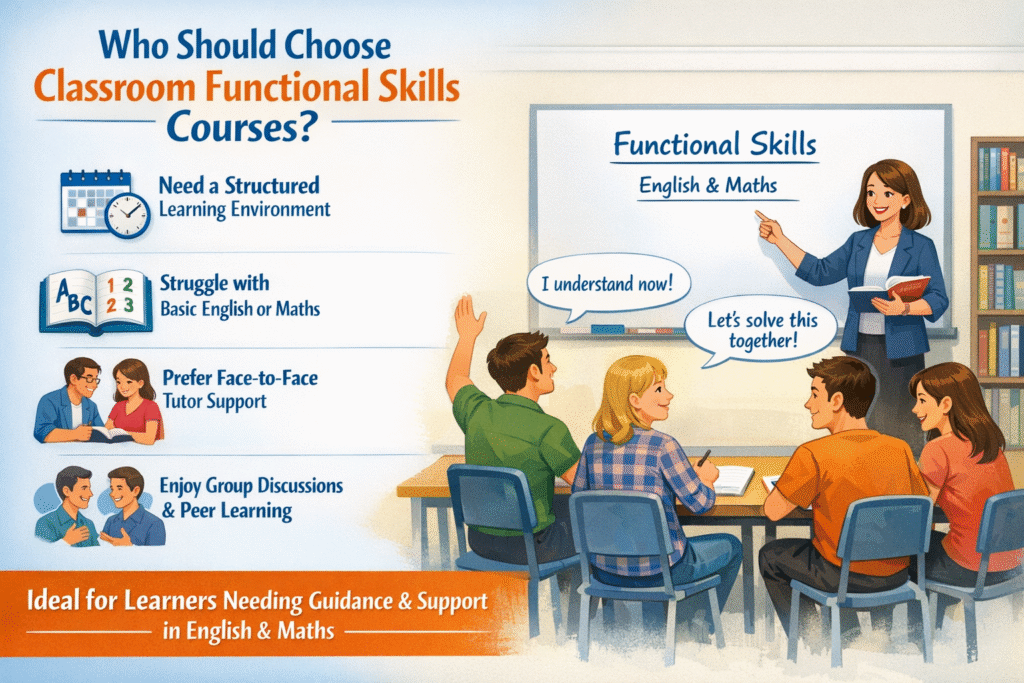
Who Should Choose Classroom Functional Skills Courses?

Who Should Choose Classroom Functional Skills Courses?

Classroom Functional Skills courses are ideal for learners who benefit from a structured and supportive learning environment. With scheduled sessions, guided lessons, and direct tutor interaction, classroom learning helps students stay focused and follow a clear study plan. This format is particularly helpful for individuals who find it difficult to stay motivated when studying independently or who need consistent feedback to improve their progress.

Students who struggle with core English or Maths basics often gain confidence through face-to-face explanations and step-by-step support. Classroom settings allow tutors to identify learning gaps quickly and provide personalised assistance. In addition, learners who enjoy social interaction and collaborative activities may find classroom Functional Skills courses more engaging, as group discussions and peer support can make complex topics easier to understand while building communication skills.

Can You Combine Both?

Hybrid learning is becoming a growing trend in UK education, especially for adult learners and professionals seeking recognised skills without disrupting their daily commitments. Many course providers now offer programmes that blend online learning with classroom elements, allowing learners to benefit from both independent study and structured teaching. This modern approach reflects the changing demands of the workforce, where flexibility and practical knowledge are equally valued.

One of the key benefits of hybrid study is the balance it creates between convenience and guidance. Learners can study theoretical topics online at their own pace while still accessing tutor support, interactive sessions, or occasional in-person workshops. This combination provides the best of flexibility and personalised learning, helping students stay motivated, improve understanding, and build confidence. As education continues to evolve, hybrid learning offers an effective pathway for achieving career goals while maintaining a manageable study routine.

Conclusion

Choosing between online and classroom Functional Skills courses ultimately depends on your lifestyle, learning style, and personal commitments. There is no single “best” option for everyone. Online learning offers convenience and flexibility, while classroom study provides structure and direct support. Both pathways can effectively help you build essential Maths and English skills. Before making a decision, take time to evaluate your goals, daily schedule, and preferred way of learning. With the right choice and consistent effort, either method can support your journey towards achieving Functional Skills Level 2 success and improving future opportunities.

FAQs – Online vs Classroom Functional Skills Courses: Which Is Right for You?

  1. 1. Are online Functional Skills courses recognised in the UK?
    Yes, online Functional Skills courses are recognised in the UK when delivered by approved training providers and awarding organisations. They hold the same value as classroom-based qualifications.
  2. 2. Is classroom learning better than online learning?
    Neither option is universally better. Classroom learning offers face-to-face support and structured schedules, while online learning provides flexibility and self-paced study. The best choice depends on your learning style and availability.
  3. 3. How long does Functional Skills Level 2 take to complete?
    Most learners complete Functional Skills Level 2 within 6 to 12 weeks. However, online learners may finish sooner depending on their study time and previous knowledge.
  4. 4. Can I pass Functional Skills by studying online only?
    Yes, many learners successfully pass Functional Skills by studying fully online. With access to digital resources, tutor support, and mock tests, online study can be highly effective.
  5. 5. Which is cheaper — online or classroom Functional Skills?
    Online courses are generally more affordable because they remove travel and facility costs. Classroom courses may cost more due to venue, timetable, and in-person teaching expenses.
Sam Walker

Article by

Sam Walker

Sam Walker is an education specialist and author at One Education, bringing over 4 years of experience in creating practical resources and strategies to support teachers and enhance student learning.

top
Home Courses Search