How to Become a Handyman in the UK with No Experience

November 23, 2026 | By Callum Wright | 15 minutes | 24 Readers

Learn how to become a handyman in the UK with no experience. Explore essential skills, training options, legal requirements and practical steps to start your career.

You can become a handyman in the UK without previous trade experience, but you must develop the competence needed for the work you intend to offer. A sensible starting point is to learn how everyday maintenance tasks are assessed, gain supervised experience and begin with a clearly defined range of services. Some work falls outside general maintenance and requires specialist competence or registration.

Whether you are changing careers, interested in part-time work or exploring property maintenance, this guide explains what handypeople do and how beginners can enter the field. It covers training choices, essential skills, legal boundaries, employment opportunities and the practical decisions involved in running a small maintenance business.

What Does a Handyman Do in the UK?

A handyman, also called a handyperson, handles a variety of smaller repair and upkeep jobs rather than working exclusively in one trade. Typical tasks might include assembling furniture, adjusting cupboard doors, fitting non-electrical hardware, preparing walls for painting and carrying out straightforward decorative repairs.

Some handypeople visit private homes and rental properties. Others maintain schools, offices, shops or larger managed buildings. These roles may involve recording faults, dealing with planned maintenance and arranging specialist contractors when a problem falls outside the maintenance team’s responsibilities.

The Skills England property maintenance operative standard describes routine repairs involving several disciplines, including joinery, plumbing, tiling and decorating. It also emphasises recognising the limits of one’s competence and reporting defects appropriately.

That distinction defines responsible handyman work. You need to understand a task well enough to judge whether you can perform it safely, not claim to be a qualified plumber, electrician or gas engineer. Accurate observation, communication and care for an occupied property are important parts of the role.

Do You Need Qualifications to Become a Handyman?

There is no single UK handyman qualification or universal licence required for every basic property maintenance service. However, the absence of a general licence does not mean that any task is suitable for an untrained person. Employers, customers, insurers and regulations may impose different requirements depending on the work involved.

For an entry-level maintenance role, useful abilities include measuring accurately, following instructions, recording defects and communicating clearly. Employers may value GCSEs, existing practical experience or relevant vocational study, although requirements differ between vacancies. Transferable abilities from retail, facilities management, hospitality or other industries can also be useful.

Introductory online learning can explain technical terms and common systems. Practical workshops provide opportunities to use equipment under guidance, while assessed vocational training can test occupational skills. A certificate of completion should not be confused with a regulated trade qualification or evidence of independent practical competence.

Before choosing training, ask what is taught, how learning is assessed, whether supervised practice is provided and what the resulting award represents. These questions are more useful than selecting a programme solely because its title sounds professional.

How to Become a Handyman with No Experience: 7 Practical Steps

Step 1. Decide Which Handyman Services to Learn First

Start by choosing a limited set of tasks that interest you and can be learned through suitable instruction and practice. Furniture assembly, minor decorative filling, painting preparation and replacing straightforward non-electrical cupboard fittings are examples of areas to investigate.

Even familiar-looking jobs may involve hidden pipes, unsafe surfaces, manufacturer restrictions or risks of property damage.

Make a simple list of potential services. For each one, consider the materials involved, possible hazards, equipment requirements and guidance you would need. Identify tasks you should observe before attempting and those that require specialist assistance.

For example, a beginner interested in interior fixtures might initially concentrate on furniture assembly, basic measurements and cupboard adjustments. This creates a manageable starting point rather than advertising numerous services without evidence of ability.

Consider the working environment as well. Occupied homes, rented properties and construction sites can involve different permissions and expectations. Always obtain appropriate authorisation before arranging work.

Step 2. Develop Essential Handyman Skills

Developing a broad understanding of maintenance helps beginners recognise how different building components interact. Four areas are particularly relevant.

General maintenance. Understand how fixings suit different materials, why surface preparation affects decorating results and how to recognise common signs of wear. Learn to read product instructions rather than assuming every wall or fitting behaves identically. Handyman Skills Training introduces tools, household repairs and decorating concepts relevant to this foundation.

Carpentry. Build familiarity with measuring, marking, timber types, hinges and hardware. Accuracy matters because small errors in dimensions or alignment can make uncomplicated fittings function poorly. Learn the difference between cosmetic repairs and work affecting the strength of structural elements.

Plumbing and pipework. Study domestic water supplies, common valves, isolation points and the differences between pipe materials, joints and supports. The Pipe Fitting Course covers terminology that can make technical diagrams and professional explanations easier to understand.

Building services. Recognise the functions of domestic heating and ventilation systems, understand why airflow matters and identify useful information when reporting faults. Familiarity with an appliance’s purpose does not establish permission to service it.

Across these areas, focus on understanding materials, identifying risks and recognising when professional advice is necessary.

Step 3. Gain Practical Experience Before Taking Paid Jobs

Reading about a repair differs from carrying it out accurately in someone’s property. Look for supervised experience with an established maintenance worker, a reputable practical training provider or a junior role where responsibilities match your developing ability.

Agree beforehand what you may observe, assist with or attempt yourself. Constructive feedback from a competent supervisor can help identify mistakes before they become established habits.

Use a simple learning record. For each activity, document the materials, instructions, safety considerations, supervision and feedback. Note what caused difficulty and whether the completed work was checked. Photographs may help demonstrate progress when the owner or supervisor gives permission.

The National Careers Service advice on developing your skills recommends identifying existing strengths and areas needing improvement. Apply this approach to your progress rather than relying on confidence alone.

If you are interested in household water systems, Domestic Plumbing Training can provide theoretical background before appropriate practical instruction.

An accurate portfolio should explain which tasks you completed, your actual responsibilities and what was supervised. Never present observation as independent professional experience.

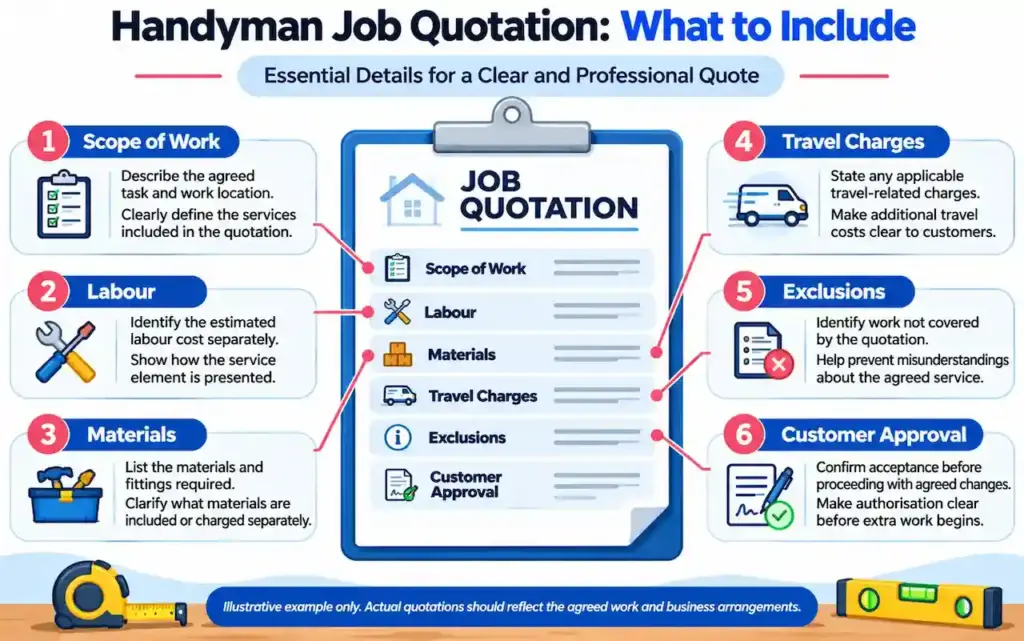
Handyman job quotation infographic showing scope of work, labour, materials, travel charges and customer approval.
Six essential elements to include when preparing a clear and professional handyman job quotation.

Step 4. Understand Which Jobs Require Specialist Qualifications or Registration

Some household tasks involve legal requirements and safety risks beyond ordinary property maintenance. Before accepting work, distinguish routine upkeep from regulated or specialist activities.

Gas work. Domestic gas installation, servicing and repair are not general handyman services. The Health and Safety Executive’s domestic gas guidance explains that anyone employed to work on gas appliances in domestic premises must be appropriately competent and Gas Safe registered for the relevant type of work.

Introductory gas training does not grant this authorisation. Suspected appliance faults should be referred to an appropriately registered professional.

Electrical work. Requirements depend on the task and location. In England, Approved Document P addresses electrical safety in dwellings and explains notification requirements for certain work.

Not every minor electrical task follows identical notification procedures, but electrical work must be undertaken safely and with suitable competence. Beginners should not attempt circuit alterations simply because they recognise the components.

Structural and other building work. Changes affecting load-bearing elements, fire protection or regulated installations may require professional design, building-control involvement or specialist approval.

Rules and approval procedures can differ across England, Scotland, Wales and Northern Ireland.

The following examples help distinguish tasks requiring different decisions.

Example Enquiry Sensible First Decision
Assemble freestanding furniture Assess instructions, competence and stability before agreeing
Fill a minor decorative wall defect Consider materials, surface condition and suitable practical experience
Repair a domestic gas boiler Refer to an appropriately Gas Safe registered professional
Alter an electrical circuit Check applicable requirements and refer unless appropriately competent and authorised

When the actual fault or work scope remains unclear, obtain specialist advice rather than guessing.

Explore the Plumbing, Heating & Handyman Training Bundle to build your understanding of property maintenance, plumbing, heating and carpentry through flexible online learning. Explore the complete bundle before planning your next training step.

Step 5. Build a Sensible Starter Toolkit

Choose equipment according to the tasks you are preparing to undertake, not simply to fill a professional-looking tool bag.

Useful basics may include a tape measure, pencil, spirit level, screwdrivers and appropriate hand tools. Check that each item suits the relevant materials, fits correctly and remains in safe working condition.

Protective equipment should be selected according to the actual hazards. Eye protection or suitable gloves may be necessary for particular activities, but protective equipment cannot make an unsafe working method acceptable.

Store sharp tools and consumables securely, particularly when working around occupants.

Avoid purchasing specialist power tools before understanding their operation, risks and training requirements.

For overhead work, the HSE guidance on ladders and stepladders explains why access equipment must be selected following a risk assessment. A ladder is not automatically appropriate simply because a task appears brief.

Step 6. Choose Between Employment, Apprenticeships and Further Training

The most suitable development route depends on your interests, existing abilities and whether you prefer employment or independent work.

Different learning routes offer different advantages.

Training or Entry Route Main Advantage Important Consideration
Maintenance assistant role Workplace tasks and experienced colleagues Supervision and responsibilities vary
Apprenticeship Structured occupational training and assessment Requires an eligible opportunity and employer
College or practical workshop Guided use of tools and techniques Content, costs and qualifications differ
Introductory online learning Flexible development of subject knowledge Does not independently establish practical competence

The Level 2 Property Maintenance Operative apprenticeship is one relevant occupational route.

Applicants in England can explore opportunities through the government’s Find an Apprenticeship service. Scotland, Wales and Northern Ireland have separate apprenticeship arrangements.

If heating and ventilation interest you, HVAC Fundamentals Training can provide introductory theoretical knowledge before you consider further specialist study.

How much can a handyman earn in the UK?

Earnings depend on the role, experience, location and employment arrangement.

As a comparison, the National Careers Service caretaker profile lists annual salary estimates of approximately £22,000 for starters and £30,000 for experienced workers.

These figures describe a related employed occupation, not a guaranteed handyman salary. Self-employed earnings depend on completed work, operating expenses and time spent on non-billable activities.

Step 7. Prepare to Work as a Self-Employed Handyman

Business structure and tax.

Many people starting independently consider sole-trader status. The GOV.UK guide to becoming a sole trader explains the responsibilities involved, including maintaining business records and dealing with tax.

Sole traders are personally responsible for their business liabilities.

You generally need to register for Self Assessment when gross trading income exceeds £1,000 in a tax year, although individual circumstances and other filing requirements may apply.

Gross income means money received before deducting business expenses, not profit.

Keep accurate records of sales, customer payments, receipts and relevant costs from the beginning.

Insurance and professional responsibilities.

Public liability insurance may help protect against covered third-party injury or property damage claims, depending on the policy.

It is not universally compulsory for every self-employed handyman, although some customers may require it.

Employers’ liability insurance is generally legally required when employing staff, subject to certain exemptions. The HSE employers’ liability insurance guidance explains the relevant employer responsibilities.

Check that any insurance policy actually covers the services you intend to provide.

Quotations and administration.

A clear quotation should identify the agreed work, estimated labour, materials, travel charges, likely duration and exclusions.

Explain how additional work will be authorised before changing the agreed scope.

Allow for administration, equipment replacement and periods without billable jobs when considering your business costs.

Waste disposal may create additional responsibilities. If your business transports waste in England, consult the GOV.UK waste carrier registration guidance. Scotland, Wales and Northern Ireland have separate registration arrangements.

Keep customer information secure, provide accurate invoices and establish a sensible process for handling complaints or return visits.

Five-step pathway to become a handyman, covering basic learning, supervised practice, feedback and job readiness.
A step-by-step learning pathway showing how aspiring handypeople can develop knowledge, gain experience and assess their readiness for work.

How Can a New Handyman Find Their First Customers?

Start with a clear description of the services you can competently offer.

Explain your working area, availability and how customers can request a quotation. Avoid advertising specialist services that fall outside your experience.

Local community networks, genuine recommendations, property contacts and legitimate business listings may help prospective customers discover you.

Photographs of completed work can support a portfolio when the property owner has given permission. Describe your involvement accurately and avoid presenting supervised tasks as independent commissions.

A straightforward enquiry process can help prevent misunderstandings.

Ask potential customers what needs doing, where the property is located, whether access is straightforward and whether relevant product information or photographs are available.

For example, suppose a customer requests the assembly of two freestanding cupboards.

Before quoting, ask for the product details, delivery status, room dimensions and any manufacturer requirements for wall anchoring.

Confirm which fittings are provided, what the quotation includes and what happens if an item arrives damaged.

This hypothetical example illustrates how preparation can make a small maintenance enquiry easier to assess.

After completing an agreed task, invite honest feedback. Genuine reviews and accurate service descriptions help prospective customers understand what to expect.

Decline unsuitable enquiries professionally rather than accepting responsibilities beyond your competence.

Common Mistakes Beginners Should Avoid

Some costly mistakes happen before the actual maintenance work begins.

The following situations illustrate how better preparation can reduce avoidable problems.

Common Mistake Better Approach
Arriving without confirming access or parking Check practical arrangements before travelling
Assuming materials or specialist fixings are supplied Confirm who provides the necessary items
Treating customer photographs as a complete diagnosis Explain what still requires inspection
Starting additional work without agreement Obtain clear authorisation before proceeding
Leaving without checking the agreed result Offer a final walk-through and record outstanding issues

These habits are particularly valuable in occupied properties, where misunderstandings can disrupt daily routines.

Clear expectations, careful communication and a professional handover contribute to a more reliable customer experience.

Your First Steps Towards Handyman Work

To become a handyman, begin with a realistic choice of services and identify the knowledge and practical competence each requires.

Compare learning options, seek appropriate supervised experience and maintain accurate evidence of your progress.

Before accepting paid responsibilities, understand the expectations involved in working on someone else’s property and recognise when specialist assistance is necessary.

A clear scope of work, sound judgement and continuous improvement provide a credible foundation for developing your place in property maintenance.

Frequently Asked Questions

There is no standard timeframe.

Someone developing competence in a narrow range of decorative tasks may follow a different route from someone preparing for a multi-trade maintenance position.

Progress depends on the complexity of the intended work, the quality of instruction and the ability to demonstrate skills consistently.

A short training programme does not automatically establish occupational readiness.

Yes, part-time handyman work is possible if you can meet customer commitments and relevant business responsibilities.

Check your employment contract for restrictions, plan realistic availability and allow time for travel and administration.

Explain your working hours clearly so customers understand when to expect a response.


Not for every job.

Some construction sites require an appropriate CSCS card or other evidence of competence under the contractor’s access policy.

General domestic maintenance does not create a universal legal requirement for a CSCS card.

Go Construct’s maintenance operative guidance notes that a card may be required for construction-site work.

top
Home Courses Search