Become a Workplace Trainer in the UK: Career Guide

November 21, 2026 | By Dominic Ashcroft | 10 minutes | 8 Readers

Learn how to become a workplace trainer in the UK. Explore essential skills, qualifications, salary expectations and career opportunities.

Introduction

Want to become a workplace trainer in the UK? This career offers opportunities to help employees develop skills. Trainers improve performance and support professional development. Workplace trainers support learning across many UK industries. These include healthcare, retail, construction, logistics and business services. Strong communication, teaching and assessment skills provide a foundation. You can use these skills to build your training career.

Workplace training involves more than delivering presentations. Successful trainers identify learning needs and design engaging sessions. They assess progress and provide constructive feedback. You might be changing careers or developing existing responsibilities. Understanding these skills is an important first step. One Education offers the Train the Trainer & Workplace Assessor Bundle. It includes 17 online courses covering essential training topics. These include training delivery, assessment, coaching and instructional design.

What Does a Workplace Trainer Do?

A workplace trainer helps employees develop essential job skills. Trainers may deliver induction programmes or demonstrate workplace procedures. They also lead workshops and support professional development.

Workplace trainers may have different job titles. These include corporate trainers and staff trainers. Other titles include learning and development trainers or learning facilitators.

Their responsibilities commonly include:

  • Identifying employee training needs and learning objectives.
  • Planning training sessions and developing learning materials.
  • Delivering face-to-face, virtual or blended training.
  • Explaining complex information clearly to different learners.
  • Assessing learner progress through activities and feedback.
  • Evaluating training effectiveness and recommending improvements.
  • Maintaining training records and supporting workplace development.

For example, warehouse trainers might explain safe working procedures. Healthcare trainers may support staff development and mandatory learning. Office-based trainers could deliver communication or leadership workshops.

Training and assessment involve different responsibilities. Workplace assessors may need specific occupational competence and recognised qualifications. These requirements particularly apply when assessing regulated vocational qualifications.

Why Skilled Workplace Trainers Matter Now

Workplace training helps employees develop new capabilities. Technology, regulations and job requirements continue changing. Employers need people who can help their workforce adapt.

1. Skills Gaps and Workforce Development

Employers sometimes struggle to find candidates with suitable skills. Effective workplace training helps existing employees develop their capabilities. It also prepares employees for changing responsibilities.

The UK government’s Employer Skills Survey examines workforce skills. It covers recruitment challenges, skills gaps and employee training. Its findings highlight the importance of workforce development.

2. Digital Transformation

Digital systems, automation and artificial intelligence are changing workplace tasks. Trainers help employees understand new processes and systems. They also support employee confidence during organisational changes.

3. Employee Development and Retention

Structured learning can support employee progression, confidence and engagement. Trainers introduce new skills and encourage continuous development.

The Chartered Institute of Personnel and Development (CIPD) publishes workplace research. Its guidance covers learning, development and people management.

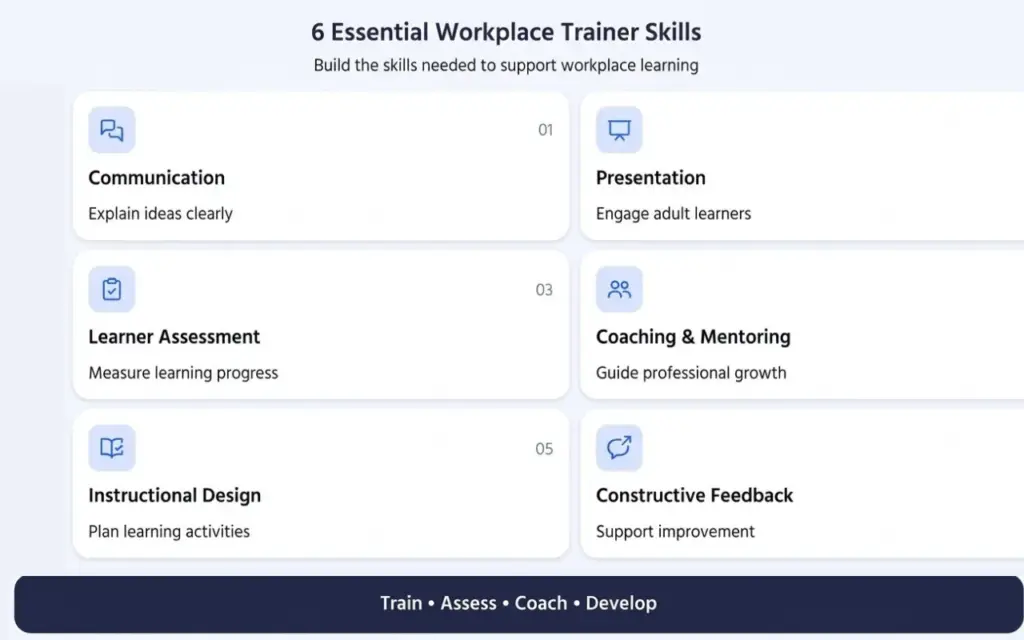
Six Essential Skills You Need to Become a Workplace Trainer

Successful trainers combine subject knowledge with several professional skills. These include communication, planning and assessment abilities.

Six Essential Workplace Trainer Skills

1. Communication Skills

Trainers must communicate instructions and learning objectives clearly. Strong listening skills help trainers understand learner questions. They also help identify learning difficulties.

Explore One Education’s Communication Skills Training Level 2. This course introduces important professional communication principles.

2. Presentation and Public Speaking

Confident presentation skills make training sessions easier to follow. Trainers should organise information logically and maintain learner engagement. They must also adapt their delivery style.

3. Learner Assessment

Assessment helps trainers measure progress towards learning objectives. Assessment methods may include quizzes, observations and discussions. Trainers may also review completed activities.

4. Coaching and Mentoring

Coaching helps employees develop abilities through guidance and reflection. Mentoring can support long-term professional growth and career progression.

5. Instructional Design

Instructional design involves planning learning experiences around clear objectives. Trainers select suitable materials, activities and assessment methods.

6. Constructive Feedback

Feedback helps learners recognise strengths and identify improvements. Effective trainers provide clear, respectful and actionable guidance.

These skills support different workplace learning roles. They also provide a foundation for further training studies.

Steps to Become a Workplace Trainer in the UK

There is no single career route for workplace trainers. Entry requirements depend on your industry and employer. Your intended training responsibilities also influence qualification requirements.

The National Careers Service explains possible entry routes. These include education, apprenticeships and relevant work experience.

Feedback helps learners recognise strengths and identify improvements. Effective trainers provide clear, respectful and actionable guidance.

These skills support different workplace learning roles. They also provide a foundation for further training studies.

Step 1: Choose Your Training Specialism

Successful trainers combine subject knowledge with several professional skills. These include communication, planning and assessment abilities.

Step 2: Develop Your Training Skills

Learn how to plan sessions and communicate information. Develop techniques for engaging adult learners. Explore One Education’s Train the Trainer Certification course. It introduces important workplace training principles.

Step 3: Understand Learner Assessment

Study how trainers evaluate learning outcomes. Learn about observation, assessment methods and constructive feedback. Understand the importance of accurate assessment records.

Step 4: Gain Training Delivery Experience

Look for opportunities to support staff inductions. You could also deliver short workshops or mentor colleagues. Keep records of training sessions and learner feedback. These records can help demonstrate your experience.

Step 5: Check Qualification Requirements

Some training roles require recognised qualifications. Vocational assessment roles may have additional requirements. Investigate relevant assessor awards and occupational competence requirements.

Step 6: Apply for Training and Development Roles

Search for workplace trainer or training assistant positions. Other opportunities include learning and development officer roles. You could also explore skills trainer positions. Highlight your subject knowledge, communication skills and training experience.

Do You Need Qualifications to Become a Workplace Trainer?

Not every workplace training role requires identical qualifications. Employers may expect relevant subject knowledge or training experience. Some roles also require formal learning and development qualifications.

Regulated vocational assessment may require additional qualifications and occupational competence.

What Can a Workplace Training Career Pay in the UK?

Workplace training salaries vary across industries and locations. Experience and job responsibilities also influence earnings.

The National Careers Service provides indicative career salary information.

CareerIndicative Annual Salary
Training Officer£24,000–£40,000
RQF/NVQ Assessor£22,000–£35,000

These figures represent indicative earnings rather than guaranteed salaries. Check the linked profiles for updated information before publication.

Career Progression Opportunities

Experienced workplace trainers may progress into senior training roles. Other pathways include learning and development management. Vocational assessment and freelance training may offer additional opportunities.

Further career options include e-learning development and human resources. Further education teaching may require additional qualifications.

How the Train the Trainer & Workplace Assessor Bundle Helps

One Education offers the Train the Trainer & Workplace Assessor Bundle. It brings together 17 online courses covering professional development. Subjects include training delivery, learner assessment and communication. Instructional design is another important learning area.

The bundle combines related subjects within one learning package.

What's Included in the Bundle?

The course selection covers:

Learning Area Included Courses
Training Delivery and Assessment Train the Trainer Certification; Assessment in Education and Training; Roles and Responsibilities in Education and Training
Instructional Design Instructional Design Pro (Part 1); Part 2; Part 3
Coaching and Feedback Coaching and Mentoring Training; Giving and Receiving Feedback Training
Communication and Presentation Communication Skills Training Level 2; Presentation Skills Course; Business English: Reading and Writing
Learning and Development Learning and Development Diploma; Designing an L&D Strategy to Power Digital Transformations
Workplace Management Workplace Performance Management; Line Management; Meeting Management Online; Critical Thinking and Decision Making Skills Training

Additional courses cover professional English, workplace performance and decision-making. Meeting management and teaching responsibilities are also covered.

Who Is This Bundle Suitable For?

The bundle may suit aspiring workplace trainers and team leaders. Supervisors and HR professionals may also find it relevant. It also supports employees responsible for delivering staff training.

Experienced trainers may want to refresh their existing knowledge. Relevant subjects include instructional design, feedback and learner assessment.

Why Choose This Bundle?

  • 17 online courses: Explore complementary training and assessment subjects.
  • Flexible learning: Study online around existing commitments.
  • Broader knowledge: Cover training delivery, coaching, communication and learning design.
  • Career development: Build foundational knowledge relevant to workplace learning roles.

The bundle supports professional knowledge development. It does not automatically confer regulated vocational assessor qualifications.

Final Thoughts: Start Your Workplace Training Career

Choosing to become a workplace trainer offers career development opportunities. You can support employee learning and organisational development. Communication and instructional design skills provide a strong foundation. Assessment and coaching abilities are equally valuable.

Start by identifying your subject expertise and career goals. Explore the requirements of your chosen training role. Develop your knowledge and seek training delivery opportunities. Consider recognised qualifications where necessary.

Ready to develop your training skills? Explore One Education’s Train the Trainer & Workplace Assessor Bundle. Discover 17 courses covering training delivery and learner assessment. The bundle also covers instructional design and professional development.

Frequently Asked Questions

Start with relevant industry knowledge and communication skills. Explore introductory training courses and workplace learning opportunities. Consider supporting staff inductions or short training sessions.

Build relevant industry knowledge and workplace training skills. Consider supporting staff inductions, workshops or employee development activities. Employers may request recognised qualifications and previous training experience.

Requirements depend on the employer, industry and training responsibilities. Some roles require recognised teaching or training qualifications. Regulated vocational assessment may require specific qualifications and occupational competence.

Corporate trainers need communication, presentation and instructional design skills. Coaching, learner assessment and constructive feedback are also valuable. These skills support effective workplace learning and employee development.

Workplace trainer salaries vary by experience, location and responsibilities. The National Careers Service publishes indicative UK salary ranges. Check current figures when researching training and development roles.

Trainers deliver learning activities and support employee skill development. Assessors evaluate learner evidence against relevant assessment standards. Some roles combine training delivery with assessment responsibilities.

Yes, online courses can introduce essential workplace training principles. One Education’s bundle includes 17 courses covering related subjects. Explore training delivery, learner assessment, coaching and instructional design. Study online at your own pace. Regulated assessor qualifications may require additional practical assessments.

top
Home Courses Search