Career Opportunities with a Level 3 Diploma in Health and Social Care

May 09, 2026 | 13 minutes | 0 Readers

A Level 3 Diploma in Health and Social Care is a widely recognised qualification designed to provide learners with the essential knowledge and practical skills needed to work effectively in the care sector. It covers key areas such as safeguarding, communication, and person-centred care, helping individuals understand how to support people of different ages and needs in a professional setting. The demand for health and social care professionals is steadily increasing due to factors such as an ageing population and

rating

Bestselling Course

View Details SAVE 94% NOW
Career Opportunities with a Level 3 Diploma in Health and Social Care

A Level 3 Diploma in Health and Social Care is a widely recognised qualification designed to provide learners with the essential knowledge and practical skills needed to work effectively in the care sector. It covers key areas such as safeguarding, communication, and person-centred care, helping individuals understand how to support people of different ages and needs in a professional setting.

The demand for health and social care professionals is steadily increasing due to factors such as an ageing population and the growing need for quality care services. This has created a wide range of job opportunities across various settings, including hospitals, care homes, and community support services, making it a stable and rewarding career choice.

One of the main benefits of this diploma is the variety of career paths it can open. Whether you aim to start in entry-level roles or progress into specialised positions or further education, this qualification offers flexibility and growth potential. Not sure what you can do after completing this course? Here’s everything you need to know.

What is a Level 3 Diploma in Health and Social Care

What is a Level 3 Diploma in Health and Social Care?

A Level 3 Diploma in Health and Social Care is a recognised qualification that equips learners with the essential knowledge and practical skills required to work in the care sector. It focuses on preparing individuals to support people effectively while maintaining professional and ethical standards.

Overview

This qualification combines theory with practical understanding, helping learners develop key skills such as communication, empathy, and problem-solving. It also promotes high-quality care practices, ensuring individuals are supported with dignity and respect.

Key Areas Covered

  • ♦  Safeguarding and Protection: Understanding how to identify and respond to risks, ensuring the safety of vulnerable individuals.
  • ♦  Communication Skills: Learning how to communicate clearly and effectively with service users, families, and colleagues.
  • ♦  Health and Safety: Gaining knowledge of safe working practices, risk management, and maintaining a secure environment.
  • ♦  Person-Centred Care: Focusing on delivering care tailored to each individual’s needs, preferences, and independence.

Who is it Suitable For?

This qualification is suitable for individuals starting a career in health and social care, those already working in the sector looking to progress, and anyone interested in supporting others in a professional care setting.

Top Career Opportunities You Can Explore​

Top Career Opportunities You Can Explore

A Level 3 Diploma in Health and Social Care can lead to several rewarding roles where you can make a real difference. Here are some key career options:

Healthcare Assistant

Role Overview: Support medical staff and ensure patient comfort.
Responsibilities: Assist with personal care, monitor vital signs, and help with basic clinical tasks.
Work Settings: Hospitals, GP surgeries, and clinics.

Care Worker / Support Worker

Role: Support elderly or vulnerable individuals in daily life.
Tasks: Personal care, companionship, and helping maintain independence.
Impact: Improves quality of life through consistent support.

Mental Health Support Worker

Role: Assist individuals with mental health conditions.
Key Skills: Empathy, patience, and communication.
Duties: Provide emotional support and encourage positive routines.

Social Care Worker

Role: Work with children, families, or communities.
Responsibilities: Safeguarding, guidance, and promoting wellbeing.
Impact: Helps protect and support vulnerable groups.

Residential Care Worker

Role: Support individuals in care homes.
Tasks: Assist with daily activities, monitor wellbeing, and encourage social interaction.
Environment: Structured and supportive care settings.

Disability Support Worker

Role: Support individuals with disabilities.
Focus: Promote independence and inclusion.
Tasks: Assist with routines, skill development, and daily activities.

Career Progression Opportunities

A Level 3 Diploma in Health and Social Care provides a solid pathway for career growth within the sector. With experience, learners can progress into senior care roles such as Senior Care Assistant, where they take on more responsibility, including supporting junior staff and overseeing care delivery.

There are also opportunities to move into team leader or supervisor positions. These roles involve managing staff, coordinating daily operations, and ensuring care standards are maintained, making them ideal for individuals with strong leadership skills.

The qualification also allows individuals to specialise in areas such as mental health or dementia care, helping them develop expertise and provide more focused support.

For further progression, learners can advance to Level 4 or Level 5 Diplomas, which prepare them for management roles. It can also act as a stepping stone towards professional pathways like nursing or social work, with additional qualifications and training.

Overall, the diploma supports continuous development and opens doors to a wide range of career opportunities in health and social care.

Where Can You Work?​

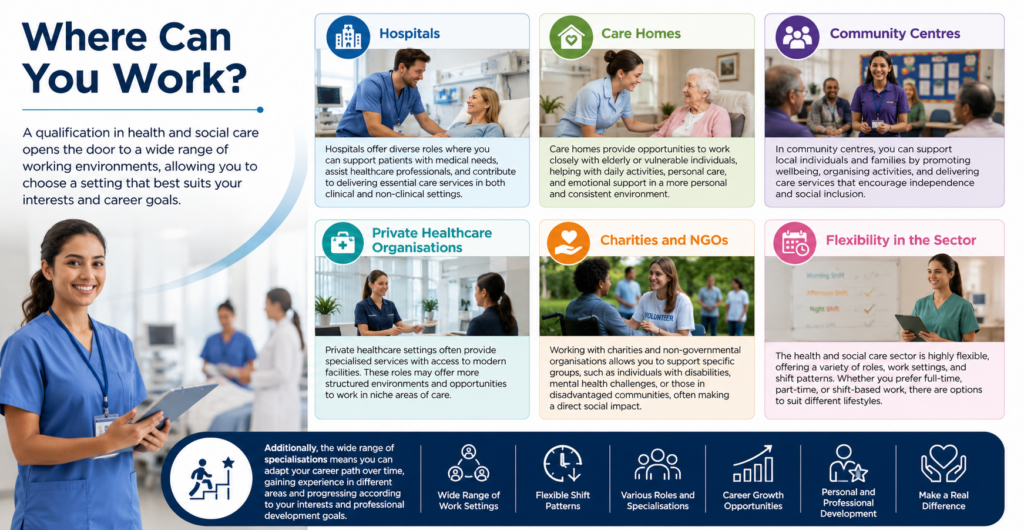
Where Can You Work?

A qualification in health and social care opens the door to a wide range of working environments, allowing you to choose a setting that best suits your interests and career goals.

Hospitals

Hospitals offer diverse roles where you can support patients with medical needs, assist healthcare professionals, and contribute to delivering essential care services in both clinical and non-clinical settings.

Care Homes

Care homes provide opportunities to work closely with elderly or vulnerable individuals, helping with daily activities, personal care, and emotional support in a more personal and consistent environment.

Community Centres

In community centres, you can support local individuals and families by promoting wellbeing, organising activities, and delivering care services that encourage independence and social inclusion.

Private Healthcare Organisations

Private healthcare settings often provide specialised services with access to modern facilities. These roles may offer more structured environments and opportunities to work in niche areas of care.

Charities and NGOs

Working with charities and non-governmental organisations allows you to support specific groups, such as individuals with disabilities, mental health challenges, or those in disadvantaged communities, often making a direct social impact.

Flexibility in the Sector

The health and social care sector is highly flexible, offering a variety of roles, work settings, and shift patterns. Whether you prefer full-time, part-time, or shift-based work, there are options to suit different lifestyles. Additionally, the wide range of specialisations means you can adapt your career path over time, gaining experience in different areas and progressing according to your interests and professional development goals.

Key Skills You Will Gain

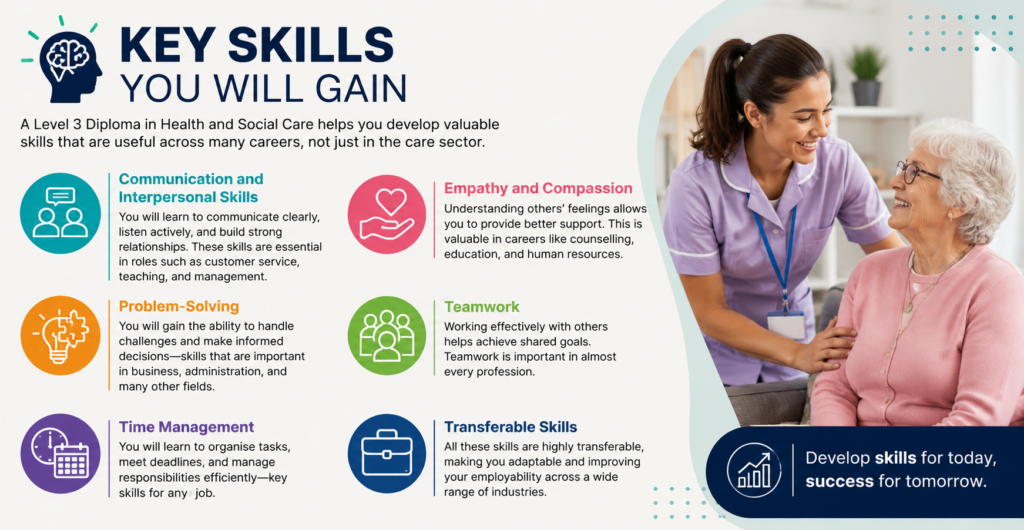
Key Skills You Will Gain

A Level 3 Diploma in Health and Social Care helps you develop valuable skills that are useful across many careers, not just in the care sector.

Communication and Interpersonal Skills

You will learn to communicate clearly, listen actively, and build strong relationships. These skills are essential in roles such as customer service, teaching, and management.

Empathy and Compassion

Understanding others’ feelings allows you to provide better support. This is valuable in careers like counselling, education, and human resources.

Problem-Solving

You will gain the ability to handle challenges and make informed decisions—skills that are important in business, administration, and many other fields.

Teamwork

Working effectively with others helps achieve shared goals. Teamwork is important in almost every profession.

Time Management

You will learn to organise tasks, meet deadlines, and manage responsibilities efficiently—key skills for any job.

Transferable Skills

All these skills are highly transferable, making you adaptable and improving your employability across a wide range of industries.

Salary Expectations and Job Demand

Salary Expectations and Job Demand

A career in health and social care offers both financial growth and strong job stability, making it an attractive option for many individuals.

Entry-Level Salary Overview

Entry-level roles such as care assistants or support workers typically offer modest starting salaries. However, opportunities for overtime and progression allow earnings to increase over time as experience grows.

Factors Affecting Pay

Salary levels can vary based on several factors, including location, experience, job role, and work setting. Urban areas and specialised roles often provide higher pay compared to entry-level or rural positions.

Growing Demand in the Healthcare Sector

The demand for health and social care professionals is steadily increasing due to an ageing population and rising healthcare needs. This creates continuous opportunities for employment and career progression.

Job Security and Stability

Health and social care roles offer strong job security, as these services are always in demand. This ensures long-term career stability and consistent employment opportunities.

Benefits of Choosing This Career Path

Benefits of Choosing This Career Path

A career in health and social care offers both personal fulfilment and long-term professional benefits.

Job Satisfaction (Helping Others)

Working in this field allows you to make a real difference in people’s lives. Supporting those in need brings a strong sense of purpose and personal reward.

Career Stability

There is a consistent demand for health and social care professionals, ensuring strong job security and a wide range of opportunities.

Opportunities for Growth

With further training and experience, you can progress into senior or specialised roles, making it a career with clear advancement pathways.

Flexible Working Options

Many roles offer flexible hours, including part-time and shift work, helping you maintain a healthy work-life balance.

Tips to Start Your Career Successfully

Tips to Start Your Career Successfully

Starting your career becomes much easier when you focus on the right steps from the beginning. Here are some key tips to guide you:

Gain Practical Experience

Take part in volunteering, internships, or part-time roles to build real-world skills and understand workplace expectations.

Build a Strong CV

Create a clear and professional CV that highlights your skills, education, and relevant experience to make a strong first impression.

Take Additional Short Courses (CPD)

CPD courses help you develop new skills and show your commitment to learning. They add value to your CV and support personal development.

Develop Soft Skills

Focus on communication, teamwork, and time management, as these are essential for success in any workplace.

Network Within the Industry

Connect with professionals, attend events, and stay active on platforms like LinkedIn to discover new opportunities.

Common Challenges​

Common Challenges

Working in health and social care can be rewarding, but it also comes with several challenges.

Emotional Demands

Supporting vulnerable individuals can be emotionally draining. Practising self-care, such as taking breaks and seeking support, helps prevent burnout.

Long Working Hours

Roles often involve long and irregular hours, which can lead to fatigue. Good time management and proper rest are essential to maintain balance.

Handling Difficult Situations

Dealing with emergencies or challenging behaviour requires patience and strong communication skills. Proper training and workplace support help professionals manage these situations effectively.

Conclusion

Level 3 Diploma in Health and Social Care offers a strong pathway into a variety of rewarding and in-demand careers, equipping learners with essential skills, practical knowledge, and opportunities for further progression within the sector. Whether working in care homes, community support, or healthcare environments, this qualification provides both personal fulfilment and professional growth in a field that continues to expand. If you’re passionate about helping others, this diploma could be your first step towards a rewarding career.

FAQs — Career Opportunities with a Level 3 Diploma in Health and Social Care

  1. 1. What is a Level 3 Diploma in Health and Social Care?
    It is a vocational qualification designed to develop knowledge and practical skills needed to work in the health and social care sector.
  2. 2. What career opportunities are available after completing this diploma?
    You can work in roles such as care assistant, support worker, healthcare assistant, or residential care worker.
  3. 3. Can this diploma help me progress in my career?
    Yes, it can support career progression and open pathways to more advanced roles or further studies in health and social care.
  4. 4. Is the Level 3 Diploma a formal qualification?
    It is a recognised professional course, but it does not provide a formal academic degree.
  5. 5. Can I work in a hospital with this qualification?
    Yes, you may qualify for entry-level roles such as a healthcare assistant in hospitals or clinics.
Sam Walker

Article by

Sam Walker

Sam Walker is an education specialist and author at One Education, bringing over 4 years of experience in creating practical resources and strategies to support teachers and enhance student learning.

top

Hear What Our Learners Say About Us

Home Courses Search