Career Pathways in the Modern Legal Industry

June 24, 2026 | 15 minutes | 21 Readers

The legal profession has undergone significant transformation over the past decade, evolving far beyond the traditional image of courtrooms and law firms. Rapid advancements in digital technology, the rise of artificial intelligence, increasing regulatory requirements, and the growing impact of globalisation have reshaped the legal landscape and created a wide range of new career opportunities. Today, legal expertise is in demand across corporate organisations, government agencies, technology companies, financial institutions, and consultancy firms, offering professionals diverse and dynamic career options.

The legal profession has undergone significant transformation over the past decade, evolving far beyond the traditional image of courtrooms and law firms. Rapid advancements in digital technology, the rise of artificial intelligence, increasing regulatory requirements, and the growing impact of globalisation have reshaped the legal landscape and created a wide range of new career opportunities. Today, legal expertise is in demand across corporate organisations, government agencies, technology companies, financial institutions, and consultancy firms, offering professionals diverse and dynamic career options.

As the industry continues to adapt to changing business and technological environments, modern legal careers now encompass roles in compliance, legal technology, risk management, data privacy, corporate governance, and regulatory affairs. Understanding these evolving career pathways is essential for aspiring legal professionals, as it enables them to identify opportunities that align with their interests, strengths, and long-term career goals. This article explores the various career pathways available in the modern legal industry and the skills needed to succeed in this rapidly changing profession.

How the Legal Industry Is Changing

The legal industry is evolving rapidly as technology, regulations, and client expectations continue to reshape legal services.

Technology Integration

Technology is transforming legal work through AI-assisted legal research, contract automation, e-discovery software, and legal analytics. These tools help legal professionals improve efficiency, accuracy, and decision-making.

Increased Regulatory Requirements

Growing regulations have increased the demand for legal expertise. Areas such as data protection, financial compliance, and corporate governance require organisations to manage risks and meet legal obligations effectively.

Client-Centred Services

Clients now expect faster and more flexible legal support. This has led to the growth of alternative legal service providers and flexible legal consulting models that offer accessible and cost-effective solutions.

Remote and Hybrid Working

The rise of virtual law firms, online dispute resolution, and digital legal services has changed how legal professionals work and interact with clients. These developments provide greater flexibility and accessibility.

Legal Knowledge Beyond Traditional Practice

Legal knowledge is becoming increasingly valuable outside traditional law careers. Skills in compliance, contracts, governance, and risk management are in demand across industries such as business, finance, technology, and consulting.

Looking Ahead

As the legal sector continues to evolve, professionals who embrace technology, adapt to regulatory changes, and develop client-focused skills will be well-positioned for future career success.

Traditional Legal Career Pathways

Traditional Legal Career Pathways

The legal profession offers two well-established career paths: solicitor and barrister. While both require strong legal knowledge, their roles and responsibilities differ.

Solicitor

Solicitors advise clients on legal matters, draft legal documents, negotiate agreements, and represent clients when required. Key skills include legal research, communication, negotiation, and problem-solving.

Career Progression:
Trainee Solicitor → Associate → Senior Associate → Partner

Barrister

Barristers specialise in advocacy, court representation, and providing specialist legal opinions. This role is ideal for individuals who enjoy public speaking, litigation, and analysing complex legal arguments.

Career Progression:
Pupil Barrister → Junior Barrister → King’s Counsel (KC)

Both career paths offer rewarding opportunities and play vital roles in supporting clients and the legal system.

Legal Executive

Legal Executive

A Legal Executive is a qualified legal professional who specialises in specific areas of law and provides legal advice, case management, and client support. It offers a practical route into the legal profession without necessarily following the traditional solicitor pathway.

Why It’s Growing
The role is becoming increasingly popular as organisations seek skilled legal professionals who can deliver specialist legal services efficiently. It provides a flexible and accessible pathway into a successful legal career.

Typical Areas of Practice

  • ♦  Family Law – Divorce, child arrangements, and financial settlements.
  • ♦  Employment Law – Workplace disputes, contracts, and employment rights.
  • ♦  Conveyancing – Property purchases, sales, and transfers.
  • ♦  Criminal Law – Supporting criminal cases and legal proceedings.

Key Skills

  • ♦  Legal research and analysis
  • ♦  Communication and client care
  • ♦  Attention to detail
  • ♦  Case management

Legal Executives can work in law firms, local authorities, government organisations, and corporate legal departments, with opportunities for career progression into senior legal roles.

If you’re interested in expanding your legal knowledge and gaining a recognised qualification, consider enrolling in the ATHE Level 5 Extended Diploma in Law. This comprehensive course covers key areas of legal study, helping you develop a strong understanding of legal principles, systems, and practices while supporting your academic and professional progression. Take the next step in your legal education with One Education.

Emerging Career Pathways in the Modern Legal Industry

Emerging Career Pathways in the Modern Legal Industry

The legal industry is changing rapidly, creating new career opportunities beyond traditional legal roles. As technology, compliance requirements, and business needs evolve, professionals with specialised legal and operational skills are increasingly in demand.

Legal Technology Specialist

Legal Technology Specialists help law firms adopt and manage digital tools. Their responsibilities include implementing legal software, improving workflows, and leading digital transformation projects. Demand for this role is growing as firms use technology to increase efficiency and improve services.

Compliance Officer

Compliance Officers ensure organisations follow laws, regulations, and internal policies. They monitor compliance programmes, review policies, and help reduce organisational risk. Opportunities are available across industries such as banking, healthcare, insurance, and technology.

Data Protection and Privacy Specialist

As data privacy laws continue to expand globally, organisations need specialists to manage privacy and compliance requirements. These professionals focus on data governance, privacy audits, and risk management to protect sensitive information and ensure regulatory compliance.

Legal Operations Manager

Legal Operations Managers combine legal knowledge with business management skills. Their responsibilities include budget management, process improvement, vendor management, and technology implementation. They help legal teams operate more efficiently and strategically.

Contract Manager

Contract Managers oversee the entire contract lifecycle, including drafting contracts, reviewing agreements, negotiating terms, and managing contract performance. This role is ideal for professionals who enjoy detail-oriented work and commercial decision-making.

Alternative Legal Careers Beyond Practising Law

Alternative Legal Careers Beyond Practising Law

Many people are unaware that a legal career can extend beyond becoming a solicitor or barrister. Several alternative roles allow professionals to use their legal knowledge in different and rewarding ways.

Legal Recruiter

Legal recruiters help law firms and organisations hire legal professionals. They identify suitable candidates, manage recruitment processes, and support career development within the legal sector.

Legal Writer or Content Specialist

Legal writers create legal publications, educational content, compliance guides, and policy documents. This role is ideal for those with strong research and writing skills.

Mediator

Mediators help resolve disputes without litigation by facilitating discussions and finding mutually acceptable solutions. This field offers growing demand, flexible career opportunities, and a strong focus on alternative dispute resolution.

Legal Consultant

Legal consultants provide specialist advice to businesses and organisations. Common areas of specialisation include employment law, compliance, corporate governance, and risk management.

Benefits

Alternative legal careers offer flexibility, diverse opportunities, and the chance to apply legal expertise outside traditional legal practice.

Essential Skills for Success in the Modern Legal Industry

Essential Skills for Success in the Modern Legal Industry

Success in today’s legal industry requires a combination of technical expertise and professional skills. As legal services become more technology-driven, professionals must be equipped to handle both legal and business challenges effectively.

⚖️ Technical Skills

  • ♦  Legal Research – Finding, analysing, and interpreting legal information accurately.
  • ♦  Legal Technology – Using case management, document automation, and AI-powered legal tools.
  • ♦  Compliance Knowledge – Understanding regulations and ensuring legal compliance.
  • ♦  Contract Management – Drafting, reviewing, and managing contracts effectively.
  • ♦  Data Analysis – Using data to identify trends, assess risks, and support decisions.

🤝 Professional Skills

  • ♦  Communication – Explaining legal matters clearly to clients and stakeholders.
  • ♦  Critical Thinking – Evaluating information and making sound legal judgments.
  • ♦  Problem Solving – Developing practical solutions to legal challenges.
  • ♦  Negotiation – Reaching agreements and resolving disputes effectively.
  • ♦  Adaptability – Keeping pace with changing laws, regulations, and technologies.

🚀 Emerging Skill: Digital Literacy

Professionals who understand legal technology and AI tools are becoming increasingly valuable. Digital literacy helps legal professionals work more efficiently and adapt to the future of the legal industry.

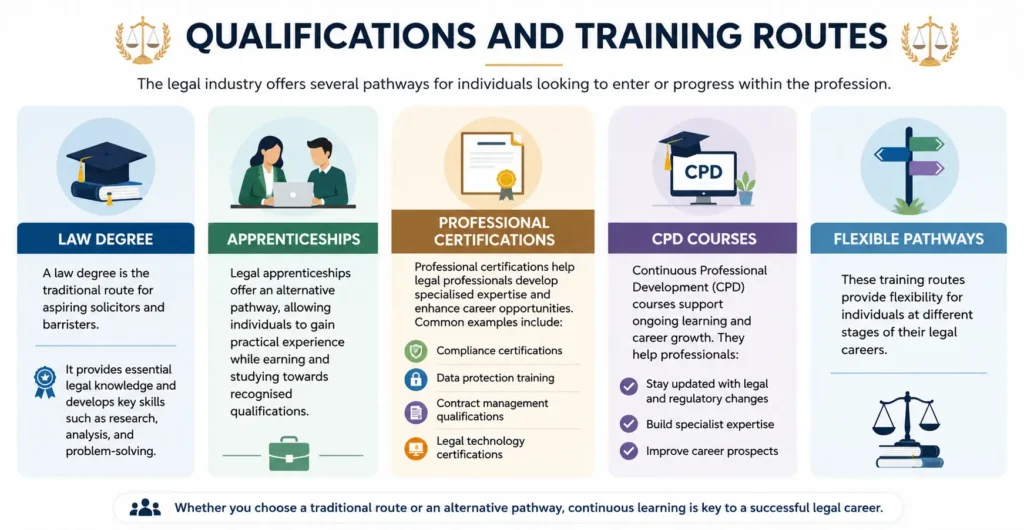
Qualifications and Training Routes

Qualifications and Training Routes

The legal industry offers several pathways for individuals looking to enter or progress within the profession.

Law Degree

A law degree is the traditional route for aspiring solicitors and barristers. It provides essential legal knowledge and develops key skills such as research, analysis, and problem-solving.

Apprenticeships

Legal apprenticeships offer an alternative pathway, allowing individuals to gain practical experience while earning and studying towards recognised qualifications.

Professional Certifications

Professional certifications help legal professionals develop specialised expertise and enhance career opportunities. Common examples include:

  • ♦  Compliance certifications
  • ♦  Data protection training
  • ♦  Contract management qualifications
  • ♦  Legal technology certifications

CPD Courses

Continuous Professional Development (CPD) courses support ongoing learning and career growth. They help professionals:

  • ♦  Stay updated with legal and regulatory changes
  • ♦  Build specialist expertise
  • ♦  Improve career prospects

These training routes provide flexibility for individuals at different stages of their legal careers.

Future Trends Shaping Legal Careers

Future Trends Shaping Legal Careers

The legal industry is evolving as technology, regulation, and globalisation create new opportunities and challenges for legal professionals.

Artificial Intelligence

AI is automating routine tasks such as legal research and document review, allowing legal professionals to focus on strategic advice, complex cases, and client relationships.

Cybersecurity and Privacy Law

Growing digital risks and stricter data protection regulations are increasing demand for specialists in cybersecurity, privacy, and compliance law.

ESG and Sustainability Regulation

Rising environmental, social, and governance (ESG) requirements are creating opportunities for legal professionals who can support organisations with compliance and sustainability obligations.

Global Legal Services

As businesses operate across borders, demand is growing for legal professionals with expertise in international regulations, cross-border transactions, and global legal matters.

Looking Ahead

Legal professionals who embrace technology, develop specialist knowledge, and adapt to changing regulations will be well-positioned for future career success.

Choosing the Right Legal Career Path

Choosing the right legal career starts with understanding your interests and strengths. Ask yourself:

  • ♦  Do you enjoy advocacy and public speaking? Roles such as barrister or litigation solicitor may suit you.
  • ♦  Are you interested in technology and innovation? Consider careers in legal technology, legal operations, or compliance technology.
  • ♦  Do you prefer business-focused legal work? Corporate and commercial law offer opportunities to support business growth and strategy.
  • ♦  Are you detail-oriented and analytical? Legal research, compliance, risk management, and contract review require strong attention to detail.
  • ♦  Would you rather advise organisations than represent clients? In-house legal, compliance, and consultancy roles focus on supporting businesses and organisations.

Your answers can help identify the legal career path that best matches your skills, interests, and long-term goals.

Conclusion

The modern legal industry offers a wide range of career pathways that extend far beyond traditional solicitor and barrister roles. As technology, globalisation, and evolving client expectations continue to reshape the profession, legal professionals have increasing opportunities to specialise in areas such as legal technology, compliance, corporate governance, intellectual property, and alternative dispute resolution. Success in this dynamic sector requires a combination of legal expertise, adaptability, digital proficiency, and strong interpersonal skills. By continuously developing their knowledge and embracing emerging trends, aspiring and experienced professionals alike can build rewarding and resilient careers within the ever-evolving legal landscape.

FAQs — Career Pathways in the Modern Legal Industry

1. What career options are available in the modern legal industry?
The legal industry offers careers such as solicitor, barrister, paralegal, legal executive, compliance officer, legal consultant, and legal technology specialist.

2. Do I need a law degree to work in the legal sector?
Not always. While many legal roles require a law degree, positions in compliance, legal administration, legal operations, and legal technology may accept candidates from different educational backgrounds.

3. What skills are important for a legal career?
Key skills include communication, research, analytical thinking, problem-solving, attention to detail, negotiation, and digital literacy.

4. How is technology changing legal careers?
Technology is automating routine tasks, improving legal research, and creating new opportunities in legal technology, data management, and legal operations.

5. What is the role of a paralegal?
Paralegals support legal professionals by conducting research, preparing documents, managing case files, and assisting with client communications.

6. Are there opportunities outside traditional legal practice?
Yes. Legal professionals can work in compliance, risk management, corporate governance, human resources, legal consulting, and legal technology.

Sam Walker

Article by

Sam Walker

Sam Walker is an education specialist and author at One Education, bringing over 4 years of experience in creating practical resources and strategies to support teachers and enhance student learning.

top
Home Courses Search