Confidentiality Explained: Definition, Importance, and Real-Life Examples

April 12, 2026 | 13 minutes | 517 Readers

Imagine sharing your personal details with a doctor, employer, or an online platform, trusting that your information will remain private—only to discover it has been exposed or misused. Situations like this highlight the true value of confidentiality in everyday life. In simple terms, confidentiality means keeping sensitive information secure and only sharing it with authorised individuals when necessary, whether in healthcare, workplaces, education, or digital environments. In today’s data-driven world, confidentiality is more important than ever due to rising data

rating

Bestselling Course

View Details SAVE 94% NOW
Confidentiality Explained: Definition, Importance, and Real-Life Examples

Imagine sharing your personal details with a doctor, employer, or an online platform, trusting that your information will remain private—only to discover it has been exposed or misused. Situations like this highlight the true value of confidentiality in everyday life. In simple terms, confidentiality means keeping sensitive information secure and only sharing it with authorised individuals when necessary, whether in healthcare, workplaces, education, or digital environments.

In today’s data-driven world, confidentiality is more important than ever due to rising data breaches, cyber threats, and strict privacy regulations such as the UK GDPR. It helps build trust, protects personal and professional relationships, and ensures legal compliance. In this article, you will learn what confidentiality means, why it matters, and how it applies through real-life examples.

What Is Confidentiality?

Confidentiality means keeping information private and only sharing it with the right people when it is necessary and appropriate. It is about protecting sensitive details—such as personal, medical, financial, or professional information—from being disclosed without permission. In simple terms, if someone trusts you with their information, confidentiality means you respect that trust by not sharing it carelessly.

At its core, confidentiality is built on three key elements. Privacy ensures that personal information is not exposed to others without consent. Trust is the foundation, as individuals feel safe sharing information when they believe it will be protected. Protection of information involves taking proper steps—such as secure storage, limited access, and careful communication—to prevent misuse, loss, or unauthorised access.

Confidentiality is often confused with privacy, but they are not the same. Privacy refers to a person’s right to keep their personal life and information to themselves. Confidentiality, on the other hand, is the responsibility of others to protect that information once it has been shared. For example, a patient has a right to privacy, while a healthcare professional has a duty to maintain confidentiality.

Overall, confidentiality plays a vital role in building trust, maintaining professional relationships, and ensuring that sensitive information is handled responsibly in any setting.

Types of confidentiality

Types of Confidentiality

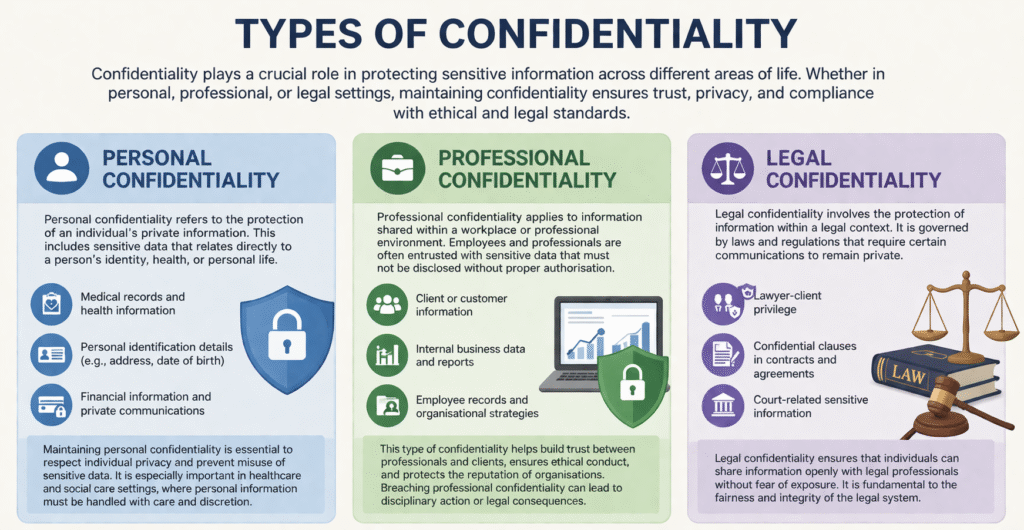
Confidentiality plays a crucial role in protecting sensitive information across different areas of life. Whether in personal, professional, or legal settings, maintaining confidentiality ensures trust, privacy, and compliance with ethical and legal standards. Below are the main types of confidentiality explained in a clear and structured way:

Personal Confidentiality

Personal confidentiality refers to the protection of an individual’s private information. This includes sensitive data that relates directly to a person’s identity, health, or personal life.

  • ♦  Medical records and health information
  • ♦  Personal identification details (e.g., address, date of birth)
  • ♦  Financial information and private communications

Maintaining personal confidentiality is essential to respect individual privacy and prevent misuse of sensitive data. It is especially important in healthcare and social care settings, where personal information must be handled with care and discretion.

Professional Confidentiality

Professional confidentiality applies to information shared within a workplace or professional environment. Employees and professionals are often entrusted with sensitive data that must not be disclosed without proper authorisation.

  • ♦  Client or customer information
  • ♦  Internal business data and reports
  • ♦  Employee records and organisational strategies

This type of confidentiality helps build trust between professionals and clients, ensures ethical conduct, and protects the reputation of organisations. Breaching professional confidentiality can lead to disciplinary action or legal consequences.

Legal Confidentiality

Legal confidentiality involves the protection of information within a legal context. It is governed by laws and regulations that require certain communications to remain private.

  • ♦  Lawyer-client privilege
  • ♦  Confidential clauses in contracts and agreements
  • ♦  Court-related sensitive information

Legal confidentiality ensures that individuals can share information openly with legal professionals without fear of exposure. It is fundamental to the fairness and integrity of the legal system.

Why confidentiality matters in business

Why Is Confidentiality Important?

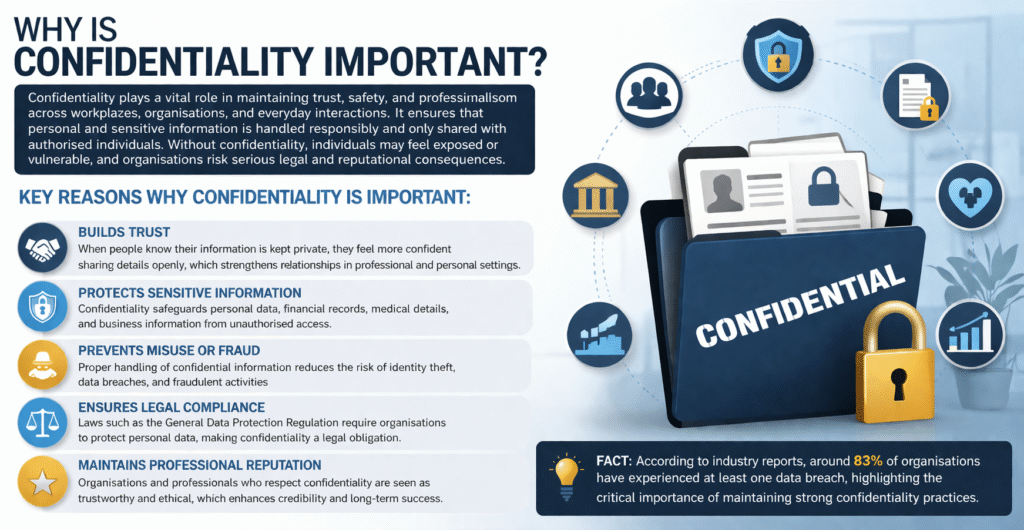
Confidentiality plays a vital role in maintaining trust, safety, and professionalism across workplaces, organisations, and everyday interactions. It ensures that personal and sensitive information is handled responsibly and only shared with authorised individuals. Without confidentiality, individuals may feel exposed or vulnerable, and organisations risk serious legal and reputational consequences.

Key reasons why confidentiality is important:

  • ♦  Builds trust
    When people know their information is kept private, they feel more confident sharing details openly, which strengthens relationships in professional and personal settings.
  • ♦  Protects sensitive information
    Confidentiality safeguards personal data, financial records, medical details, and business information from unauthorised access.
  • ♦  Prevents misuse or fraud
    Proper handling of confidential information reduces the risk of identity theft, data breaches, and fraudulent activities.
  • ♦  Ensures legal compliance
    Laws such as the General Data Protection Regulation require organisations to protect personal data, making confidentiality a legal obligation.
  • ♦  Maintains professional reputation
    Organisations and professionals who respect confidentiality are seen as trustworthy and ethical, which enhances credibility and long-term success.

Fact: According to industry reports, around 83% of organisations have experienced at least one data breach, highlighting the critical importance of maintaining strong confidentiality practices.

Real-life examples of confidentiality

Real-Life Examples of Confidentiality

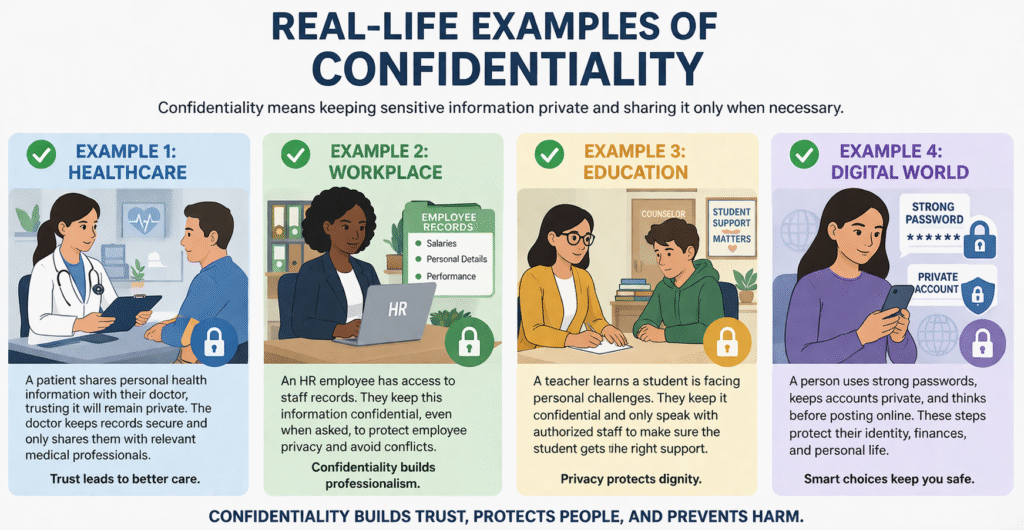
Confidentiality plays a vital role in everyday life, ensuring that sensitive information is handled responsibly and shared only when necessary. Below are some relatable, real-life examples that show how confidentiality works in different settings.

Example 1: Healthcare

A patient visits a doctor to discuss a personal health issue. They share symptoms, medical history, and concerns openly, trusting that this information will remain private. The doctor records the details securely and only shares them with relevant medical professionals involved in the patient’s care. This confidentiality builds trust and encourages honest communication, which is essential for proper diagnosis and treatment.

Example 2: Workplace

An employee working in a company’s HR department has access to staff records, including salaries, personal details, and performance reviews. Even when colleagues ask casual questions, the employee understands the importance of keeping this information confidential. By protecting company and employee data, they maintain professionalism and prevent potential conflicts or legal issues.

Example 3: Education

A teacher becomes aware that a student is struggling with personal challenges at home. Instead of sharing this information with others, the teacher keeps it confidential and only discusses it with authorised staff, such as a school counsellor. This ensures the student receives the right support while protecting their privacy and dignity.

Example 4: Digital World

A person uses strong passwords and avoids sharing them, even with close friends. They also ensure their social media accounts are private and think carefully before posting personal information online. By taking these steps, they protect their identity, financial details, and personal life from potential cyber threats.

Consequences of breaking confidentiality

Consequences of Breaking Confidentiality

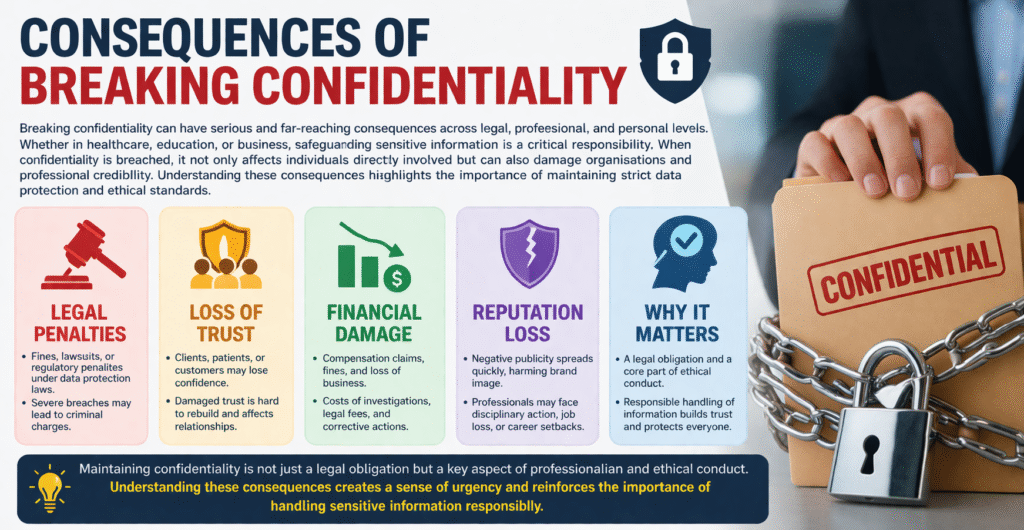
Breaking confidentiality can have serious and far-reaching consequences across legal, professional, and personal levels. Whether in healthcare, education, or business, safeguarding sensitive information is a critical responsibility. When confidentiality is breached, it not only affects individuals directly involved but can also damage organisations and professional credibility. Understanding these consequences highlights the importance of maintaining strict data protection and ethical standards.

Legal Penalties

One of the most immediate consequences of breaching confidentiality is legal action. Organisations and individuals may face fines, lawsuits, or regulatory penalties under data protection laws such as the General Data Protection Regulation. In serious cases, legal proceedings can lead to criminal charges, especially if sensitive personal data is misused or disclosed without consent.

Loss of Trust

Trust is fundamental in any professional relationship. When confidentiality is broken, clients, patients, or customers may lose confidence in the individual or organisation. This loss of trust is often difficult to rebuild and can result in reduced engagement, complaints, or long-term damage to relationships.

Financial Damage

Confidentiality breaches can lead to significant financial consequences. Organisations may face compensation claims, regulatory fines, and loss of business due to decreased customer confidence. Additionally, resources may be required to manage the breach, including legal costs, investigations, and implementing corrective measures.

Reputation Loss

A damaged reputation can have lasting effects on both individuals and organisations. Negative publicity, especially in the digital age, spreads quickly and can harm brand image. For professionals, this may result in disciplinary action, job loss, or difficulty securing future employment.

Why It Matters

Maintaining confidentiality is not just a legal obligation but a key aspect of professionalism and ethical conduct. Understanding these consequences creates a sense of urgency and reinforces the importance of handling sensitive information responsibly.

How to maintain confidentiality_ tips

How to Maintain Confidentiality (Practical Tips)

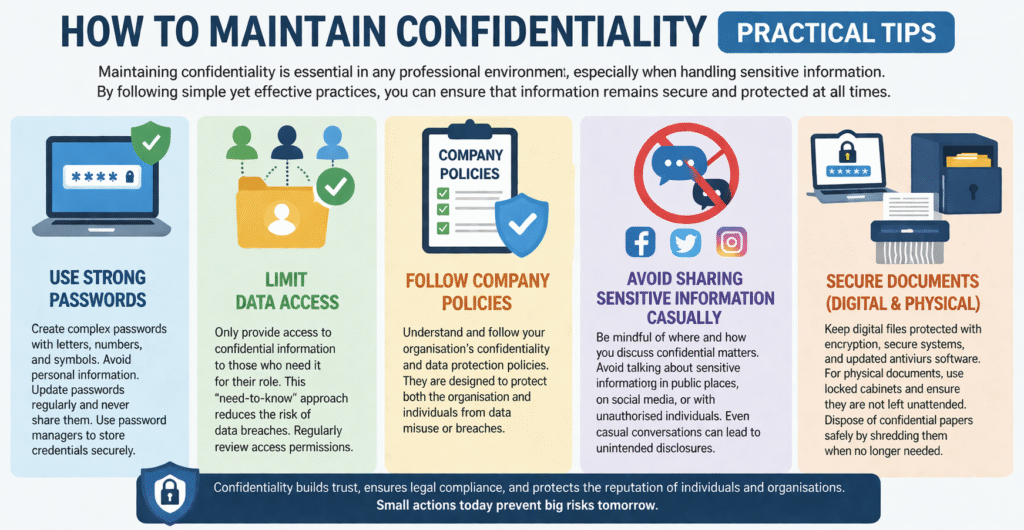
Maintaining confidentiality is essential in any professional environment, especially when handling sensitive information related to clients, employees, or business operations. Breaches of confidentiality can damage trust, lead to legal consequences, and harm organisational reputation. By following simple yet effective practices, you can ensure that information remains secure and protected at all times.

Use Strong Passwords

Create complex passwords that include a mix of letters, numbers, and symbols. Avoid using easily guessed information such as names or birthdays. It’s also important to update passwords regularly and never share them with others. Using password managers can help you store and manage credentials securely.

Limit Data Access

Only provide access to confidential information to individuals who genuinely need it for their role. This “need-to-know” approach reduces the risk of accidental or intentional data breaches. Regularly review access permissions to ensure they remain appropriate.

Follow Company Policies

Every organisation has confidentiality and data protection policies in place. Make sure you understand and follow these guidelines at all times. They are designed to protect both the organisation and individuals from data misuse or breaches.

Avoid Sharing Sensitive Information Casually

Be mindful of where and how you discuss confidential matters. Avoid talking about sensitive information in public places, on social media, or with unauthorised individuals. Even casual conversations can lead to unintended disclosures.

Secure Documents (Digital & Physical)

Keep digital files protected with encryption, secure systems, and updated antivirus software. For physical documents, use locked cabinets and ensure they are not left unattended. Dispose of confidential papers safely by shredding them when no longer needed.

Confidentiality, privacy, and security explained

Confidentiality vs Privacy vs Security

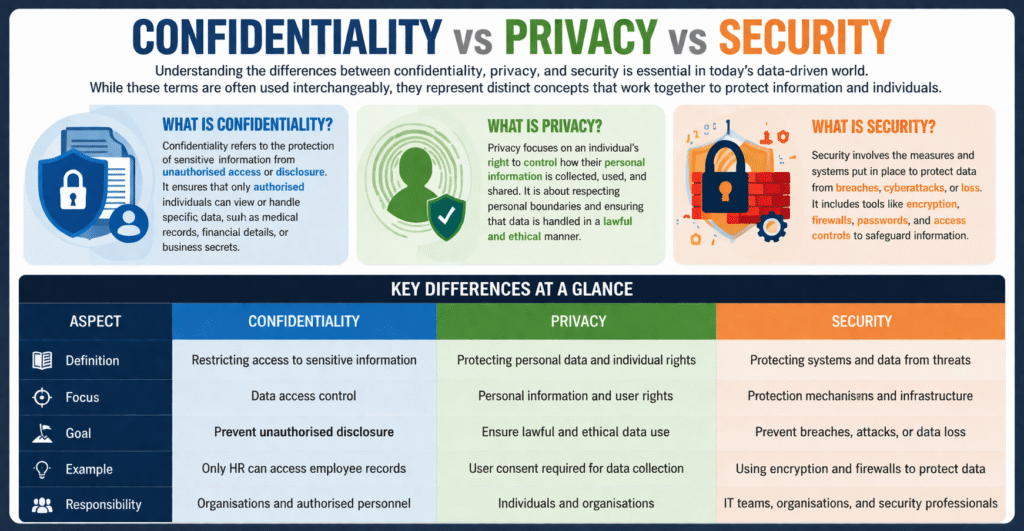
Understanding the differences between confidentiality, privacy, and security is essential in today’s data-driven world. While these terms are often used interchangeably, they represent distinct concepts that work together to protect information and individuals.

What is Confidentiality?

Confidentiality refers to the protection of sensitive information from unauthorised access or disclosure. It ensures that only authorised individuals can view or handle specific data, such as medical records, financial details, or business secrets.

What is Privacy?

Privacy focuses on an individual’s right to control how their personal information is collected, used, and shared. It is about respecting personal boundaries and ensuring that data is handled in a lawful and ethical manner.

What is Security?

Security involves the measures and systems put in place to protect data from breaches, cyberattacks, or loss. It includes tools like encryption, firewalls, passwords, and access controls to safeguard information.

Key Differences at a Glance

Aspect Definition Focus Goal Example Responsibility
Confidentiality Restricting access to sensitive information Data access control Prevent unauthorised disclosure Only HR can access employee records Organisations and authorised personnel
Privacy Protecting personal data and individual rights Personal information and user rights Ensure lawful and ethical data use User consent required for data collection Individuals and organisations
Security Protecting systems and data from threats Protection mechanisms and infrastructure Prevent breaches, attacks, or data loss Using encryption and firewalls to protect data IT teams, organisations, and security professionals

Conclusion

confidentiality is the practice of protecting sensitive information from unauthorised access, ensuring trust, privacy, and professional integrity across various fields. From healthcare and business to everyday interactions, maintaining confidentiality prevents harm, builds credibility, and supports ethical behaviour. Real-life examples clearly show that breaches can lead to serious legal and reputational consequences. Ultimately, confidentiality is not just a rule—it is a responsibility that demonstrates respect, accountability, and trust in both personal and professional settings.

FAQs

  1. 1. What is confidentiality in simple terms?
    Confidentiality means keeping sensitive information private and not sharing it without permission. It ensures that personal or business data is protected from unauthorised access.
  2. 2. Why is confidentiality important in the workplace?
    Confidentiality builds trust between employees, clients, and organisations. It also protects sensitive data and helps businesses comply with legal and ethical standards.
  3. 3. What happens if confidentiality is broken?
    Breaking confidentiality can lead to legal consequences, loss of trust, and reputational damage. In workplaces, it may also result in disciplinary action or dismissal.
  4. 4. What are examples of confidential information?
    Examples include personal details, medical records, financial information, and business secrets. Any data that is not meant for public access is considered confidential.
  5. 5. Is confidentiality a legal requirement?
    Yes, confidentiality is often protected by laws and regulations, especially in sectors like healthcare, finance, and law. Organisations must follow strict guidelines to safeguard sensitive information.
Sam Walker

Article by

Sam Walker

Sam Walker is an education specialist and author at One Education, bringing over 4 years of experience in creating practical resources and strategies to support teachers and enhance student learning.

top

Hear What Our Learners Say About Us

Home Courses Search