


An Introduction to Number Theory

  • Bestseller
  • Great Service
  • Highly Rated
  • Trending

An Introduction to Number Theory explores fundamental concepts like primes, divisibility, and modular arithmetic, building logical thinking skills and mathematical insight for beginners interested in pure mathematics and problem solving.

An Introduction to Number Theory

Get access to 5000+ courses including this for only £49. Learn More.

Overview of An Introduction to Number Theory

An Introduction to Number Theory is a comprehensive course designed to introduce learners to the fascinating world of Number Theory, exploring the properties, patterns, and relationships found within numbers. Covering essential concepts such as integer properties, prime numbers, divisibility rules, and number bases, this course builds a strong foundation in discrete mathematics and mathematical reasoning.

Through engaging lessons on factorials, divisibility, primes, and modular arithmetic, learners will develop the ability to analyse number patterns and understand the logic behind mathematical proofs. The course introduces key techniques used in problem-solving, helping students strengthen their analytical skills and gain confidence in applying Number Theory concepts across various mathematical applications.

This course also explores advanced topics such as continued fractions and cryptography basics, demonstrating how Number Theory supports modern technologies and secure communication systems. Ideal for learners interested in mathematics, computer science, and logical problem-solving, this course provides valuable knowledge of mathematical structures, proof methods, and the principles behind cryptographic systems.

The course was audited and updated on: 17th July, 2026

Extra Gift Included: +

  • Free CPD Certificate
  • Unlimited Free Retake Exams

Free Courses Inlcuded - Limited Time Offer!

Learning Support Assistant Training
Safeguarding and Child Protection

Learning Outcomes of An Introduction to Number Theory

Method Of Assessment​

Learners complete an assignment designed to evaluate their understanding of the course content. The assignment is reviewed by qualified tutors who provide personalised feedback, allowing learners to demonstrate their applied knowledge and skills.

Certification

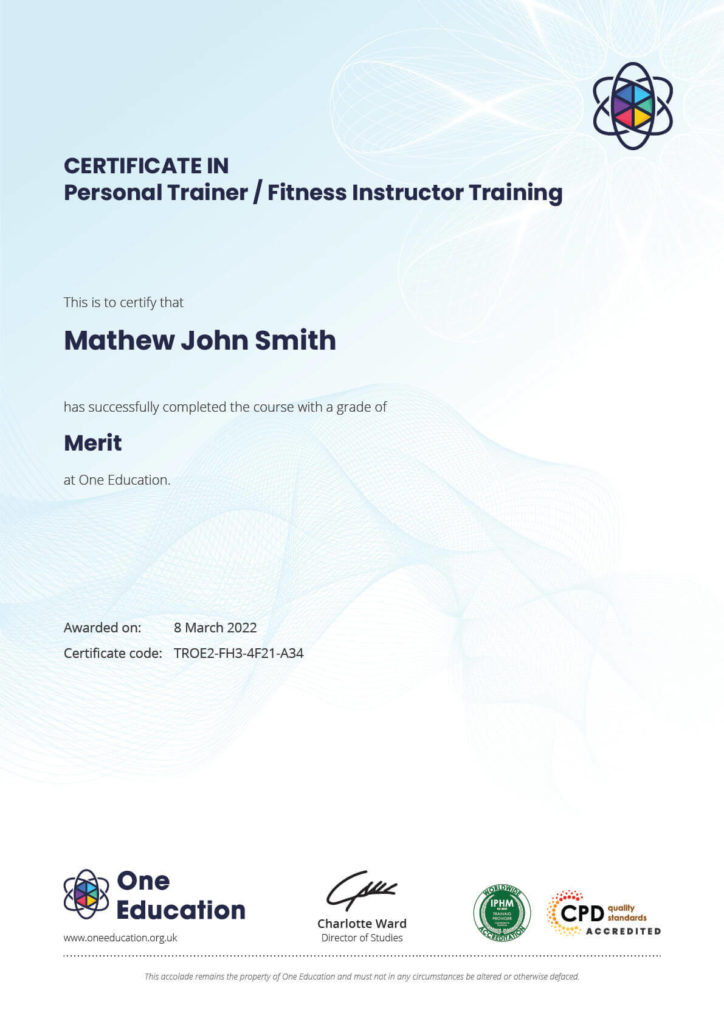
one education Certificate

After completing the An Introduction to Number Theory course assessment, you will be eligible to receive a CPD-accredited certificate worth £9 from One Education to demonstrate your achievement.

The certificate is also available as a printed hard copy delivered by post for £15.

Why Study This An Introduction to Number Theory Course?

An Introduction to Number Theory introduces learners to the fascinating study of integers, prime numbers, divisibility, and mathematical patterns. This course explores key concepts such as number properties, divisibility rules, modular arithmetic, mathematical proofs, and the foundations of number theory used in areas including cryptography and discrete mathematics.

Studying An Introduction to Number Theory develops logical reasoning, problem-solving abilities, and mathematical thinking. The course supports learners interested in mathematics, computer science, and related fields by building a strong understanding of integer relationships, proof techniques, number patterns, and the fundamental ideas behind modern mathematical applications.

Course Duration

The An Introduction to Number Theory course has a total study time of 8 hours, 31 minutes. This comprehensive programme is designed for flexible learning, allowing learners to progress at their own pace while exploring number theory concepts, including prime numbers, divisibility rules, integer properties, mathematical proofs, modular arithmetic, number patterns, cryptography basics, discrete mathematics, mathematical reasoning, and fundamental principles of numbers.

Requirements

The An Introduction to Number Theory course requirements are simple and suitable for beginners. Learners should have a basic understanding of mathematics, an interest in numbers, logical reasoning, problem-solving, and mathematical patterns, and a willingness to explore concepts such as prime numbers, divisibility, integers, and mathematical proofs. Access to an internet-enabled device and commitment to regular study are recommended for effective learning and successful course completion.

Career Path

Frequently Asked Questions

This course introduces the fundamental concepts of number theory, covering prime numbers, divisibility rules, integer properties, mathematical proofs, modular arithmetic, number patterns, cryptography basics, discrete mathematics, and logical mathematical reasoning.

No. It is suitable for beginners, students, mathematics learners, computer science enthusiasts, and anyone interested in developing analytical thinking and problem-solving skills through number theory.

The course is delivered online, allowing you to learn at your own pace and develop essential knowledge of mathematical structures, patterns, and number-based concepts conveniently.


Yes. Number theory exercises, proof-based activities, problem-solving tasks, mathematical examples, practice questions, and quizzes may be included to reinforce learning.

You will receive a certificate of completion after successfully finishing the course.

This course supports further development in mathematics, computer science, cryptography, data analysis, cybersecurity, research, education, and other fields requiring strong logical and analytical skills.

Course Curriculum

Introduction
What is Number Theory 00:08:00
Basics of Number Theory
Number Theory 00:07:00
Number Sets 00:09:00
Number Patterns 00:10:00
Even & Odd Numbers 00:11:00
Number Properties 00:10:00
Proofs 00:11:00
Number Bases
Number Bases 00:12:00
Binary Base 00:12:00
Binary Arithmetics 00:15:00
Hexadecimal Base 00:13:00
Hexadecimal Arithmetics 00:14:00
Factorials
Factorial 00:05:00
Double Factorial 00:09:00
Super Factorial 00:03:00
Exponential Factorial 00:03:00
Factorion 00:05:00
Stirling’s Formula 00:03:00
Number of Digits 00:03:00
Divisibility
Divisibility 00:07:00
Divisibility Rules 00:04:00
Euclidean Division Theorem 00:08:00
GCD & LCM 00:11:00
Bézout’s Identity 00:08:00
Perfect Numbers 00:04:00
Practical Numbers 00:05:00
Amicable Numbers 00:04:00
Fibonacci Sequence 00:09:00
Tribonacci Sequence 00:05:00
Golden Ratio 00:11:00
Primes
Prime Numbers 00:09:00
Fundamental Theorem of Arithmetics (FTA) 00:10:00
Almost Primes 00:07:00
Prime Powers 00:02:00
Factorial Prime 00:03:00
Euclid’s Theorems 00:09:00
The Prime Number Theorem 00:04:00
Unsolved Problems 00:06:00
Number Empire 00:07:00
Modular Arithmetic
Modular Arithmetics 00:09:00
Congruence 00:13:00
Congruence Class 00:12:00
Residue Systems 00:04:00
Quadratic Residues 00:04:00
Modular Operations 00:06:00
Inverses 00:07:00
Modular Exponentiation 00:10:00
Wilson’s Theorem 00:05:00
Chinese Remainder Theorem 00:09:00
Fermat’s Little Theorem 00:05:00
Euler’s Totient Function 00:07:00
Euler-Fermat Theorem 00:04:00
Continued Fractions
Continued Fractions 00:08:00
Negative Continued Fractions 00:11:00
Finite Continued Fractions 00:14:00
Infinite Continued Fractions 00:17:00
Periodic Continued Fractions 00:10:00
Convergent 00:12:00
Cryptography
Cryptography 00:09:00
Early Ciphers 00:11:00
Public Key Cryptography 00:13:00
RSA Encryption 00:11:00
Diffie-Hellman Protocol 00:04:00
Resources
Resource – An Introduction to Number Theory 00:00:00
Assignment
Assignment – An Introduction to Number Theory 00:00:00
top