
 Take All courses for £49
 1 Year Access
 0 Students
  3 weeks, 4 days
Essential Calculus Training Masterclass
- Instructor Unique
- Original
- Video Training
Essential Calculus Training Masterclass delivers clear, structured guidance on limits, derivatives, and integrals, building analytical confidence through step-by-step explanations, practical examples, and targeted exercises designed to strengthen mathematical reasoning skills.
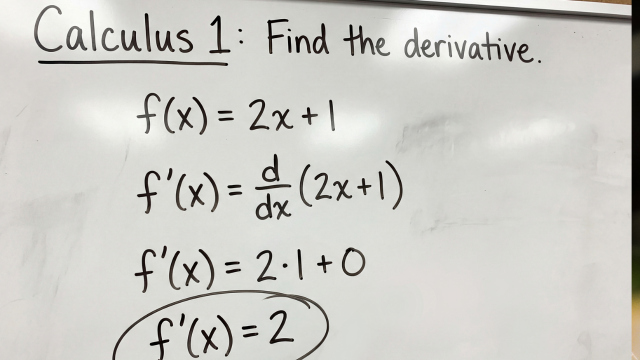



Essential Calculus Training Masterclass
Or
 1 Year Access
 -
Level 7
-
0 Students
-
 3 weeks, 4 days

Course Curriculum
| Unit 1 - About the course | |||
| Introduction to the course | 00:30:00 | ||
| Unit 2 - Analytical geometry in the space | |||
| The plane R^2 and the 3-space R^3: points and vectors | 00:25:00 | ||
| Distance between points | 00:08:00 | ||
| Vectors and their products | 00:04:00 | ||
| Dot product | 00:14:00 | ||
| Cross product | 00:13:00 | ||
| Scalar triple product | 00:07:00 | ||
| Describing reality with numbers; geometry and physics | 00:06:00 | ||
| Straight lines in the plane | 00:08:00 | ||
| Planes in the space | 00:13:00 | ||
| Straight lines in the space | 00:08:00 | ||
| Unit 3 - Conic Units: circle, ellipse, parabola, hyperbola | |||
| Conic Units, an introduction | 00:06:00 | ||
| Quadratic curves as conic Units | 00:10:00 | ||
| Definitions by distance | 00:17:00 | ||
| Cheat sheets | 00:04:00 | ||
| Circle and ellipse, theory | 00:19:00 | ||
| Parabola and hyperbola, theory | 00:12:00 | ||
| Completing the square | 00:04:00 | ||
| Completing the square, problems 1 and 2 | 00:12:00 | ||
| Completing the square, problem 3 | 00:10:00 | ||
| Completing the square, problems 4 and 5 | 00:08:00 | ||
| Completing the square, problems 6 and 7 | 00:08:00 | ||
| Unit 4 - Quadric surfaces: spheres, cylinders, cones, ellipsoids, paraboloids etc | |||
| Quadric surfaces, an introduction | 00:16:00 | ||
| Degenerate quadrics | 00:17:00 | ||
| Ellipsoids | 00:08:00 | ||
| Paraboloids | 00:16:00 | ||
| Hyperboloids | 00:25:00 | ||
| Problems 1 and 2 | 00:09:00 | ||
| Problem 3 | 00:07:00 | ||
| Problems 4 and 5 | 00:10:00 | ||
| Problem 6 | 00:06:00 | ||
| Unit 5 - Topology in R^n | |||
| Neighborhoods | 00:07:00 | ||
| Open, closed, and bounded sets | 00:14:00 | ||
| Identify sets, an introduction | 00:04:00 | ||
| Example 1 | 00:06:00 | ||
| Example 2 | 00:06:00 | ||
| Example 3 | 00:05:00 | ||
| Example 4 | 00:06:00 | ||
| Example 5 | 00:04:00 | ||
| Example 6 and 7 | 00:06:00 | ||
| Unit 6 - Coordinate systems | |||
| Different coordinate systems | 00:02:00 | ||
| Polar coordinates in the plane | 00:11:00 | ||
| An important example | 00:07:00 | ||
| Solving 3 problems | 00:19:00 | ||
| Cylindrical coordinates in the space | 00:03:00 | ||
| Problem 1 | 00:03:00 | ||
| Problem 2 | 00:02:00 | ||
| Problem 3 | 00:04:00 | ||
| Problem 4 | 00:04:00 | ||
| Spherical coordinates in the space | 00:08:00 | ||
| Some examples | 00:08:00 | ||
| Conversion | 00:08:00 | ||
| Problem 1 | 00:08:00 | ||
| Problem 2 | 00:12:00 | ||
| Problem 3 | 00:11:00 | ||
| Problem 4 | 00:07:00 | ||
| Unit 7 - Vector-valued functions, introduction | |||
| Curves: an introduction | 00:10:00 | ||
| Functions: repetition | 00:08:00 | ||
| Functions: repetition | 00:08:00 | ||
| Vector-valued functions, parametric curves: domain | 00:08:00 | ||
| Unit 8 - Some examples of parametrisation | |||
| Vector-valued functions, parametric curves | 00:11:00 | ||
| An intriguing example | 00:14:00 | ||
| Problem 1 | 00:12:00 | ||
| Problem 2 | 00:13:00 | ||
| Problem 3 | 00:15:00 | ||
| Problem 4, helix | 00:09:00 | ||
| Unit 9 - Vector-valued calculus; curve: continuous, differentiable, and smooth | |||
| Notation | 00:05:00 | ||
| Limit and continuity | 00:09:00 | ||
| Derivatives | 00:14:00 | ||
| Speed, acceleration | 00:08:00 | ||
| Position, velocity, acceleration: an example | 00:06:00 | ||
| Smooth and piecewise smooth curves | 00:09:00 | ||
| Sketching a curve | 00:15:00 | ||
| Sketching a curve: an exercise | 00:16:00 | ||
| Example 1 | 00:11:00 | ||
| Example 2 | 00:16:00 | ||
| Example 3 | 00:10:00 | ||
| Extra theory: limit and continuity | 00:19:00 | ||
| Extra theory: derivative, tangent, and velocity | 00:13:00 | ||
| Differentiation rules | 00:27:00 | ||
| Differentiation rules, example 1 | 00:19:00 | ||
| Differentiation rules: example 2 | 00:19:00 | ||
| Position, velocity, acceleration, example 3 | 00:15:00 | ||
| Position and velocity, one more example | 00:15:00 | ||
| Trajectories of planets | 00:13:00 | ||
| Unit 10 - Arc length | |||
| Parametric curves: arc length | 00:15:00 | ||
| Arc length: problem 1 | 00:11:00 | ||
| Arc length: problems 2 and 3 | 00:15:00 | ||
| Arc length: problems 4 and 5 | 00:13:00 | ||
| Unit 11 - Arc length parametrisation | |||
| Parametric curves: parametrisation by arc length | 00:10:00 | ||
| Parametrisation by arc length, how to do it, example 1 | 00:12:00 | ||
| Parametrisation by arc length, example 2 | 00:22:00 | ||
| Arc length does not depend on parametrisation, theory | 00:14:00 | ||
| Unit 12 - Real-valued functions of multiple variables | |||
| Functions of several variables, introduction | 00:09:00 | ||
| Introduction, continuation 1 | 00:14:00 | ||
| Introduction, continuation 2 | 00:08:00 | ||
| Domain | 00:06:00 | ||
| Domain, problem solving part 1 | 00:18:00 | ||
| Domain, problem solving part 2 | 00:13:00 | ||
| Domain, problem solving part 3 | 00:15:00 | ||
| Functions of several variables, graphs | 00:14:00 | ||
| Plotting functions of two variables, problems part 1 | 00:16:00 | ||
| Plotting functions of two variables, problems part 2 | 00:12:00 | ||
| Level curves | 00:14:00 | ||
| Level curves, problem 1 | 00:10:00 | ||
| Level curves, problem 2 | 00:08:00 | ||
| Level curves, problem 3 | 00:09:00 | ||
| Level curves, problem 4 | 00:14:00 | ||
| Level curves, problem 5 | 00:16:00 | ||
| Level surfaces, definition and problem solving | 00:20:00 | ||
| Unit 13 - Limit, continuity | |||
| Limit and continuity, part 1 | 00:18:00 | ||
| Limit and continuity, part 2 | 00:15:00 | ||
| Limit and continuity, part 3 | 00:20:00 | ||
| Problem solving 1 | 00:25:00 | ||
| Problem solving 2 | 00:18:00 | ||
| Problem solving 3 | 00:20:00 | ||
| Problem solving 4 | 00:15:00 | ||
| Unit 14 - Partial derivative, tangent plane, normal line, gradient, Jacobian | |||
| Introduction 1: definition and notation | 00:10:00 | ||
| Introduction 2: arithmetical consequences | 00:12:00 | ||
| Introduction 3: geometrical consequences (tangent plane) | 00:13:00 | ||
| Introduction 4: partial derivatives not good enough | 00:06:00 | ||
| Introduction 5: a pretty terrible example | 00:15:00 | ||
| Tangent plane, part 1 | 00:07:00 | ||
| Normal vector | 00:15:00 | ||
| Tangent plane part 2: normal equation | 00:09:00 | ||
| Normal line | 00:08:00 | ||
| Tangent planes, problem 1 | 00:14:00 | ||
| Tangent planes, problem 2 | 00:13:00 | ||
| Tangent planes, problem 3 | 00:16:00 | ||
| Tangent planes, problem 4 | 00:09:00 | ||
| Tangent planes, problem 5 | 00:11:00 | ||
| The gradient | 00:11:00 | ||
| A way of thinking about functions from R^n to R^m | 00:11:00 | ||
| The Jacobian | 00:14:00 | ||
| Unit 15 - Higher partial derivatives | |||
| Introduction | 00:15:00 | ||
| Definition and notation | 00:07:00 | ||
| Mixed partials, Hessian matrix | 00:13:00 | ||
| The difference between Jacobian matrices and Hessian matrices | 00:08:00 | ||
| Equality of mixed partials; Schwarz’ theorem | 00:09:00 | ||
| Schwarz’ theorem: Peano’s example | 00:06:00 | ||
| Schwarz’ theorem: the proof | 00:19:00 | ||
| Partial Differential Equations, introduction | 00:04:00 | ||
| Partial Differential Equations, basic ideas | 00:11:00 | ||
| Partial Differential Equations, problem solving | 00:13:00 | ||
| Laplace equation and harmonic functions 1 | 00:08:00 | ||
| Laplace equation and harmonic functions 2 | 00:06:00 | ||
| Laplace equation and Cauchy-Riemann equations | 00:11:00 | ||
| Dirichlet problem | 00:07:00 | ||
| Unit 16 - Chain rule: different variants | |||
| A general introduction | 00:17:00 | ||
| Variants 1 and 2 | 00:10:00 | ||
| Variant 3 | 00:18:00 | ||
| Variant 3 (proof) | 00:11:00 | ||
| Variant 4 | 00:09:00 | ||
| Example with a diagram | 00:04:00 | ||
| Problem solving | 00:08:00 | ||
| Problem solving, problem 1 | 00:04:00 | ||
| Problem solving, problem 2 | 00:09:00 | ||
| Problem solving, problem 3 | 00:33:00 | ||
| Problem solving, problem 4 | 00:15:00 | ||
| Problem solving, problem 6 | 00:09:00 | ||
| Problem solving, problem 7 | 00:06:00 | ||
| Problem solving, problem 5 | 00:28:00 | ||
| Problem solving, problem 8 | 00:18:00 | ||
| Unit 17 - Linear approximation, linearisation, differentiability, differential | |||
| Linearisation and differentiability in Calc1 | 00:11:00 | ||
| Differentiability in Calc3: introduction | 00:15:00 | ||
| Differentiability in two variables, an example | 00:10:00 | ||
| Differentiability in Calc3 implies continuity | 00:10:00 | ||
| Partial differentiability does NOT imply differentiability | 00:05:00 | ||
| An example: continuous, not differentiable | 00:06:00 | ||
| Differentiability in several variables, a test | 00:18:00 | ||
| Differentiability, Partial Differentiability, and Continuity in Calc3 | 00:12:00 | ||
| Differentiability in two variables, a geometric interpretation | 00:11:00 | ||
| Linearization: two examples | 00:16:00 | ||
| Linearization, problem solving 1 | 00:11:00 | ||
| Linearization, problem solving 2 | 00:11:00 | ||
| Linearization, problem solving 3 | 00:12:00 | ||
| Linearization by Jacobian matrix, problem solving | 00:16:00 | ||
| Differentials: problem solving 1 | 00:11:00 | ||
| Differentials: problem solving 2 | 00:10:00 | ||
| Unit 18 - Gradient, directional derivatives | |||
| Gradient | 00:04:00 | ||
| The gradient in each point is orthogonal to the level curve through the point | 00:08:00 | ||
| The gradient in each point is orthogonal to the level surface through the point | 00:14:00 | ||
| Tangent plane to the level surface, an example | 00:06:00 | ||
| Directional derivatives, introduction | 00:06:00 | ||
| Directional derivatives, the direction | 00:04:00 | ||
| How to normalize a vector and why it works | 00:08:00 | ||
| Directional derivatives, the definition | 00:07:00 | ||
| Partial derivatives as a special case of directional derivatives | 00:05:00 | ||
| Directional derivatives, an example | 00:11:00 | ||
| Directional derivatives: important theorem for computations and interpretations | 00:10:00 | ||
| Directional derivatives: an earlier example revisited | 00:05:00 | ||
| Geometrical consequences of the theorem about directional derivatives | 00:10:00 | ||
| Geometical consequences of the theorem about directional derivatives, an example | 00:07:00 | ||
| Directional derivatives, an example | 00:11:00 | ||
| Normal line and tangent line to a level curve: how to get their equations | 00:06:00 | ||
| Normal line and tangent line to a level curve: their equations, an example | 00:14:00 | ||
| Gradient and directional derivatives, problem 1 | 00:18:00 | ||
| Gradient and directional derivatives, problem 2 | 00:20:00 | ||
| Gradient and directional derivatives, problem 3 | 00:09:00 | ||
| Gradient and directional derivatives, problem 4 | 00:04:00 | ||
| Gradient and directional derivatives, problem 5 | 00:12:00 | ||
| Gradient and directional derivatives, problem 6 | 00:10:00 | ||
| Gradient and directional derivatives, problem 7 | 00:13:00 | ||
| Unit 19 - Implicit functions | |||
| What is the Implicit Function Theorem? | 00:13:00 | ||
| Jacobian determinant | 00:04:00 | ||
| Jacobian determinant for change to polar and to cylindrical coordinates | 00:07:00 | ||
| Jacobian determinant for change to spherical coordinates | 00:09:00 | ||
| Jacobian determinant and change of area | 00:10:00 | ||
| The Implicit Function Theorem variant 1 | 00:08:00 | ||
| The Implicit Function Theorem variant 1, an example | 00:15:00 | ||
| The Implicit Function Theorem variant 2 | 00:10:00 | ||
| The Implicit Function Theorem variant 2, example 1 | 00:07:00 | ||
| The Implicit Function Theorem variant 2, example 2 | 00:14:00 | ||
| The Implicit Function Theorem variant 3 | 00:15:00 | ||
| The Implicit Function Theorem variant 3, an example | 00:12:00 | ||
| The Implicit Function Theorem variant 4 | 00:11:00 | ||
| The Inverse Function Theorem | 00:09:00 | ||
| The Implicit Function Theorem, summary | 00:04:00 | ||
| Notation in some unclear cases | 00:08:00 | ||
| The Implicit Function Theorem, problem solving 1 | 00:27:00 | ||
| The Implicit Function Theorem, problem solving 2 | 00:13:00 | ||
| The Implicit Function Theorem, problem solving 3 | 00:07:00 | ||
| The Implicit Function Theorem, problem solving 4 | 00:16:00 | ||
| Unit 20 - Taylor’s formula, Taylor’s polynomial, quadratic forms | |||
| Taylor’s formula, introduction | 00:10:00 | ||
| Quadratic forms and Taylor’s polynomial of second degree | 00:22:00 | ||
| Taylor’s polynomial of second degree, theory | 00:11:00 | ||
| Taylor’s polynomial of second degree, example 1 | 00:07:00 | ||
| Taylor’s polynomial of second degree, example 2 | 00:04:00 | ||
| Taylor’s polynomial of second degree, example 3 | 00:11:00 | ||
| Classification of quadratic forms (positive definite etc) | 00:12:00 | ||
| Classification of quadratic forms, problem solving 1 | 00:08:00 | ||
| Classification of quadratic forms, problem solving 2 | 00:14:00 | ||
| Classification of quadratic forms, problem solving 3 | 00:10:00 | ||
| Unit 21 - Optimization on open domains (critical points) | |||
| Extreme values of functions of several variables | 00:12:00 | ||
| Extreme values of functions of two variables, without computations | 00:10:00 | ||
| Critical points and their classification (max, min, saddle) | 00:09:00 | ||
| Second derivative test for C^3 functions of several variables | 00:12:00 | ||
| Second derivative test for C^3 functions of two variables | 00:07:00 | ||
| Critical points and their classification: some simple examples | 00:06:00 | ||
| Critical points and their classification: more examples 1 | 00:05:00 | ||
| Critical points and their classification: more examples 2 | 00:08:00 | ||
| Critical points and their classification: more examples 3 | 00:10:00 | ||
| Critical points and their classification: a more difficult example (4) | 00:47:00 | ||
| Unit 22 - Optimization on compact domains | |||
| Extreme values for continuous functions on compact domains | 00:06:00 | ||
| Eliminate a variable on the boundary | 00:10:00 | ||
| Parameterize the boundary | 00:08:00 | ||
| Unit 23 - Lagrange multipliers (optimization with constraints) | |||
| Lagrange multipliers 1 | 00:13:00 | ||
| Lagrange multipliers 1, an old example revisited | 00:08:00 | ||
| Lagrange multipliers 1, another example | 00:13:00 | ||
| Lagrange multipliers 2 | 00:10:00 | ||
| Lagrange multipliers 2, an example | 00:18:00 | ||
| Lagrange multipliers 3 | 00:08:00 | ||
| Lagrange multipliers 3, an example | 00:09:00 | ||
| Summary: optimization | 00:07:00 | ||
| Unit 24 - Final words | |||
| The last one | 00:05:00 | ||
| Assignment | |||
| Assignment – Essential Calculus Training Masterclass | 3 weeks, 2 days | ||
| Order Your Certificate | |||
| Order Your Certificate QLS | 00:00:00 | ||
Essential Calculus Training Masterclass