EYFS Diploma: Observation, Assessment & Planning

EYFS Diploma: Observation, Assessment & Planning
cpdacree aoth ukrlp 24hs fullonline 14days

Get access to 5000+ courses including this for only £49. Learn More.

Overview of EYFS Diploma: Observation, Assessment & Planning

The EYFS Diploma: Observation, Assessment & Planning provides a comprehensive introduction to Early Years Education, focusing on effective Child Observation, Child Assessment, and Learning Planning. Learners explore the EYFS Framework, understand Early Years Development, and develop practical knowledge of Child Development to support positive learning experiences and outcomes.

This EYFS Diploma explores essential Early Years Practice, including observing children, assessing progress, tracking development, and creating effective learning plans. Learners will understand how to identify individual needs, record and report observations, and use assessment information to support meaningful Learning Outcomes while promoting children's development through informed and purposeful educational approaches.

Through seven structured modules, learners develop practical skills in observation, assessment, planning, reporting, partnerships, reflective practice, and quality improvement. The course supports a deeper understanding of Early Years Development and encourages effective application of the EYFS Framework in professional settings, helping learners strengthen their confidence in supporting children's learning, development, and wellbeing.

The course was audited and updated on: 28th May, 2026

Learning Outcomes of EYFS Diploma: Observation, Assessment & Planning

Certification

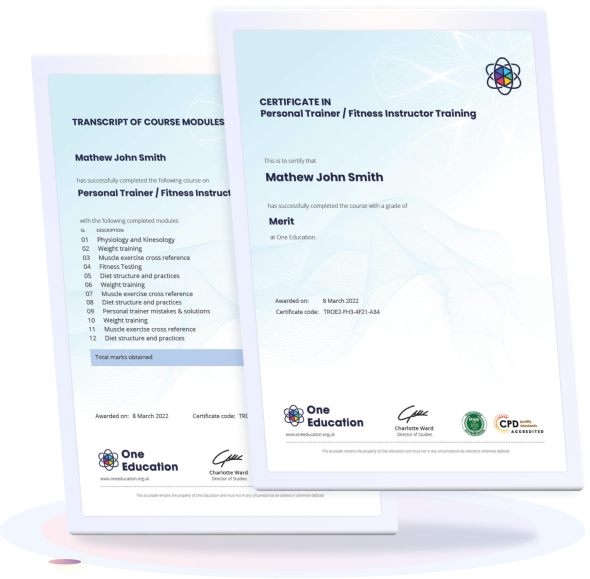
one education Certificate

After completing the EYFS Diploma: Observation, Assessment & Planning course assessment, you will be eligible to receive a CPD-accredited certificate worth £9 from One Education to demonstrate your achievement.

The certificate is also available as a printed hard copy delivered by post for £15.

Why Study This EYFS Diploma: Observation, Assessment & Planning Course?

Effective observation and assessment are essential for understanding young children’s development and planning meaningful learning experiences. This course develops knowledge of EYFS principles, child observation, assessment techniques, and learning planning, helping practitioners support individual development and recognise children’s emerging needs.

Studying an EYFS Diploma can strengthen professional practice across early years settings by improving confidence in observing, recording, and assessing children’s progress. Learners can develop practical approaches to creating responsive learning plans that encourage development, support individual needs, and promote positive outcomes in early childhood education.

Course Duration

The EYFS Diploma: Observation, Assessment & Planning has a total study time of 46 minutes. Learners can complete the programme at a pace that fits their schedule, developing practical knowledge of child observation, assessment, learning planning, early years development, and effective EYFS practice.

Requirements

The EYFS Diploma: Observation, Assessment & Planning course requirements are simple and suitable for beginners and aspiring early years professionals. Learners should have basic communication, literacy, and computer skills, an interest in early years education, child development, observation, assessment, learning planning, and the EYFS framework, and a willingness to develop practical skills for supporting young children's learning and development. Access to an internet-enabled device and commitment to regular study are recommended for effective learning and successful course completion.

Career Path

Frequently Asked Questions

1. What is the EYFS Diploma: Observation, Assessment & Planning course?
This course develops knowledge and practical understanding of observation, assessment, and planning within Early Years Education. It explores how practitioners can observe children, assess their development, record meaningful information, and use findings to support effective learning and development.

2. Who is the EYFS Diploma suitable for?
The course is suitable for early years practitioners, nursery staff, teaching assistants, childcare professionals, educators, and learners interested in developing their knowledge of child observation, assessment, and learning planning within an early years setting.

3. What will I learn from this EYFS course?
You will explore the EYFS Framework, child observation, developmental assessment, learning outcomes, planning approaches, documentation, and ways of using observations to understand children’s individual learning and development needs.

4. Why is observation important in Early Years Education?
Observation helps practitioners understand children’s interests, abilities, behaviour, progress, and individual development. Meaningful observations can provide useful evidence for assessing learning and informing appropriate activities and experiences.

5. What is assessment in the EYFS?
EYFS assessment involves gathering and considering information about children’s learning and development. It helps practitioners recognise progress, identify areas where additional support may be beneficial, and make informed decisions about future learning opportunities.

6. Does the course cover the EYFS Framework?
Yes. The course introduces the EYFS Framework and its principles, helping learners understand how observation, assessment, and planning can be incorporated into early years practice and used to support children’s development.

7. Will I learn how to plan learning activities for young children?
Yes. The course explores learning planning and how observations and assessments can inform suitable activities and experiences. This can help practitioners create more purposeful opportunities that reflect children’s developmental stages and individual interests.

8. How does observation support child development?
Regular and purposeful observation can help practitioners recognise developmental progress, interests, strengths, and emerging needs. This information can then be used to adapt learning experiences and provide appropriate support for individual children.

9. Is the EYFS Observation, Assessment & Planning course suitable for beginners?
Yes. The course can provide foundational knowledge for learners who are new to these areas as well as those already working in early years settings who want to strengthen their understanding of observation, assessment, and planning.

10. What are the benefits of studying EYFS observation, assessment, and planning?
Developing these skills can improve understanding of child development, strengthen observation and assessment practices, and support more effective learning planning. The knowledge can also contribute to reflective and child-centred practice within early years environments.


Course Curriculum

Module 1 The EYFS Framework and Principles
Module 1 The EYFS Framework and Principles 00:08:00
Module 2 Child Development Foundations
Module 2 Child Development Foundations 00:07:00
Module 3 Observation in Early Years Practice
Module 3 Observation in Early Years Practice 00:06:00
Module 4 Assessment and Tracking Progress
Module 4 Assessment and Tracking Progress 00:06:00
Module 5 Planning for Learning and Development
Module 5 Planning for Learning and Development 00:06:00
Module 6 Recording, Reporting and Partnerships
Module 6 Recording, Reporting and Partnerships 00:07:00
Module 7 Reflective Practice and Quality Improvement
Module 7 Reflective Practice and Quality Improvement 00:06:00
EYFS Diploma: Observation, Assessment & Planning
top