Financial Crime Officer

Financial Crime Officer professionals detect, prevent, and investigate financial misconduct within organisations. They monitor suspicious transactions, ensure regulatory compliance, manage risk controls, and help protect institutions from fraud, money laundering, and illegal financial activities.

cpdacree aoth ukrlp 24hs fullonline 14days

Get access to 5000+ courses including this for only £49. Learn More.

Overview of Financial Crime Officer

The Financial Crime Officer course provides a practical introduction to Financial Crime, focusing on the principles and procedures needed to identify, prevent and manage financial misconduct. Explore AML Compliance, Anti-Money Laundering, customer due diligence, suspicious transactions, record keeping and the responsibilities of a Money Laundering Reporting Officer.

Develop essential skills in Fraud Prevention, KYC Compliance, Risk Assessment and Financial Investigation while learning how to recognise suspicious conduct, theft, white-collar crime and property offences. The course also introduces the Proceeds of Crime Act 2002, customer due diligence requirements and effective Compliance Monitoring practices.

Designed for learners seeking knowledge of Regulatory Compliance and financial crime controls, this course covers key processes from investigation through to trial and sentencing. Gain a stronger understanding of financial crime risks, reporting responsibilities, legal procedures and compliance practices to support effective AML Compliance and professional financial crime management.

The course was audited and updated on: 15th August, 2026

Learning Outcomes of Financial Crime Officer

Method Of Assessment​

Learners can complete a mock exam to practice and assess their understanding before taking the final exam. The final multiple-choice exam is automatically marked, and learners must achieve at least 60% to pass. Successful learners receive a CPD-certified certificate.

Certification

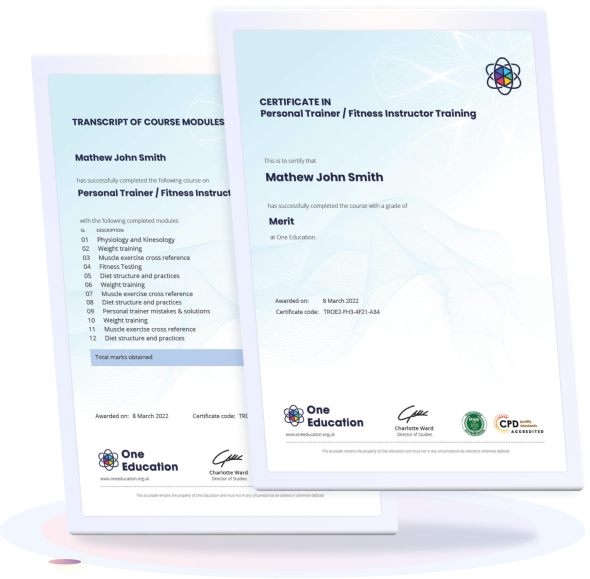
one education Certificate

After completing the Financial Crime Officer course assessment, you will be eligible to receive a CPD-accredited certificate worth £9 from One Education to demonstrate your achievement.

The certificate is also available as a printed hard copy delivered by post for £15.

Why Study This Financial Crime Officer Course?

A Financial Crime Officer plays an important role in identifying, preventing, and managing risks associated with financial crime. This course helps learners develop knowledge of Financial Crime, AML Compliance, Anti-Money Laundering, Fraud Prevention, KYC Compliance, Risk Assessment, Financial Investigation, and Regulatory Compliance.

Studying Financial Crime can strengthen practical skills for supporting effective compliance and financial crime prevention. Learners can understand money laundering risks, explore relevant legislation, recognise suspicious activities, develop investigation skills, and contribute to Compliance Monitoring and effective AML procedures within financial and regulated organisations.

Course Duration

The Financial Crime Officer course has a total study time of 4 hours, 27 minutes. Learners can progress through the programme at a flexible pace, developing practical knowledge of Financial Crime, Anti-Money Laundering (AML), AML Compliance, Fraud Prevention, KYC Compliance, Risk Assessment, Financial Investigation, Compliance Monitoring, Regulatory Compliance, and financial crime prevention.

Requirements

The Financial Crime Officer course has no formal entry requirements, making it suitable for beginners and aspiring compliance professionals. An interest in financial crime, Anti-Money Laundering (AML), fraud prevention, KYC compliance, financial investigation, risk assessment, compliance monitoring, and regulatory compliance is beneficial. Good English, basic computer skills, and reliable internet access are recommended for effective online learning.

Career Path

Frequently Asked Questions

1. What is the Financial Crime Officer course?
The Financial Crime Officer course provides learners with foundational knowledge of financial crime, money laundering, fraud, and compliance controls. It covers Financial Crime, AML Compliance, Anti-Money Laundering, Fraud Prevention, KYC Compliance, Risk Assessment, Financial Investigation, Compliance Monitoring, and Regulatory Compliance.

2. Who is the Financial Crime Officer course suitable for?
The course is suitable for compliance professionals, finance and banking employees, aspiring Financial Crime Officers, risk professionals, auditors, accountants, business owners, and learners who want to develop knowledge of Anti-Money Laundering and financial crime prevention.

3. What will I learn from this Financial Crime course?
You will explore the fundamentals of Money Laundering, relevant legislation, financial crime risks, and compliance responsibilities. The course covers areas including the Proceeds of Crime Act 2002, AML Compliance, Fraud Prevention, KYC Compliance, Risk Assessment, Financial Investigation, and Compliance Monitoring.

4. Do I need previous financial crime experience?
No. The course begins with an introduction to Money Laundering and relevant legislation, making it suitable for learners who want to develop foundational knowledge of Financial Crime and Anti-Money Laundering without extensive previous experience.

5. What is financial crime?
Financial Crime refers to illegal activities involving money, financial systems, assets, or economic resources. It can include money laundering, fraud, bribery, corruption, and other activities that may create financial, legal, and regulatory risks.

6. What is Anti-Money Laundering?
Anti-Money Laundering involves policies, procedures, controls, and measures designed to prevent criminals from disguising the origins of illegally obtained funds. AML frameworks help organisations identify suspicious activity and manage money laundering risks.

Course Curriculum

Module 01: Introduction to Money Laundering
Introduction to Money Laundering 00:15:00
Module 02: Proceeds of Crime Act 2002
Proceeds of Crime Act 2002 00:17:00
Module 03: Responsibility of the Money Laundering Reporting Officer
Responsibility of the Money Laundering Reporting Officer 00:18:00
Module 04: Customer Due Diligence
Customer Due Diligence 00:21:00
Module 05: Record Keeping
Record Keeping 00:14:00
Module 06: Suspicious Conduct and Transactions
Suspicious Conduct and Transactions 00:20:00
Module 07: Theft
Theft 00:22:00
Module 08: White-Collar Crime
White-Collar Crime 00:27:00
Module 09: Property Offences
Property Offences 00:22:00
Module 10: The Trial
The Trial 00:26:00
Module 11: Sentencing Process
Sentencing Process 00:25:00
Mock Exam
Mock Exam – Financial Crime Officer 00:20:00
Final Exam
Final Exam – Financial Crime Officer 00:20:00
Financial Crime Officer
top