Forensic Psychology and Offender Profiling

This course covers Forensic Psychology and Offender Profiling, teaching criminal behavior analysis, profiling methods, and investigative strategies to support law enforcement in identifying, understanding, and managing offenders efficiently.

Forensic Psychology and Offender Profiling

Get access to 5000+ courses including this for only £49. Learn More.

Overview of Forensic Psychology and Offender Profiling

This course explores forensic psychology foundations, tracing its history while examining theories of offending. Learners gain insight into criminal behaviour patterns, supporting informed understanding of offenders within justice and rehabilitation settings.

The programme develops analytical skills through research methods, offender profiling and evaluation of profiling effectiveness. Topics include sexual, violent and fire-setting behaviour, strengthening evidence-based approaches to behavioural assessment.

Learners also study eyewitness and expert testimony, incident management and strategies for reducing re-offending. This structured learning builds practical psychological insight for roles linked to criminal justice, investigation and offender rehabilitation.

Learning Outcomes of Forensic Psychology and Offender Profiling

Method Of Assessment​

Learners can complete a mock exam to practice and assess their understanding before taking the final exam. The final multiple-choice exam is automatically marked, and learners must achieve at least 60% to pass. Successful learners receive a CPD-certified certificate.

Certification

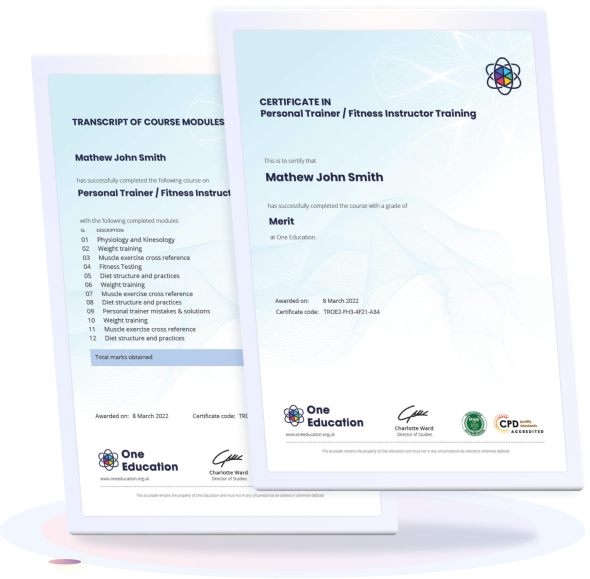
one education Certificate

After completing the Forensic Psychology and Offender Profiling assessments, learners qualify for a CPD QS accredited certificate from One Education.

The certificate is available in two formats: a PDF version for £9 or a printed hard copy delivered by post for £15.

Why Study This Forensic Psychology and Offender Profiling?

Interest in forensic psychology continues to grow across criminal justice, mental health, and public safety sectors. Understanding offender behaviour, criminal motivation, and psychological assessment plays a vital role in reducing re-offending and supporting effective investigations.

Studying Forensic Psychology and Offender Profiling strengthens analytical thinking, deepens knowledge of criminal behaviour, and builds awareness of real-world forensic practices. CPD certification demonstrates professional development, enhances CV value, and supports progression for those exploring careers or academic pathways linked to psychology, criminology, and offender management.

Course Duration

The Forensic Psychology and Offender Profiling Course is structured to be completed over 2 hours and 27 minutes. The programme is organised into clearly defined modules, allowing learners to progress steadily through the content while balancing other commitments. Completion time may vary depending on individual study habits, but the course is designed to fit comfortably within the stated duration when followed as outlined.

Requirements

The Forensic Psychology and Offender Profiling course has straightforward entry requirements and is open to a wide range of learners. A general interest in psychology, criminal behaviour, or the justice system is helpful, but no prior professional experience is required. The course is delivered entirely online and can be accessed on any internet-enabled device, allowing learners to study from a location that suits them and progress comfortably alongside other commitments.

Career Path

Frequently Asked Questions

Forensic psychology focuses on applying psychological principles to criminal behaviour, while offender profiling analyses behavioural patterns to help understand, predict, and manage criminal actions.

No prior psychology degree is required. The course is designed for beginners as well as learners with an interest in crime, behaviour, or criminal justice.

You will develop analytical thinking, understanding of criminal behaviour, knowledge of offending theories, and insight into profiling techniques and risk management.

They are closely related. Offender profiling focuses on behavioural patterns of offenders, while criminal profiling is often used broadly to support investigations and case analysis.

The course supports career development by building foundational knowledge relevant to criminal justice, psychology-related roles, and behavioural analysis fields.

The subject explores how professionals assess and understand offenders, but studying the course does not involve direct contact with offenders.

Course Curriculum

Forensic Psychology and Offender Profiling
Module 01: Reducing the Risk of Re-Offending
Interventions to reduce risk of re-offending 00:07:00
Module 02- History of Forensic Psychology
History of development of Forensic Psychology 00:06:00
Module 03: Research Methods in Forensic Psychology
Research Design and Methodology 00:12:00
Critical evaluation of psychological research 00:09:00
Module 04: Theories of Offending
Introduction to theories of offending 00:06:00
Module 05: Sexual and Violent Offending
Theories of sexual offending 00:08:00
Theories of violent offending 00:08:00
Module 06: Fire-Setting Behaviour
Theories of fire-setting behaviour 00:08:00
Module 07: Offender Profiling
An Introduction to Offender Profiling 00:05:00
Approaches to Offender Profiling 00:05:00
Module 08: Effectiveness of Offender Profiling
The Effectiveness of Offender Profiling 00:06:00
Module 09: Eye-Witness and Expert Witness Testimony
Eye-witness testimony 00:09:00
Expert witness testimony 00:04:00
Module 10: Reducing Re-Offending and Incident Management
’What works’ literature in reducing re-offending 00:06:00
Incident management (Crisis Negotiation) 00:08:00
Mock Exam
Mock Exam – Forensic Psychology and Offender Profiling 00:20:00
Final Exam
Final Exam – Forensic Psychology and Offender Profiling 00:20:00
Order Your Certificate
Order Your Certificate Now 00:00:00
top
OE Footer
Home Search Cart