
 Take All courses for £49
Functional Skills Maths - Level 1
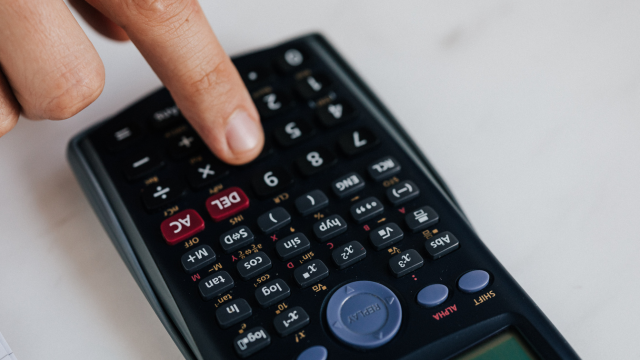
Functional Skills Maths – Level 1 builds practical numeracy for everyday life, covering calculations, problem solving, measurements, and data handling. Ideal for learners seeking confidence, workplace readiness, and progression opportunities.


Functional Skills Maths - Level 1
Or
 1 Year Access
  Level 1
  202 Students
 -
 11 hours, 37 minutes
Course Curriculum
| Section 1: Introduction | |||
| Lecture 1: Introduction Video | 00:02:00 | ||
| Lecture 2: Quick Guide | 00:01:00 | ||
| Section 2: Read, Write, Compare and Order Large Numbers | |||
| Lecture 1: Read & Write Large Numbers Part 1 | 00:08:00 | ||
| Lecture 2: Read & Write Large Numbers Part 2 | 00:13:00 | ||
| Lecture 3: Compare and Order Large Numbers | 00:12:00 | ||
| Downloadable Resources | 00:00:00 | ||
| Section 3: Rounding off Numbers | |||
| Lecture 1: Why do you Round off a Number? | 00:03:00 | ||
| Lecture 2: Rounding off techniques | 00:07:00 | ||
| Lecture 3: Practice Problems Part 1 | 00:09:00 | ||
| Lecture 4: Practice Problems Part 2 | 00:08:00 | ||
| Lecture 5: Rounding to Significant Figures | 00:15:00 | ||
| Downloadable Resources | 00:00:00 | ||
| Section 4: Negative & Positive Numbers | |||
| Lecture 1: Number System | 00:07:00 | ||
| Lecture 2: Integers and Ordering of Integers | 00:08:00 | ||
| Lecture 3: Addition and Subtractions of Integers | 00:10:00 | ||
| Lecture 4: Operations on Integers | 00:06:00 | ||
| Lecture 5: Multiplication and Division of Integers | 00:07:00 | ||
| Downloadable Resources | 00:00:00 | ||
| Section 5: Factors and Multiples | |||
| Lecture 1: Factors and Multiples Basics | 00:07:00 | ||
| Lecture 2: Divisibility tests for 2,3,4,5,6 | 00:07:00 | ||
| Lecture 3: Divisibility tests for 7,8,9,10,11 | 00:11:00 | ||
| Lecture 4: Prime Factorisation | 00:13:00 | ||
| Lecture 5: Highest Common Factor HCF | 00:13:00 | ||
| Lecture 6: HCF – Division Method | 00:10:00 | ||
| Lecture 7: Least Common Multiple LCM | 00:14:00 | ||
| Downloadable Resources | 00:00:00 | ||
| Section 6: Fractions | |||
| Lecture 1: Classification of Fractions | 00:09:00 | ||
| Lecture 2: Convert mixed to improper and improper to mixed fractions | 00:05:00 | ||
| Lecture 3: Equivalent Fractions | 00:07:00 | ||
| Lecture 4: Comparing Fractions after converting to like fractions | 00:09:00 | ||
| Lecture 5: Reducing a fraction to the lowest term | 00:05:00 | ||
| Lecture 6: Addition & Subtraction of fractions | 00:09:00 | ||
| Lecture 7: Multiplication and Division of Fractions | 00:11:00 | ||
| Lecture 8: Find Fractions of whole number quantities or measurements | 00:08:00 | ||
| Downloadable Resources | 00:00:00 | ||
| Section 7: Decimal numbers | |||
| Lecture 1: Expanded form of Decimals | 00:08:00 | ||
| Lecture 2: Expanded form to Decimal form | 00:03:00 | ||
| Lecture 3: Writing fractions to Decimals | 00:04:00 | ||
| Lecture 4: Converting Decimals to a fraction | 00:05:00 | ||
| Lecture 5: Like & Unlike Decimals | 00:04:00 | ||
| Lecture 6: Comparing & Ordering Decimal Numbers | 00:09:00 | ||
| Lecture 7: Addition and Subtraction of Decimals | 00:06:00 | ||
| Lecture 8: Multiplication of Decimals | 00:07:00 | ||
| Lecture 9: Division of Decimals | 00:06:00 | ||
| Downloadable Resources | 00:00:00 | ||
| Section 8: Multiply and Divide by 10,100,1000 etc. | |||
| Lecture 1: Multiply whole numbers and decimals by 10,100 & 1000 | 00:09:00 | ||
| Lecture 2: Divide whole numbers and decimals by 10,100 & 1000 | 00:05:00 | ||
| Downloadable Resources | 00:00:00 | ||
| Section 9: Squaring of one-digit and two-digit numbers | |||
| Lecture 1: Squaring of one-digit and two-digit numbers | 00:06:00 | ||
| Section 10: Formula in words for 1 step or two steps operations | |||
| Lecture 1: Simple Formula in words for one step or two steps operations | 00:09:00 | ||
| Downloadable Resources | 00:00:00 | ||
| Section 11: Length Mass & Capacity | |||
| Lecture 1: Intro to the metric system | 00:09:00 | ||
| Lecture 2: Length, Mass & Capacity | 00:10:00 | ||
| Lecture 3: Length, Mass & Capacity Addition & Subtraction | 00:05:00 | ||
| Section 12: Time | |||
| Lecture 1: Converting 12-hour time to a 24-hour time | 00:04:00 | ||
| Lecture 2: Converting 24-hour time to a 12-hour time | 00:05:00 | ||
| Lecture 3: Conversion to different units of Time | 00:09:00 | ||
| Lecture 4: Addition with Time | 00:08:00 | ||
| Lecture 5: Subtraction with Time | 00:08:00 | ||
| Lecture 6: Multiplication with Time | 00:07:00 | ||
| Lecture 7: Division with Time | 00:06:00 | ||
| Lecture 8: Finding Time interval between given timings Part 1 | 00:05:00 | ||
| Lecture 9: Finding Time interval between given timings Part 2 | 00:10:00 | ||
| Lecture 10: Past Paper problem Q1 | 00:02:00 | ||
| Lecture 11: Past Paper problem Q2 | 00:02:00 | ||
| Lecture 12: Past Paper problem Q3 | 00:05:00 | ||
| Lecture 13: Past Paper problem Q4 | 00:03:00 | ||
| Lecture 14: Past Paper problem Q5 | 00:02:00 | ||
| Section 13: Order of Operations rule- PEMDAS | |||
| Lecture 1: Order of Operations – PEMDAS | 00:10:00 | ||
| Lecture 2: Practice Problems on – PEMDAS | 00:05:00 | ||
| Downloadable Resources | 00:00:00 | ||
| Section 14: Estimation | |||
| Lecture 1: Estimation and approximation | 00:07:00 | ||
| Lecture 2: Estimation using Fractions and Decimals | 00:03:00 | ||
| Section 15: Simple Ratio & Direct Proportion | |||
| Lecture 1: Simple Ratio and Direct Proportion Part 1 | 00:09:00 | ||
| Lecture 2: Simple Ratio and Direct Proportion Part 2 | 00:04:00 | ||
| Lecture 3: Simple Ratio and Direct Proportion Part 3 | 00:04:00 | ||
| Section 16: Scale Drawing | |||
| Lecture 1: Scale Drawing | 00:06:00 | ||
| Section 17: Percentage | |||
| Lecture 1: What is the meaning of Percentage? | 00:02:00 | ||
| Lecture 2: Percentage to Fraction | 00:07:00 | ||
| Lecture 3: Percentage of a quantity and conversation to Decimal | 00:05:00 | ||
| Lecture 4: Expressing one Quantity as a Percentage of another Quantity | 00:07:00 | ||
| Lecture 5: Calculate Percentages of amounts, increase, decrease by 5,10,15% | 00:11:00 | ||
| Section 18: Simple Interest and Discounts | |||
| Lecture 1: Calculate simple interest in multiples of 5% on amounts of money | 00:11:00 | ||
| Lecture 2: Calculate discounts in multiples of 5% on amounts of money | 00:08:00 | ||
| Downloadable Resources | 00:00:00 | ||
| Section 19: Money | |||
| Lecture 1: Problems based on Money | 00:06:00 | ||
| Downloadable Resources | 00:00:00 | ||
| Section 20: Statistics | |||
| Lecture 1: What is statistics? | 00:04:00 | ||
| Lecture 2: Representation of discrete data in Tables | 00:11:00 | ||
| Lecture 3: One-way Tables | 00:03:00 | ||
| Lecture 4: Two-way Tables | 00:04:00 | ||
| Lecture 5: Grouping of a discrete data Part 1 | 00:05:00 | ||
| Lecture 6: Grouping of a discrete data Part 2 | 00:04:00 | ||
| Lecture 7: Represent discrete data in Bar Charts (Graphs)Part 1 | 00:08:00 | ||
| Lecture 8: Represent discrete data in Bar Charts (Graphs)Part 2 | 00:07:00 | ||
| Lecture 9: Pie Charts (Circle graphs) Part 1 | 00:08:00 | ||
| Lecture 10: Pie Charts (Circle graphs) Part 2 | 00:05:00 | ||
| Lecture 11: Pie Charts (Circle graphs) Part 3 | 00:08:00 | ||
| Lecture 12: Mean & Range | 00:09:00 | ||
| Downloadable Resources | 00:00:00 | ||
| Section 21: Probability | |||
| Lecture 1: Probability on a scale from 0 to 1 | 00:12:00 | ||
| Lecture 2: Probabilities of simple events Part 1 | 00:03:00 | ||
| Lecture 3: Probabilities of simple events Part 2 | 00:06:00 | ||
| Downloadable Resources | 00:00:00 | ||
| Section 22: Geometry | |||
| Lecture 1: Lines & Angles | 00:08:00 | ||
| Lecture 2: Introduction to Triangles | 00:05:00 | ||
| Lecture 3: Polygons | 00:05:00 | ||
| Lecture 4: More 2D Figures | 00:07:00 | ||
| Lecture 5: Line symmetry | 00:05:00 | ||
| Section 23: Areas and Perimeters | |||
| Lecture 1: Area & Perimeter Part 1 | 00:08:00 | ||
| Lecture 2: Area & Perimeter Part 2 | 00:06:00 | ||
| Lecture 3: Area & Perimeter Part 3 | 00:08:00 | ||
| Downloadable Resources | 00:00:00 | ||
| Section 24: Volume and Surface Area | |||
| Lecture 1: Calculation of the volumes & Surface Area of cubes and cuboids | 00:08:00 | ||
| Order your Accredited Certificate directly from CPDQS | |||
| Order your Accredited Certificate directly from CPDQS | 00:00:00 | ||
| Thanks for learning with us, we appreciate your feedback. | |||
| We Appreciate Your Feedback | 00:00:00 | ||
Functional Skills Maths – Level 1