
 Take All courses for £49
Functional Skills Maths - Level 2
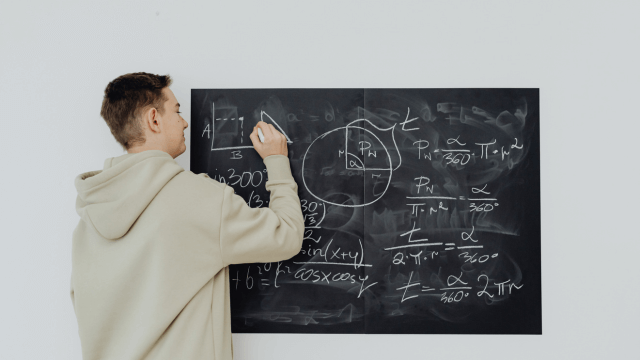
Functional Skills Maths Level 2 builds practical numerical confidence for everyday life and workplace tasks, covering problem-solving, percentages, ratios, and data interpretation to support progression into employment and apprenticeships successfully.


Functional Skills Maths - Level 2
Or
 1 Year Access
  Level 2
  134 Students
 -
 13 hours, 51 minutes
Course Curriculum
| Section 01: Introduction | |||
| Lecture 01: Introduction Video | 00:02:00 | ||
| Lecture 02: Quick Guide | 00:01:00 | ||
| Section 02: Read, Write, Compare and Order Numbers of any size | |||
| Lecture 01: Read and write large numbers Part 1 | 00:12:00 | ||
| Lecture 02: Read and write large numbers Part 2 | 00:07:00 | ||
| Lecture 03: Compare numbers of any size | 00:07:00 | ||
| Lecture 04: Add & Subtract numbers up to one million and check answers | 00:14:00 | ||
| Lecture 05: Multiply & Divide numbers up to one million and check answers | 00:14:00 | ||
| Lecture 06: Integers | 00:14:00 | ||
| Section 03: Substitution in Given Formula | |||
| Lecture 01: Evaluate and write formulae of word problems | 00:09:00 | ||
| Lecture 02: Substitutions in given Formulae Part 1 | 00:06:00 | ||
| Lecture 03: Substitutions in given Formulae Part 2 | 00:08:00 | ||
| Lecture 04: Substitutions in given Formulae Part 3 | 00:06:00 | ||
| Section 04: Fractions | |||
| Lecture 01: Classification of Fractions | 00:09:00 | ||
| Lecture 02: Convert mixed to improper and improper to mixed fractions | 00:05:00 | ||
| Lecture 03: Equivalent Fractions | 00:07:00 | ||
| Lecture 04: Comparing Fractions after converting to like fractions | 00:09:00 | ||
| Lecture 05: Reducing a fraction to the lowest term | 00:05:00 | ||
| Lecture 06: Addition & Subtraction of fractions | 00:09:00 | ||
| Lecture 7: Multiplication and Division of Fractions | 00:11:00 | ||
| Lecture 08: Find Fractions of whole number quantities or measurements | 00:08:00 | ||
| Downloadable resources | 00:00:00 | ||
| Section 05: Decimal Numbers | |||
| Lecture 01: Expanded form of Decimals | 00:08:00 | ||
| Lecture 02: Expanded form to Decimal form | 00:03:00 | ||
| Lecture 03: Writing fractions to Decimals | 00:04:00 | ||
| Lecture 04: Converting Decimals to a fraction | 00:05:00 | ||
| Lecture 05: Like & Unlike Decimals | 00:04:00 | ||
| Lecture 06: Comparing & ordering Decimal numbers | 00:09:00 | ||
| Lecture 07: Addition and Subtraction of Decimals | 00:06:00 | ||
| Lecture 08: Multiplication of Decimals | 00:07:00 | ||
| Lecture 09: Division of Decimals | 00:06:00 | ||
| Downloadable resources | 00:00:00 | ||
| Section 06: Percentages | |||
| Lecture 01: Finding the percentage of a given quantity | 00:07:00 | ||
| Lecture 02: Expressing one amount as a percentage of another | 00:09:00 | ||
| Lecture 03: Work out percentages of amounts – Part 1 | 00:09:00 | ||
| Lecture 04: Work out percentages of amounts – Part 2 | 00:06:00 | ||
| Lecture 05 Calculate percentage change Part 1 | 00:10:00 | ||
| Lecture 06: Calculate percentage change Part 2 | 00:05:00 | ||
| Section 07: Equivalence between fractions, decimals and percentages | |||
| Lecture 01: Express one number as a fraction of another number | 00:05:00 | ||
| Lecture 02: Equivalence between Fractions, Decimals and Percentages | 00:09:00 | ||
| Section 08: Ratio and Proportion | |||
| Lecture 01: Writing given quantities in Ratio | 00:09:00 | ||
| Lecture 02: The Ratio Method | 00:04:00 | ||
| Lecture 3: Divide a quantity in a given ratio | 00:05:00 | ||
| Lecture 04: Direct Proportion | 00:13:00 | ||
| Lecture 05: Inverse Proportion | 00:09:00 | ||
| Past Paper problem Q1 | 00:06:00 | ||
| Past Paper problem Q2 | 00:01:00 | ||
| Past Paper problem Q3 | 00:02:00 | ||
| Section 09: Profit & Loss | |||
| Lecture 01: Calculating Profit & Loss Percent | 00:16:00 | ||
| Lecture 02: Finding Selling Price | 00:07:00 | ||
| Lecture 03: Finding Cost Price | 00:06:00 | ||
| Downloadable Resources | 00:00:00 | ||
| Section 10: Discounts and Taxes | |||
| Lecture 01: Introduction to Discounts | 00:09:00 | ||
| Lecture 02: Practice problems on Discounts | 00:13:00 | ||
| Lecture 03: Successive Discounts | 00:12:00 | ||
| Lecture 04: Taxes | 00:08:00 | ||
| Section 11: Simple Interest and Compound Interest | |||
| Lecture 01: Simple Interest Basics & formulae | 00:04:00 | ||
| Lecture 02: Practice Problems on SI Part 1 | 00:09:00 | ||
| Lecture 03: Practice Problems on SI Part 2 | 00:08:00 | ||
| Lecture 04: Compound Interest Part 1 | 00:09:00 | ||
| Lecture 05: Compound Interest Part 2 | 00:08:00 | ||
| Section 12: Money | |||
| Lecture 01: Money Basics | 00:06:00 | ||
| Lecture 02: Money & Currency Problems Part 1 | 00:08:00 | ||
| Lecture 03: Money & Currency Problems Part 2 | 00:05:00 | ||
| Lecture 04: Money & Currency Problems Part 3 | 00:11:00 | ||
| Lecture 05: Money & Currency Problems Part 4 | 00:09:00 | ||
| Section 13: Convert between metric and imperial units | |||
| Lecture 01: Conversion between kilometre and mile | 00:11:00 | ||
| Lecture 02: Conversion between pounds and kilograms | 00:07:00 | ||
| Lecture 03: past paper problems-1 | 00:05:00 | ||
| Lecture 04: Past Paper problems -2 | 00:08:00 | ||
| Section 14: Compound Measures including speed, density & rates of pay | |||
| Lecture 01: Speed, distance & Time Part 1 | 00:08:00 | ||
| Lecture 02: Speed, distance & Time Part 2 | 00:06:00 | ||
| Lecture 03: Density, Mass & Volume | 00:06:00 | ||
| Lecture 04: Rates of Pay | 00:08:00 | ||
| Section 15: Perimeters and Areas of 2-D shapes | |||
| Lecture 01: Area & Perimeter Part 1 | 00:08:00 | ||
| Lecture 02: Area & Perimeter Part 2 | 00:06:00 | ||
| Lecture 03: Area & Perimeter Part 3 | 00:08:00 | ||
| Lecture 04: Area & Circumference of a Circle Part 1 | 00:10:00 | ||
| Lecture 05: Area & Circumference of a Circle Part 2 | 00:07:00 | ||
| Lecture 06: Past Paper Problems 1 | 00:07:00 | ||
| Lecture 07: Past Paper Problems 2 | 00:09:00 | ||
| Downloadable Resources | 00:00:00 | ||
| Section 16: Volumes and Surface Areas of 3-D shapes | |||
| Lecture 01: Volumes & Surface area of cubes and cuboids | 00:08:00 | ||
| Lecture 02: Past Paper problems on Volumes Part 1 | 00:10:00 | ||
| Lecture 03: Past Paper problems on Volumes Part 2 | 00:05:00 | ||
| Section 17: Scale Drawings | |||
| Lecture 01: Scale drawing Basics | 00:06:00 | ||
| Lecture 02: Calculate actual dimensions from scale drawings part 1 | 00:10:00 | ||
| Lecture 03: Calculate actual dimensions from scale drawings part 2 | 00:06:00 | ||
| Lecture 04: Create a scale diagram given actual measurements Part 1 | 00:06:00 | ||
| Lecture 05: Create a scale diagram given actual measurements Part 2 | 00:07:00 | ||
| Section 18: Statistics | |||
| Lecture 01: Two-way Tables Introduction | 00:04:00 | ||
| Lecture 02: Formulation of Two-way Tables | 00:10:00 | ||
| Lecture 03: Interpretation of Two-way Tables | 00:07:00 | ||
| Lecture 04: Mean & Range | 00:09:00 | ||
| Lecture 05: Mean of grouped frequency distribution | 00:08:00 | ||
| Lecture 06: Median & Mode | 00:12:00 | ||
| Lecture 07: Compare two sets of data using mean, median, mode and range | 00:06:00 | ||
| Lecture 08: Draw & Interpret scatter diagram Part 1 | 00:04:00 | ||
| Lecture 09: Draw & Interpret scatter diagram Part 2 | 00:04:00 | ||
| Lecture 10: Past Paper Problems | 00:03:00 | ||
| Lecture 11: Past Paper Solutions & Answers | 00:04:00 | ||
| Section 19: Probability | |||
| Lecture 01: Probability on a scale from 0 to 1 | 00:12:00 | ||
| Lecture 02: Probabilities of simple events Part 1 | 00:03:00 | ||
| Lecture 03: Probabilities of simple events Part 2 | 00:06:00 | ||
| Lecture 04: Probability of combined events | 00:14:00 | ||
| Downloadable Resources | 00:00:00 | ||
| Section 20 Bonus Section (Time Topic 11 Video Lectures) | |||
| Lecture 01: Converting 12-hour time to a 24-hour time | 00:04:00 | ||
| Lecture 02: Converting 24-hour time to a 12-hour time | 00:05:00 | ||
| Lecture 03: Conversion to different units of Time | 00:09:00 | ||
| lecture 04: Addition with Time | 00:08:00 | ||
| Lecture 05: Subtraction with Time | 00:08:00 | ||
| Lecture 06: Multiplication with Time | 00:07:00 | ||
| Lecture 07: Division with Time | 00:06:00 | ||
| Lecture 08: Finding Time interval between given timings Part 1 | 00:05:00 | ||
| Lecture 09: Finding Time interval between given timings Part 2 | 00:10:00 | ||
| Lecture 10: Time Management Problems Part 1 | 00:12:00 | ||
| Lecture 11: Time Management Problems Part 2 | 00:07:00 | ||
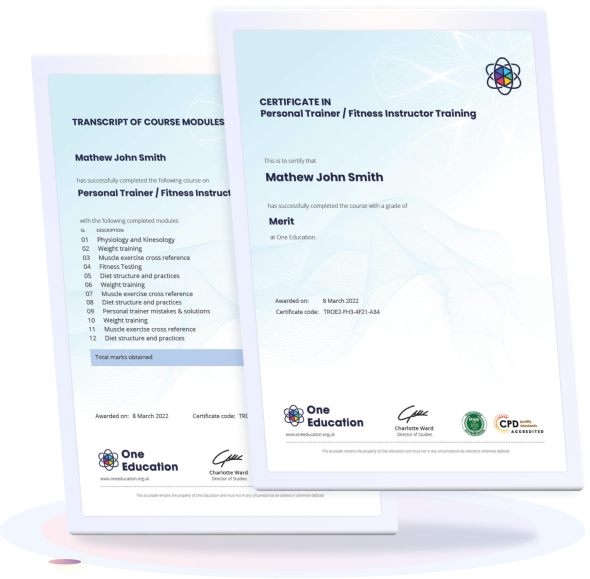
| Certificate and Transcript | |||
| We Appreciate Your Feedback | 00:00:00 | ||
| Collect your Certificate and Transcript | 00:00:00 | ||
| Order your Accredited Certificate directly from CPDQS | 00:00:00 | ||
Functional Skills Maths – Level 2