Introduction to Astronomy

  • Original

Introduction to Astronomy explores the universe, celestial bodies, and cosmic phenomena. Learn how stars, planets, galaxies, and space systems work while building fundamental knowledge of observational astronomy and the structure of space.

Introduction to Astronomy
cpdacree aoth ukrlp 24hs fullonline 14days

Get access to 5000+ courses including this for only £49. Learn More.

Overview of Introduction to Astronomy

Introduction to Astronomy explores stars, planets, galaxies, and the solar system using powerful telescopes. Learn how gravity governs orbits and how lightyears measure cosmic distances. This beginner-friendly course builds a strong foundation in understanding nebulae, celestial motion, and the vast structure of the universe.

Students study stargazing, the Moon, planets, meteors, asteroids, and comets while exploring how gravity shapes orbits across the solar system. Lessons explain nebulae, galaxies, and black holes, helping learners visualize cosmic evolution through telescopes and understand distances measured in lightyears.

This Introduction to Astronomy course also covers the Big Bang, dark matter, dark energy, and theories of the multiverse. Students examine stars and galaxies through telescopes, studying black holes and cosmic expansion to understand how the universe formed, evolves, and may eventually end.

The course was audited and updated on: 15th April, 2026

Learning Outcomes of Introduction to Astronomy

Method Of Assessment​

Learners can complete a mock exam to practice and assess their understanding before taking the final exam. The final multiple-choice exam is automatically marked, and learners must achieve at least 60% to pass. Successful learners receive a CPD-certified certificate.

Certification

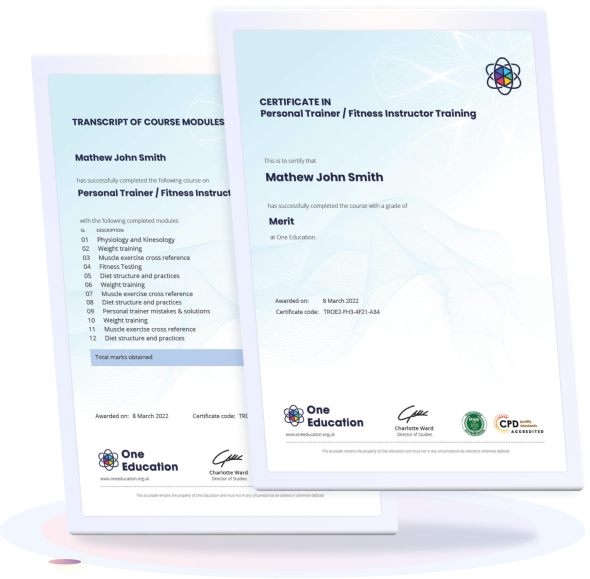
one education Certificate

After completing the Introduction to Astronomy course assessment, you will be eligible to receive a CPD-accredited certificate worth £9 from One Education to demonstrate your achievement.

The certificate is also available as a printed hard copy delivered by post for £15.

Why Study This Introduction to Astronomy Course?

Studying Introduction to Astronomy opens a pathway to understanding the universe beyond Earth, from planets to galaxies. It builds scientific curiosity, analytical thinking, and data interpretation skills essential for academic growth and careers in space-related fields.

With increasing global interest in space exploration and satellite technology, this course helps learners grasp fundamental astronomical concepts, improve problem-solving abilities, and appreciate humanity’s place in the cosmos through structured scientific learning and observation techniques.

Course Duration

The Introduction to Astronomy Course has a total study time of 6 hours 13 minutes. Learners can complete the course at a flexible pace, allowing them to progress through the material in line with their personal schedule, availability, and preferred learning speed.

Requirements

The Introduction to Astronomy online course requirements are straightforward and accessible. Learners should have a basic understanding of science and mathematics, along with curiosity about space and the universe. The course is fully online, allowing study from any internet-enabled device at a flexible pace and convenient schedule.

Career Path

Frequently Asked Questions

Astronomy is the study of space, stars, planets, and other celestial objects.

They study the universe, including galaxies, planets, moons, stars, and cosmic events.

A galaxy is a huge system of stars, gas, dust, and dark matter held together by gravity.

It is the Sun and all objects that orbit it, including planets, moons, and asteroids.

They use telescopes, satellites, space probes, and computer models.

It helps us understand the universe, space exploration, and the origin of Earth.

Course Curriculum

Introduction to Astronomy
Module 01: Basics of Astronomy 00:34:00
Module 02: Stargazing 01:00:00
Module 03: The Moon 00:23:00
Module 04: The Planets 00:57:00
Module 05: Meteor & Meteorites 00:17:00
Module 06: Asteroids 00:19:00
Module 07: Comets 00:17:00
Module 08: Stars and the Zodiac 00:29:00
Module 09: Galaxy, the Milky Way & Black Holes 00:24:00
Module 10: The Big Bang & Extra-terrestrial Life Forms 00:24:00
Module 11: Dark Matter, Dark Energy, the Multiverse 00:14:00
Module 12: How the Universe Might End 00:15:00
Mock Exam
Mock Exam – Introduction to Astronomy 00:20:00
Final Exam
Final Exam – Introduction to Astronomy 00:20:00
Introduction to Astronomy
top