Operations Management: Enterprise Resource Planning

Operations Management: Enterprise Resource Planning
cpdacree aoth ukrlp 24hs fullonline 14days

Get access to 5000+ courses including this for only £49. Learn More.

Overview of Operations Management: Enterprise Resource Planning

Operations Management: Enterprise Resource Planning is a comprehensive course designed to enhance understanding of Enterprise Resource Planning and modern Operations Management. It focuses on ERP Systems, Business Integration, Supply Chain Planning, Process Automation, Data Management, Inventory Control, and Workflow Coordination to improve organizational efficiency and decision-making across enterprise functions effectively.

Section 01 to 03 of the curriculum explores Operations of an Economic Entity through Enterprise Resource Planning, emphasizing Entrepreneurship, Creativity & Innovation, and ERP Systems aligned with Internal Priorities. It strengthens Business Integration, Supply Chain Planning, Process Automation, and Resource Optimization while enhancing strategic decision-making and operational efficiency in dynamic business environments.

Sections 04 and 05 focus on Operational Indicators, KPIs & Metrics along with Measurement and Presentation Tools within Operations Management and Enterprise Resource Planning. Learners gain expertise in Data Management, Resource Optimization, Inventory Control, and Workflow Coordination using ERP Systems, enabling accurate performance tracking, reporting, and continuous business process improvement.

The course was audited and updated on: 12th June, 2026

Learning Outcomes of Operations Management: Enterprise Resource Planning

Method Of Assessment​

Learners complete an assignment designed to evaluate their understanding of the course content. The assignment is reviewed by qualified tutors who provide personalised feedback, allowing learners to demonstrate their applied knowledge and skills.

Certification

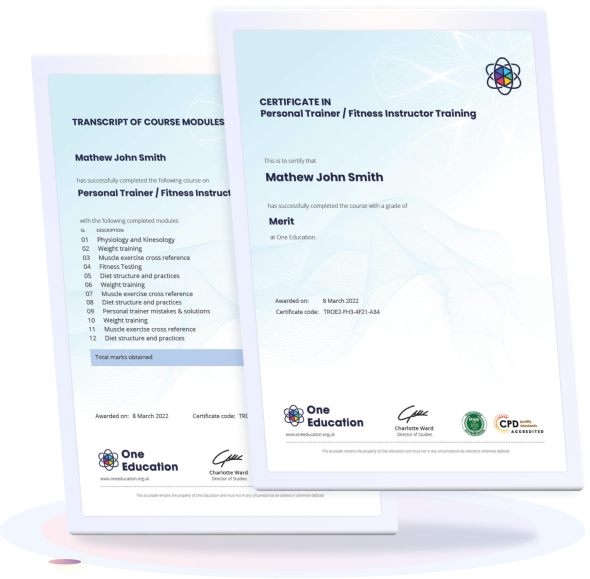
one education Certificate

After completing the Operations Management: Enterprise Resource Planning course assessment, you will be eligible to receive a CPD-accredited certificate worth £9 from One Education to demonstrate your achievement.

The certificate is also available as a printed hard copy delivered by post for £15.

Why Study This Operations Management: Enterprise Resource Planning Course?

Operations Management: Enterprise Resource Planning is essential in modern organizations where integrated systems are used to manage core business processes efficiently. This course helps learners understand how ERP systems connect different departments such as finance, supply chain, and operations.

Studying this course develops skills in process integration, system management, and operational planning. It prepares professionals to use ERP tools effectively, improve data flow across the organization, and support better decision-making and operational efficiency.

Course Duration

The Operations Management: Enterprise Resource Planning course has a total study time of 1 hour, 55 minutes. Learners can progress through the material at a flexible pace, enabling them to complete the programme conveniently while developing practical knowledge of ERP systems, operations management, and integrated business resource planning.

Requirements

The Operations Management: Enterprise Resource Planning course is suitable for learners with a basic understanding of business operations, supply chain systems, or enterprise management. Strong analytical thinking, problem-solving ability, and organisational skills are recommended. The course is fully online and accessible from any internet-enabled device, allowing flexible study at your own pace and convenience.

Career Path

Frequently Asked Questions

It focuses on how organisations use ERP systems to integrate and manage core business processes such as finance, supply chain, procurement, inventory, HR, and operations.

No, beginners can join, although basic knowledge of business operations or management is helpful.

It is usually delivered online through self-paced modules, ERP system demonstrations, and case studies.

Yes, most courses include ERP-based exercises, quizzes, and business process simulations.

You will receive a certificate of completion in Operations Management: Enterprise Resource Planning.

You can work in operations, ERP support, business analysis, supply chain coordination, inventory management, or operations management roles.

Course Curriculum

Section 01: Operations of an Economic Entity: Enterprise Resource Planning
Operations of an Economic Entity: Enterprise Resource Planning 00:03:00
The Hierarchical Perspective 00:02:00
Enterprise Resource Planning ERP 00:01:00
Technology’s Role in Business 00:03:00
Types of Information Systems 00:03:00
Interrelations between Systems 00:01:00
Functional IT Systems 00:01:00
Section 02: Entrepreneurship Creativity & Innovation
Enterprise Resource Planning: External Priorities 00:02:00
Why ERP? 00:02:00
Overall Implementation Requisites for ERP 00:02:00
Challenges of ERP Implementation in Business 00:02:00
Senior and Project Management 00:03:00
Critical Factors for Successful ERP Implementation 00:07:00
Implementation Steps 00:03:00
ERP: Integration and Supply Chain Support 00:02:00
Web Services Integration Options 00:02:00
Market Information and Sales Orders 00:02:00
Benefits of the Marketing Information System 00:02:00
Customer Relationship Management 00:02:00
Customer Relationship Management Functions 00:02:00
Section 03: Enterprise Resource Planning: Internal Priorities
ERP: HR Planning and Utilization 00:03:00
What is an HRIS? 00:05:00
ERP: Electronic Commerce – Accounting System Interface 00:04:00
E-Commerce Supply Chain Management Solutions 00:04:00
Problems in ERP and E-Commerce Integration 00:01:00
Section 04: Operational Indicator, KPI's & Metrics
Operational Indicator, KPI’s and Metrics 00:03:00
What is Metrics? 00:01:00
Need for Metrics in Testing and Quality Analysis 00:01:00
Metrics Continued 00:04:00
What are Quality Metrics? 00:03:00
Tips of Selection of Quality Metrics 00:02:00
Lead, Spot & Lagged Indicators – Drive, Monitor & Report Indicators 00:05:00
Lean Manufacturing and Agility 00:05:00
Quantitative vs. Qualitative Indicators and Measurement Scope 00:02:00
Section 05: Measurement and Presentation Tools
Measurement and Presentation Tools 00:02:00
Mechanisms of Success 00:03:00
Monitoring, Evaluation and Reporting 00:05:00
Balanced Scorecard Perspectives 00:04:00
Strategy Mapping 00:03:00
Balanced Scorecards vs. Dashboards 00:04:00
Metrics Measurements: IT Systems in ERP 00:04:00
Assignment
Assignment -Operations Management: Enterprise Resource Planning 00:00:00
Operations Management: Enterprise Resource Planning
top