
 Take All courses for £49
 1 Year Access
 320 Students
  4 hours, 14 minutes
The Complete Raspberry Pi Bootcamp
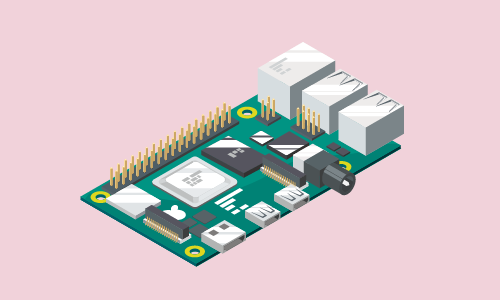
The Complete Raspberry Pi Bootcamp introduces the Raspberry Pi platform, covering setup, operating systems, programming basics, and hardware interfacing. This course helps learners understand how Raspberry Pi is used to build practical computing, electronics, and embedded system projects.


The Complete Raspberry Pi Bootcamp
Or
 1 Year Access
 -
Intermediate
-
320 Students
-
 4 hours, 14 minutes
Course Curriculum
| Introduction & Getting Started | |||
| Introduction | 00:03:00 | ||
| Who We Are? | 00:05:00 | ||
| Quick Intro To Raspberry Pi World | 00:04:00 | ||
| 10 Uses for Raspberry Pi Board | 00:02:00 | ||
| Different Versions of Raspberry Pi | 00:02:00 | ||
| Raspberry Pi Components | 00:02:00 | ||
| OS Versions Available for Raspberry Pi | 00:06:00 | ||
| Arduino Vs Raspberry Pi Vs BeagleBone | 00:05:00 | ||
| Course Material Works with any high-tech board! | 00:01:00 | ||
| Running the Raspberry Pi Board | |||
| What do you need to run the Raspberry Pi | 00:04:00 | ||
| Getting OS and Running Raspberry Pi | 00:09:00 | ||
| Setting Up Raspberry Pi for the First Time | 00:04:00 | ||
| Simulating Raspberry Pi | 00:05:00 | ||
| Raspberry PI Hardware and Starter Kit that can be used with it | |||
| Simple Starter Kit | 00:07:00 | ||
| Raspberry Pi Model B Unboxing | 00:01:00 | ||
| A Tour inside Raspberry Pi Operating System | |||
| A tour inside Raspberry Pi Operating System | 00:04:00 | ||
| Raspberry Pi Command Line | 00:06:00 | ||
| Updating Software Packages | 00:06:00 | ||
| Control Raspberry Pi Board From another device | |||
| Control Raspberry Pi from another Device using SSH | 00:04:00 | ||
| Control Raspberry Pi from another Device using VNC Server | 00:08:00 | ||
| Assign A fixed IP Address for Raspberry Pi Board | 00:04:00 | ||
| Connecting Raspberry Pi to another computer using Network Cable | 00:04:00 | ||
| Control General Purpose Input Output | |||
| Programming GPIO with Python | 00:04:00 | ||
| Python and Your First Code | 00:08:00 | ||
| Installing the Control Library | 00:03:00 | ||
| Practical Examples | |||
| Example 1 Blinking Led | 00:07:00 | ||
| Example Two Reading Input Values From A Switch | 00:03:00 | ||
| Example Three Running the Led Using LDR | 00:03:00 | ||
| Example Four PIR Motion Detector | 00:04:00 | ||
| Arduino Vs Raspberry PI Vs PIC Microcontroller | |||
| What are Arduino Raspberry Pi and PIC Microcontroller | 00:06:00 | ||
| Quick summary of the main differences | 00:05:00 | ||
| Hardware: Power and Connectivity | 00:03:00 | ||
| Hardware: IO Pins Storage and USB | 00:04:00 | ||
| Software Comparison | 00:05:00 | ||
| Expanding Onward Capabilities | 00:03:00 | ||
| How to decide | 00:06:00 | ||
| Connect and Interface Raspberry Pi with Arduino | |||
| Raspberry Pi Connections | 00:03:00 | ||
| Raspberry Pi Configuration and Code | 00:06:00 | ||
| Arduino Configuration | 00:06:00 | ||
| Arduino Raspberry Pi Connection | 00:02:00 | ||
| Finishing Configuration | 00:07:00 | ||
| Completing Python Setup | 00:05:00 | ||
| Final Step | 00:01:00 | ||
| Make a Smart Mirror Using Raspberry Pi | |||
| Download Raspian Operating System for Raspberry Pi | 00:02:00 | ||
| Install Raspbian Operating System on the SD Card | 00:07:00 | ||
| Practical Work Smart Mirror | |||
| Starting Raspian and Getting the Code and Libraries | 00:02:00 | ||
| Downloading and Installing pip | 00:02:00 | ||
| Installing Dependencies | 00:02:00 | ||
| Getting API Token for Weather | 00:03:00 | ||
| Adding the API Token and Running the Application | 00:04:00 | ||
| Practical Assembly Smart Mirror | |||
| Before Practical Assembly | 00:07:00 | ||
| Practical Assembly | 00:09:00 | ||
| Obstacle Avoiding Robot with Raspberry Pi | |||
| Required Material | 00:03:00 | ||
| How Things Work | |||
| Raspberry Pi and Ultrasonic Sensor | 00:08:00 | ||
| IR Sensor and Motor Driver | 00:03:00 | ||
| Voltage Regulator and DC Motors | 00:03:00 | ||
| Circuit Diagram | |||
| Circuit Diagram | 00:06:00 | ||
| Code | |||
| Code | 00:03:00 | ||
| Order Your Certificate | |||
| Order Your Certificate Now | 00:00:00 | ||
The Complete Raspberry Pi Bootcamp