Yes, British Sign Language (BSL) can be relatively easy to start learning, especially when you practise regularly and focus on everyday communication. Beginners can quickly pick up basic signs, fingerspelling and simple phrases, although becoming fluent requires consistent practice and a deeper understanding of how BSL works.
BSL is a visual language that uses hand shapes, movements, facial expressions and body language to communicate meaning. Rather than simply replacing spoken English with signs, it has its own grammar and sentence structure. This can feel unfamiliar at first, but learning becomes more natural as you practise recognising and producing signs in real conversations.

So, how easy is it to learn BSL? The answer depends on your learning approach, practice time and goals. Basic communication can be achievable for many beginners, while confident or fluent signing takes considerably longer. Understanding the learning process, common challenges and effective practice methods can help you decide what to expect when starting BSL.
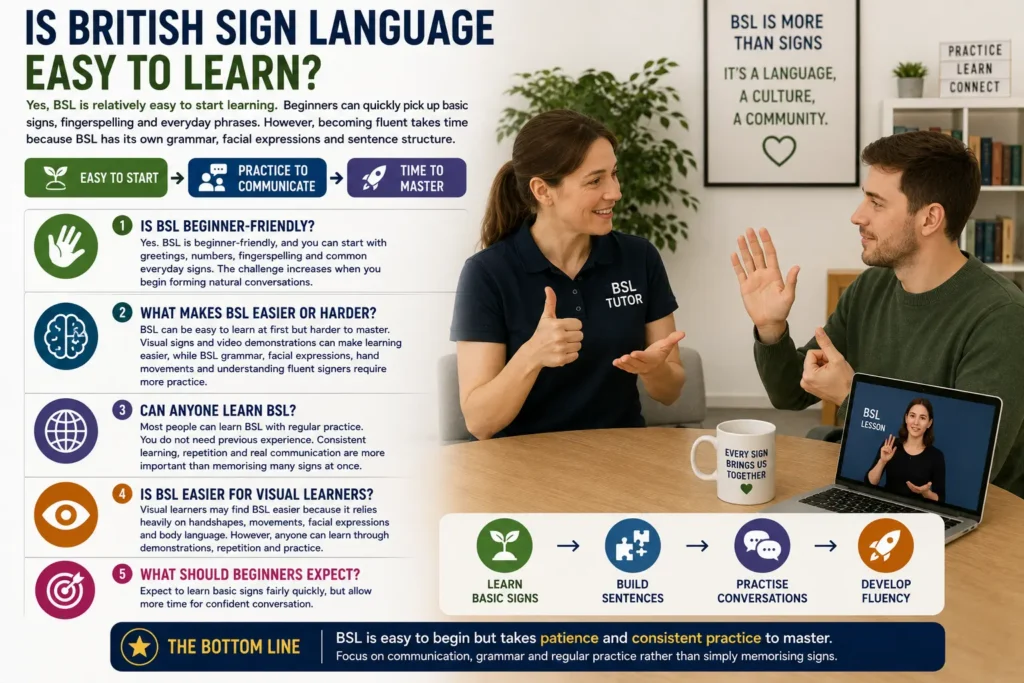
Is British Sign Language Easy to Learn?
Yes, BSL is relatively easy to start learning. Beginners can quickly pick up basic signs, fingerspelling and everyday phrases. However, becoming fluent takes time because BSL has its own grammar, facial expressions and sentence structure.
Easy to start → Practice to communicate → Time to master
👋 Is BSL Beginner-Friendly?
Yes. BSL is beginner-friendly, and you can start with greetings, numbers, fingerspelling and common everyday signs. The challenge increases when you begin forming natural conversations.
🤔 What Makes BSL Easier or Harder?
BSL can be easy to learn at first but harder to master. Visual signs and video demonstrations can make learning easier, while BSL grammar, facial expressions, hand movements and understanding fluent signers require more practice.
🌍 Can Anyone Learn BSL?
Most people can learn BSL with regular practice. You do not need previous experience. Consistent learning, repetition and real communication are more important than memorising many signs at once.
👀 Is BSL Easier for Visual Learners?
Visual learners may find BSL easier because it relies heavily on handshapes, movements, facial expressions and body language. However, anyone can learn through demonstrations, repetition and practice.
🎯 What Should Beginners Expect?
Expect to learn basic signs fairly quickly, but allow more time for confident conversation.
🌱 Learn basic signs → 🧩 Build sentences → 💬 Practise conversations → 🚀 Develop fluency
⭐ The Bottom Line
BSL is easy to begin but takes patience and consistent practice to master. Focus on communication, grammar and regular practice rather than simply memorising signs.
Continue Your Professional Development
Interested in developing your communication skills? Explore our British Sign Language Level 1 & 2 course and discover more professional development courses to support your career goals. Browse all courses at One Education.
How Long Does It Take to Learn BSL?
You can learn basic BSL in a few weeks to a few months. Simple conversations may be possible within 1–3 months, while becoming confident can take around 6–12 months. Reaching fluency usually requires several years of regular learning and real-world practice.
How Long Does It Take to Learn Basic BSL?
Most beginners can build a basic foundation within 1–3 months. You can start with fingerspelling, greetings, numbers, everyday vocabulary, basic questions and common expressions.
How Quickly Can You Have a Simple BSL Conversation?
With consistent practice, you may begin having simple conversations within 1–3 months. Start by introducing yourself, discussing family or work, expressing likes and dislikes, and asking basic questions.
How Long Does It Take to Become Confident in BSL?
Developing confidence may take around 6–12 months or longer. Regularly practising both signing and understanding other signers will help you communicate more naturally and rely less on translating from English.
How Long Does It Take to Become Fluent?
BSL fluency usually takes several years. Fluency involves more than knowing signs; you also need to understand BSL grammar, facial expressions, signing space and natural communication with different signers.
How Much Practice Should You Do Each Week?
Aim for around 15–30 minutes of practice on most days. Short, regular sessions can help you remember signs, improve receptive skills and build confidence more effectively than occasional long study sessions.
Quick BSL Learning Timeline:
🖐️ Basic BSL: A few weeks–3 months
💬 Simple conversations: 1–3 months
👍 Greater confidence: 6–12 months
🌟 Fluency: Several years
⏱️ Practice: 15–30 minutes most days
What Is the Hardest Part of Learning BSL?
The hardest part of learning BSL is usually combining signs with BSL grammar, sentence structure, facial expressions and understanding other signers. Memorising signs may become easier with practice, but communicating naturally takes more time.
Is BSL Grammar Difficult to Understand?
BSL has its own grammar, so translating English word-for-word does not always work. Learners need practice to become familiar with natural BSL patterns.
Why Is BSL Sentence Structure Different from English?
BSL is an independent language with its own sentence structure. Instead of following English word order, learners should focus on expressing the intended meaning visually and naturally.
Are Facial Expressions Important in BSL?
Yes. Facial expressions are an important part of BSL and can communicate questions, emotions and emphasis. Using them naturally alongside signs can be challenging for beginners.
Is Remembering Signs Difficult?
Remembering many signs can take time, especially without regular practice. Using signs in conversations and revisiting them frequently can improve recall.
Why Is Understanding Other Signers Harder?
Other people may sign at different speeds and use different styles. Regularly watching different BSL users can strengthen receptive skills and make real conversations easier to follow.
Do Regional Variations Make BSL Harder?
Yes, some BSL signs vary across regions of the UK. Learners do not need to know every variation immediately, but exposure to different signers can gradually build confidence.
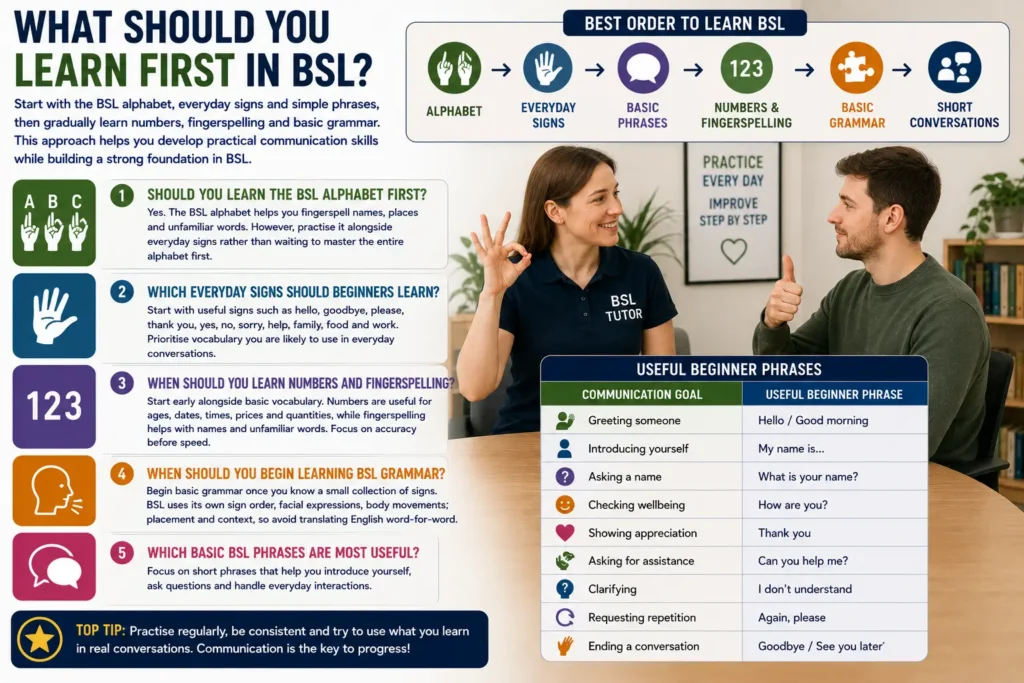
What Should You Learn First in BSL?
Start with the BSL alphabet, everyday signs and simple phrases, then gradually learn numbers, fingerspelling and basic grammar. This approach helps you develop practical communication skills while building a strong foundation in BSL.
Should You Learn the BSL Alphabet First?
Yes. The BSL alphabet helps you fingerspell names, places and unfamiliar words. However, practise it alongside everyday signs rather than waiting to master the entire alphabet first.
Which Everyday Signs Should Beginners Learn?
Start with useful signs such as hello, goodbye, please, thank you, yes, no, sorry, help, family, food and work. Prioritise vocabulary you are likely to use in everyday conversations.
When Should You Learn Numbers and Fingerspelling?
Start early alongside basic vocabulary. Numbers are useful for ages, dates, times, prices and quantities, while fingerspelling helps with names and unfamiliar words. Focus on accuracy before speed.
When Should You Begin Learning BSL Grammar?
Begin basic grammar once you know a small collection of signs. BSL uses its own sign order, facial expressions, body movements, placement and context, so avoid translating English word-for-word.
Which Basic BSL Phrases Are Most Useful?
Focus on short phrases that help you introduce yourself, ask questions and handle everyday interactions.
| Communication Goal | Useful Beginner Phrase |
|---|---|
| Greeting someone | Hello / Good morning |
| Introducing yourself | My name is… |
| Asking a name | What is your name? |
| Checking wellbeing | How are you? |
| Showing appreciation | Thank you |
| Asking for assistance | Can you help me? |
| Clarifying | I don't understand |
| Requesting repetition | Again, please |
| Ending a conversation | Goodbye / See you later |
⭐ Best Order to Learn BSL
Alphabet → Everyday Signs → Basic Phrases → Numbers & Fingerspelling → Basic Grammar → Short Conversations
What Is the Best Way to Learn BSL?
The best way to learn BSL is to combine structured lessons, visual practice and real conversations. Online learning offers flexibility, while classroom sessions and live practice provide valuable feedback and interaction.
Is It Better to Learn BSL Online or in a Classroom?
Both can work well. Online courses let you learn at your own pace and replay signs, while classroom learning provides immediate feedback and more opportunities to practise with others. Combining both can be especially effective.
Can You Teach Yourself Basic BSL?
Yes. You can learn basic signs, fingerspelling, numbers and everyday phrases independently. However, practising with experienced signers can help correct mistakes in handshape, movement, facial expressions and sentence structure.
Should You Learn From Videos or Live Signers?
Use both. Videos allow you to pause and repeat signs, while live signers help you experience natural signing, different communication styles and real-time conversations.
Why Is Practising With Other People Important?
Regular practice helps you recognise signs faster, improve fluency and develop confidence. It also strengthens your ability to understand and respond to BSL naturally rather than simply memorising individual signs.
How Can Interacting With Deaf BSL Users Improve Your Skills?
Respectful interaction with Deaf BSL users can expose you to natural BSL, everyday expressions and Deaf culture. Deaf-led events, workshops and community activities can provide valuable opportunities to experience BSL in authentic settings.
💡 Key Takeaway
Learn → Watch → Practise → Interact → Get Feedback → Repeat.
Combining structured learning with consistent practice and real interaction is one of the most effective ways to develop confident, natural BSL communication.
How Can You Make Learning BSL Easier?
You can make learning BSL easier by practising regularly, remembering signs through context, using full phrases, developing receptive skills and practising independently. Short, consistent sessions can help signs feel more natural and easier to recall.
Should You Practise BSL Every Day?
Yes. Even 10–15 minutes of daily practice can improve your memory, accuracy and confidence. Try using signs during everyday activities to reinforce what you learn.
How Can You Remember New Signs?
Connect new signs with images, movements and real-life situations. Group vocabulary into themes such as food, family or work, and regularly review previously learned signs.
Why Practise Full Phrases Instead of Isolated Signs?
Full phrases help you understand BSL structure, context and natural communication. They also teach you how vocabulary, facial expressions and body movements work together.
How Can You Improve Your Receptive Signing Skills?
Watch different BSL signers and focus on handshapes, movements, facial expressions and body language. Gradually practise understanding signing at different speeds without relying immediately on explanations.
How Can You Practise BSL Without a Signing Partner?
Use a mirror, record yourself, follow BSL videos or sign about your daily activities. Watching recordings of yourself can help you identify areas where your clarity and fluency need improvement.
Quick Tip: Practise little and often, learn signs in context and use BSL whenever possible.
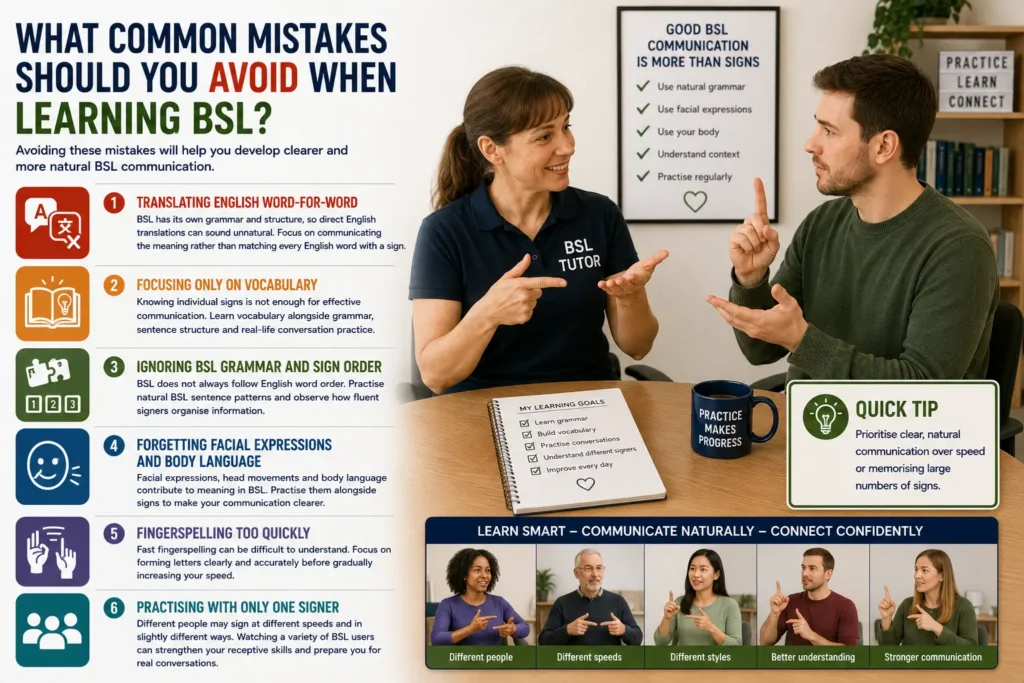
What Common Mistakes Should You Avoid When Learning BSL?
Avoid translating English word-for-word, focusing only on vocabulary, ignoring BSL grammar, forgetting facial expressions, fingerspelling too quickly and practising with only one signer. Avoiding these mistakes will help you develop clearer and more natural BSL communication.
Translating English Word-for-Word
BSL has its own grammar and structure, so direct English translations can sound unnatural. Focus on communicating the meaning rather than matching every English word with a sign.
Focusing Only on Vocabulary
Knowing individual signs is not enough for effective communication. Learn vocabulary alongside grammar, sentence structure and real-life conversation practice.
Ignoring BSL Grammar and Sign Order
BSL does not always follow English word order. Practise natural BSL sentence patterns and observe how fluent signers organise information.
Forgetting Facial Expressions and Body Language
Facial expressions, head movements and body language contribute to meaning in BSL. Practise them alongside signs to make your communication clearer.
Fingerspelling Too Quickly
Fast fingerspelling can be difficult to understand. Focus on forming letters clearly and accurately before gradually increasing your speed.
Practising With Only One Signer
Different people may sign at different speeds and in slightly different ways. Watching a variety of BSL users can strengthen your receptive skills and prepare you for real conversations.
Quick Tip: Prioritise clear, natural communication over speed or memorising large numbers of signs.
Is Learning BSL Worth It?
Yes, learning BSL is worth it because it helps you communicate with Deaf BSL users, improves Deaf awareness and provides a valuable skill for everyday life and the workplace. Even if you never use BSL professionally, it can help you become a more confident and inclusive communicator.
What Are the Benefits of Learning BSL?
Learning BSL can help you communicate more effectively with Deaf people, understand Deaf culture and develop stronger visual and non-verbal communication skills. It can also be a useful additional skill to include on your CV.
Can BSL Be Useful in the Workplace?
Yes. BSL can be valuable in workplaces involving regular communication with customers, patients, pupils or service users. It may be particularly useful in education, healthcare, social care, childcare, customer service, hospitality, retail and public services.
Can BSL Improve Communication and Deaf Awareness?
BSL teaches you to pay closer attention to facial expressions, body language and visual communication. Learning the language can also improve your understanding of Deaf culture, accessibility and different communication preferences.
Is BSL Worth Learning If You Do Not Need It for Work?
Absolutely. You might use BSL to communicate with Deaf friends, relatives or people in your community, or simply learn it as a new language. Its value goes beyond employment by helping make everyday communication more accessible and inclusive.
In short: BSL is more than a career skill—it is a valuable way to communicate, connect and promote inclusion.
FAQs — About Learning BSL
Is BSL easy to learn?
Yes. Basic BSL is relatively easy to learn, but becoming fluent requires regular practice.How long does it take to learn BSL?
Basic signs can be learned within weeks or months, while fluency takes considerably longer.Can I teach myself BSL?
Yes. You can learn basic BSL through online courses, videos and regular practice.Is BSL difficult for beginners?
Not usually. Beginners can start with simple signs, fingerspelling and everyday phrases.What is the easiest way to learn BSL?
Practise regularly, watch experienced signers and use signs in everyday situations.What is the hardest part of learning BSL?
Understanding fast signing, BSL grammar and using facial expressions naturally can take time.Do I need to learn BSL grammar?
Yes. BSL has its own grammar and sentence structure, which differs from spoken English.Can I become fluent in BSL online?
Online learning can build strong skills, but regular interaction with BSL users is valuable for fluency.
Article by
Sam Walker is an education specialist and author at One Education, bringing over 4 years of experience in creating practical resources and strategies to support teachers and enhance student learning.
Related Articles
Get a FREE Course
- Learn useful skills online free
- Get CPD accredited certificate
- Add it to your CV today!

Aug, 26, 2026