Effective Written Communication: Building Professionalism and Productivity

April 16, 2026 | 12 minutes | 683 Readers

Have you ever sent an email that was misunderstood or received a message that left you unsure of the next step? In many workplaces, unclear writing leads to confusion, missed deadlines, and repeated follow-ups. A simple lack of clarity in tone or structure can turn a straightforward message into a time-consuming problem. Written communication is a core skill in professional life, shaping how your ideas are understood and how others perceive your competence. From emails and reports to internal messages,

rating

Bestselling Course

View Details SAVE 94% NOW
Effective Written Communication: Building Professionalism and Productivity

Have you ever sent an email that was misunderstood or received a message that left you unsure of the next step? In many workplaces, unclear writing leads to confusion, missed deadlines, and repeated follow-ups. A simple lack of clarity in tone or structure can turn a straightforward message into a time-consuming problem.

Written communication is a core skill in professional life, shaping how your ideas are understood and how others perceive your competence. From emails and reports to internal messages, clear and well-structured writing reflects professionalism, builds trust, and supports effective collaboration. It ensures that your message is delivered accurately and received as intended.

Strong written communication also plays a key role in improving productivity. Clear messages reduce errors, save time, and help teams work more efficiently without constant clarification. In this blog, you will learn how to write with clarity, maintain a professional tone, and structure your communication effectively to enhance both your productivity and professional image.

Find the Course That Suits You!

We create outstanding professionals in Employability, Business, Health Care, Marketing, Language, and Functional Skills. Whether you're starting or advancing your career, we turn your passion into success as the UK’s most trusted e-learning course provider.
5000+ course

What is Effective Written Communication?

Effective written communication refers to the ability to convey information clearly and accurately through written words. In simple terms, it means expressing ideas in a way that the reader can easily understand without confusion or misinterpretation. Whether it is a short message or a detailed document, the goal is to communicate thoughts in a structured and meaningful manner.

In the workplace, written communication plays a vital role in daily operations. It is commonly used in emails, reports, proposals, and instant messages to share information, provide instructions, and maintain professional records. Clear written communication ensures that teams stay aligned, tasks are completed correctly, and important information is documented for future reference.

Clarity, tone, and purpose are key elements of effective writing. Clarity helps the reader quickly understand the message, while an appropriate tone maintains professionalism and builds positive relationships. Having a clear purpose ensures that the message stays focused and delivers the intended outcome, making communication more efficient and impactful.

Why Written Communication Matters in the Workplace​

Why Written Communication Matters in the Workplace

Written communication plays a vital role in the workplace, as it ensures clarity and minimises the risk of misunderstandings. Clear emails, reports, and messages help convey ideas accurately, allowing tasks to be completed correctly the first time. This not only reduces errors but also improves overall workflow and decision-making.

It also helps build a strong professional image and credibility. Well-structured and grammatically correct communication reflects attention to detail and professionalism, which can enhance trust among colleagues, clients, and stakeholders. Over time, this contributes to a positive reputation within the organisation.

Effective written communication saves time and increases efficiency by providing clear instructions and reducing the need for repeated explanations. It enables employees to access information quickly and stay aligned with organisational goals. Additionally, it supports teamwork and collaboration by ensuring that everyone is informed, connected, and working towards common objectives.

Key Elements of Effective Written Communication​

Key Elements of Effective Written Communication

Effective written communication is essential for maintaining professionalism and ensuring messages are clearly understood. Whether you are writing emails, reports, or business documents, focusing on clarity, tone, structure, and accuracy helps improve both productivity and credibility.

Clarity and Conciseness

Clear and concise writing ensures that your message is easily understood without confusion. Avoid using unnecessary words or overly complex sentences, as they can distract the reader from the main point. Instead, keep your sentences simple, direct, and focused on delivering the intended message efficiently. This approach saves time and makes communication more effective in professional settings.

Tone and Professionalism

The tone of your writing reflects your attitude and professionalism. Using polite and respectful language helps build trust and maintain positive relationships with your audience. It is also important to match your tone to the situation—formal for business communication and slightly relaxed when appropriate. A well-adjusted tone ensures your message is received in the right context.

Structure and Formatting

A well-structured document makes information easier to read and understand. Using headings, bullet points, and proper spacing helps organise your content and allows readers to scan key information quickly. Good formatting not only improves readability but also gives your writing a more professional and polished appearance.

Grammar and Accuracy

Accurate writing is crucial for maintaining credibility. Proofreading your work helps identify and correct errors before sharing your message. Paying attention to grammar, spelling, and punctuation reduces misunderstandings and presents you as detail-oriented and reliable. Avoiding common mistakes ensures your communication remains clear and professional.

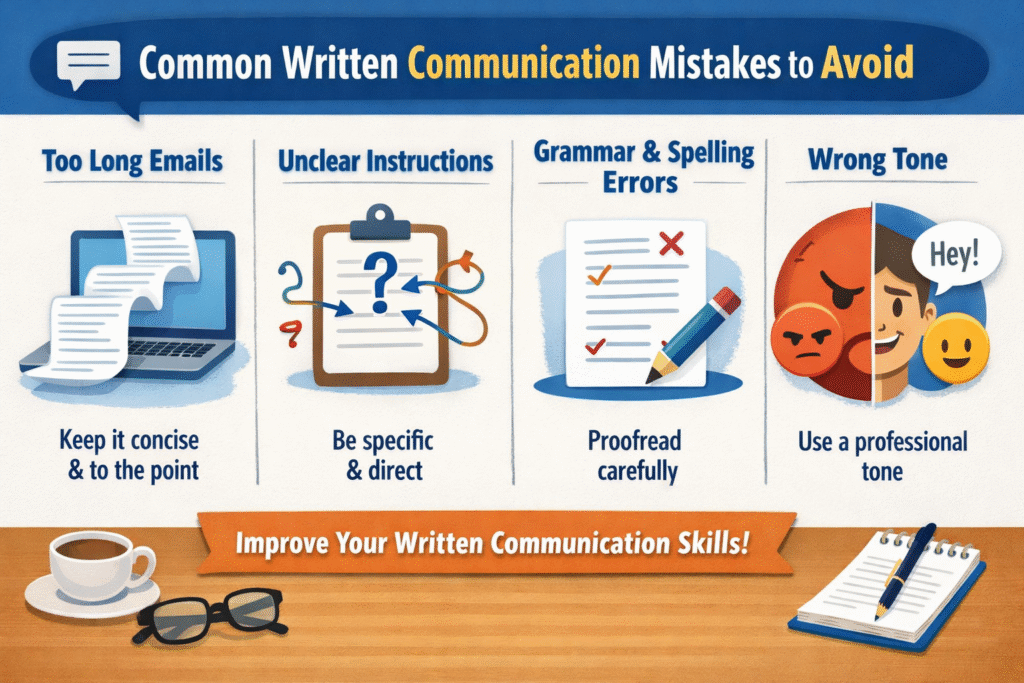
Common Written Communication Mistakes to Avoid Effective written communication plays a vital role in maintaining professionalism and ensuring clarity in any workplace. However, many individuals unintentionally make mistakes that can lead to confusion, misinterpretation, or even damage professional relationships. Understanding these common errors is the first step towards improving communication skills and boosting overall productivity. One of the most frequent issues is writing overly long emails. Lengthy messages often lose the reader’s attention and make it difficult to identify key points. Keeping communication concise and structured helps ensure that the message is clear and easy to understand. Another common mistake is providing vague or unclear instructions, which can lead to misunderstandings and errors. Clear, direct language with specific details is essential for effective communication. Poor grammar and spelling can also negatively impact the credibility of your message. Even minor errors may create a perception of carelessness or lack of professionalism. Taking the time to proofread your writing ensures accuracy and builds trust with the reader. Additionally, using the wrong tone—whether too casual or overly harsh—can affect how your message is received. A balanced, respectful, and professional tone helps maintain positive relationships and encourages effective collaboration. By avoiding these common written communication mistakes, individuals can communicate more clearly, professionally, and confidently in any setting. Improving these skills not only enhances day-to-day interactions but also supports long-term career growth and workplace success.

Common Written Communication Mistakes to Avoid

Effective written communication plays a vital role in maintaining professionalism and ensuring clarity in any workplace. However, many individuals unintentionally make mistakes that can lead to confusion, misinterpretation, or even damage professional relationships. Understanding these common errors is the first step towards improving communication skills and boosting overall productivity.

One of the most frequent issues is writing overly long emails. Lengthy messages often lose the reader’s attention and make it difficult to identify key points. Keeping communication concise and structured helps ensure that the message is clear and easy to understand. Another common mistake is providing vague or unclear instructions, which can lead to misunderstandings and errors. Clear, direct language with specific details is essential for effective communication.

Poor grammar and spelling can also negatively impact the credibility of your message. Even minor errors may create a perception of carelessness or lack of professionalism. Taking the time to proofread your writing ensures accuracy and builds trust with the reader. Additionally, using the wrong tone—whether too casual or overly harsh—can affect how your message is received. A balanced, respectful, and professional tone helps maintain positive relationships and encourages effective collaboration.

By avoiding these common written communication mistakes, individuals can communicate more clearly, professionally, and confidently in any setting. Improving these skills not only enhances day-to-day interactions but also supports long-term career growth and workplace success.

Practical Tips to Improve Your Writing Skills

Practical Tips to Improve Your Writing Skills

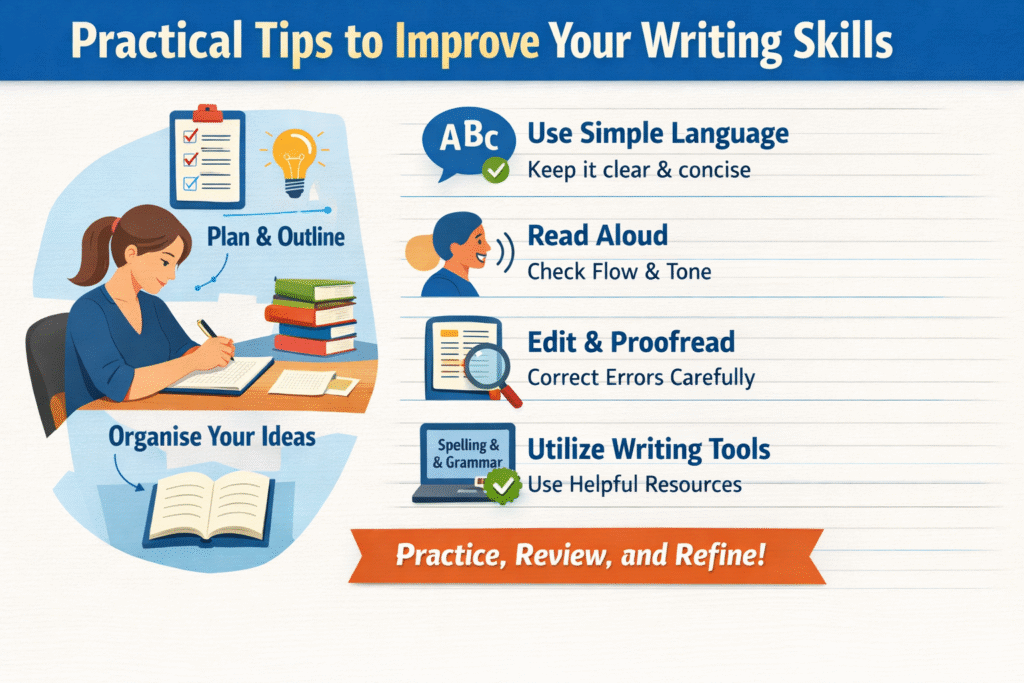
Improving your writing skills does not have to be complicated. With the right approach and consistent practice, anyone can become a clear and confident writer. Whether you are writing emails, reports, or academic content, applying a few practical techniques can make a noticeable difference in both quality and professionalism.

One of the most important steps is to plan before writing. Take a moment to organise your thoughts, outline your key points, and define your purpose. This helps you stay focused and ensures your writing flows logically. At the same time, aim to use simple language. Clear and straightforward words make your message easier to understand and more effective for your audience.

Another helpful habit is to read your message aloud once you have written it. This allows you to spot awkward phrasing, unclear sentences, or missing ideas. It also helps ensure your tone sounds natural and professional. After this, always take time to edit and proofread your work carefully. Checking for grammar, spelling, and structure can significantly improve the final output.

Finally, make use of available tools such as spell checkers and grammar assistants. These tools can support accuracy and save time, especially when working on important documents. By combining planning, simplicity, careful review, and helpful tools, you can steadily build strong and effective writing skills.

Real-Life Examples of Effective vs Ineffective Communication

Real-Life Examples of Effective vs Ineffective Communication

Effective communication is clear, direct, and involves listening, helping people understand each other and complete tasks smoothly. Ineffective communication, like vague messages or not listening, often causes confusion, mistakes, and misunderstandings.

Poor Example (Unclear Message)

Hi, I need the report soon. Please send it quickly. There are some issues, so fix them and get back to me ASAP.

Improved Version (Clear and Professional)

Dear [Name],
Could you please review and update the report by 3:00 PM today? There are a few areas that require attention, particularly the data in section 2 and the summary conclusions. Kindly ensure these are corrected before resubmission.
Please let me know if you need any clarification.
Kind regards,
[Your Name]

Key Differences Explained

The poor example is vague, lacks specific instructions, and uses an urgent tone without clarity, which may cause confusion or errors. In contrast, the improved version is precise, polite, and structured. It clearly outlines expectations, deadlines, and areas for revision, making it easier for the recipient to respond effectively and professionally.

How Effective Communication Boosts Productivity

How Effective Communication Boosts Productivity

Effective communication plays a vital role in improving productivity within any organisation. When information is shared clearly and efficiently, it allows individuals and teams to work with greater focus and confidence. Strong communication ensures that everyone understands their roles, expectations, and objectives, reducing confusion and helping tasks move forward without unnecessary delays.

One of the key benefits of effective communication is faster decision-making. When ideas, feedback, and updates are communicated promptly, teams can make informed decisions without wasting time. Clear instructions and open dialogue also minimise misunderstandings, which significantly reduces errors and the need for repeated revisions. This not only saves time but also improves the overall quality of work delivered.

Additionally, effective communication strengthens teamwork and enhances workflow. When team members communicate openly and respectfully, collaboration becomes more seamless, leading to better coordination and shared problem-solving. As a result, processes become more organised, tasks are completed more efficiently, and productivity increases across the entire organisation.

The Role of Written Communication in Career Growth

The Role of Written Communication in Career Growth

Written communication plays a vital role in shaping long-term career success. It reflects not only what you say, but how effectively you present your ideas in a professional environment. Clear, structured, and purposeful writing demonstrates confidence and competence, helping individuals stand out in competitive workplaces. From emails to reports, strong written skills ensure your message is understood and respected.

One of the key benefits of effective written communication is its ability to build leadership presence. Professionals who communicate clearly are often seen as more reliable and capable of handling responsibility. Whether drafting strategic documents or guiding teams through written instructions, strong communication supports decision-making and leadership development.

Additionally, written communication enhances professional reputation. Well-crafted messages show attention to detail, professionalism, and respect for others’ time. It also plays a crucial role in client and stakeholder communication, where clarity and tone can influence relationships and business outcomes. Mastering written communication helps individuals build trust, maintain credibility, and progress confidently in their careers.

Conclusion

Effective written communication plays a vital role in shaping professionalism and enhancing productivity across all industries. From structuring clear messages to using the right tone and grammar, strong writing skills help convey ideas accurately, reduce misunderstandings, and build credibility. Mastering these skills not only improves day-to-day interactions but also supports career growth and organisational success. By consistently refining your writing approach and applying best practices, you can communicate with confidence and impact. Start improving your written communication today and unlock new opportunities for professional development.

FAQs — Effective Written Communication: Building Professionalism and Productivity

1. What is effective written communication?
Effective written communication is the ability to convey ideas clearly, accurately, and professionally through writing. It ensures the message is easily understood by the intended audience.

2. Why is written communication important in the workplace?
Written communication helps maintain clarity, consistency, and professionalism in business interactions. It supports documentation, reduces misunderstandings, and strengthens collaboration among teams.

3. How can I improve my writing skills?
You can improve your writing by practising regularly, focusing on clarity and structure, and reviewing your work for errors. Reading professional content and using simple language also enhances communication.

4. What are common communication mistakes?
Common mistakes include unclear messaging, grammatical errors, excessive jargon, and poor structure. These issues can confuse readers and reduce the effectiveness of communication.

5. How does communication affect productivity?
Clear written communication saves time, reduces errors, and ensures tasks are understood correctly. This leads to improved efficiency and better overall workplace productivity.

Find the Course That Suits You!

We create outstanding professionals in Employability, Business, Health Care, Marketing, Language, and Functional Skills. Whether you're starting or advancing your career, we turn your passion into success as the UK’s most trusted e-learning course provider.
5000+ course
Sam Walker

Article by

Sam Walker

Sam Walker is an education specialist and author at One Education, bringing over 4 years of experience in creating practical resources and strategies to support teachers and enhance student learning.

top

Hear What Our Learners Say About Us

Home Courses Search