Entry-Level Project Management Jobs You Can Start 

July 02, 2026 | 16 minutes | 102 Readers

Project management remains one of the fastest-growing career fields, with organisations across industries increasingly relying on skilled professionals to deliver projects successfully. From IT and healthcare to construction, marketing, finance, and education, businesses need project management teams to coordinate tasks, manage resources, and ensure projects are completed on time and within budget. As organisations continue to invest in innovation, digital transformation, and operational improvements, the demand for project management talent continues to rise. The good news is that many project

Project management remains one of the fastest-growing career fields, with organisations across industries increasingly relying on skilled professionals to deliver projects successfully. From IT and healthcare to construction, marketing, finance, and education, businesses need project management teams to coordinate tasks, manage resources, and ensure projects are completed on time and within budget. As organisations continue to invest in innovation, digital transformation, and operational improvements, the demand for project management talent continues to rise.

The good news is that many project management roles are accessible to individuals with little or no prior experience. Entry-level positions provide an excellent opportunity to develop practical skills, gain hands-on experience, and build a pathway towards more senior project management roles. In this article, you’ll discover some of the best entry-level project management jobs you can start, the responsibilities they involve, and how they can help you launch a successful career in this growing profession.

Why Project Management Is a Great Career Choice in 2026

Project management continues to be a highly attractive career in 2026, offering strong job prospects, career growth, and opportunities across a wide range of industries.

Growing Demand for Project Professionals

Organisations across all sectors need skilled project managers to deliver projects efficiently, creating strong demand for qualified professionals.

Opportunities Across Multiple Industries

Project management skills are valuable in sectors such as IT, healthcare, construction, finance, education, and many more.

Clear Career Progression

Professionals can advance from entry-level roles to senior project management and leadership positions.

Valuable Transferable Skills

Project managers develop key skills, including leadership, communication, problem-solving, budgeting, and risk management.

Remote and Hybrid Opportunities

Flexible working models are creating more remote and hybrid project management roles than ever before.

Quick Fact Box

Benefit Details
Entry Barrier Relatively low
Degree Required Not always
Remote Opportunities Increasing
Career Growth High
Industry Options Nearly every sector
What Does an Entry-Level Project Management Professional Do

What Does an Entry-Level Project Management Professional Do?

An entry-level project management professional supports project teams by helping projects stay organised, on schedule, and running efficiently. Their role focuses on coordination, communication, and administration rather than leading large projects.

Assisting Project Managers

They support project managers with tasks such as updating schedules, preparing reports, and organising project activities.

Tracking Deadlines

They monitor deadlines, track milestones, and help ensure tasks are completed on time.

Managing Documentation

They maintain project documents, reports, and records, keeping information accurate and accessible.

Coordinating Meetings

They schedule meetings, prepare agendas, take notes, and share action points with team members.

Communicating with Stakeholders

They help keep stakeholders informed by sharing updates and ensuring clear communication across the project.

Monitoring Project Progress

They track project performance, collect status updates, and help identify potential issues early.

If you’re ready to apply advanced project management principles in real-world environments and gain a globally recognised qualification, consider enrolling in the PRINCE2® 7 Practitioner Course (with Official Exam and Resit). This course focuses on the practical application of the PRINCE2® methodology, helping you manage projects effectively while preparing for the official Practitioner certification exam. Enhance your professional credentials today with One Education.

Top Entry-Level Project Management Jobs You Can Start in 2026

Top Entry-Level Project Management Jobs You Can Start in 2026

Project management continues to be one of the fastest-growing career fields, with organisations across industries seeking professionals who can plan, coordinate, and deliver projects successfully. The good news is that you do not need years of experience to get started. In 2026, a variety of entry-level project management roles offer excellent opportunities to develop valuable skills, gain hands-on experience, and build a pathway towards senior project management positions. Here are some of the top project management jobs you can start with little to no experience.

Project Coordinator

One of the most common entry-level project management roles. Project Coordinators support teams by scheduling meetings, maintaining documentation, tracking tasks, and keeping projects organised.

Skills: Organisation, Microsoft Office, communication, and time management.

Project Administrator

Project Administrators provide administrative support, track budgets, prepare reports, and manage project records. This role is ideal for those moving from office administration positions.

Junior Project Manager

Junior Project Managers assist with project planning, monitor timelines, and manage smaller projects. This role is best suited to candidates with some workplace experience.

PMO Analyst (Project Management Office Analyst)

PMO Analysts collect project data, produce reports, and monitor project performance. As organisations increasingly rely on data-driven decision-making, demand for this role continues to grow.

Project Support Officer

Project Support Officers coordinate resources, track risks, and manage project documentation. They are commonly employed in government, healthcare, education, and large organisations.

Scrum Coordinator

Scrum Coordinators support Agile teams by organising sprint meetings, improving communication, and helping remove obstacles. This role is ideal for those interested in technology and software development.

Operations Coordinator

Operations Coordinators manage workflows, support projects, and improve efficiency. The role often serves as a stepping stone into project management careers.

Implementation Coordinator

Implementation Coordinators support product rollouts, client onboarding, and system implementations. They are commonly found in software, SaaS, and healthcare technology companies.

Skills Employers Look for in Entry-Level Project Management Candidates

Skills Employers Look for in Entry-Level Project Management Candidates

For entry-level project management roles, employers often focus more on skills and potential than previous experience.

Hard Skills

Employers value candidates who are familiar with:

  • ♦  Project scheduling
  • ♦  Microsoft Excel
  • ♦  Microsoft Project
  • ♦  Trello
  • ♦  Asana
  • ♦  Jira
  • ♦  Reporting and progress tracking

Soft Skills

Strong workplace skills are equally important, including:

  • ♦  Communication
  • ♦  Leadership potential
  • ♦  Problem-solving
  • ♦  Teamwork
  • ♦  Organisation
  • ♦  Adaptability

These skills help project managers coordinate teams, manage deadlines, and keep projects running smoothly.

Pro Tip: Strong communication and organisational skills often matter more than technical project management experience when applying for entry-level roles. Employers can teach tools and processes, but effective communication and organisation are highly valued from the start.

Can You Get a Project Management Job Without Experience

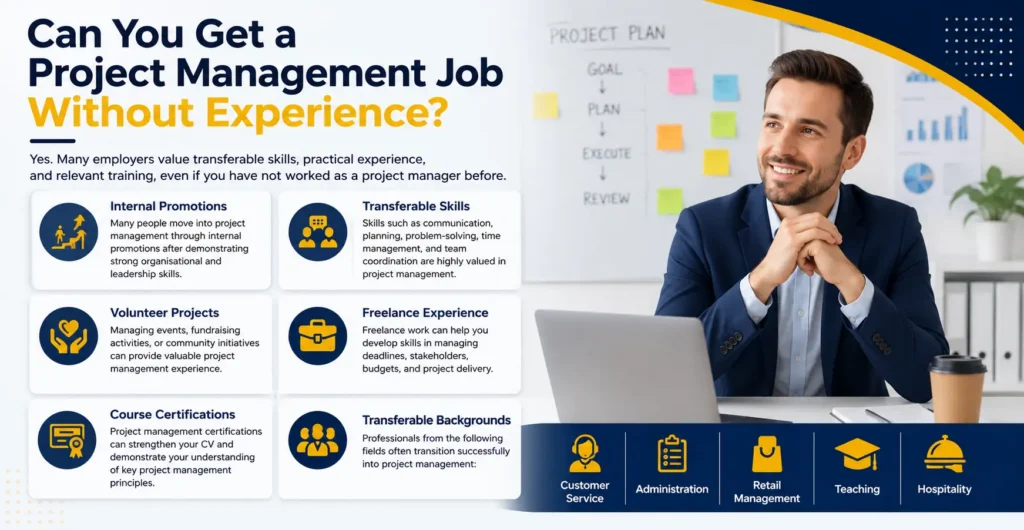
Can You Get a Project Management Job Without Experience?

Yes. Many employers value transferable skills, practical experience, and relevant training, even if you have not worked as a project manager before.

Internal Promotions

Many people move into project management through internal promotions after demonstrating strong organisational and leadership skills.

Transferable Skills

Skills such as communication, planning, problem-solving, time management, and team coordination are highly valued in project management.

Volunteer Projects

Managing events, fundraising activities, or community initiatives can provide valuable project management experience.

Freelance Experience

Freelance work can help you develop skills in managing deadlines, stakeholders, budgets, and project delivery.

Course Certifications

Project management certifications can strengthen your CV and demonstrate your understanding of key project management principles.

Transferable Backgrounds

Professionals from the following fields often transition successfully into project management:

  • ♦  Customer Service
  • ♦  Administration
  • ♦  Retail Management
  • ♦  Teaching
  • ♦  Hospitality
Industries Hiring Entry-Level Project Management Professionals in 2026

Industries Hiring Entry-Level Project Management Professionals in 2026

Industries across the globe are actively hiring entry-level project management professionals in 2026, particularly as businesses continue investing in digital transformation, infrastructure development, and process improvement initiatives. Sectors such as information technology, construction, healthcare, finance, consulting, manufacturing, and energy are creating opportunities for junior project coordinators, project assistants, and associate project managers. These industries value candidates with strong organisational, communication, and problem-solving skills, making project management an attractive career path for graduates and career changers alike. As organisations increasingly rely on project-based work, demand for entry-level project management talent is expected to remain strong in the coming years.

💻 Technology

  • ♦  Software projects
  • ♦  Product launches

Tech companies need project professionals to coordinate teams, manage timelines, and support successful product delivery.

🏗️ Construction

  • ♦  Building projects
  • ♦  Infrastructure development

Construction firms rely on project management to keep projects on schedule, within budget, and running efficiently.

🏥 Healthcare

  • ♦  Process improvement
  • ♦  Digital transformation

Healthcare organisations hire project professionals to support system upgrades and operational improvements.

📢 Marketing

  • ♦  Campaign management
  • ♦  Event planning

Marketing teams use project management skills to organise campaigns, coordinate resources, and deliver successful events.

🎓 Education

  • ♦  Learning programme delivery
  • ♦  Training initiatives

Schools, colleges, and training providers need project professionals to manage educational programmes and training projects.

💼 Finance

  • ♦  Compliance projects
  • ♦  System upgrades

Financial organisations recruit project professionals to support regulatory projects and technology improvements.

Typical Salary Expectations for Entry-Level Project Management Roles

Typical Salary Expectations for Entry-Level Project Management Roles

One of the key advantages of pursuing a career in project management is the strong earning potential available even at entry level. Salaries vary depending on factors such as location, industry, company size, and individual qualifications. However, professionals entering the field can expect competitive starting salaries, with opportunities for rapid progression as they gain experience and certifications.

Entry-Level Project Management Salary Comparison (UK)

Job Role Typical Entry-Level Salary (UK)
Project Coordinator £25,000–£35,000
Project Administrator £23,000–£32,000
Project Support Officer £24,000–£35,000
Junior Project Manager £30,000–£40,000
PMO Analyst £28,000–£40,000

As the table shows, entry-level project management professionals can earn between £23,000 and £40,000 per year, depending on the role. Positions such as Junior Project Manager and PMO Analyst typically offer higher starting salaries due to their increased responsibilities and involvement in project planning, reporting, and decision-making processes.

Note: Salary ranges are approximate and may vary based on location, industry sector, employer, and market demand. Professionals working in sectors such as technology, construction, finance, and consultancy often benefit from higher salary packages and faster career progression opportunities.

How to Start Your Project Management Career in 5 Steps

How to Start Your Project Management Career in 5 Steps

Starting a career in project management can open doors to opportunities across many industries. By following these five simple steps, you can build the skills and experience needed to secure your first role.

Step 1: Learn Project Management Fundamentals

Begin by understanding the basics of project management, including planning, scheduling, budgeting, risk management, and stakeholder communication. Learning common methodologies such as Agile and Waterfall can also provide a strong foundation.

Step 2: Develop Organisational and Communication Skills

Project managers must manage multiple tasks while communicating effectively with team members and stakeholders. Strengthening your organisation, time management, and communication skills will help you succeed in project-based roles.

Step 3: Gain Practical Experience Through Small Projects

Look for opportunities to manage small projects at work, in education, or through volunteering. Practical experience helps you apply project management principles and develop confidence in leading tasks and teams.

Step 4: Build a Project-Focused CV

Create a CV that highlights project-related skills, achievements, and experiences. Emphasise abilities such as leadership, teamwork, organisation, and problem-solving to demonstrate your suitability for project management roles.

Step 5: Apply for Entry-Level Positions Consistently

Search for roles such as Project Coordinator, Project Administrator, or Project Support Officer. Tailor your applications and apply regularly to increase your chances of securing your first project management position.

Future Career Progression

Future Career Progression

A career in project management offers a clear pathway for professional growth, with opportunities to take on greater responsibility, lead larger teams, and manage increasingly complex projects. As you develop your skills, experience, and industry knowledge, you can progress through several rewarding roles.

Career Roadmap

Entry-Level Role
Begin your journey in an administrative or support position where you gain experience in planning, communication, documentation, and team coordination.

Project Coordinator
Support project managers by organising schedules, tracking progress, managing documentation, and ensuring project activities run smoothly.

Project Manager
Take responsibility for planning, executing, and delivering projects while managing budgets, timelines, resources, risks, and stakeholder expectations.

Senior Project Manager
Lead larger and more complex projects, mentor junior project managers, and contribute to strategic decision-making within the organisation.

Programme Manager
Oversee multiple related projects, ensuring they align with business objectives and deliver long-term organisational benefits.

Portfolio Manager
Manage a portfolio of programmes and projects, prioritising investments, allocating resources, and ensuring projects support overall business strategy.

Director of Projects
Provide executive leadership for project delivery across the organisation, shape project management strategies, and drive business growth through successful project outcomes.

Conclusion

Entry-level project management jobs provide an excellent starting point for individuals looking to build a rewarding and long-term career in a growing field. While most beginner roles focus on supporting project teams, coordinating tasks, and managing schedules rather than leading projects, they offer valuable hands-on experience and a clear pathway to advancement. By developing essential project management skills, gaining practical experience, and earning recognised certifications, aspiring professionals can improve their employability and career prospects. With organisations across various industries continuing to invest in project-based work, 2026 presents a promising opportunity to enter the profession and begin progressing towards more senior project management roles.

FAQs — Entry-Level Project Management Jobs You Can Start

1. What is an entry-level project management job?
An entry-level project management job is a role that helps professionals gain experience in planning, organising, and supporting projects while working under experienced project managers.
2. Do I need experience to start a project management career?
No. Many entry-level positions are designed for beginners and focus on developing practical project management skills on the job.
3. What are the most common entry-level project management roles?
Common roles include Project Coordinator, Project Administrator, Project Assistant, Junior Project Manager, and PMO Analyst.
4. What skills are important for entry-level project management jobs?
Key skills include communication, organisation, time management, problem-solving, teamwork, and attention to detail.
5. Can I become a project manager without a degree?
Yes. Many employers value practical skills, relevant certifications, and experience alongside or instead of a university degree.

Sam Walker

Article by

Sam Walker

Sam Walker is an education specialist and author at One Education, bringing over 4 years of experience in creating practical resources and strategies to support teachers and enhance student learning.

top
Home Courses Search