How to Become a Project Manager Without Experience

June 19, 2026 | 16 minutes | 89 Readers

Many aspiring professionals believe that becoming a project manager requires years of experience, but that is not always the case. Project management is one of the most accessible career transitions today, offering opportunities for individuals from various educational and professional backgrounds. As businesses continue to focus on improving efficiency, meeting deadlines, and achieving strategic goals, the demand for skilled project managers has grown significantly across industries such as technology, healthcare, construction, finance, and marketing. The good news is that you

Many aspiring professionals believe that becoming a project manager requires years of experience, but that is not always the case. Project management is one of the most accessible career transitions today, offering opportunities for individuals from various educational and professional backgrounds. As businesses continue to focus on improving efficiency, meeting deadlines, and achieving strategic goals, the demand for skilled project managers has grown significantly across industries such as technology, healthcare, construction, finance, and marketing.

The good news is that you can begin a project management career by developing transferable skills such as communication, leadership, organisation, and problem-solving, even if you have never held a project management role before. In this guide, you will learn how to become a project manager without experience, the qualifications and certifications that can boost your credibility, practical ways to gain relevant skills, and the steps you can take to secure your first project management position.

What Does a Project Manager Actually Do?

A Project Manager is responsible for leading projects from start to finish, ensuring they are completed on time, within budget, and according to objectives. They coordinate people, resources, and processes to achieve successful outcomes.

Key Responsibilities

  • ♦  Planning and Organising Projects: Creating project plans, setting goals, and defining tasks.
  • ♦  Managing Budgets and Timelines: Monitoring costs, resources, and deadlines to keep projects on track.
  • ♦  Coordinating Teams and Stakeholders: Ensuring effective communication and collaboration among everyone involved.
  • ♦  Identifying and Mitigating Risks: Recognising potential challenges and taking action to minimise their impact.
  • ♦  Ensuring Project Objectives Are Achieved: Tracking progress and making adjustments to meet project goals.

Why Companies Need Project Managers

  • ♦  Improved Efficiency: Helps teams work more effectively and stay organised.
  • ♦  Better Resource Management: Ensures time, budget, and resources are used wisely.
  • ♦  Higher Project Success Rates: Increases the likelihood of delivering projects successfully.

Quick Insight

Many people already perform project management tasks without realising it. Skills such as communication, scheduling, organising tasks, and coordinating people are all key aspects of project management and can provide a strong foundation for this career.

Can You Really Become a Project Manager Without Experience?

Yes, you can. The reality is that most project managers did not start their careers as project managers. Project management is often a career transition rather than an entry-level role.

Many employers value transferable skills just as much as formal experience. Skills such as organisation, communication, leadership, problem-solving, and time management can be developed in a wide range of jobs and are highly relevant to project management.

Common Myths

❌ You need a project management degree.
A degree can help, but it is not essential.

❌ You need years of experience first.
Many professionals start by managing tasks, teams, or small projects in their existing roles.

❌ You must start with a Project Manager title.
Relevant experience often comes from responsibilities, not job titles.

✅ What You Really Need
Strong transferable skills and proof that you can plan, organise, coordinate, and deliver work effectively.

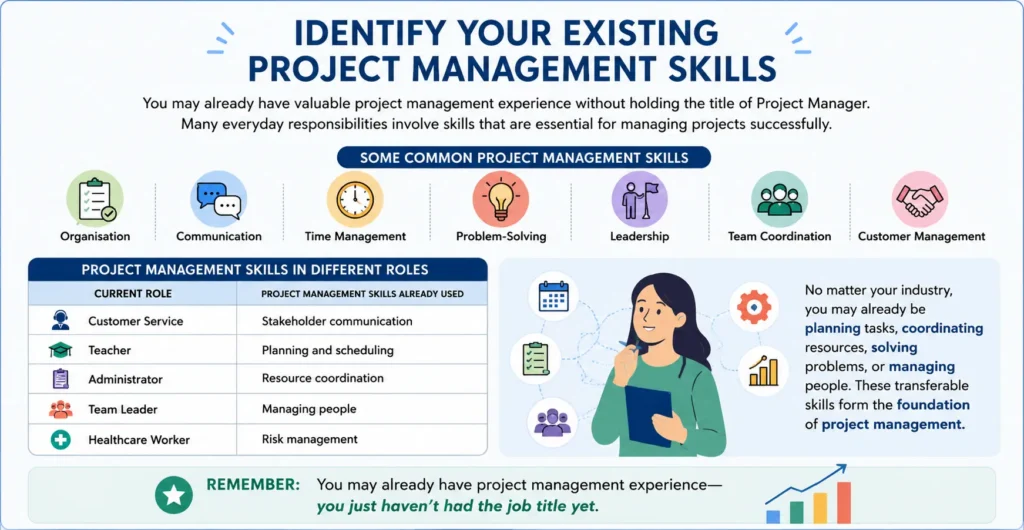
Identify Your Existing Project Management Skills

Identify Your Existing Project Management Skills

You may already have valuable project management experience without holding the title of Project Manager. Many everyday responsibilities involve skills that are essential for managing projects successfully.

Some common project management skills include:

  • ♦  Organisation
  • ♦  Communication
  • ♦  Time Management
  • ♦  Problem-Solving
  • ♦  Leadership
  • ♦  Team Coordination
  • ♦  Customer Management

Project Management Skills in Different Roles

Current Role Project Management Skills Already Used
Customer Service Stakeholder communication
Teacher Planning and scheduling
Administrator Resource coordination
Team Leader Managing people
Healthcare Worker Risk management

No matter your industry, you may already be planning tasks, coordinating resources, solving problems, or managing people. These transferable skills form the foundation of project management.

Remember: You may already have project management experience—you just haven’t had the job title yet.

If you’re ready to apply advanced project management principles in real-world environments and gain a globally recognised qualification, consider enrolling in the PRINCE2® 7 Practitioner Course (with Official Exam and Resit). This course focuses on the practical application of the PRINCE2® methodology, helping you manage projects effectively while preparing for the official Practitioner certification exam. Enhance your professional credentials today with One Education.

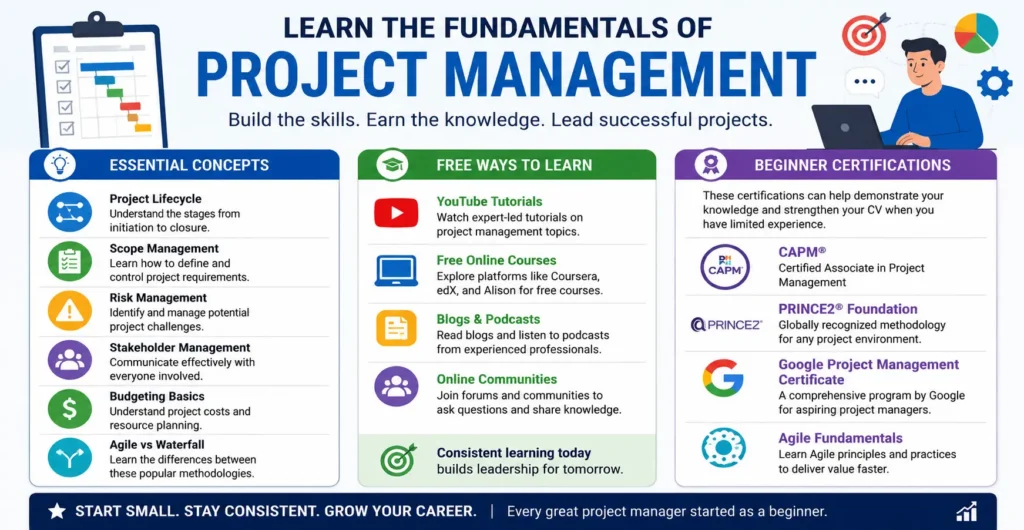
Learn the Fundamentals of Project Management

Learn the Fundamentals of Project Management

To become a project manager, start by learning the core concepts of project management.

Essential Concepts

  • ♦  Project Lifecycle – Understand the stages from initiation to closure.
  • ♦  Scope Management – Learn how to define and control project requirements.
  • ♦  Risk Management – Identify and manage potential project challenges.
  • ♦  Stakeholder Management – Communicate effectively with everyone involved.
  • ♦  Budgeting Basics – Understand project costs and resource planning.
  • ♦  Agile vs Waterfall – Learn the differences between these popular methodologies.

Free Ways to Learn

  • ♦  YouTube tutorials
  • ♦  Free online courses
  • ♦  Project management blogs and podcasts
  • ♦  Online communities and forums

Beginner Certifications

  • ♦  CAPM
  • ♦  PRINCE2 Foundation
  • ♦  Google Project Management Certificate
  • ♦  Agile Fundamentals

These certifications can help demonstrate your knowledge and strengthen your CV when you have limited experience.

Gain Experience Without Having a Project Management Job

You do not need a formal project management role to gain valuable experience. Many opportunities allow you to develop essential project management skills while building your CV.

Volunteer for Projects

Get involved in community events, charity fundraising, or school and local initiatives. These activities help you develop planning, organisation, and leadership skills.

Take Opportunities at Work

Volunteer to lead a small internal project, organise meetings and workflows, or help improve existing processes. This demonstrates initiative and project coordination abilities.

Manage Personal Projects

Plan a website launch, organise an event, or run a side business. Personal projects provide practical experience in managing tasks, timelines, and resources.

Explore Freelance and Remote Work

Support small businesses, startups, or open-source projects. These opportunities can help you gain real-world project management experience and expand your professional portfolio.

Real project management experience can come from volunteering, workplace initiatives, personal projects, and freelance opportunities—not just from a project management job title.

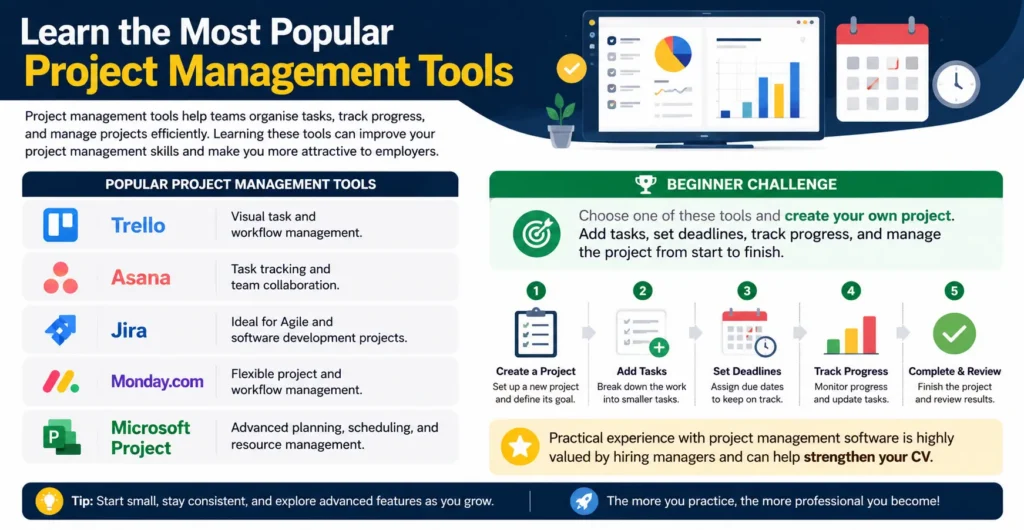
Learn the Most Popular Project Management Tools

Learn the Most Popular Project Management Tools

Project management tools help teams organise tasks, track progress, and manage projects efficiently. Learning these tools can improve your project management skills and make you more attractive to employers.

Popular Project Management Tools:

  • ♦  Trello – Visual task and workflow management.
  • ♦  Asana – Task tracking and team collaboration.
  • ♦  Jira – Ideal for Agile and software development projects.
  • ♦  Monday.com – Flexible project and workflow management.
  • ♦  Microsoft Project – Advanced planning, scheduling, and resource management.

Beginner Challenge

Choose one of these tools and create your own project. Add tasks, set deadlines, track progress, and manage the project from start to finish.

Practical experience with project management software is highly valued by hiring managers and can help strengthen your CV.

Target Entry-Level Roles That Lead to Project Management

Many Project Managers start their careers in supporting roles that provide hands-on experience in planning, coordination, communication, and team management.

Project Coordinator

Supports project planning, scheduling, documentation, and team communication. This is one of the most common pathways to becoming a Project Manager.

Project Administrator

Manages project records, reports, budgets, and documentation, helping build a strong understanding of project processes.

Project Assistant

Assists with task coordination, scheduling, and administrative support while gaining exposure to project execution.

Operations Coordinator

Coordinates business processes, resources, and workflows, developing organisational and problem-solving skills relevant to project management.

Business Analyst

Analyses business needs, gathers requirements, and works with stakeholders, building valuable planning and communication skills.

Team Lead

Oversees team performance, delegates tasks, and develops leadership and people-management abilities.

Customer Success Specialist

Manages client relationships and coordinates solutions, strengthening stakeholder management and communication skills.

These roles provide direct exposure to project environments and serve as valuable stepping stones towards a Project Manager position.

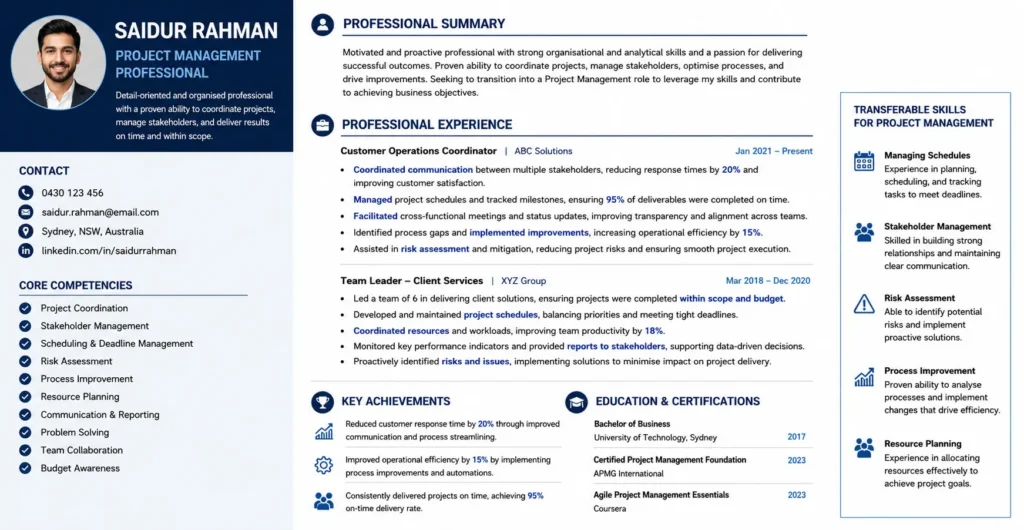
Create a Resume That Highlights Project Management Potential

Create a Resume That Highlights Project Management Potential

Even without a project management job title, your resume can showcase the skills employers value. Focus on your achievements rather than your responsibilities.

Instead of writing:

  • ♦  Answered customer enquiries.

Write:

  • ♦  Coordinated communication between multiple stakeholders, reducing response times by 20%.

This highlights valuable project management skills such as communication, organisation, and coordination.

Include transferable skills from previous roles, such as:

  • ♦  Managing schedules and deadlines
  • ♦  Coordinating teams and stakeholders
  • ♦  Risk assessment
  • ♦  Process improvement
  • ♦  Resource planning

Also, use relevant keywords throughout your resume, including:

  • ♦  Project coordination
  • ♦  Stakeholder management
  • ♦  Risk assessment
  • ♦  Scheduling
  • ♦  Process improvement
  • ♦  Resource planning

By emphasising achievements and project-related skills, you can demonstrate strong project management potential even without direct experience.

Network Your Way Into Project Management

Networking is one of the most effective ways to enter project management without prior experience. Many professionals secure opportunities through connections before applying for jobs.

Where to Network

  • ♦  LinkedIn – Connect with professionals, join groups, and engage with industry content.
  • ♦  Project Management Institute (PMI) Communities – Attend events, webinars, and local chapter meetings.
  • ♦  Industry Events – Participate in conferences, workshops, and networking sessions.
  • ♦  Project Management Forums – Join online communities to learn and connect with experienced professionals.

Networking Strategies

  • ♦  Connect with Project Managers to learn from their experience and expand your network.
  • ♦  Ask for Informational Interviews to gain insights into the role and industry.
  • ♦  Seek Mentorship Opportunities for guidance, career advice, and professional support.

Building genuine professional relationships can help you gain valuable insights, increase your visibility, and uncover project management opportunities that may not be publicly advertised.

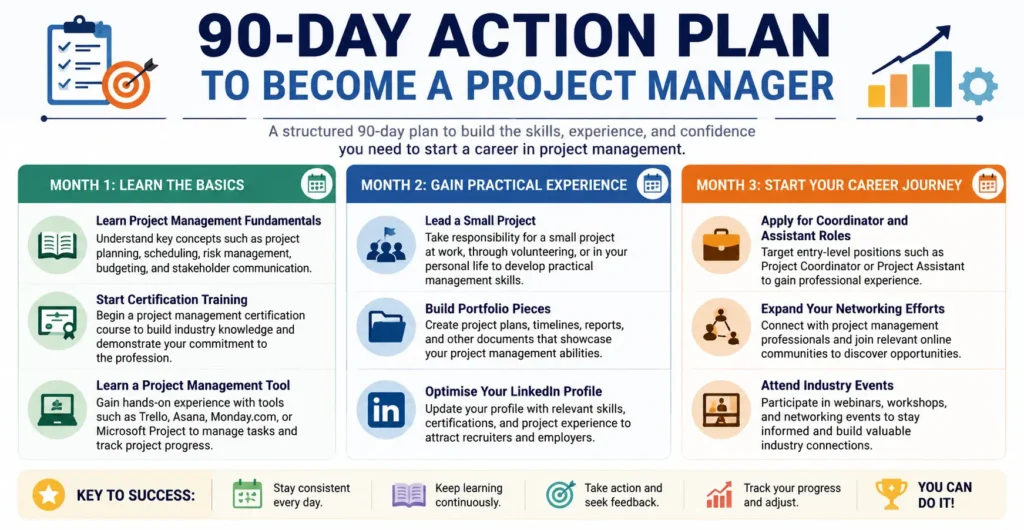
A 90-Day Action Plan to Become a Project Manager

A 90-Day Action Plan to Become a Project Manager

A structured 90-day plan can help you develop the skills, experience, and confidence needed to start a career in project management.

Month 1: Learn the Basics

Learn Project Management Fundamentals

Understand key concepts such as project planning, scheduling, risk management, budgeting, and stakeholder communication.

Start Certification Training

Begin a project management certification course to build industry knowledge and demonstrate your commitment to the profession.

Learn a Project Management Tool

Gain hands-on experience with tools such as Trello, Asana, Monday.com, or Microsoft Project to manage tasks and track project progress.

Month 2: Gain Practical Experience

Lead a Small Project

Take responsibility for a small project at work, through volunteering, or in your personal life to develop practical management skills.

Build Portfolio Pieces

Create project plans, timelines, reports, and other documents that showcase your project management abilities.

Optimise Your LinkedIn Profile

Update your profile with relevant skills, certifications, and project experience to attract recruiters and employers.

Month 3: Start Your Career Journey

Apply for Coordinator and Assistant Roles

Target entry-level positions such as Project Coordinator or Project Assistant to gain professional experience.

Expand Your Networking Efforts

Connect with project management professionals and join relevant online communities to discover opportunities.

Attend Industry Events

Participate in webinars, workshops, and networking events to stay informed and build valuable industry connections.

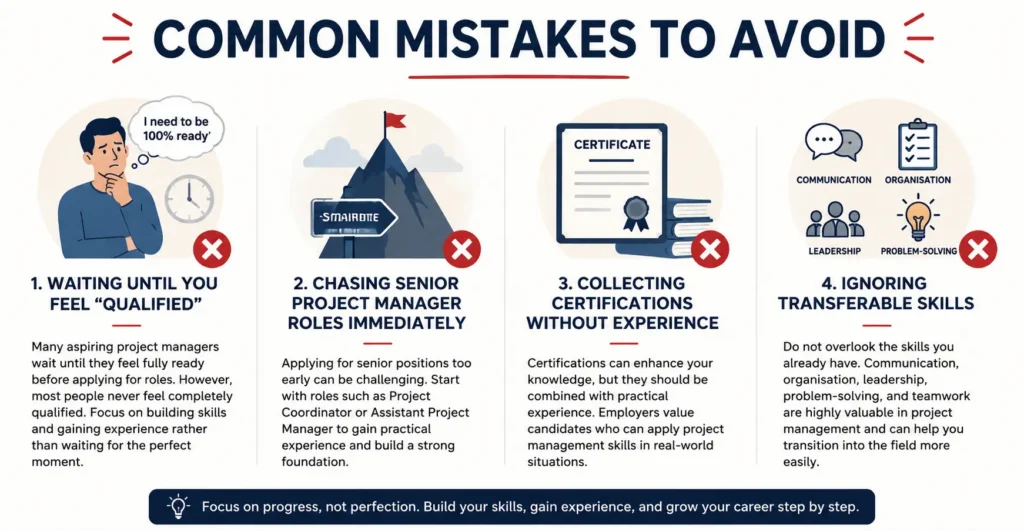
Common Mistakes to Avoid

Common Mistakes to Avoid

Waiting Until You Feel “Qualified”

Many aspiring project managers wait until they feel fully ready before applying for roles. However, most people never feel completely qualified. Focus on building skills and gaining experience rather than waiting for the perfect moment.

Chasing Senior Project Manager Roles Immediately

Applying for senior positions too early can be challenging. Start with roles such as Project Coordinator or Assistant Project Manager to gain practical experience and build a strong foundation.

Collecting Certifications Without Experience

Certifications can enhance your knowledge, but they should be combined with practical experience. Employers value candidates who can apply project management skills in real-world situations.

Ignoring Transferable Skills

Do not overlook the skills you already have. Communication, organisation, leadership, problem-solving, and teamwork are highly valuable in project management and can help you transition into the field more easily.

Conclusion

Becoming a project manager without prior experience may seem challenging, but it is a realistic and achievable career goal with the right approach. By developing essential project management skills, earning relevant certifications, gaining hands-on experience through small projects, and building a strong professional network, you can gradually establish yourself in the field. Remember that every experienced project manager once started with little or no experience. The key is to take action, seek learning opportunities, and begin managing projects—no matter how small. With persistence, continuous improvement, and a proactive mindset, you can successfully launch and grow a rewarding career in project management.

FAQs — How to Become a Project Manager Without Experience

Can I become a project manager with no degree?

Yes. Many project managers start without a degree by developing relevant skills, gaining experience, and earning project management certifications.

What certification is best for beginners?

Beginner-friendly certifications include CAPM and PRINCE2 Foundation. These qualifications help you learn the fundamentals of project management and improve your job prospects.

How long does it take to become a project manager?

It typically takes 1–3 years to gain the skills, knowledge, and experience needed to move into a project management role.

What is the average project manager salary?

The average salary varies by location, industry, and experience. Generally, project management offers competitive pay with strong earning potential as you progress.

Is project management a good career in 2026?

Yes. Project management remains a high-demand profession with excellent career growth opportunities across various industries.

Sam Walker

Article by

Sam Walker

Sam Walker is an education specialist and author at One Education, bringing over 4 years of experience in creating practical resources and strategies to support teachers and enhance student learning.

top
Home Courses Search