How to Become an IT Service Desk Analyst 

July 03, 2026 | 17 minutes | 101 Readers

Every organisation relies on technology to support its daily operations, from communication and collaboration tools to business-critical software and cloud-based systems. When technical issues occur, employees and customers need immediate assistance to minimise disruption and maintain productivity. This is where IT Service Desk Analysts play a crucial role, acting as the first point of contact for IT support and ensuring that systems and services continue to run smoothly. As businesses become increasingly dependent on digital technologies, the demand for skilled

Every organisation relies on technology to support its daily operations, from communication and collaboration tools to business-critical software and cloud-based systems. When technical issues occur, employees and customers need immediate assistance to minimise disruption and maintain productivity. This is where IT Service Desk Analysts play a crucial role, acting as the first point of contact for IT support and ensuring that systems and services continue to run smoothly.

As businesses become increasingly dependent on digital technologies, the demand for skilled IT Service Desk Analysts continues to grow across various industries. This career offers excellent opportunities for individuals with strong problem-solving, communication, and technical skills. In this guide, we will explore the qualifications required to enter the profession, the key skills employers look for, salary expectations, career progression opportunities, and the step-by-step process of becoming an IT Service Desk Analyst.

What Does an IT Service Desk Analyst Do?

An IT Service Desk Analyst is the first point of contact for users experiencing technical issues. They provide support for software, hardware, networks, and IT systems, helping to resolve problems quickly and keep business operations running smoothly.

Key Responsibilities

  • ♦  Responding to IT Support Requests – Assisting users via phone, email, chat, or ticketing systems.
  • ♦  Troubleshooting Software and Hardware Issues – Diagnosing and resolving common technical problems.
  • ♦  Managing Support Tickets – Logging, tracking, and updating support requests.
  • ♦  Escalating Complex Technical Problems – Referring advanced issues to specialist IT teams.
  • ♦  Assisting Users Remotely – Providing support through remote access tools.
  • ♦  Maintaining IT Documentation – Updating knowledge bases, guides, and troubleshooting records.
  • ♦  Supporting System Upgrades and Deployments – Assisting with software installations, updates, and technology rollouts.

Typical Daily Tasks

  • ♦  Reviewing and prioritising support tickets.
  • ♦  Responding to user queries by phone, email, or chat.
  • ♦  Troubleshooting software, hardware, and network issues.
  • ♦  Providing remote technical support.
  • ♦  Updating ticket records and documenting solutions.
  • ♦  Escalating unresolved issues to specialist teams.
  • ♦  Assisting with system updates and maintenance.
  • ♦  Following up with users to confirm issue resolution.

IT Service Desk Analysts play a vital role in ensuring users receive timely technical support and that IT services operate efficiently.

Why Choose a Career as an IT Service Desk Analyst

Why Choose a Career as an IT Service Desk Analyst?

A career as an IT Service Desk Analyst is an excellent way to enter the IT industry. As businesses continue to rely on technology, there is strong demand for skilled IT support professionals across a wide range of sectors.

Key benefits of the role include:

  • ♦  Strong demand across industries
  • ♦  Excellent entry point into IT
  • ♦  Opportunities for remote and hybrid work
  • ♦  Competitive salary growth
  • ♦  Clear progression into specialist IT careers
  • ♦  Continuous learning and development opportunities

Many IT managers, network engineers, and cybersecurity specialists started their careers on the service desk. The role provides valuable hands-on experience, technical knowledge, and problem-solving skills, creating a strong foundation for long-term career growth in IT.

Essential Skills Every IT Service Desk Analyst Needs

Essential Skills Every IT Service Desk Analyst Needs

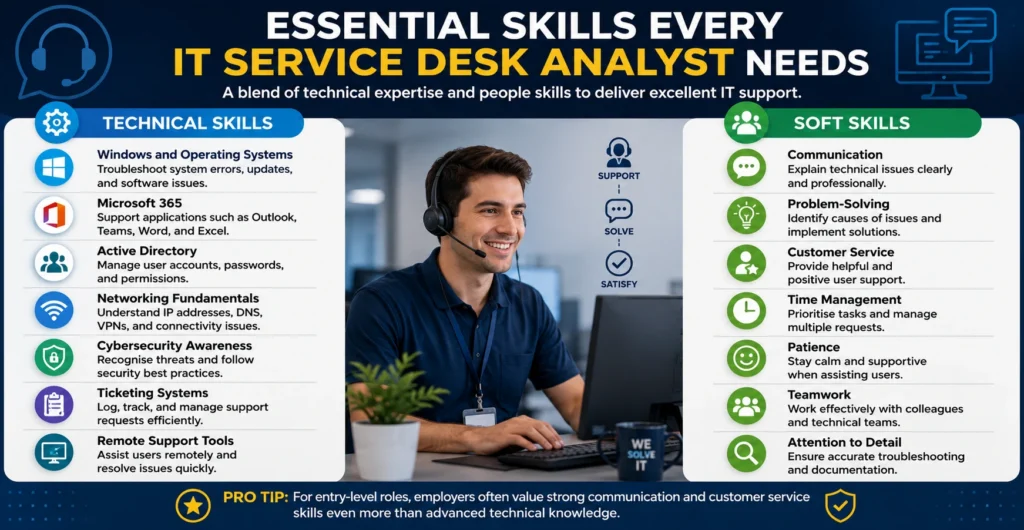
Successful IT Service Desk Analysts need a balance of technical knowledge and strong people skills.

Technical Skills

  • ♦  Windows and Operating Systems – Troubleshoot system errors, updates, and software issues.
  • ♦  Microsoft 365 – Support applications such as Outlook, Teams, Word, and Excel.
  • ♦  Active Directory – Manage user accounts, passwords, and permissions.
  • ♦  Networking Fundamentals – Understand IP addresses, DNS, VPNs, and connectivity issues.
  • ♦  Cybersecurity Awareness – Recognise threats and follow security best practices.
  • ♦  Ticketing Systems – Log, track, and manage support requests efficiently.
  • ♦  Remote Support Tools – Assist users remotely and resolve issues quickly.

Soft Skills

  • ♦  Communication – Explain technical issues clearly and professionally.
  • ♦  Problem-Solving – Identify causes of issues and implement solutions.
  • ♦  Customer Service – Provide helpful and positive user support.
  • ♦  Time Management – Prioritise tasks and manage multiple requests.
  • ♦  Patience – Stay calm and supportive when assisting users.
  • ♦  Teamwork – Work effectively with colleagues and technical teams.
  • ♦  Attention to Detail – Ensure accurate troubleshooting and documentation.

Pro Tip: For entry-level roles, employers often value strong communication and customer service skills even more than advanced technical knowledge.

If you’re looking to develop expertise in delivering digital products and services in fast-paced environments, consider enrolling in the ITIL® 4 Specialist: High-Velocity IT Certification Course. This course explores agile, lean, and digital operating models, helping you understand how high-performing organisations create value while preparing you for the official certification exam. Advance your IT service management career with One Education.

What Qualifications Do You Need

What Qualifications Do You Need?

You do not always need a degree to become an IT Service Desk Analyst. While higher education can be beneficial, many employers place greater value on practical skills, technical knowledge, and professional certifications.

Useful Subjects

Studying the following subjects can help prepare you for the role:

  • ♦  Information Technology
  • ♦  Computer Science
  • ♦  Networking
  • ♦  Cybersecurity

Professional Certifications

Industry-recognised certifications can improve your job prospects and technical expertise, including:

  • ♦  ITIL Foundation – IT service management principles and best practices.
  • ♦  CompTIA A+ – Essential IT support and troubleshooting skills.
  • ♦  CompTIA Network+ – Networking concepts and infrastructure support.
  • ♦  Microsoft Fundamentals – Core Microsoft technologies and cloud services.
  • ♦  Google IT Support Professional Certificate – Practical IT support and system administration skills.

A combination of relevant knowledge, certifications, and hands-on experience can help you start a successful career as an IT Service Desk Analyst.

How to Become an IT Service Desk Analyst in 6 Steps

How to Become an IT Service Desk Analyst in 6 Steps

Becoming an IT Service Desk Analyst is an excellent way to start a career in IT. The role combines technical problem-solving with customer support, helping organisations keep their systems running smoothly. By building IT knowledge, developing communication skills, gaining practical experience, earning relevant certifications, creating a strong CV, and applying for entry-level support roles, you can successfully launch your career as an IT Service Desk Analyst.

Step 1: Build Basic IT Knowledge

Start by developing a strong understanding of core IT concepts. Learn about computer hardware, software, operating systems, and networking fundamentals. This knowledge will help you diagnose common technical issues and provide effective support to users.

Step 2: Develop Customer Service Skills

Customer service is just as important as technical knowledge in a service desk role. You will regularly assist users who may be frustrated or unfamiliar with technology. Strong communication, active listening, patience, and problem-solving skills will help you deliver excellent support and improve user satisfaction.

Step 3: Earn Relevant Certifications

Certifications can demonstrate your knowledge and make your CV more attractive to employers. Popular beginner-friendly options include:

  • ♦  CompTIA A+
  • ♦  CompTIA Network+
  • ♦  ITIL® Foundation
  • ♦  Microsoft Fundamentals Certifications
  • ♦  Google IT Support Professional Certificate

These qualifications can help you build confidence and improve your employment prospects.

Step 3: Earn Relevant Certifications

Certifications can demonstrate your knowledge and make your CV more attractive to employers. Popular beginner-friendly options include:

  • ♦  CompTIA A+
  • ♦  CompTIA Network+
  • ♦  ITIL® Foundation
  • ♦  Microsoft Fundamentals Certifications
  • ♦  Google IT Support Professional Certificate

These qualifications can help you build confidence and improve your employment prospects.

Step 4: Gain Hands-On Experience

Practical experience is essential for developing real-world IT support skills. You can gain experience through:

  • ♦  Building a home lab
  • ♦  Volunteering for local organisations
  • ♦  Completing internships
  • ♦  Providing freelance IT support

Hands-on experience allows you to apply your knowledge and strengthen your problem-solving abilities.

Step 5: Create a Strong CV

Your CV should clearly showcase your suitability for an IT support role. Be sure to include:

  • ♦  Technical skills
  • ♦  Relevant certifications
  • ♦  Personal or academic IT projects
  • ♦  Customer service experience

A well-structured CV can help you stand out when applying for entry-level positions.

Step 6: Apply for Entry-Level IT Support Roles

Once you have built your knowledge and experience, start applying for entry-level IT positions such as:

  • ♦  IT Service Desk Analyst
  • ♦  Help Desk Technician
  • ♦  IT Support Assistant
  • ♦  Technical Support Representative
  • ♦  First Line Support Technician

These roles provide valuable experience and can lead to more advanced careers in IT support, networking, cybersecurity, and IT management.

How Long Does It Take to Become an IT Service Desk Analyst

How Long Does It Take to Become an IT Service Desk Analyst?

The time required to become an IT Service Desk Analyst depends on your chosen pathway and previous experience. Some learners can enter the field within a few months through professional certifications, while others may choose longer academic routes for more in-depth knowledge.

Typical Routes

Route Time
Certification Route 3–6 months
Diploma Route 6–12 months
Degree Route 3–4 years
Career Change with Self-Study 6–12 months
  • ♦  Certification Route (3–6 months): A fast-track option focused on practical IT support and service management skills.
  • ♦  Diploma Route (6–12 months): Provides broader training in IT support, troubleshooting, and customer service.
  • ♦  Degree Route (3–4 years): Offers comprehensive technical knowledge and supports long-term career growth.
  • ♦  Career Change with Self-Study (6–12 months): Ideal for those transitioning from another profession through online learning and certifications.

With the right training and commitment, many aspiring IT Service Desk Analysts can gain the skills needed to start their careers within a year.

IT Service Desk Analyst Salary in the UK

IT Service Desk Analyst Salary in the UK

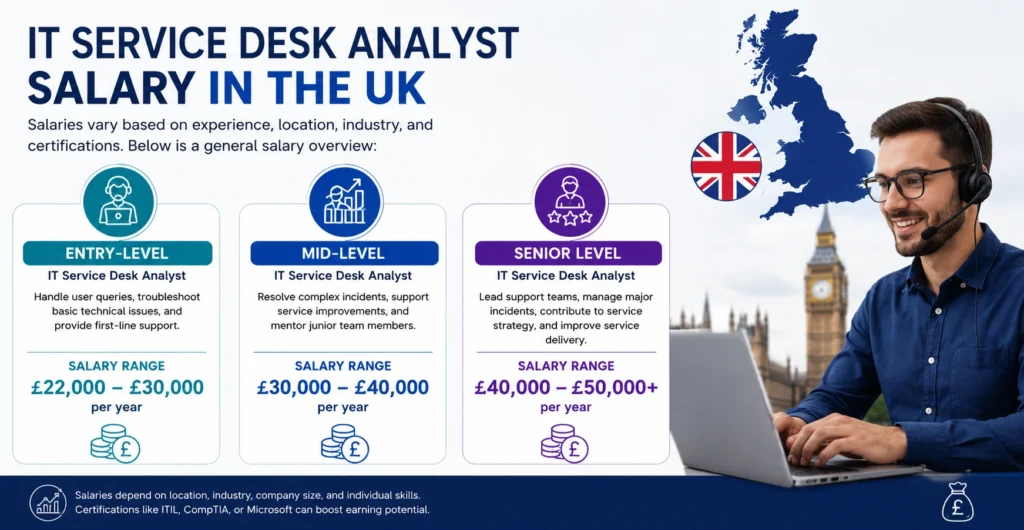
The salary of an IT Service Desk Analyst in the UK can vary depending on factors such as experience, location, industry, and professional certifications. Organisations in sectors such as finance, technology, healthcare, and government often offer different salary levels based on the complexity of their IT environments.

Entry-Level IT Service Desk Analyst

Professionals starting their careers in IT support or service desk roles can typically expect to earn between £22,000 and £30,000 per year. Entry-level positions usually involve handling user queries, troubleshooting basic technical issues, and providing first-line support.

Mid-Level IT Service Desk Analyst

With several years of experience and a stronger understanding of IT service management processes, IT Service Desk Analysts can earn approximately £30,000 to £40,000 per year. At this stage, responsibilities often include resolving more complex incidents, supporting service improvements, and mentoring junior team members.

Senior IT Service Desk Analyst

Experienced professionals in senior service desk roles can earn £40,000 to £50,000+ per year. Senior analysts may lead support teams, manage major incidents, contribute to service strategy, and work closely with other IT departments to improve service delivery and operational efficiency.

Career Progression Opportunities

Career Progression Opportunities

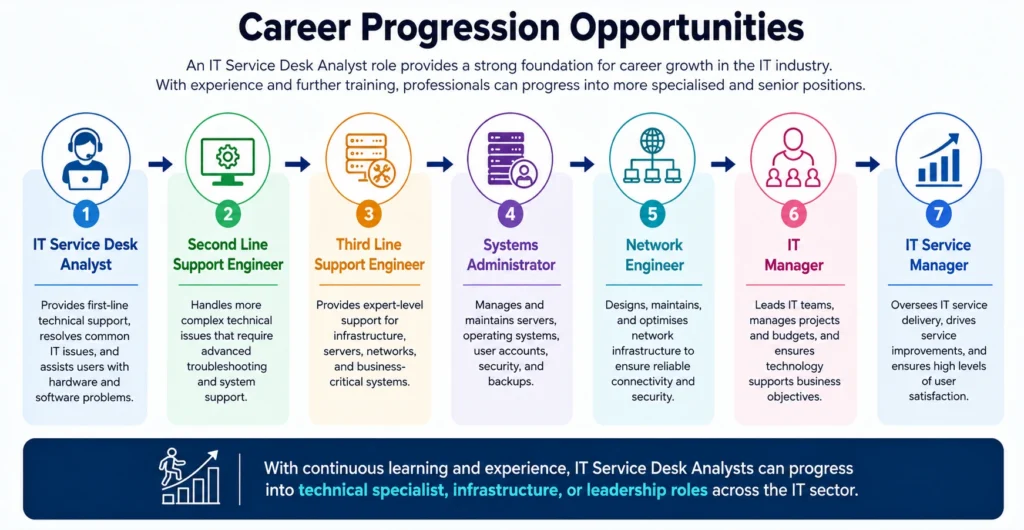
An IT Service Desk Analyst role provides a strong foundation for career growth in the IT industry. With experience and further training, professionals can progress into more specialised and senior positions.

Typical Career Path

IT Service Desk Analyst
Provides first-line technical support, resolves common IT issues, and assists users with hardware and software problems.

Second Line Support Engineer
Handles more complex technical issues that require advanced troubleshooting and system support.

Third Line Support Engineer
Provides expert-level support for infrastructure, servers, networks, and business-critical systems.

Systems Administrator
Manages and maintains servers, operating systems, user accounts, security, and backups.

Network Engineer
Designs, maintains, and optimises network infrastructure to ensure reliable connectivity and security.

IT Manager
Leads IT teams, manages projects and budgets, and ensures technology supports business objectives.

IT Service Manager
Oversees IT service delivery, drives service improvements, and ensures high levels of user satisfaction.

With continuous learning and experience, IT Service Desk Analysts can progress into technical specialist, infrastructure, or leadership roles across the IT sector.

Common Challenges and How to Overcome Them

Common Challenges and How to Overcome Them

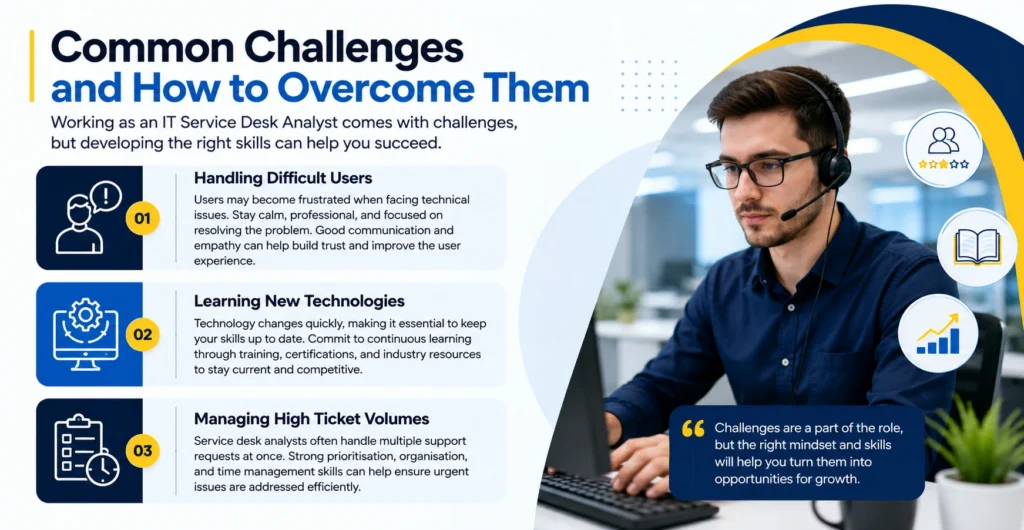
Working as an IT Service Desk Analyst comes with challenges, but developing the right skills can help you succeed.

Handling Difficult Users

Users may become frustrated when facing technical issues. Stay calm, professional, and focused on resolving the problem. Good communication and empathy can help build trust and improve the user experience.

Learning New Technologies

Technology changes quickly, making it essential to keep your skills up to date. Commit to continuous learning through training, certifications, and industry resources to stay current and competitive.

Managing High Ticket Volumes

Service desk analysts often handle multiple support requests at once. Strong prioritisation, organisation, and time management skills can help ensure urgent issues are addressed efficiently.

Future Trends in IT Service Desk Careers

Future Trends in IT Service Desk Careers

The IT service desk profession is evolving rapidly as organisations adopt new technologies and focus more on service quality and user experience.

AI-Assisted Support

AI is helping service desk teams with ticket routing, troubleshooting, and knowledge management. This improves efficiency and allows professionals to focus on more complex issues.

Increased Automation

Automation is reducing repetitive tasks such as password resets and routine service requests, enabling service desk staff to concentrate on problem-solving and service improvement.

Cloud-Based Service Management

As more organisations move to the cloud, demand for professionals with cloud service management knowledge continues to grow.

Cybersecurity Integration

Service desk professionals are increasingly involved in identifying, escalating, and responding to security incidents, making cybersecurity awareness an essential skill.

Enhanced User Experience

The focus is shifting beyond issue resolution to improving overall user satisfaction and delivering a better service experience.

Is IT Service Desk Analyst a Good Career Choice?

Yes, an IT Service Desk Analyst is a strong career choice, particularly for those looking to enter the IT industry. It provides an excellent entry point into technology, helping professionals build technical knowledge, problem-solving abilities, and customer service skills.

There is strong demand for IT support professionals across many industries, offering good job stability and employment opportunities. The role also provides multiple career progression routes, including positions in network administration, cyber security, cloud computing, and IT management.

Another advantage is the opportunity to specialise in areas that match your interests and career goals. Along the way, you’ll develop valuable transferable skills such as communication, troubleshooting, teamwork, and time management.

While the role can be demanding at times, it offers excellent experience, career growth potential, and a solid foundation for a successful long-term career in IT.

FAQs — How to Become an IT Service Desk Analyst

1. What does an IT Service Desk Analyst do?
An IT Service Desk Analyst provides technical support to users, resolves IT issues, manages service requests, and ensures smooth day-to-day IT operations.
2. What qualifications do I need to become an IT Service Desk Analyst?
While a degree can be helpful, many employers accept candidates with relevant IT certifications, technical skills, and practical experience.
3. Which skills are important for an IT Service Desk Analyst?
Key skills include troubleshooting, communication, customer service, problem-solving, time management, and knowledge of IT systems and networks.
4. Do I need experience to start a career as an IT Service Desk Analyst?
Entry-level positions are available for beginners. Completing training courses, earning certifications, and gaining hands-on practice can improve your chances of securing a role.
5. What certifications are useful for IT Service Desk Analysts?
Popular certifications include ITIL, CompTIA A+, Microsoft certifications, and other IT support or service management qualifications.

Sam Walker

Article by

Sam Walker

Sam Walker is an education specialist and author at One Education, bringing over 4 years of experience in creating practical resources and strategies to support teachers and enhance student learning.

top
Home Courses Search