Building a strong relationship with your class means creating trust, respect and genuine connection between you and your students. When learners feel that their teacher listens to them, understands their needs and treats them fairly, they are more likely to feel comfortable, participate in lessons and communicate openly.
Positive teacher-student relationships are not built in a single lesson. They develop through consistent communication, active listening, encouragement and clear boundaries. Learning students’ names and interests, recognising their efforts and giving them opportunities to express themselves can help create a classroom where everyone feels valued and included.

A good relationship with your class can also make teaching and learning more effective. Students who feel respected and supported are often more willing to ask questions, accept feedback and engage with classroom activities. By building trust while maintaining professional expectations, teachers can create a positive learning environment where students feel confident, motivated and ready to learn.
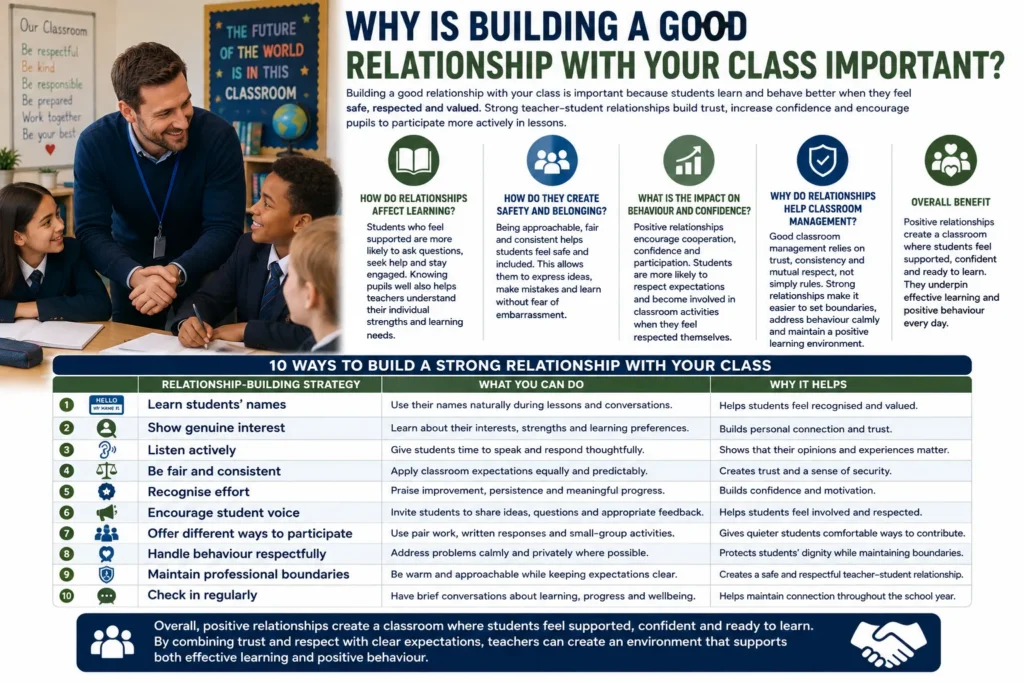
Why Is Building a Good Relationship with Your Class Important?
Building a good relationship with your class is important because students learn and behave better when they feel safe, respected and valued. Strong teacher–student relationships build trust, increase confidence and encourage pupils to participate more actively in lessons.
How Do Relationships Affect Learning?
Students who feel supported are more likely to ask questions, seek help and stay engaged. Knowing pupils well also helps teachers understand their individual strengths and learning needs.
How Do They Create Safety and Belonging?
Being approachable, fair and consistent helps students feel safe and included. This allows them to express ideas, make mistakes and learn without fear of embarrassment.
What Is the Impact on Behaviour and Confidence?
Positive relationships encourage cooperation, confidence and participation. Students are more likely to respect expectations and become involved in classroom activities when they feel respected themselves.
Why Do Relationships Help Classroom Management?
Good classroom management relies on trust, consistency and mutual respect, not simply rules. Strong relationships make it easier to set boundaries, address behaviour calmly and maintain a positive learning environment.
10 Ways to Build a Strong Relationship with Your Class
Building positive classroom relationships comes down to consistent everyday actions. Here are 10 practical ways teachers can strengthen trust, communication and connection with their students.
| Relationship-Building Strategy | What You Can Do | Why It Helps |
|---|---|---|
| Learn students' names | Use their names naturally during lessons and conversations. | Helps students feel recognised and valued. |
| Show genuine interest | Learn about their interests, strengths and learning preferences. | Builds personal connection and trust. |
| Listen actively | Give students time to speak and respond thoughtfully. | Shows that their opinions and experiences matter. |
| Be fair and consistent | Apply classroom expectations equally and predictably. | Creates trust and a sense of security. |
| Recognise effort | Praise improvement, persistence and meaningful progress. | Builds confidence and motivation. |
| Encourage student voice | Invite students to share ideas, questions and appropriate feedback. | Helps students feel involved and respected. |
| Offer different ways to participate | Use pair work, written responses and small-group activities. | Gives quieter students comfortable ways to contribute. |
| Handle behaviour respectfully | Address problems calmly and privately where possible. | Protects students' dignity while maintaining boundaries. |
| Maintain professional boundaries | Be warm and approachable while keeping expectations clear. | Creates a safe and respectful teacher–student relationship. |
| Check in regularly | Have brief conversations about learning, progress and wellbeing. | Helps maintain connection throughout the school year. |
Overall, positive relationships create a classroom where students feel supported, confident and ready to learn. By combining trust and respect with clear expectations, teachers can create an environment that supports both effective learning and positive behaviour.
Continue Your Professional Development
Interested in developing your SEN knowledge? Explore our SENCO – Special Educational Needs Coordination course and discover more professional development courses to support your career goals. Browse all courses at One Education.
How Can You Get to Know Your Students Better?
You can get to know your students better by taking a genuine interest in their personalities, interests, strengths and learning needs. Small, consistent interactions can help build trust and strengthen teacher–student relationships.
1. Learn and Use Their Names
Learn students’ names quickly and use them regularly. This helps each student feel recognised and valued.
2. Understand Their Interests and Strengths
Find out what students enjoy, where they perform well and where they may need support. Use these insights to make learning more relevant.
3. Notice Individual Personalities
Pay attention to how each student communicates and participates. Some may prefer speaking, while others feel more comfortable writing or working in smaller groups.
4. Have Regular Informal Conversations
Use brief conversations and check-ins to ask how students are doing, what they enjoy and whether they need support.
5. Avoid Making Assumptions
Do not assume quiet students are disengaged or challenging students are simply difficult. Observe, listen and understand the reasons behind individual behaviour.
Getting to know students takes time. Regular listening, observation and conversation can help teachers understand each learner and create a more supportive classroom.
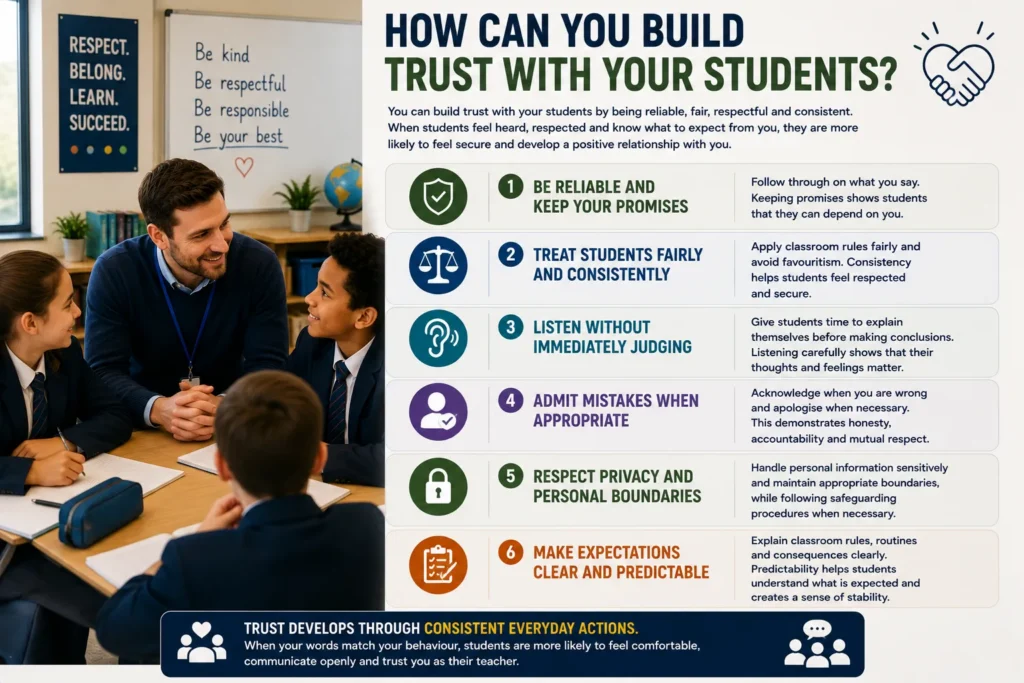
How Can You Build Trust with Your Students?
You can build trust with your students by being reliable, fair, respectful and consistent. When students feel heard, respected and know what to expect from you, they are more likely to feel secure and develop a positive relationship with you.
1. Be Reliable and Keep Your Promises
Follow through on what you say. Keeping promises shows students that they can depend on you.
2. Treat Students Fairly and Consistently
Apply classroom rules fairly and avoid favouritism. Consistency helps students feel respected and secure.
3. Listen Without Immediately Judging
Give students time to explain themselves before making conclusions. Listening carefully shows that their thoughts and feelings matter.
4. Admit Mistakes When Appropriate
Acknowledge when you are wrong and apologise when necessary. This demonstrates honesty, accountability and mutual respect.
5. Respect Privacy and Personal Boundaries
Handle personal information sensitively and maintain appropriate boundaries, while following safeguarding procedures when necessary.
6. Make Expectations Clear and Predictable
Explain classroom rules, routines and consequences clearly. Predictability helps students understand what is expected and creates a sense of stability.
Trust develops through consistent everyday actions. When your words match your behaviour, students are more likely to feel comfortable, communicate openly and trust you as their teacher.
How Can Effective Communication Strengthen Classroom Relationships?
Effective communication strengthens classroom relationships by helping students feel heard, respected and confident. Teachers who communicate openly can build trust and create a classroom where students feel safe expressing their thoughts and needs.
- ♦ Practise active listening: Give students your full attention and respond thoughtfully to show that their views matter.
- ♦ Use clear and respectful language: Choose age-appropriate words and a positive tone to prevent misunderstanding and build mutual respect.
- ♦ Ask open-ended questions: Encourage students to explain their thoughts, feelings and ideas rather than giving simple yes-or-no answers.
- ♦ Allow enough time: Give students time to think and express themselves without interruption or pressure.
- ♦ Notice non-verbal communication: Pay attention to facial expressions, body language, eye contact and tone to better understand how students feel.
- ♦ Create a safe space for ideas: Encourage students to contribute without fear of embarrassment, criticism or ridicule.
Together, these communication habits help develop trust, confidence, participation and stronger teacher–student relationships.
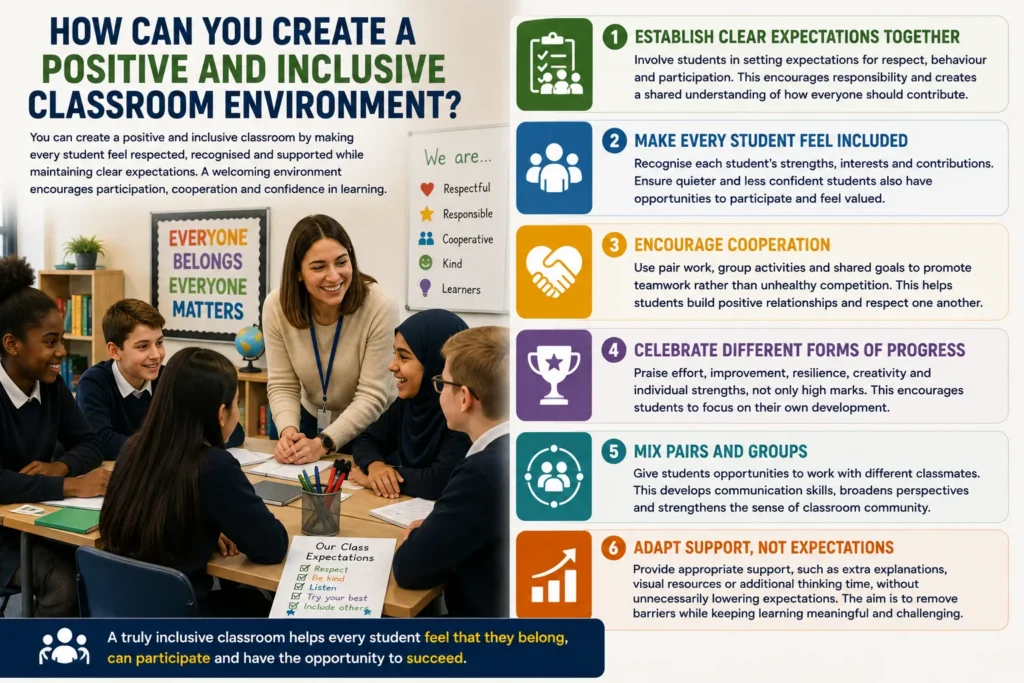
How Can You Create a Positive and Inclusive Classroom Environment?
You can create a positive and inclusive classroom by making every student feel respected, recognised and supported while maintaining clear expectations. A welcoming environment encourages participation, cooperation and confidence in learning.
1. Establish Clear Expectations Together
Involve students in setting expectations for respect, behaviour and participation. This encourages responsibility and creates a shared understanding of how everyone should contribute.
2. Make Every Student Feel Included
Recognise each student’s strengths, interests and contributions. Ensure quieter and less confident students also have opportunities to participate and feel valued.
3. Encourage Cooperation
Use pair work, group activities and shared goals to promote teamwork rather than unhealthy competition. This helps students build positive relationships and respect one another.
4. Celebrate Different Forms of Progress
Praise effort, improvement, resilience, creativity and individual strengths, not only high marks. This encourages students to focus on their own development.
5. Mix Pairs and Groups
Give students opportunities to work with different classmates. This develops communication skills, broadens perspectives and strengthens the sense of classroom community.
6. Adapt Support, Not Expectations
Provide appropriate support, such as extra explanations, visual resources or additional thinking time, without unnecessarily lowering expectations. The aim is to remove barriers while keeping learning meaningful and challenging.
A truly inclusive classroom helps every student feel that they belong, can participate and have the opportunity to succeed.
How Should You Respond to Challenging Behaviour Without Damaging the Relationship?
Respond calmly, fairly and respectfully, focusing on the behaviour rather than judging the student. Try to understand what may be causing the behaviour, address it privately where possible, apply consistent consequences and give the student an opportunity to repair the situation and move forward.
1. Separate the Behaviour from the Student
Focus on what the student did, rather than labelling them as difficult or disruptive. This protects their dignity while making expectations clear.
2. Understand What Is Driving the Behaviour
Consider whether frustration, anxiety, learning difficulties, peer conflict or personal circumstances may be contributing to the behaviour.
3. Correct Privately Where Possible
Avoid unnecessary public criticism. A quiet, private conversation can reduce embarrassment and defensiveness while preserving trust.
4. Stay Calm and Avoid Humiliation
Use a calm tone and respectful language. Avoid shouting, sarcasm, confrontation or embarrassing the student in front of others.
5. Use Fair and Consistent Consequences
Consequences should be clear, proportionate and consistently applied, helping students understand boundaries without feeling personally targeted.
6. Give Them a Chance to Move Forward
Allow students to repair any harm, reflect on what happened and make a fresh start. This encourages responsibility while protecting the teacher–student relationship.
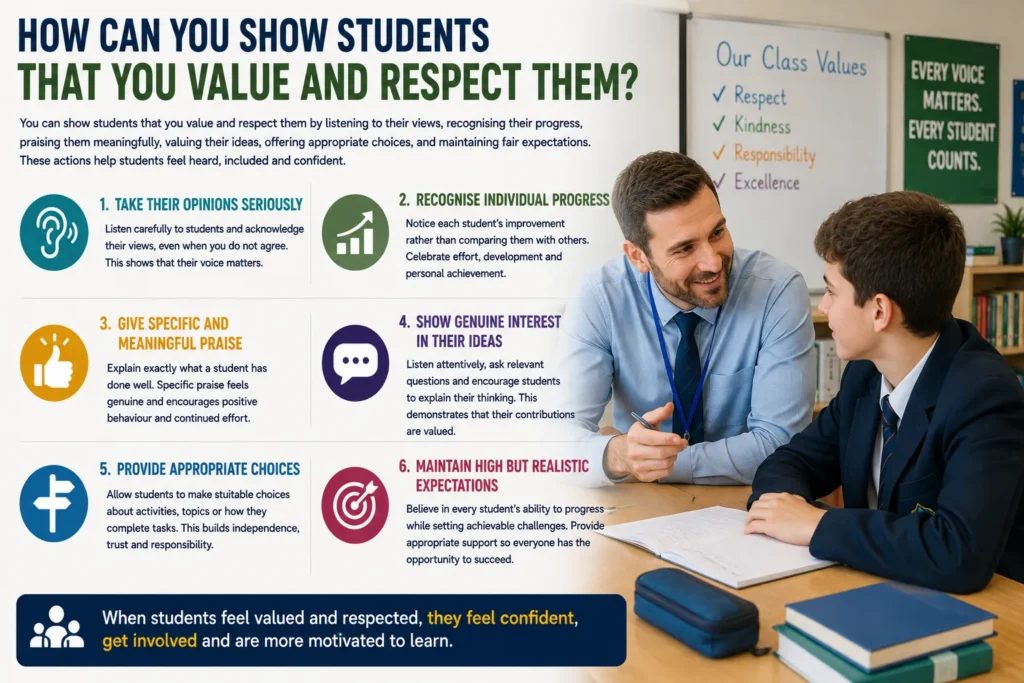
How Can You Show Students That You Value and Respect Them?
You can show students that you value and respect them by listening to their views, recognising their progress, praising them meaningfully, valuing their ideas, offering appropriate choices, and maintaining fair expectations. These actions help students feel heard, included and confident.
Take Their Opinions Seriously
Listen carefully to students and acknowledge their views, even when you do not agree. This shows that their voice matters.
Recognise Individual Progress
Notice each student’s improvement rather than comparing them with others. Celebrate effort, development and personal achievement.
Give Specific and Meaningful Praise
Explain exactly what a student has done well. Specific praise feels genuine and encourages positive behaviour and continued effort.
Show Genuine Interest in Their Ideas
Listen attentively, ask relevant questions and encourage students to explain their thinking. This demonstrates that their contributions are valued.
Provide Appropriate Choices
Allow students to make suitable choices about activities, topics or how they complete tasks. This builds independence, trust and responsibility.
Maintain High but Realistic Expectations
Believe in every student’s ability to progress while setting achievable challenges. Provide appropriate support so everyone has the opportunity to succeed.
How Can You Build Relationships with Quiet or Disengaged Students?
Build relationships with quiet or disengaged students by creating a supportive, low-pressure environment where trust can develop gradually. Give them time, choice and consistent encouragement rather than demanding immediate participation.
1. Avoid Forcing Participation
Do not put students on the spot. Allow them time to feel comfortable before expecting active involvement.
2. Use One-to-One Conversations
Brief private conversations can help you understand their interests, concerns and reasons for disengagement while building trust.
3. Offer Different Ways to Contribute
Use written responses, paired discussions, small groups or practical activities so speaking publicly is not the only way to participate.
4. Give Preparation Time
Allow students time to think, prepare answers or discuss ideas with a partner before contributing.
5. Recognise Small Improvements
Acknowledge progress such as answering a question, joining an activity or contributing to a discussion without making the student feel singled out.
6. Identify Barriers
Consider whether confidence, learning difficulties, relationships, communication needs or personal circumstances may be affecting engagement.
7. Build Trust Gradually
Be patient, consistent and approachable. Regular positive interactions can help students feel safe, valued and increasingly willing to participate.
The key is invitation rather than pressure. Students are more likely to engage when they feel understood, respected and supported.
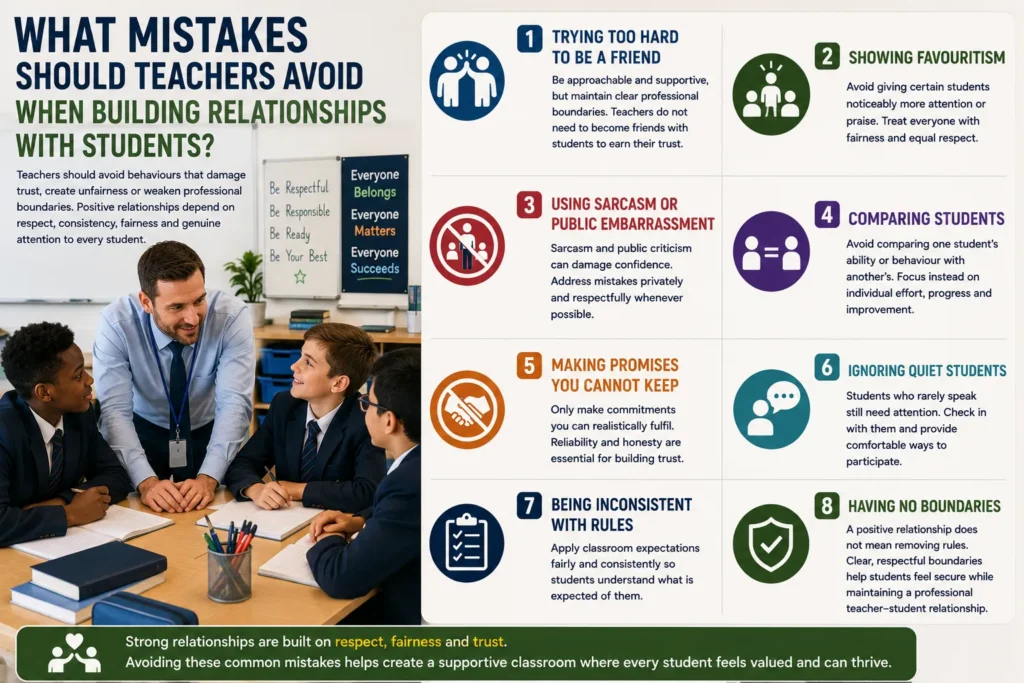
What Mistakes Should Teachers Avoid When Building Relationships with Students?
Teachers should avoid behaviours that damage trust, create unfairness or weaken professional boundaries. Positive relationships depend on respect, consistency, fairness and genuine attention to every student.
1. Trying Too Hard to Be a Friend
Be approachable and supportive, but maintain clear professional boundaries. Teachers do not need to become friends with students to earn their trust.
2. Showing Favouritism
Avoid giving certain students noticeably more attention or praise. Treat everyone with fairness and equal respect.
3. Using Sarcasm or Public Embarrassment
Sarcasm and public criticism can damage confidence. Address mistakes privately and respectfully whenever possible.
4. Comparing Students
Avoid comparing one student’s ability or behaviour with another’s. Focus instead on individual effort, progress and improvement.
5. Making Promises You Cannot Keep
Only make commitments you can realistically fulfil. Reliability and honesty are essential for building trust.
6. Ignoring Quiet Students
Students who rarely speak still need attention. Check in with them and provide comfortable ways to participate.
7. Being Inconsistent with Rules
Apply classroom expectations fairly and consistently so students understand what is expected of them.
8. Having No Boundaries
A positive relationship does not mean removing rules. Clear, respectful boundaries help students feel secure while maintaining a professional teacher–student relationship.
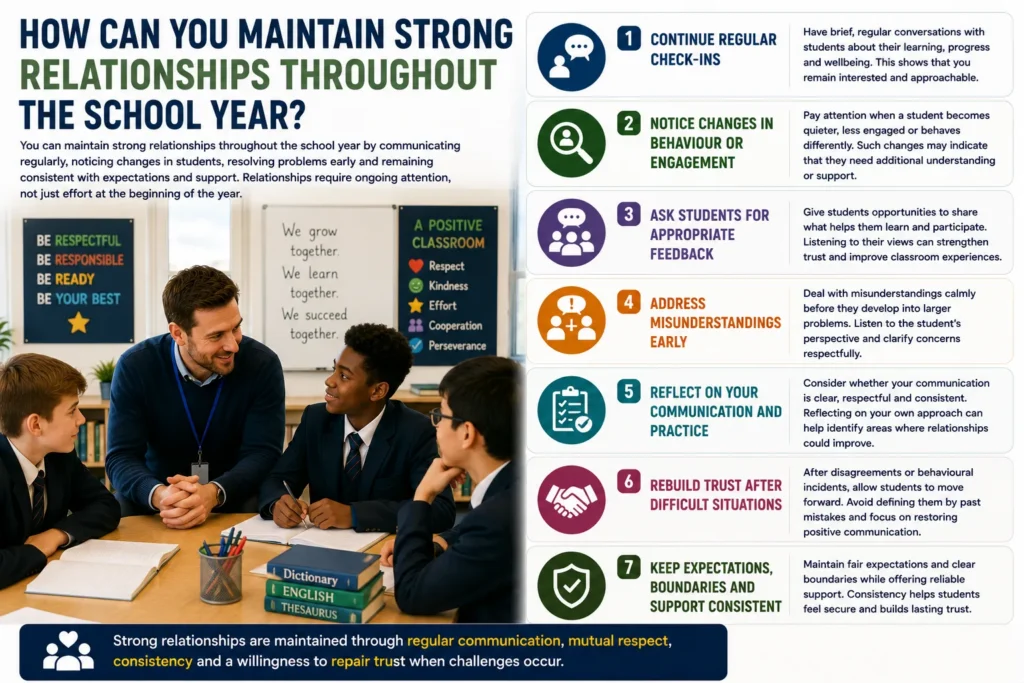
How Can You Maintain Strong Relationships Throughout the School Year?
You can maintain strong relationships throughout the school year by communicating regularly, noticing changes in students, resolving problems early and remaining consistent with expectations and support. Relationships require ongoing attention, not just effort at the beginning of the year.
Continue Regular Check-Ins
Have brief, regular conversations with students about their learning, progress and wellbeing. This shows that you remain interested and approachable.
Notice Changes in Behaviour or Engagement
Pay attention when a student becomes quieter, less engaged or behaves differently. Such changes may indicate that they need additional understanding or support.
Ask Students for Appropriate Feedback
Give students opportunities to share what helps them learn and participate. Listening to their views can strengthen trust and improve classroom experiences.
Address Misunderstandings Early
Deal with misunderstandings calmly before they develop into larger problems. Listen to the student’s perspective and clarify concerns respectfully.
Reflect on Your Communication and Practice
Consider whether your communication is clear, respectful and consistent. Reflecting on your own approach can help identify areas where relationships could improve.
Rebuild Trust After Difficult Situations
After disagreements or behavioural incidents, allow students to move forward. Avoid defining them by past mistakes and focus on restoring positive communication.
Keep Expectations, Boundaries and Support Consistent
Maintain fair expectations and clear boundaries while offering reliable support. Consistency helps students feel secure and builds lasting trust.
Strong relationships are maintained through regular communication, mutual respect, consistency and a willingness to repair trust when challenges occur.
FAQs — How to Build a Relationship with Your Class?
1. How can a teacher build a good relationship with their class?
Show respect, consistency and genuine interest in your students. Learn their names, listen to their ideas, recognise their efforts and create opportunities for positive interaction. Strong relationships develop when students feel valued, understood and supported.
2. Why is building relationships with students important?
Positive relationships help students feel safe, confident and ready to learn. When students trust their teacher, they are more likely to participate, ask for help, follow classroom expectations and engage with lessons.
3. How long does it take to build a relationship with a class?
There is no fixed timeframe. Trust develops gradually through everyday interactions. Being reliable, fair and approachable from the beginning can help establish positive relationships, but maintaining them requires consistent effort throughout the school year.
4. How can I get my students to trust me?
Be consistent and follow through on what you say. Listen without immediately judging, treat students fairly, respect confidentiality where appropriate and acknowledge mistakes. Students are more likely to trust teachers whose behaviour is predictable and respectful.
5. How can I connect with difficult or disengaged students?
Start with small, positive interactions rather than focusing only on their behaviour. Find out about their interests, recognise genuine progress and speak with them individually when appropriate. Understanding what may be affecting their engagement can help you respond more effectively.
Article by
Sam Walker is an education specialist and author at One Education, bringing over 4 years of experience in creating practical resources and strategies to support teachers and enhance student learning.
Related Articles
Get a FREE Course
- Learn useful skills online free
- Get CPD accredited certificate
- Add it to your CV today!

Aug, 22, 2026