How to Build Relationships with Students?

August 22, 2026 | 16 minutes | 94 Readers

Building strong relationships with students starts with creating an environment where they feel respected, valued and comfortable communicating with their teacher. A positive teacher–student relationship is built on mutual trust, respect, consistency and open communication. When students know what to expect from their teacher and feel that their thoughts and concerns are taken seriously, they are more likely to participate, ask for help and engage positively in learning. However, meaningful relationships do not develop through a single conversation, classroom activity

Building strong relationships with students starts with creating an environment where they feel respected, valued and comfortable communicating with their teacher. A positive teacher–student relationship is built on mutual trust, respect, consistency and open communication. When students know what to expect from their teacher and feel that their thoughts and concerns are taken seriously, they are more likely to participate, ask for help and engage positively in learning.

However, meaningful relationships do not develop through a single conversation, classroom activity or team-building exercise. They grow gradually through repeated everyday interactions—such as listening carefully, keeping promises, responding fairly, recognising effort and showing genuine interest in students’ learning. By being approachable and consistent over time, teachers can build connections that support students’ confidence, engagement and sense of belonging in the classroom.

Why Are Positive Relationships with Students Important

Why Are Positive Relationships with Students Important?

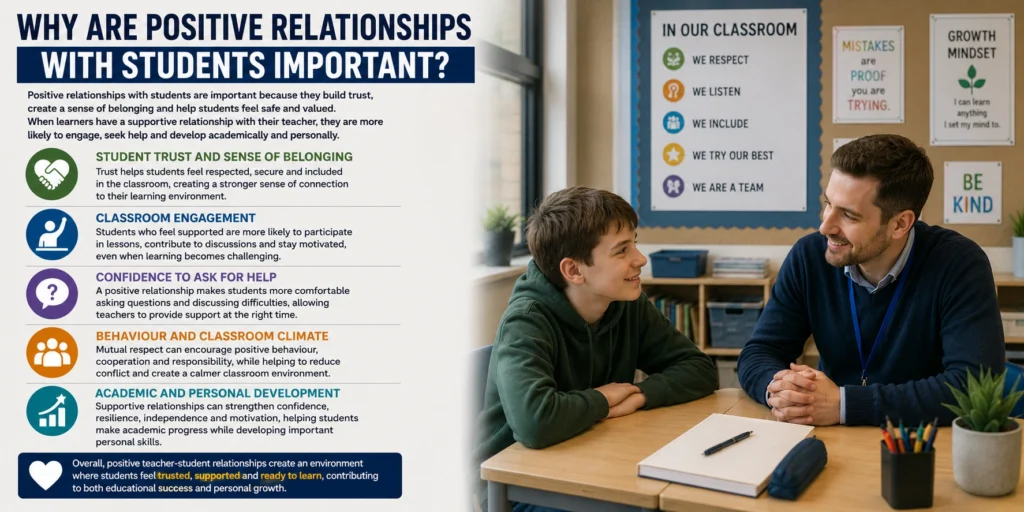
Positive relationships with students are important because they build trust, create a sense of belonging and help students feel safe and valued. When learners have a supportive relationship with their teacher, they are more likely to engage, seek help and develop academically and personally.

Student Trust and Sense of Belonging

Trust helps students feel respected, secure and included in the classroom, creating a stronger sense of connection to their learning environment.

Classroom Engagement

Students who feel supported are more likely to participate in lessons, contribute to discussions and stay motivated, even when learning becomes challenging.

Confidence to Ask for Help

A positive relationship makes students more comfortable asking questions and discussing difficulties, allowing teachers to provide support at the right time.

Behaviour and Classroom Climate

Mutual respect can encourage positive behaviour, cooperation and responsibility, while helping to reduce conflict and create a calmer classroom environment.

Academic and Personal Development

Supportive relationships can strengthen confidence, resilience, independence and motivation, helping students make academic progress while developing important personal skills.

Overall, positive teacher-student relationships create an environment where students feel trusted, supported and ready to learn, contributing to both educational success and personal growth.

What Makes a Good Teacher–Student Relationship

What Makes a Good Teacher–Student Relationship?

A good teacher–student relationship is built on trust, mutual respect, fairness, empathy, consistency, approachability and clear professional boundaries. These qualities help students feel safe, valued and confident enough to participate, communicate and ask for support.

Trust

Students need to know they can rely on their teacher. Keeping promises, listening carefully and responding supportively helps build trust and encourages open communication.

Mutual Respect

Teachers should value students’ opinions, backgrounds and individual differences while expecting respectful behaviour in return. This creates a positive and inclusive classroom environment.

Fairness

Students should feel that rules, expectations and decisions are fair. Fairness means giving each learner appropriate support and opportunities rather than necessarily treating everyone identically.

Empathy

Teachers should try to understand situations from the student’s perspective. Listening patiently and avoiding quick assumptions can help students feel understood and supported.

Consistency

Clear and consistent rules, routines and expectations help students understand what is expected of them and create a predictable, secure learning environment.

Approachability

Students should feel comfortable asking questions or discussing concerns. A calm, welcoming and supportive manner makes communication easier.

Clear Professional Boundaries

Teachers should be caring and supportive while maintaining appropriate professional boundaries. Clear limits around communication, confidentiality, favouritism and personal relationships protect both teachers and students.

Together, these qualities create a safe, respectful and supportive relationship where students can feel confident, engage in learning and develop successfully.

How Can You Get to Know Your Students Better

How Can You Get to Know Your Students Better?

You can get to know your students better by showing genuine interest in who they are, what they enjoy and how they learn. Small, regular interactions can help build trust and strengthen teacher-student relationships.

1. Learn and Use Their Names

Learn students’ preferred names, pronounce them correctly and use them naturally. This helps students feel recognised and valued.

2. Discover Their Interests and Strengths

Find out about students’ hobbies, favourite subjects and individual strengths. This can help you make learning more relevant and engaging.

3. Notice Learning Preferences

Observe how students respond to discussions, written tasks, practical activities and group work. Use these observations to provide varied opportunities to learn and participate.

4. Have Informal Conversations

Use short conversations before lessons, during activities or at break times to learn more about students beyond their academic work.

5. Use Regular Check-Ins

Ask students how they are progressing, whether they understand the topic and if they need support. Regular check-ins can reveal changes in confidence or engagement.

6. Remember Important Details

Remember appropriate details students choose to share, such as hobbies, achievements or upcoming activities. Following up shows that you listened and value them as individuals.

Consistent small actions help teachers understand their students better and create a classroom where learners feel known, respected and supported.

Continue Your Professional Development

Interested in developing your SEN knowledge? Explore our SENCO – Special Educational Needs Coordination course and discover more professional development courses to support your career goals. Browse all courses at One Education.

How Can Effective Communication Build Trust with Students

How Can Effective Communication Build Trust with Students?

Effective communication builds trust by making students feel heard, respected and comfortable expressing themselves. Teachers can strengthen this trust through consistent, supportive communication.

1. Active Listening

Give students your full attention, avoid interrupting and respond thoughtfully. This shows that their views and feelings matter.

2. Ask Open-Ended Questions

Use questions such as “How do you feel about this?” to encourage students to explain their thoughts and concerns freely.

3. Give Students Time to Respond

Allow enough thinking time, especially for students who need longer to express themselves. Avoid rushing or answering for them.

4. Use Clear and Respectful Language

Communicate calmly using simple, age-appropriate language. Avoid words or tones that could embarrass, confuse or discourage students.

5. Take Concerns Seriously

Listen carefully when students raise concerns, acknowledge their feelings and take appropriate action rather than dismissing what they say.

6. Use Positive Non-Verbal Communication

Appropriate eye contact, facial expressions, posture and tone of voice can demonstrate attention, patience and respect.

When teachers communicate in these ways consistently, students are more likely to feel safe, valued and confident approaching them for support.

How Can You Make Every Student Feel Seen and Valued?

You can make every student feel seen and valued by recognising them individually, listening to their ideas and ensuring everyone has fair opportunities to participate.

1. Greet Students Individually

Welcome students by name to show that their presence is noticed and valued.

2. Recognise Effort, Not Just Achievement

Praise effort, improvement and persistence, rather than focusing only on grades or high achievement.

3. Include Quieter Students

Use pair work, small groups or written responses to give quieter students comfortable ways to contribute.

4. Show Interest in Their Ideas

Listen carefully, ask follow-up questions and demonstrate that their opinions matter.

5. Avoid Favouritism

Give all students fair access to attention, praise, responsibilities and opportunities.

6. Give Meaningful Encouragement

Use specific and genuine praise that highlights what a student has done well or improved.

These simple, consistent actions can build trust, confidence and belonging, helping every student feel recognised and valued in the classroom.

How Do You Build Relationships with Quiet, Shy or Disengaged Students

How Do You Build Relationships with Quiet, Shy or Disengaged Students?

Build relationships with quiet, shy or disengaged students by reducing pressure, offering flexible ways to participate and giving trust time to develop. Small, consistent interactions can help students feel safe, respected and valued.

  • ♦  Avoid forcing interaction: Invite participation without putting students on the spot.
  • ♦  Start with brief conversations: Use greetings, simple questions or positive comments to build familiarity.
  • ♦  Offer alternative participation: Allow written responses, paired discussions, small groups or one-to-one conversations.
  • ♦  Identify their interests: Use hobbies, favourite subjects or activities as natural conversation starters.
  • ♦  Allow time for trust: Stay patient, approachable and consistent rather than expecting quick engagement.
  • ♦  Notice small changes: Recognise subtle progress, such as asking a question, contributing briefly or joining an activity.

The key is patience and consistency. Giving students space, choice and genuine attention can gradually strengthen trust and encourage greater engagement.

How Can You Build Relationships While Maintaining Professional Boundaries?

Teachers can build positive relationships by being approachable, fair and supportive while maintaining clear professional boundaries. Students should feel respected and valued, but the teacher–student relationship must always remain appropriate and focused on learning and wellbeing.

Be Friendly, Not a Friend

Be warm and approachable without becoming personally involved in a student’s life. Avoid oversharing, inappropriate communication or behaviour that could blur professional roles.

Maintain Clear Roles

Teachers should provide guidance, encouragement and support while maintaining their professional responsibility and appropriate teacher–student boundaries.

Apply Rules Fairly

Treat students consistently and avoid favouritism. Fair rules and expectations help students develop trust and feel equally respected.

Protect Student Privacy

Handle personal information sensitively and only share it when necessary. Never promise complete confidentiality where a safeguarding concern exists.

Follow Safeguarding Procedures

Follow your organisation’s safeguarding policies when concerns arise and report issues through the correct procedures.

Know When to Share Concerns

If information suggests that a student or another person may be at risk, record and share the concern promptly with the appropriate safeguarding staff rather than dealing with it alone.

Strong relationships are built through trust, respect and consistency. Clear professional boundaries allow teachers to support students effectively while protecting their safety, privacy and wellbeing.

How Should Teachers Handle Conflict Without Damaging the Relationship

How Should Teachers Handle Conflict Without Damaging the Relationship?

Teachers should manage conflict calmly and respectfully, addressing the behaviour without damaging the student’s dignity or trust. A well-handled disagreement can strengthen relationships while helping students understand boundaries and responsibility.

1. Stay Calm

Respond with a steady tone and avoid emotional reactions that could escalate the situation.

2. Listen to the Student

Allow students to explain their perspective. Feeling heard can make them more receptive to guidance.

3. Address Behaviour, Not Character

Focus on what the student did rather than labelling them as “difficult”, “lazy” or “disruptive”.

4. Avoid Public Humiliation

Discuss sensitive issues privately whenever possible to protect the student’s dignity and maintain trust.

5. Explain Consequences Clearly

Make consequences fair and proportionate, explaining why they apply and what behaviour needs to change.

6. Apologise When Appropriate

If you respond unfairly or make a mistake, acknowledge it. A sincere apology demonstrates respect and accountability.

7. Offer a Fresh Start

Once the conflict is resolved, avoid holding the incident against the student. Return to positive interactions and give them an opportunity to improve.

The key is to correct the behaviour without rejecting the student. Clear boundaries, respectful communication and a fresh start can resolve conflict while preserving a positive teacher–student relationship.

How Can Teachers Build Relationships with Challenging Students

How Can Teachers Build Relationships with Challenging Students?

Teachers can build relationships with challenging students by looking beyond their behaviour, understanding possible triggers and creating positive interactions while maintaining clear boundaries.

1. Look Beyond the Behaviour

Consider what may be causing the behaviour, such as frustration, difficult tasks, peer issues or unmet needs.

2. Identify Triggers and Patterns

Notice when and where problems occur. Recognising patterns can help teachers anticipate triggers and respond more effectively.

3. Avoid Only Corrective Interactions

Do not approach students only when something goes wrong. Include friendly conversations, encouragement and recognition of effort.

4. Create Positive Contact

Take an interest in the student’s strengths, progress and interests. Small positive interactions can gradually build trust.

5. Maintain Predictable Expectations

Keep rules and consequences clear, fair and consistent. Predictability helps students understand boundaries and feel more secure.

6. Separate the Student from the Behaviour

Address the inappropriate action without labelling the student. Make it clear that the behaviour needs to change, not the student’s worth or identity.

By combining understanding, positive contact and consistent boundaries, teachers can reduce conflict and develop stronger relationships with students they may initially find difficult to connect with.

What Everyday Classroom Strategies Strengthen Student Relationships

What Everyday Classroom Strategies Strengthen Student Relationships?

Everyday classroom strategies strengthen student relationships by helping students feel welcomed, respected, heard and supported. Small, consistent actions can gradually build trust and create a positive learning environment.

1. Greet Students at the Door

Welcome students by name with a friendly greeting. This simple habit shows that their presence is noticed and valued.

2. Use Brief Individual Check-Ins

Have short, informal conversations to ask how students are doing or whether they need support. Even brief check-ins can strengthen trust.

3. Celebrate Progress

Recognise effort, improvement and persistence, not only high achievement. Specific praise helps students see that their development matters.

4. Give Constructive Feedback

Explain what was done well, what needs improvement and what to do next. Keep feedback respectful, specific and focused on development.

5. Create Opportunities for Student Voice

Use discussions, polls, choices or suggestion boxes to let students express their views. Where appropriate, show how their ideas influence classroom decisions.

6. Encourage Cooperative Activities

Use pair work, group tasks and collaborative projects to encourage communication, teamwork and positive peer relationships.

7. Establish Predictable Classroom Routines

Keep expectations and everyday procedures consistent. Predictable routines create stability and help students feel secure and confident.

8. Start Positively

Begin each day or lesson with a warm welcome, encouraging message or achievable activity to create a positive atmosphere from the outset.

Strong student relationships are built through small actions repeated consistently. When students regularly feel recognised, listened to and supported, trust and classroom engagement can grow naturally.

Conclusion

Building strong relationships with students starts with making them feel respected, understood and valued. Teachers can achieve this by listening actively, showing genuine interest, communicating clearly, recognising individual needs and creating a safe and inclusive classroom. Consistency, fairness and encouragement also help develop trust over time. When students have positive relationships with their teachers, they are more likely to feel comfortable participating, asking for help and engaging with their learning. Ultimately, effective teacher-student relationships create a supportive environment where students can build confidence, develop a sense of belonging and reach their potential.

FAQs — How to Build Relationships with Students?

1. How can teachers build positive relationships with students?

Teachers can build positive relationships by showing respect, listening carefully and taking a genuine interest in each student. Consistent communication, encouragement and fair treatment help students feel valued and comfortable in the classroom.

2. Why is building relationships with students important?

Strong teacher-student relationships can improve trust, engagement and participation. When students feel supported and respected, they may be more comfortable asking questions, sharing concerns and becoming involved in learning activities.

3. How can a teacher gain students’ trust?

Teachers can gain trust by being reliable, fair and consistent. Keeping promises, listening without unnecessary judgement and responding appropriately to students’ concerns demonstrates that the teacher can be depended upon.

4. How can teachers get to know their students better?

Teachers can learn more about students through regular conversations and observation. Asking about their interests, learning preferences, strengths and goals can help teachers understand how to communicate with and support them effectively.

5. How does communication improve teacher-student relationships?

Clear and respectful communication helps prevent misunderstandings and creates trust. Teachers should listen actively, explain expectations clearly and give students appropriate opportunities to express their thoughts and ask questions.

Sam Walker

Article by

Sam Walker

Sam Walker is an education specialist and author at One Education, bringing over 4 years of experience in creating practical resources and strategies to support teachers and enhance student learning.

top
Home Courses Search