How to Choose the Right Functional Skills Course

March 25, 2026 | 12 minutes | 413 Readers

Struggling with Maths or English qualifications can feel like a constant barrier to career growth, university entry, or even everyday confidence. Many learners enrol in Functional Skills courses hoping to improve their prospects — yet choosing the wrong course can lead to wasted time, frustration, and unnecessary costs. Selecting the right Functional Skills course is more important than most people realise. The right choice can help you gain recognised skills, meet job or academic requirements, and build long-term confidence in communication and numeracy.

rating

Bestselling Course

View Details SAVE 94% NOW
How to Choose the Right Functional Skills Course

Struggling with Maths or English qualifications can feel like a constant barrier to career growth, university entry, or even everyday confidence. Many learners enrol in Functional Skills courses hoping to improve their prospects — yet choosing the wrong course can lead to wasted time, frustration, and unnecessary costs.

Selecting the right Functional Skills course is more important than most people realise. The right choice can help you gain recognised skills, meet job or academic requirements, and build long-term confidence in communication and numeracy. This simple guide will walk you through practical tips to help you choose wisely and make a decision that truly supports your future goals.

What Are Functional Skills Courses?

Functional Skills courses are practical learning programmes designed to develop essential everyday abilities, mainly in Maths and English. These courses focus on helping learners build confidence in reading, writing, speaking, listening, and using numbers effectively. Rather than concentrating on theoretical knowledge, Functional Skills training is centred on real-life applications. Learners gain the ability to understand instructions, communicate clearly, manage finances, interpret data, and solve common workplace or daily challenges.

Functional Skills qualifications are available at different stages to support gradual learning and progression. Entry Level introduces basic literacy and numeracy skills for beginners. Level 1 builds on this foundation by strengthening communication, problem-solving, and practical calculation abilities. Level 2, which is equivalent to a GCSE pass grade (4/C), prepares learners for employment opportunities, further education, and vocational training.

These courses emphasise real-world skill development, including effective communication in professional settings, confident use of numbers for budgeting or measurements, and logical problem-solving for everyday situations. Functional Skills courses are widely recognised by employers and training providers because they help individuals become more capable, independent, and work-ready.

Choosing the right course for success

Why Choosing the Right Course Is Important

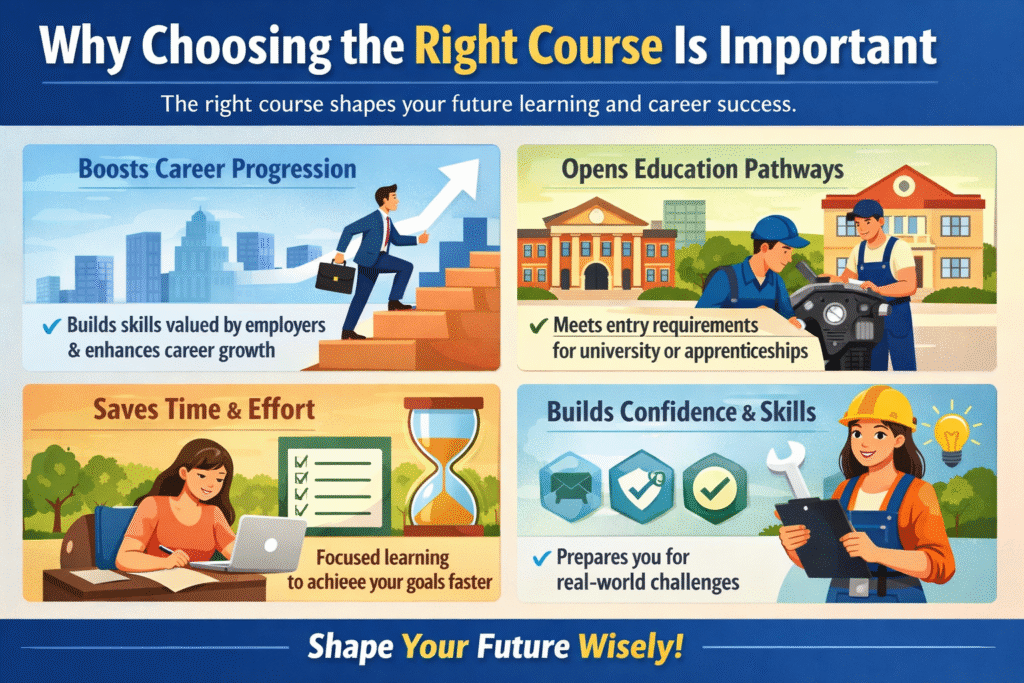
Choosing the right course is an important decision that can shape your future learning journey and career direction. A well-selected course helps you gain relevant knowledge, develop practical skills, and stay motivated throughout your studies. It ensures that your time, effort, and resources are invested wisely while supporting both personal growth and professional ambitions.

  • ♦  Affects career progression: The right course builds skills valued by employers and supports long-term career advancement.
  • ♦  Impacts university or apprenticeship eligibility: Appropriate qualifications can meet entry requirements for further study or vocational pathways.
  • ♦  Saves study time and effort: Focused learning prevents unnecessary repetition and helps you achieve goals faster.
  • ♦  Builds confidence and practical abilities: Relevant training strengthens self-belief and prepares you for real-world challenges.
Key factors for choosing a course

Key Factors to Consider Before Choosing

Before choosing a course, consider its content, accreditation, duration, and flexibility. Also check the provider’s reputation, certification options, and how well the course supports your career goals and skill level.

Identify Your Current Level

Understanding your current ability is an important first step before enrolling in any course or training programme. Choosing the right level helps you stay motivated, learn effectively, and make steady progress without feeling overwhelmed or bored. A clear evaluation of your strengths and weaknesses allows you to set realistic learning goals and select a course that truly matches your needs.

  • ♦  Take a diagnostic test or complete a self-assessment to measure your skills.
  • ♦  Review your previous qualifications, experience, and practical knowledge carefully.
  • ♦  Avoid selecting a level that feels too easy and limits progress.
  • ♦  Avoid choosing a level that is too difficult and reduces confidence.
  • ♦  Identify specific areas where improvement or additional support is needed.
  • ♦  Seek guidance from tutors or course advisors if you feel uncertain.

Check Course Accreditation and Recognition

Choosing the right course involves carefully reviewing its accreditation and recognition to ensure your learning is valued and respected. Accredited courses are usually reviewed by recognised bodies, which helps confirm that the content meets quality standards and supports meaningful skills development. Recognition also matters because employers and educational institutions often prefer candidates who have completed training from trusted providers. Checking these factors before enrolling can help you invest your time and effort wisely while improving your career prospects.

  • ♦  Look for courses approved by recognised awarding organisations or CPD bodies
  • ♦  Check whether employers in your chosen industry accept the qualification
  • ♦  Confirm the course provider’s reputation and credibility in the training sector
  • ♦  Review course outcomes to ensure they match current industry expectations
  • ♦  Ensure certification details are clear and verifiable before enrolment 

Find the Course That Suits You!

We create outstanding professionals in Employability, Business, Health Care, Marketing, Language, and Functional Skills. Whether you're starting or advancing your career, we turn your passion into success as the UK’s most trusted e-learning course provider.
5000+ course

Review Course Content and Learning Outcomes

Review Course Content and Learning Outcomes is an important step when choosing the right course for your personal or professional development. Carefully analysing what the course covers helps you understand whether the knowledge and skills offered will truly support your future plans. A well-structured course should clearly explain its topics, provide measurable learning outcomes, and include practical elements that make learning more engaging and effective. This approach ensures that you invest your time and effort in a programme that aligns with your learning objectives and career aspirations.

  • ♦  Look for real-life examples that help you understand how concepts apply in practical situations.
  • ♦  Choose courses that include practical exercises to build confidence and hands-on skills.
  • ♦  Check whether the Maths or English level matches your current ability and future goals.
  • ♦  Review learning outcomes to ensure they clearly describe the skills you will gain.
  • ♦  Make sure the course content is relevant to your desired job role or progression path.

Consider Study Flexibility

Study flexibility plays an important role when choosing the right course, as it allows learners to balance education with work, family, and other commitments. Modern learning options provide greater convenience and control over how and when you study. Understanding different delivery methods and learning styles can help you select a course that suits your schedule, learning pace, and personal preferences.

  • ♦  Online learning offers convenience, remote access, and the ability to study anytime.
  • ♦  Classroom learning provides structured schedules, face-to-face interaction, and direct support.
  • ♦  Self-paced study allows learners to progress according to their availability and comfort.
  • ♦  Tutor-guided options provide expert feedback, motivation, and a more organised learning path.

Look at Assessment Methods

Understanding assessment methods is important for measuring learning progress and identifying areas for improvement. Well-structured evaluation techniques help learners stay confident, motivated, and prepared for their final outcomes. By using a combination of supportive tools, learners can track performance, strengthen weak areas, and improve overall understanding throughout the course.

  • ♦  Mock tests: Simulate real exam conditions to build confidence and reduce anxiety.
  • ♦  Practice quizzes: Offer quick knowledge checks to reinforce learning after each module.
  • ♦  Final exam support: Provide guidance, tips, and revision resources for successful completion.

Compare Course Provider Reputation

Choosing the right course provider is essential to ensure a valuable learning experience and meaningful skill development. Comparing course provider reputation helps learners understand the quality of training, credibility of certification, and level of support they can expect. A trusted provider often demonstrates consistent learner satisfaction, transparent outcomes, and reliable academic assistance throughout the course journey.

  • ♦  Reviews and learner feedback: Check authentic student reviews, ratings, and testimonials to understand real learning experiences and satisfaction levels.
  • ♦  Success rates: Look at course completion rates, learner achievements, and how effectively the provider helps students reach their learning goals.
  • ♦  Support quality: Evaluate availability of tutor support, technical assistance, and prompt communication channels for resolving learner queries. 
Online vs classroom courses comparison

Online vs Classroom Functional Skills Courses

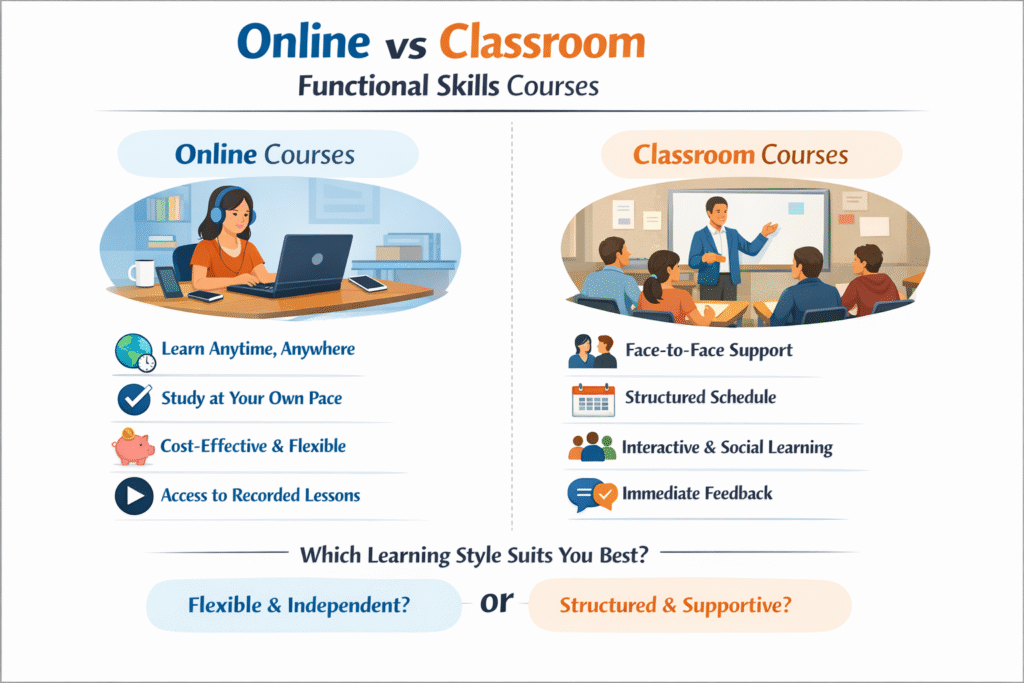
Choosing between online and classroom Functional Skills courses depends on your learning style, schedule, and personal goals. Both options provide valuable opportunities to improve essential Maths and English skills, but they offer different learning experiences and benefits.

Benefits of Online Functional Skills Courses

Online learning offers excellent flexibility, allowing you to study at your own pace from any location. This makes it ideal for learners balancing work, family, or other commitments. Courses are usually accessible on multiple devices, enabling convenient learning anytime. Online Functional Skills courses are also often more cost-effective, as you can save on travel, accommodation, and classroom materials. Additionally, recorded lessons and digital resources allow you to revisit topics whenever needed, improving understanding and confidence.

Benefits of Classroom Functional Skills Courses

Classroom learning provides direct face-to-face support from tutors, which can be helpful for learners who prefer immediate feedback and personal guidance. A structured timetable creates a consistent study routine, helping some students stay motivated and disciplined. Classroom environments also encourage peer interaction, group discussions, and collaborative learning, which can enhance communication skills and deepen subject understanding.

Ultimately, the best choice depends on whether you prefer flexible independent study or structured in-person support.

Mistakes to avoid in learning choices

Common Mistakes to Avoid

Selecting the right course requires careful consideration, yet many learners make avoidable mistakes that can affect their overall learning experience. One common error is choosing a course only based on price. While affordability is important, extremely low-priced courses may lack quality content, expert guidance, or recognised certification. It is always better to balance cost with value, course outcomes, and credibility.

Another frequent mistake is ignoring course duration. Learners often enrol without checking how long the course will take to complete, which can lead to scheduling conflicts or loss of motivation. Understanding the time commitment helps you plan your studies effectively and stay consistent.

Many students also make the error of not checking support availability. Access to tutor support, technical help, or learner communities can significantly enhance understanding and keep you on track. Without proper support, resolving doubts becomes difficult and progress may slow down.

Finally, skipping practice resources is a major setback. Practical exercises, quizzes, and real-world tasks are essential for reinforcing knowledge and building confidence. Courses that include interactive learning tools help you apply concepts effectively and achieve better results.

Tips to Make the Final Decision

Choosing the right course becomes easier when you clearly connect it with your long-term career or education goals. Always check whether the course level matches your current knowledge and where you want to go next. Selecting a course that is too advanced or too basic can slow down your progress and reduce motivation.

Before enrolling, explore free resources or sample lessons offered by the provider. This helps you understand the teaching style, course structure, and learning platform. Speaking to course advisors can also provide valuable guidance, as they can clarify course outcomes, study expectations, and career relevance. Finally, set a realistic study schedule that fits your daily routine. Planning your time properly ensures consistent learning, better focus, and higher chances of successfully completing the course.

Conclusion

Choosing the right Functional Skills course can make a real difference to your personal and professional growth. A well-structured course helps you build essential Maths and English skills, improve confidence, and meet key requirements for employment or further study. By considering factors such as course content, flexibility, support, and recognised certification, you can select a programme that truly matches your goals.

Now is the right time to take action and invest in your future. Gaining Functional Skills can open new doors, strengthen your CV, and create better opportunities in today’s competitive job market. With the right choice, you can move forward with confidence, develop valuable abilities, and take a meaningful step towards long-term success.

FAQs – How to Choose the Right Functional Skills Course

  1. 1. What level Functional Skills should I choose?
    You should choose a level based on your current knowledge and career goals. Beginners often start at Entry Level or Level 1, while Level 2 is ideal for employment or further education progression.
  2. 2. Is Functional Skills Level 2 equivalent to GCSE?
    Yes, Functional Skills Level 2 is widely considered equivalent to a GCSE Grade 4 (previously Grade C). It demonstrates practical Maths and English skills required for work and daily life.
  3. 3. Can I study Functional Skills online?
    Yes, many providers offer fully online Functional Skills courses. Online learning allows you to study at your own pace, access resources anytime, and balance learning with work or personal commitments.
  4. 4. How long does it take to complete a Functional Skills course?
    Course duration depends on the level and your availability. On average, learners take between a few weeks to a few months to complete Level 1 or Level 2 courses.
  5. 5. Do employers accept Functional Skills qualifications?
    Yes, Functional Skills qualifications are widely recognised by employers across the UK. They show that you have essential practical skills in Maths and English, which are important for many job roles and career progression.
  6. 6. Are Functional Skills courses suitable for adults?
    Absolutely. Functional Skills courses are designed for both young learners and adults who want to improve their Maths and English skills for employment, promotion, or further study opportunities.

Find the Course That Suits You!

We create outstanding professionals in Employability, Business, Health Care, Marketing, Language, and Functional Skills. Whether you're starting or advancing your career, we turn your passion into success as the UK’s most trusted e-learning course provider.
5000+ course
Sam Walker

Article by

Sam Walker

Sam Walker is an education specialist and author at One Education, bringing over 4 years of experience in creating practical resources and strategies to support teachers and enhance student learning.

top

Hear What Our Learners Say About Us

Home Courses Search