How to explain special educational needs to a 4 year old?

August 14, 2026 | 17 minutes | 135 Readers

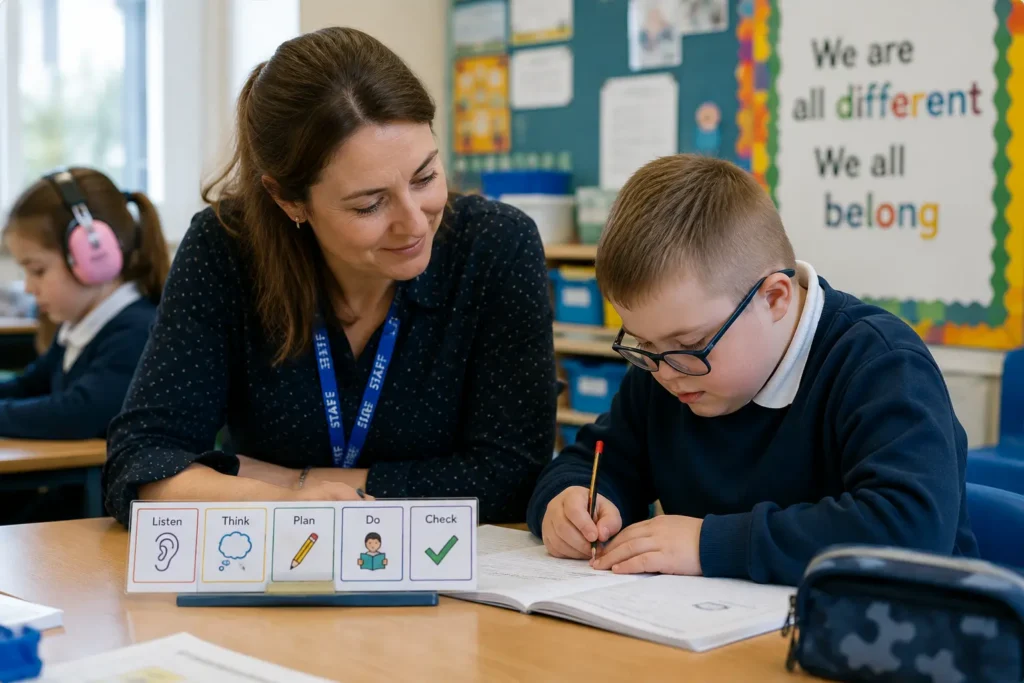
“Why doesn’t Noah talk like me?” “Why does that girl cover her ears?” “Why does he get to sit somewhere quiet?” Questions like these are common when a four-year-old begins noticing that other children may communicate, learn, play or behave differently. At this age, children are naturally curious, and their questions are usually an attempt to understand what they see rather than an intention to be unkind. You do not need to give your child a complicated explanation of special

“Why doesn’t Noah talk like me?” “Why does that girl cover her ears?” “Why does he get to sit somewhere quiet?” Questions like these are common when a four-year-old begins noticing that other children may communicate, learn, play or behave differently. At this age, children are naturally curious, and their questions are usually an attempt to understand what they see rather than an intention to be unkind.

You do not need to give your child a complicated explanation of special educational needs and disabilities (SEND). Instead, respond to what they have noticed using simple and familiar language. You might say, “Everyone’s brain works a little differently. Some children need extra help with talking, learning or dealing with loud sounds.” A short, truthful answer is often much easier for a young child to understand.

These everyday conversations are also an opportunity to introduce kindness and acceptance. Help your child understand that needing extra support does not make another child strange or less capable; it simply means they may experience some things differently. When explaining special educational needs to a four-year-old, the most important approach is simple: be truthful, keep the explanation age-appropriate and encourage kindness towards differences.

First, What Does “Special Educational Needs” Actually Mean

First, What Does “Special Educational Needs” Actually Mean?

In the UK, special educational needs (SEN) means that a child has a learning difficulty or disability and may need extra or different support to learn and take part in everyday activities. SEND means Special Educational Needs and Disabilities and is a broader term that also explicitly includes disabilities.

Having SEN does not mean a child is less intelligent or capable. Children simply learn, communicate and experience the world in different ways. SEN may affect areas such as communication, learning, attention, sensory processing, physical activities or social interaction.

Some needs are easy to notice, while others are less visible. For example, a child may appear comfortable in class but find noise overwhelming or struggle to process instructions. Because every child’s needs are different, the support they receive may also differ, from visual instructions and extra time to specialist equipment or additional adult support.

The key message is simple: needing something different to learn or participate does not mean being unable to learn or participate.

What Can a 4-Year-Old Actually Understand About SEN

What Can a 4-Year-Old Actually Understand About SEN?

A four-year-old does not need to understand complex SEN terms such as neurodevelopmental condition, cognitive impairment, learning disability, sensory processing, reasonable adjustment or differentiated provision. At this age, simple and familiar ideas are much easier to understand.

A useful way to explain SEN is:

Same → Different → Help → Kindness

Start With What Is the Same

Begin with similarities so that differences do not feel unusual or frightening.

“You both like playing, having fun and learning new things.”

This helps children understand that someone with SEN is still a child just like them.

Explain Differences Simply

Four-year-olds already notice that people do things differently. You can explain:

“Everybody is good at different things. Some things are easy for you and some things are hard. It is the same for other children.”

The key message is that everyone needs help sometimes, although some children may need extra or different support.

Explain Extra Help

Children may wonder why someone gets more time, uses special equipment or receives additional help. Keep the answer practical:

“Sometimes people need different kinds of help so they can join in and learn.”

For example, one child may need instructions repeated, while another may wear ear defenders because loud noises are uncomfortable.

Connect Understanding With Kindness

Teach children what they can do: invite others to play, be patient, avoid laughing at difficulties and include children who communicate or learn differently.

“Sometimes your friend might do things differently or need a little extra help. That’s okay. You can be kind, give them time and still play together.”

Keep Explanations Short and Concrete

Young children understand things they can see and experience better than abstract descriptions. Instead of saying, “Sam has sensory processing difficulties,” say:

“Loud noises can feel much louder to Sam, so sometimes he covers his ears.”

At four, understanding SEN is not about learning medical or educational terminology. If a child understands that people can be similar, have differences, need different kinds of help and should always be treated kindly, they have understood the most important message.

Continue Your Professional Development

Interested in developing your SEN knowledge? Explore our SENCO – Special Educational Needs Coordination course and discover more professional development courses to support your career goals. Browse all courses at One Education.

The “Different Brains, Different Help” Explanation

The “Different Brains, Different Help” Explanation

A four-year-old does not need a complicated explanation of SEN. Simply explain that people’s brains and bodies work differently, so they may need different kinds of help.

Step 1: Start With Something Familiar

Use an example they understand:

“You’re good at building with blocks, but sometimes you need help fastening your coat.”

This shows that everyone has strengths and things they need help with.

Step 2: Explain Differences

Say:

“People’s bodies and brains work in different ways.”

Some children may learn quickly, while others need more time or prefer quieter environments.

Step 3: Explain Extra Support

“Sometimes a child needs extra help to learn, talk, listen, move or play.”

They might use pictures, wear ear defenders or receive help from an adult.

Step 4: Make Help Feel Normal

If they ask why someone gets extra help, say:

“Because that’s what helps them. Everyone needs help with something.”

Step 5: Bring It Back to Friendship

Finish positively:

“They still want to play, learn, laugh and have friends, just like you.”

The key message is that being different is normal, needing help is okay, and everyone deserves kindness and inclusion.

Simple SEN Explanations a Four-Year-Old Can Understand

Simple SEN Explanations a Four-Year-Old Can Understand

Four-year-olds often notice when another child communicates, plays or behaves differently. Keep answers short, positive and focused on what they can understand.

If a 4-year-old asks… You could say…
“Why doesn't he talk?” “Talking is harder for him, so he might communicate another way.”
“Why does she cover her ears?” “Some sounds can feel much louder to her.”
“Why does he get extra help?” “Different people need help with different things.”
“Why doesn't she play with us?” “She might enjoy playing differently or need more time.”
“Why does he keep doing that?” “That might help his body feel calm.”
“Why can't she do what I can?” “Some things are harder for her, and other things may be easier.”
“Is something wrong with him?” “No. Everyone is different in some ways.”

Keep It Simple and Positive

Young children rarely need detailed explanations about diagnoses. Focus instead on what the child needs and what helps them. Encourage patience and kindness without making the child seem helpless.

Respect the Child’s Privacy

Do not guess or share another child’s diagnosis or private information. If you do not know, simply say: “I’m not sure, but everyone does things differently sometimes.”

The key message is simple: people learn, communicate and play differently, and everyone deserves kindness and respect.

Should You Actually Use the Words “Special Educational Needs”?

You do not need to avoid the term “special educational needs” (SEN). What matters is explaining it simply and positively.

You could say:

“Special educational needs means someone might need extra or different help with learning or doing things.”

Use familiar examples, such as needing more time, using pictures to understand instructions or having a quieter place to concentrate.

Don’t Make SEN Feel Secret

Talk about SEN calmly rather than making it seem secret or negative. Remind children that everyone needs help with different things sometimes.

Keep the explanation simple, respectful and focused on support and inclusion.

Explain Fairness: “Fair Doesn’t Always Mean Everyone Gets the Same”

Four-year-olds often notice when another child gets extra help, takes breaks or uses different equipment. They may ask, “Why do they get to do that?”

A simple answer is:

“Fair means everyone gets what helps them.”

Use the Shoe Analogy

Giving everyone the same size shoes would not be fair because everyone’s feet are different. Instead, each person gets shoes that fit.

The same applies to support. Some children may need a quiet space, extra time, visual aids or more adult help.

You can explain:

“We don’t all need the same help. Everyone gets what works best for them.”

There is no need to share another child’s diagnosis or personal information. Keep the message clear: fair does not always mean the same; it means getting the support you need.

Explain Different Types of Needs Without Turning Children Into Labels

Explain Different Types of Needs Without Turning Children Into Labels

When explaining SEND to a four-year-old, focus on what a child finds difficult and what helps them, rather than labels or conditions. This makes differences easier to understand without defining a child by their needs.

When Talking Is Difficult

Some children use pictures, signs or gestures instead of words. You might say, “Words are difficult for Maya, so she uses pictures to tell us what she needs.”

When Listening Is Difficult

Some children find it harder to concentrate in busy places. Explain, “Sam listens better when it is quiet and may need things repeated.”

When Sounds, Lights or Touch Feel Different

Sounds, lights or textures can feel stronger to some children. Say, “A sound that seems quiet to you might feel very loud to someone else.”

When Playing Looks Different

Some children prefer playing alone or need more time to join in. Encourage kindness while respecting their space and choices.

When Learning Takes Longer

Some children need extra time or practice. Explain, “Jamie needs to practise a few more times, and that’s okay.”

When Moving Is Difficult

Some children use wheelchairs or walking aids. Explain positively: “That wheelchair helps Alex move around.” Remind children not to touch mobility equipment without permission.

Focus on the Child

Talk about what the child needs, not what is “wrong” with them. Remind children that everyone has different strengths, interests and needs, and needing extra support is only one part of who someone is.

Teach Curiosity Without Teaching Pity

Children are naturally curious. If a four-year-old notices a communication board, hearing aid, wheelchair or unfamiliar behaviour, looking or asking questions is not automatically unkind. Telling them “Don’t look” or “Don’t ask” can accidentally suggest that disability is something embarrassing.

Instead, teach respectful curiosity using a simple approach:

Notice → Explain → Include

Notice: “That’s a communication board.”
Explain: “It helps her tell people what she wants.”
Include: “Would you like to ask her if she wants to play?”

This acknowledges the difference without creating pity and encourages children to think about connection and participation.

The goal is not to teach children to ignore differences, but to respond to them with understanding, respect and inclusion. Gradually, the question shifts from “Why is that child different?” to “How can we include them?”

Respectful curiosity helps children learn that people may communicate, move or behave differently while still deserving the same friendship, choice and sense of belonging.

What If Your 4-Year-Old Has SEN

What If Your 4-Year-Old Has SEN?

Sometimes, the conversation is not about why another child is different. Your four-year-old may begin asking why they need extra help or why certain things feel harder for them.

Keep the explanation simple and reassuring. You might say:

“Some things are easy for you and some things take more work. Your teachers and we are helping you find ways that make those things easier.”

Focus on Strengths as Well as Difficulties

Talk about what your child does well alongside what they find challenging. SEN should never become their whole identity. Remind them of their interests, abilities and achievements so they understand that needing extra support is only one part of who they are.

Acknowledge How They Feel

Reassurance does not mean pretending difficulties do not exist. If your child feels frustrated, acknowledge it:

“I know this can feel difficult sometimes. We can find ways to make it easier.”

This shows that you understand their feelings while helping them see that support is available.

Explain Support Positively

Help your child understand that extra support is not a punishment or a sign of failure. Teachers, family members and other adults are there to help them find ways of learning and communicating that work for them.

Give your child opportunities to ask questions, even if the same questions come up more than once. Keep your answers simple, honest and appropriate for their age.

Most importantly, do not make this one dramatic “SEN talk”. Your child’s understanding will develop as they grow, so keep the conversation open and revisit it whenever they have new questions or experiences.

A 60-Second Conversation Parents Can Remember

A 60-Second Conversation Parents Can Remember

Talking to children about differences does not need to be complicated. The S.A.M.E. Method gives parents a simple way to explain differences while encouraging understanding and inclusion.

S — Start Simple

Give one short, clear explanation.

“Some people find certain things easier, while others may need more support.”

Keep it age-appropriate and allow your child to ask questions.

A — Acknowledge Differences

Help children understand that differences are normal.

“People learn, communicate and do things differently.”

Everyone has different strengths, challenges and ways of participating.

M — Make Help Normal

Remind children that needing support is nothing unusual.

“Everyone needs help with something.”

Whether it is homework, learning a new skill or joining an activity, asking for and receiving help is a normal part of life.

E — Encourage Inclusion

Turn understanding into positive action by asking:

“What could we do to help everyone join in?”

It could mean inviting someone to play, listening patiently, giving them more time or adapting an activity.

Remember S.A.M.E.: Start simple. Acknowledge differences. Make help normal. Encourage inclusion.

A 60-second conversation can give children a lasting message: people may be different, but everyone deserves understanding, support and the chance to be included.

Quick Reference Box: What to Remember

When talking to children about SEN, keep explanations simple, respectful and positive. Focus on understanding differences without defining someone by their needs.

DO

  • ♦  Keep explanations short and age-appropriate.
  • ♦  Use examples your child understands.
  • ♦  Answer the question they actually asked.
  • ♦  Discuss strengths as well as difficulties.
  • ♦  Normalise different types of support.
  • ♦  Encourage respectful questions.
  • ♦  Model positive, inclusive language.
  • ♦  Focus on friendship, inclusion and participation.

DON’T

  • ♦  Diagnose another child or share private information.
  • ♦  Encourage pity or describe SEN as something “wrong”.
  • ♦  Suggest that all differences are the same.
  • ♦  Give long explanations when they are not needed.
  • ♦  Ignore or pretend differences do not exist.
  • ♦  Make SEN someone’s whole identity.

Remember: Children can learn, communicate and participate differently while deserving the same respect, kindness and opportunity to belong.

FAQs — How to explain special educational needs to a 4 year old?

How do you explain special educational needs to a 4-year-old?

Keep the explanation simple and positive. You might say that everyone learns and does things differently, and some children need extra or different help with learning, talking, playing or joining in.

Should I tell my 4-year-old that they have SEN?

Yes, an age-appropriate conversation can help a child understand why they receive additional support. Use simple language, acknowledge things they may find difficult and remind them of their strengths and the things they do well.

How do you explain why another child gets extra help?

Explain that being fair does not always mean everyone gets exactly the same thing. Some children need different kinds of support to help them learn, communicate or participate.

Should children be allowed to ask questions about disabilities?

Yes. Questions are a natural part of how young children learn about differences. Encourage respectful curiosity while teaching them that some information is private and that everyone should be treated with kindness.

How do I explain autism to a 4-year-old?

Focus on simple, observable differences. You could explain that people’s brains work in different ways, so some children may experience sounds, talking, playing or changes differently and might need additional support.

Sam Walker

Article by

Sam Walker

Sam Walker is an education specialist and author at One Education, bringing over 4 years of experience in creating practical resources and strategies to support teachers and enhance student learning.

top
Home Courses Search