How to Improve Customer Experience in IT Services 

June 28, 2026 | 19 minutes | 86 Readers

In today’s digital-first business environment, customer experience (CX) has become a critical success factor in IT services. Organisations can no longer rely solely on delivering functional and reliable technical support; customers now expect fast responses, personalised assistance, seamless interactions, and consistent service quality. As a result, IT service providers are shifting their focus from simply delivering services to creating positive service experiences that build trust, improve satisfaction, and strengthen long-term customer relationships. This shift is being driven by changing customer

In today’s digital-first business environment, customer experience (CX) has become a critical success factor in IT services. Organisations can no longer rely solely on delivering functional and reliable technical support; customers now expect fast responses, personalised assistance, seamless interactions, and consistent service quality. As a result, IT service providers are shifting their focus from simply delivering services to creating positive service experiences that build trust, improve satisfaction, and strengthen long-term customer relationships.

This shift is being driven by changing customer expectations, technological advancements, and growing competition across the IT sector. Trends such as AI-powered support, self-service solutions, and data-driven decision-making are transforming how organisations engage with customers and resolve issues. In this guide, you’ll discover why customer experience matters in IT services, explore the latest trends shaping modern IT support, and learn practical strategies to improve service quality, increase customer satisfaction, and drive business success.

What Does Customer Experience Mean in IT Services?

Customer experience in IT services refers to how customers perceive every interaction they have with IT support, from reporting an issue to receiving a resolution. It is influenced by the quality of support, communication, and the ease of the overall service process.

There are two main types of customers in IT services: internal customers, such as employees who rely on IT systems to do their jobs, and external customers, such as clients or end users who use an organisation’s products and services. Both expect reliable, efficient, and user-friendly support.

Today, technical excellence alone is no longer enough. While fast response times and effective solutions remain important, customers also value clear communication, convenience, and a smooth support experience.

For example, a ticket may be resolved in just 10 minutes, but the experience can still be poor if the customer has to provide the same information multiple times. This shows that successful IT service delivery depends not only on solving problems but also on making the process simple and stress-free for customers.

Why Customer Experience Matters More Than Ever

Customer experience (CX) has become a major factor in business success. Today’s customers expect not only fast and effective service but also clear communication and a positive overall experience. Businesses that prioritise CX are more likely to build trust, loyalty, and long-term growth.

Customer Retention

A positive customer experience encourages customers to stay with a business for longer. Satisfied customers are more likely to return and less likely to switch to competitors, helping organisations maintain steady growth.

Brand Reputation

Customer experiences directly affect brand reputation. Positive interactions can lead to recommendations and favourable reviews, while poor experiences can quickly damage a company’s image.

Employee Productivity

When service processes are efficient and communication is clear, employees spend less time handling complaints and follow-ups. This allows them to focus on resolving issues and delivering better service.

Reduced Support Costs

Keeping customers informed and providing proactive support reduces repeated enquiries and unnecessary support requests. This helps lower operational costs and improves efficiency.

Competitive Advantage

Excellent customer experience helps businesses stand out from competitors. Customers are more likely to choose organisations that are responsive, transparent, and easy to work with.

Provider A vs Provider B: Which Builds Greater Loyalty?

Consider two IT providers:

  • ♦  Provider A resolves tickets quickly.
  • ♦  Provider B resolves tickets just as quickly but keeps customers informed throughout the process.

While both solve the issue, Provider B is more likely to earn customer loyalty. Regular updates reduce uncertainty, build trust, and create a more positive experience. This shows that customers value not only the solution but also the way the service is delivered.

If you’re looking to enhance your IT service management expertise and earn a recognised qualification, consider enrolling in the ITIL® 4 Specialist: Drive Stakeholder Value Certification Course. This course explores how to create, deliver, and improve services that meet stakeholder needs while preparing you for the official certification. Advance your professional skills today with One Education.

The Biggest Customer Experience Challenges in IT Services

The Biggest Customer Experience Challenges in IT Services

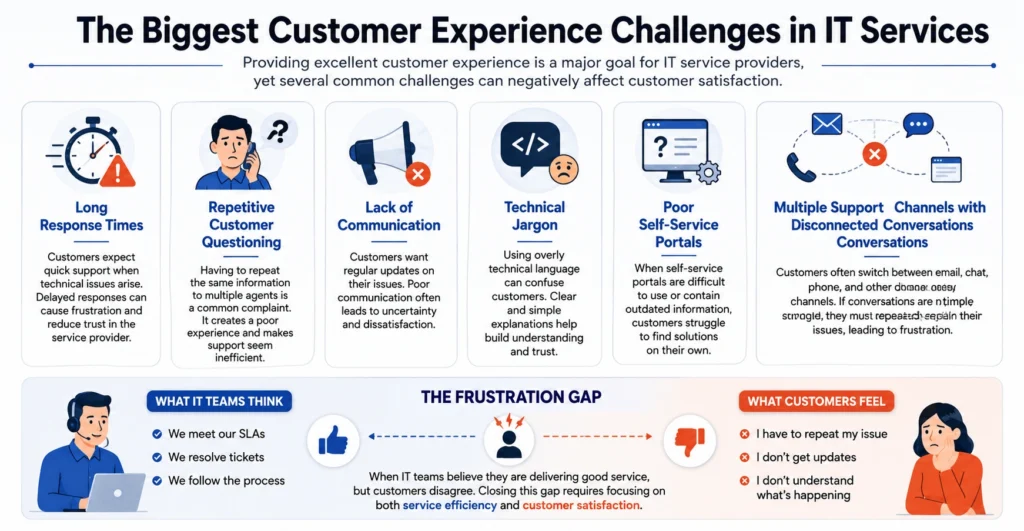
Providing excellent customer experience is a major goal for IT service providers, yet several common challenges can negatively affect customer satisfaction.

Long Response Times

Customers expect quick support when technical issues arise. Delayed responses can cause frustration and reduce trust in the service provider.

Repetitive Customer Questioning

Having to repeat the same information to multiple agents is a common complaint. It creates a poor experience and makes support seem inefficient.

Lack of Communication

Customers want regular updates on their issues. Poor communication often leads to uncertainty and dissatisfaction.

Technical Jargon

Using overly technical language can confuse customers. Clear and simple explanations help build understanding and trust.

Poor Self-Service Portals

When self-service portals are difficult to use or contain outdated information, customers struggle to find solutions on their own.

Multiple Support Channels with Disconnected Conversations

Customers often switch between email, chat, phone, and other channels. If conversations are not connected, they must repeatedly explain their issues, leading to frustration.

The Frustration Gap

A key challenge in IT services is “The Frustration Gap”—when IT teams believe they are delivering good service, but customers disagree. While support teams may meet internal performance targets, customers may still be unhappy due to poor communication, repeated interactions, or lack of clarity. Closing this gap requires focusing on both service efficiency and customer satisfaction.

Understand the Customer Journey Before Fixing It

Understand the Customer Journey Before Fixing It

Many IT teams focus on resolving technical issues quickly, but customer experience begins long before a support ticket is submitted and continues after the issue is resolved. Understanding the entire customer journey helps organisations identify pain points, improve satisfaction, and deliver better support.

Customer Journey Stages

1. Issue Occurs

The user encounters a problem, such as a software error or system issue.

2. User Searches for Answers

Many users first look for solutions through FAQs, knowledge bases, or online resources.

3. Contacts Support

If self-service options do not help, the user reaches out to the support team.

4. Receives Assistance

Support staff investigate the issue, provide updates, and guide the user towards a solution.

5. Issue Resolution

The problem is fixed, allowing the user to continue their work.

6. Follow-Up Experience

Feedback requests and follow-up communication help ensure continued satisfaction.

Journey Mapping Exercise for IT Teams

Journey mapping helps IT teams understand the user experience and identify improvement opportunities.

Steps:

  1. ♦  List each stage of the customer journey.

  2. ♦  Identify user actions and emotions at each stage.

  3. ♦  Find pain points, such as poor documentation, long response times, or lack of updates.

  4. ♦  Prioritise improvements based on impact.

  5. ♦  Measure results using customer feedback and service metrics.

Example Pain Points

Journey Stage Pain Point Improvement
Searches for Answers Difficult-to-find information Improve knowledge resources
Contacts Support Complex ticket process Simplify ticket submission
Receives Assistance Lack of updates Provide regular communication
Follow-Up Experience No feedback collection Send customer surveys
Make Support Faster Without Losing the Human Touch

Make Support Faster Without Losing the Human Touch

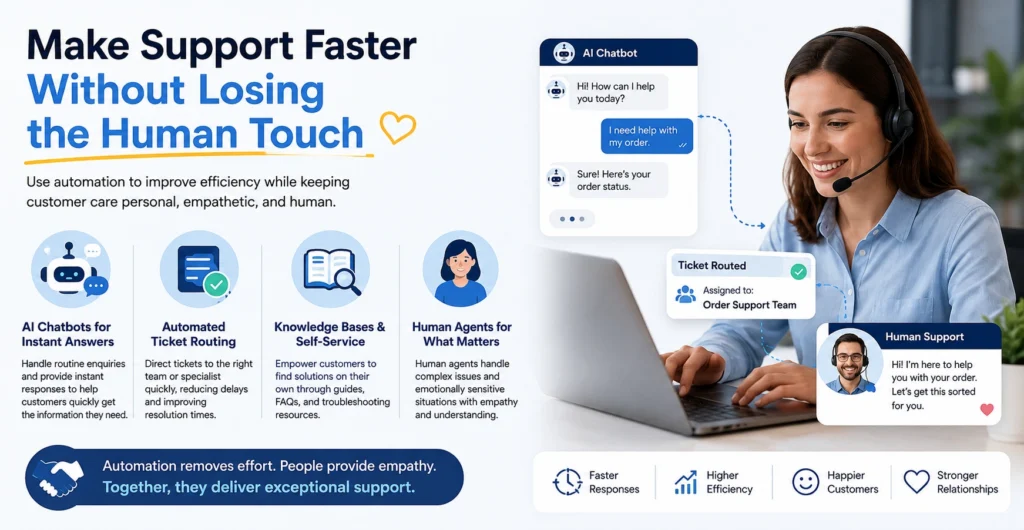
Customers expect fast support, but they also value genuine human interaction. Modern organisations use automation to improve efficiency while ensuring that customer care remains personal and empathetic.

AI chatbots can handle routine enquiries and provide instant responses, helping customers get answers quickly. Automated ticket routing directs requests to the right team or specialist, reducing delays and improving resolution times.

Knowledge bases and self-service portals allow customers to find information independently through guides, FAQs, and troubleshooting resources. This gives users quick access to solutions whenever they need them.

The key is to use automation to remove effort, not empathy. While AI and automation can manage repetitive tasks and ticket classification, human agents remain essential for handling complex issues and emotionally sensitive situations.

By combining automation with human expertise, organisations can deliver faster, more efficient support without losing the personal touch that customers value.

Personalisation: The Secret to Exceptional IT Service

Personalisation is becoming a key factor in delivering exceptional IT services. Users expect support that understands their needs, preferences, and previous interactions rather than receiving a one-size-fits-all experience.

One important aspect of personalisation is remembering customer history. When support teams have access to previous interactions, they can quickly understand issues without asking users to repeat information. Recognising repeat issues also helps teams identify root causes and provide long-term solutions rather than repeatedly fixing the same problem.

Tailoring communication styles further improves the user experience. Some users prefer detailed technical explanations, while others need simple, easy-to-follow guidance. Adapting communication ensures support is more effective and user-friendly.

Role-based support is equally important. For example, a finance manager and a software developer may face similar technical issues but require different support approaches. Finance managers often prioritise business continuity, while developers may need detailed technical information for troubleshooting.

As customer expectations continue to evolve, hyper-personalisation is becoming a major trend across service industries. By using customer data and insights to deliver more relevant support experiences, organisations can improve satisfaction, strengthen relationships, and provide more effective IT services.

Improve Communication Throughout the Support Process

Improve Communication Throughout the Support Process

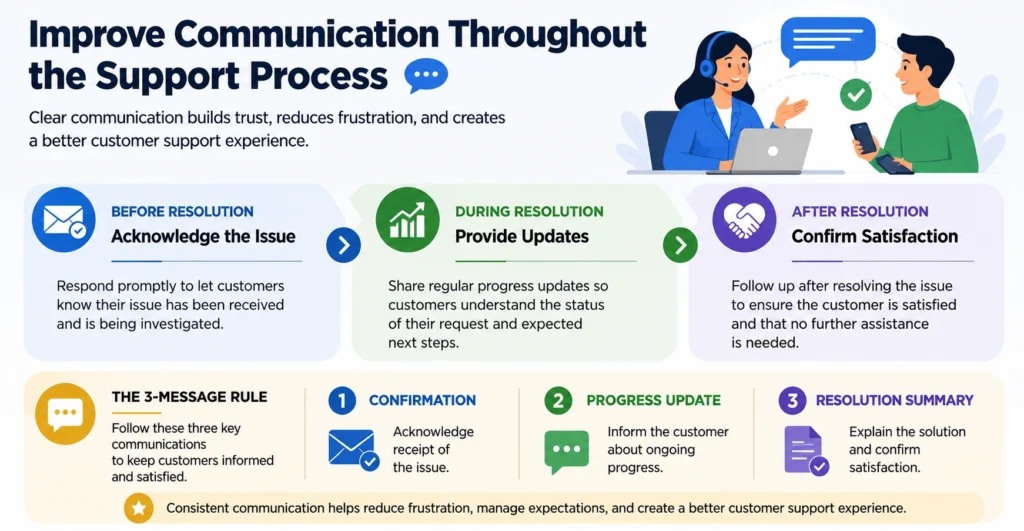
Many customer complaints arise from poor communication rather than the technical issue itself. Keeping customers informed throughout the support process helps build trust and improve satisfaction.

Before Resolution: Acknowledge the Issue

Respond promptly to let customers know their issue has been received and is being investigated.

During Resolution: Provide Updates

Share regular progress updates so customers understand the status of their request and expected next steps.

After Resolution: Confirm Satisfaction

Follow up after resolving the issue to ensure the customer is satisfied and that no further assistance is needed.

The 3-Message Rule

Follow these three key communications:

  1. ♦  Confirmation – Acknowledge receipt of the issue.

  2. ♦  Progress Update – Inform the customer about ongoing progress.

  3. ♦  Resolution Summary – Explain the solution and confirm satisfaction.

Consistent communication helps reduce frustration, manage expectations, and create a better customer support experience.

Build a Self-Service Experience Customers Actually Want to Use

Build a Self-Service Experience Customers Actually Want to Use

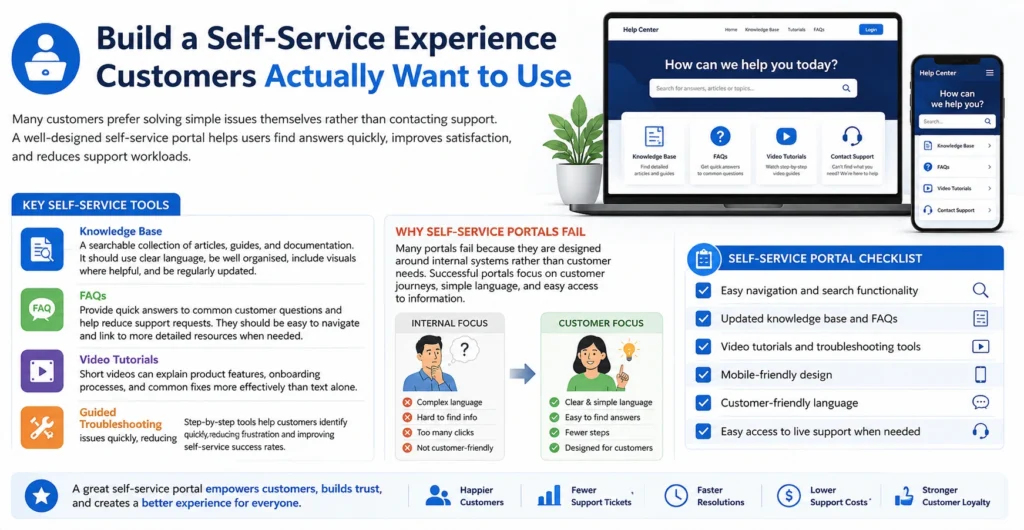
Many customers prefer solving simple issues themselves rather than contacting support. A well-designed self-service portal helps users find answers quickly, improves satisfaction, and reduces support workloads.

Key Self-Service Tools

Knowledge Base
A searchable collection of articles, guides, and documentation. It should use clear language, be well organised, include visuals where helpful, and be regularly updated.

FAQs
Provide quick answers to common customer questions and help reduce support requests. They should be easy to navigate and link to more detailed resources when needed.

Video Tutorials
Short videos can explain product features, onboarding processes, and common fixes more effectively than text alone.

Guided Troubleshooting
Step-by-step tools help customers identify and resolve issues quickly, reducing frustration and improving self-service success rates.

Why Self-Service Portals Fail

Many portals fail because they are designed around internal systems rather than customer needs. Successful portals focus on customer journeys, simple language, and easy access to information.

Self-Service Portal Checklist

✔ Easy navigation and search functionality
✔ Updated knowledge base and FAQs
✔ Video tutorials and troubleshooting tools
✔ Mobile-friendly design
✔ Customer-friendly language
✔ Easy access to live support when needed

Create a Seamless Omnichannel Support Experience

Customers interact with businesses through multiple channels, including email, live chat, phone, social media, and mobile apps. They expect a consistent experience across every touchpoint.

A key principle of omnichannel support is that customers should never have to repeat their problem when switching channels. Support teams should have access to the customer’s interaction history, allowing conversations to continue smoothly regardless of the platform used.

By integrating communication channels and customer data into a unified system, businesses can provide faster, more personalised support. This improves customer satisfaction, builds trust, and creates a seamless customer experience across all channels.

Measure What Customers Feel, Not Just What IT Delivers

Measure What Customers Feel, Not Just What IT Delivers

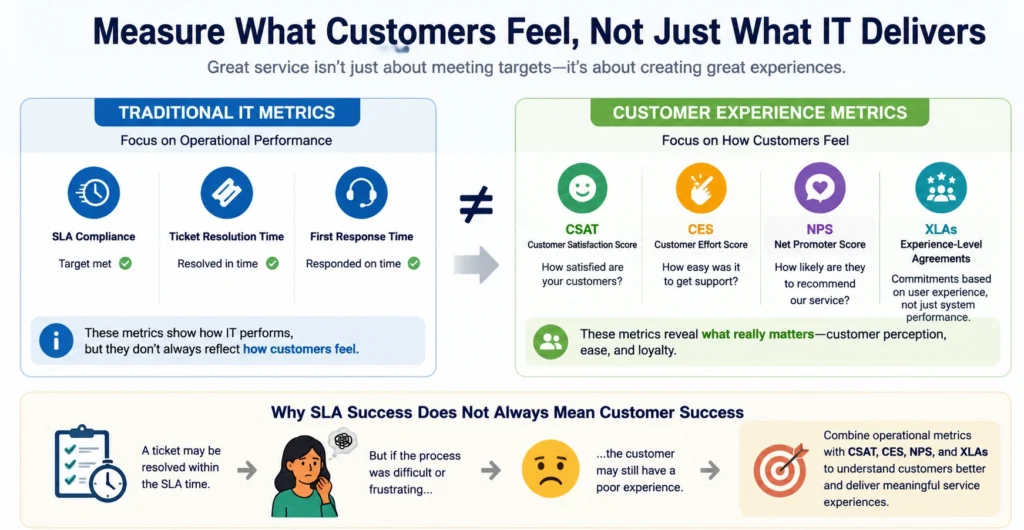
Traditional IT metrics such as SLA compliance, ticket resolution time, and first response time help measure operational performance. However, they do not always reflect how customers actually feel about the service they receive. An issue may be resolved within the agreed timeframe, yet the customer may still have a poor experience.

To gain a better understanding of service quality, organisations are increasingly using customer-focused metrics. Customer Satisfaction Score (CSAT) measures user satisfaction, Customer Effort Score (CES) evaluates how easy it was to get support, and Net Promoter Score (NPS) indicates customer loyalty and willingness to recommend the service. Many organisations are also adopting Experience-Level Agreements (XLAs), which focus on user experience rather than technical performance alone.

Why SLA Success Does Not Always Mean Customer Success

Meeting an SLA does not always guarantee customer satisfaction. A ticket may be resolved on time, but if the process was difficult or frustrating, the customer may still be dissatisfied. This is why many organisations are moving beyond traditional SLAs and embracing experience-focused measurements. By combining operational metrics with CSAT, CES, NPS, and XLAs, businesses can better understand customer needs and deliver more meaningful service experiences.

Turn Customer Feedback Into Continuous Improvement

Turn Customer Feedback Into Continuous Improvement

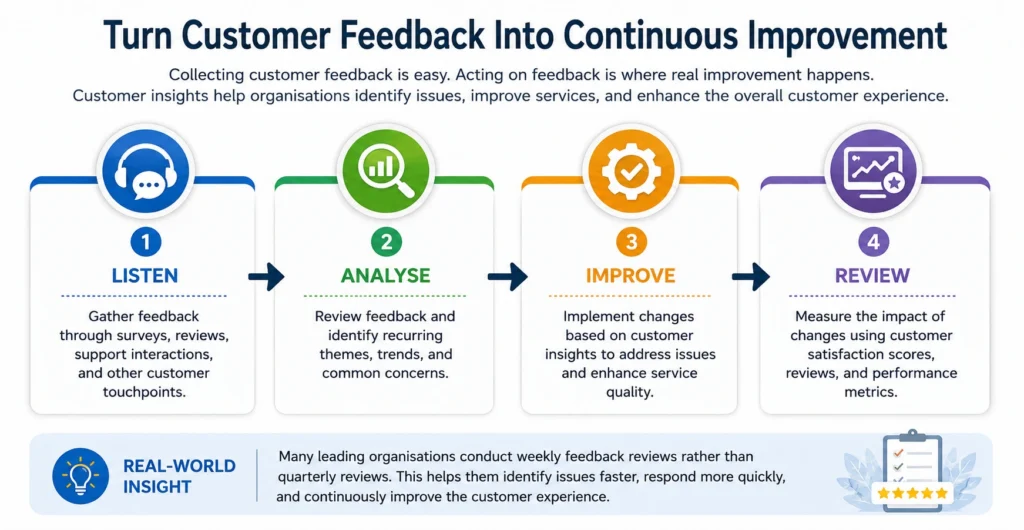
Collecting customer feedback is easy. Acting on feedback is where real improvement happens. Customer insights help organisations identify issues, improve services, and enhance the overall customer experience.

A Simple Framework

Listen
Gather feedback through surveys, reviews, support interactions, and other customer touchpoints.

Analyse
Review feedback and identify recurring themes, trends, and common concerns.

Improve
Implement changes based on customer insights to address issues and enhance service quality.

Review
Measure the impact of changes using customer satisfaction scores, reviews, and performance metrics.

Real-World Insight

Many leading organisations conduct weekly feedback reviews rather than quarterly reviews. This helps them identify issues faster, respond more quickly, and continuously improve the customer experience.

Future Trends Shaping Customer Experience in IT Services

Customer experience in IT services is evolving rapidly, driven by intelligent technologies and proactive support approaches.

AI-Powered Service Desks

AI-powered service desks automate routine tasks, provide instant support, and improve response times, helping customers receive assistance more quickly.

Predictive Support

Using data analytics, organisations can identify and address potential issues before they affect users, reducing disruptions and improving service reliability.

Agentic AI

Agentic AI goes beyond simple automation by making decisions and taking actions independently, enabling faster and more personalised support.

Experience-Led ITSM

Modern IT service management is increasingly focused on customer satisfaction and user experience rather than solely measuring technical performance.

Sentiment Analysis

Sentiment analysis helps organisations understand customer feedback and emotions, allowing them to improve services and strengthen relationships.

Proactive Issue Prevention

Continuous monitoring and intelligent analytics help prevent problems before customers experience them, reducing downtime and improving trust.

Key Takeaway

The future of IT services is not about fixing problems faster—it’s about preventing customers from experiencing problems in the first place.

Conclusion

Improving customer experience in IT services requires a combination of responsive support, clear communication, proactive problem-solving, and the effective use of modern technologies. By understanding customer needs, personalising service delivery, leveraging automation and analytics, and continuously gathering feedback, organisations can build stronger relationships and increase customer satisfaction. Businesses that prioritise customer experience not only enhance loyalty and trust but also gain a competitive advantage in an increasingly service-driven digital landscape.

FAQs — How to Improve Customer Experience in IT Services

1. What is customer experience in IT services?
Customer experience in IT services refers to how customers perceive and interact with an IT provider throughout their journey, from requesting support to receiving solutions and ongoing assistance.
2. Why is customer experience important in IT services?
A positive customer experience increases customer satisfaction, strengthens trust, improves retention rates, and helps businesses gain a competitive advantage.
3. How can IT companies improve customer experience?
IT companies can improve customer experience by providing fast support, clear communication, personalised services, proactive problem-solving, and reliable service delivery.
4. What role does communication play in customer experience?
Clear and timely communication keeps customers informed, manages expectations, reduces frustration, and builds stronger relationships.
5. How does automation enhance customer experience?
Automation speeds up response times, streamlines routine tasks, improves service consistency, and allows support teams to focus on more complex customer issues.

Sam Walker

Article by

Sam Walker

Sam Walker is an education specialist and author at One Education, bringing over 4 years of experience in creating practical resources and strategies to support teachers and enhance student learning.

top
Home Courses Search