How to Keep Your Motorcycle in Top Shape: Maintenance Tips

July 01, 2025 | 9 minutes | 1072 Readers

A well-maintained motorcycle not only performs better but also keeps you safe on the road. Regular upkeep ensures that your bike runs smoothly, lasts longer, and avoids unexpected breakdowns that could leave you stranded or worse—cause an accident. The key is consistency and knowing what to check and when.  This guide breaks down exactly how to keep your motorcycle in top shape with practical steps that work for beginners and experienced riders alike. How to Keep Your Motorcycle in Top

rating

Bestselling Course

View Details SAVE 94% NOW

A well-maintained motorcycle not only performs better but also keeps you safe on the road. Regular upkeep ensures that your bike runs smoothly, lasts longer, and avoids unexpected breakdowns that could leave you stranded or worse—cause an accident. The key is consistency and knowing what to check and when. 

This guide breaks down exactly how to keep your motorcycle in top shape with practical steps that work for beginners and experienced riders alike.

How to Keep Your Motorcycle in Top Shape

A healthy motorcycle starts with regular attention to the basics. From oil changes to tire checks, these simple but essential habits will keep your bike running strong and safe for every ride.

Regularly Check and Change the Oil

Oil lubricates your engine, reduces heat, and prevents wear. If the oil level is too low or the oil is dirty, your engine could suffer serious damage. Check your oil level regularly—once every few hundred miles or before long rides. 

Change the oil based on your manufacturer’s recommendation, usually every 3,000 to 5,000 miles. Always use motorcycle-specific oil for best results.

If you’re interested in learning more, consider enroling in a Motorbike Mechanic Course to deepen your understanding of maintenance essentials like oil changes, engine care, and more hands-on repair skills.

 
Motorbike Mechanic Course | CPD Certified
Motorbike Mechanic Course helps you performing pre-ride safety checks, changing inner tubes, and maintenance of brake and gear adjustments

Maintain Proper Tire Health

Tires are the only contact point between your bike and the road, so keeping them in good shape is non-negotiable. Check your tire pressure at least once a week using a reliable pressure gauge. 

Underinflated tires wear faster and reduce handling. Look for cracks, punctures, or uneven wear. Replace your tires if they’re bald or more than five years old, even if the tread looks okay.

Lubricate and Adjust the Chain

The drive chain transfers power from your engine to the rear wheel. If it’s dry, rusty, or too loose, it affects performance and increases wear. 

Clean your chain with a chain cleaner or kerosene, then lubricate it while the chain is warm (right after a ride is ideal). Adjust chain slack based on your bike’s manual. Too tight or too loose can damage the sprockets or even cause the chain to snap.

Keep the Battery Charged and Clean

Motorcycle batteries don’t last forever. You’ll usually get three to five years out of a good one. Check for signs of a weak battery: dim lights, slow start-up, or clicking sounds when starting. Keep terminals clean and free of corrosion. 

If your motorcycle sits unused, use a smart charger to maintain battery health. Always turn off your lights and accessories when the engine isn’t running.

Clean Your Motorcycle Regularly

Washing your bike is more than cosmetic. Dirt and grime can damage paint, corrode metal, and hide potential problems like oil leaks. Clean your motorcycle every couple of weeks or after riding in bad weather. 

Use a gentle motorcycle cleaner, avoid high-pressure washers near sensitive components, and dry your bike thoroughly. Don’t forget to clean under the seat and around the engine.

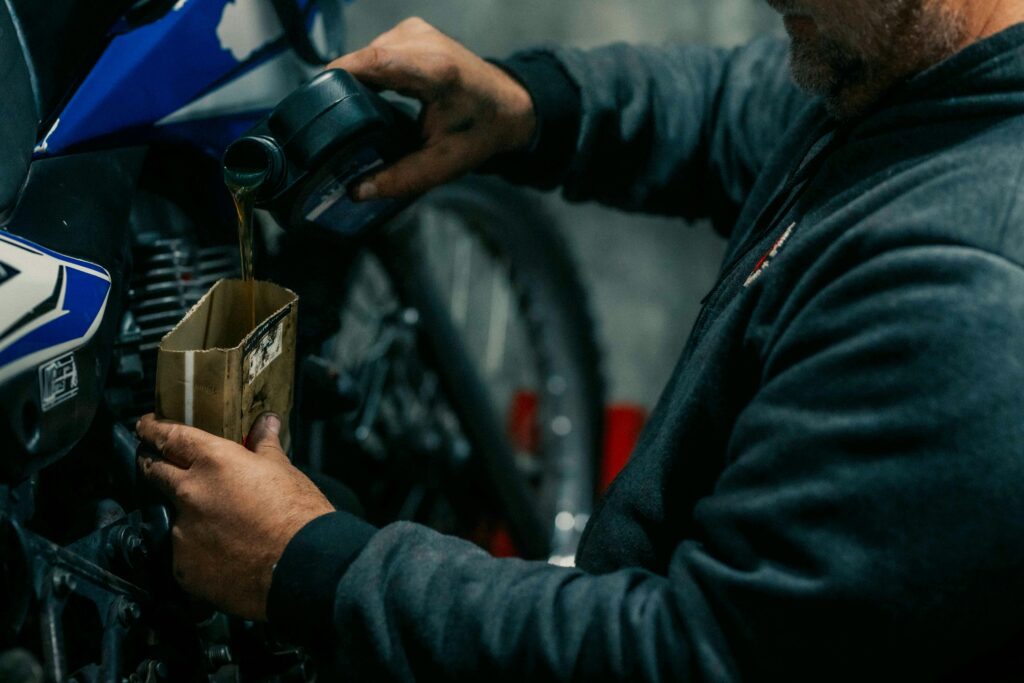
Mechanic pouring oil in a motorcycle in a dimly lit garage, emphasizing maintenance.

What Fluids Should You Check on a Motorcycle?

Your motorcycle depends on several key fluids to run smoothly and safely. Knowing what to check, when, and why can help prevent major issues before they start.

Engine Oil

This is the most important fluid. Check the oil when the engine is warm but not hot. Use the dipstick or sight glass depending on your bike. Low or dirty oil means it’s time for a top-up or a full change. Never overfill.

Coolant

Coolant regulates engine temperature and prevents overheating. Check it when the engine is cool. Look at the coolant level in the reservoir and make sure it’s within the recommended range. Top up with the right mix of antifreeze and water if it’s low.

Brake Fluid

Brake fluid absorbs moisture over time, which lowers braking performance. Inspect the fluid level in the reservoir and look at its color. If it’s dark or below the minimum line, flush and replace it. Always use the fluid type recommended in your manual—usually DOT 4.

Fork Oil

Fork oil affects how your suspension absorbs bumps. If your front suspension feels soft, bouncy, or leaks oil, it’s time to check the fork oil. While not a monthly task, it should be inspected and replaced every 15,000 to 20,000 kilometers or as specified by your bike’s service manual.

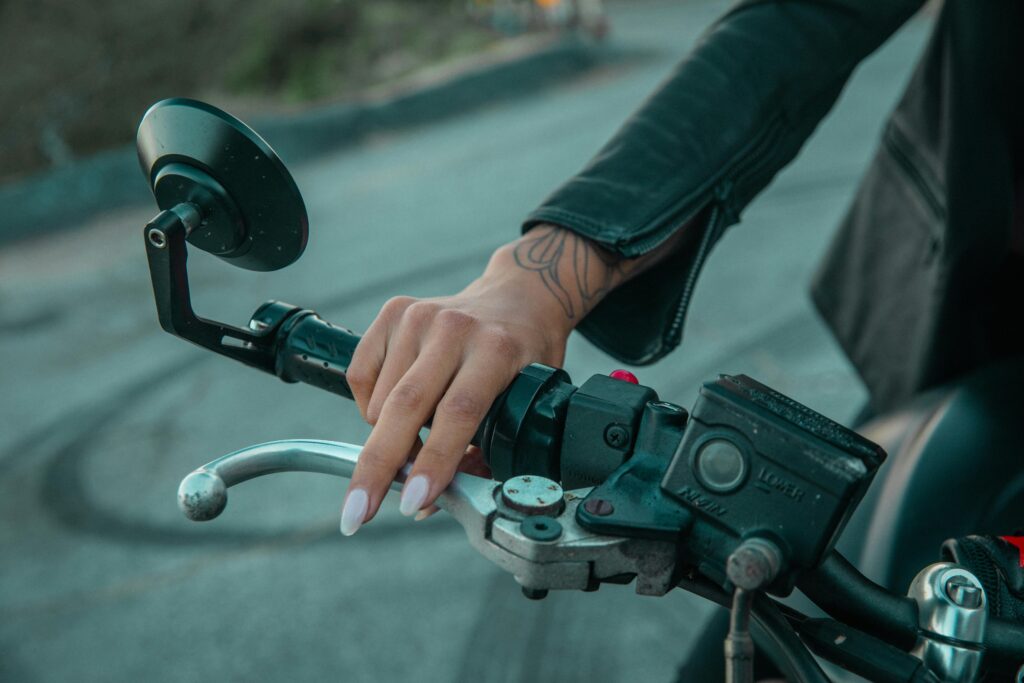
Detailed close-up of a hand gripping a motorcycle handlebar outdoors.

How to Maintain Motorcycle Brakes Properly

Brakes are your bike’s most important safety system. Proper brake maintenance ensures quick stops, confident riding, and peace of mind in any situation.

Inspect Brake Pads and Discs

Look at your brake pads through the caliper opening. If the pad thickness is less than 3mm, replace them. Inspect the discs for grooves or warping. If you hear squealing or grinding noises, replace the pads immediately.

Check Brake Fluid Levels

Brake fluid should be clear and at the correct level in the reservoir. Top it up only if it’s low and clean. If it’s dark, replace it. Avoid mixing old and new fluid, and never reuse brake fluid.

Test Brake Responsiveness

Press the levers and pedals to make sure they feel firm. Spongy brakes mean there’s air in the lines or the fluid is old. Test braking at low speeds before every ride. Brakes that grab suddenly or feel weak need attention immediately.

Find the Course That Suits You!

We create outstanding professionals in Employability, Business, Health Care, Marketing, Language, and Functional Skills. Whether you're starting or advancing your career, we turn your passion into success as the UK’s most trusted e-learning course provider.
5000+ course

How Often Should You Service a Motorcycle?

Routine service keeps your bike in peak condition. Whether you ride daily or occasionally, following a smart maintenance schedule saves you time, money, and trouble down the road.

Motorcycle service schedules vary, but a general rule works for most bikes:

Weekly: Check tire pressure, lights, chain condition, and fluid levels.

Monthly: Inspect brake pads, coolant, and battery terminals.

Every 6 months: Change engine oil, check fork oil, clean the air filter.

Yearly: Full inspection—sprockets, brake system flush, coolant flush, clutch adjustment.

Check out related blogs like Top Signs Your Motorcycle Needs a Service and DIY Maintenance Tips to stay ahead on your bike’s care.

Bonus Tips for Long-Term Motorcycle Health

Beyond the basics, there are extra steps that can extend your bike’s life and performance. These tips help you stay ahead of wear and tear and keep every part working like it should.

Lubricate Control Cables

Throttle and clutch cables should move smoothly without sticking. Apply cable lubricant every few months to prevent rust and reduce wear. If you feel stiffness or jerking, inspect and lube right away.

Adjust the Clutch as Needed

If the clutch engages too close to the handlebar or slips during acceleration, adjust it. There’s usually a barrel adjuster on the clutch cable. Keep a few millimeters of free play to avoid unnecessary wear.

Inspect Lights and Indicators

Lights are essential for safety. Check headlight, tail light, brake light, and indicators before each ride. Replace burnt-out bulbs and clean dirty lenses. Keep spares in your toolkit.

Check Sprockets and Drive Components

Look for hooked, worn, or chipped sprocket teeth. A worn chain can eat into sprockets quickly. Replace both the chain and sprockets together for best performance. Misaligned sprockets or a stretched chain can cause poor power transfer and excessive wear.

Conclusion

Keeping your motorcycle in top shape isn’t complicated. It’s about consistency. Stay on top of your oil, tires, brakes, fluids, and chain. Don’t wait for problems to appear—prevent them. Regular maintenance keeps your ride smooth, safe, and reliable. Use this guide to create a basic checklist, stick to a schedule, and your bike will reward you with performance and peace of mind on every ride.

How often should I change my motorcycle oil?

Every 3,000 to 5,000 miles, or every 6 months—whichever comes first. Follow your manufacturer’s guide.

Is it bad to ride with low tire pressure?

Yes. It reduces traction, increases tire wear, and can lead to a blowout.

What’s the best way to clean a motorcycle chain?

Use chain cleaner or kerosene, scrub with a soft brush, and apply motorcycle chain lube after it’s dry.

Can I use car engine oil in my motorcycle?

No. Car oils often contain additives that harm wet clutches in motorcycles. Use motorcycle-specific oil.

What are signs my battery needs replacing?

Slow starts, dim lights, and a weak horn are common signs. A battery over 3 years old should be tested regularly.

How do I know when my brake pads are worn out?

If the pads are under 3mm thick or you hear grinding/squealing when braking, replace them immediately.

top
Home Courses Search