9 Types of Healthcare Waste and How to Dispose Them

June 02, 2026 | 11 minutes | 3 Readers

Every day, hospitals, clinics, laboratories, and care facilities generate vast amounts of waste. While approximately 85% of this waste is non-hazardous, the remaining 15% can be highly dangerous, posing serious threats to public health and the environment if not handled properly. Healthcare waste includes everything from general rubbish and expired medicines to infectious materials, sharps, and chemical waste. Proper segregation and disposal are essential to prevent the spread of infections, protect healthcare workers and patients, and reduce environmental contamination. Improper

rating

Bestselling Course

View Details SAVE 94% NOW

Every day, hospitals, clinics, laboratories, and care facilities generate vast amounts of waste. While approximately 85% of this waste is non-hazardous, the remaining 15% can be highly dangerous, posing serious threats to public health and the environment if not handled properly.

Healthcare waste includes everything from general rubbish and expired medicines to infectious materials, sharps, and chemical waste. Proper segregation and disposal are essential to prevent the spread of infections, protect healthcare workers and patients, and reduce environmental contamination. Improper waste management can lead to disease outbreaks, injuries, pollution, and legal consequences for healthcare facilities.

In this article, we’ll explore the 9 main types of healthcare waste, their associated risks, and the best practices for safe and compliant disposal.

What Is Healthcare Waste?

Healthcare waste refers to all waste generated during the diagnosis, treatment, immunisation, or care of humans and animals. It includes both non-hazardous waste, such as paper, packaging, and food scraps, and hazardous waste, such as used needles, contaminated materials, chemicals, and pharmaceuticals that can pose risks to human health and the environment if not managed properly.

Healthcare waste is produced by a wide range of facilities and services, including:

  • ♦  Hospitals
  • ♦  Clinics
  • ♦  Laboratories
  • ♦  Dental practices
  • ♦  Nursing homes
  • ♦  Veterinary facilities
  • ♦  Home healthcare services

Quick Fact Box

Did You Know?

A large proportion of healthcare waste is similar to ordinary household waste and is generally non-hazardous. However, hazardous healthcare waste requires specialised handling, treatment, and disposal to prevent infections, injuries, and environmental contamination.

Why Proper Healthcare Waste Disposal Matters

Proper healthcare waste disposal is essential for protecting both public health and the environment. Poor waste management can lead to the spread of infections, needle-stick injuries, exposure to toxic chemicals, and radiation hazards, putting healthcare workers, patients, and communities at risk.

Improper disposal also causes serious environmental damage. Hazardous waste can contaminate soil and water sources, while unsafe burning releases harmful pollutants into the air. Additionally, discarded medical waste can injure or poison wildlife, disrupting ecosystems. By following proper disposal practices, healthcare facilities can reduce health risks, protect natural resources, and create a safer environment for everyone.

Healthcare Waste

The 9 Types of Healthcare Waste and Their Disposal Methods

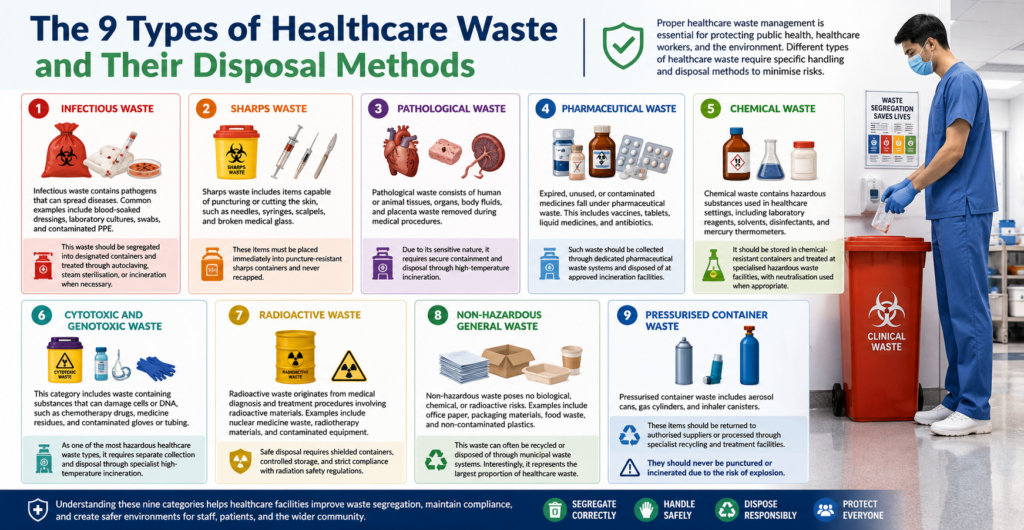
Proper healthcare waste management is essential for protecting public health, healthcare workers, and the environment. Different types of healthcare waste require specific handling and disposal methods to minimise risks.

1. Infectious Waste

Infectious waste contains pathogens that can spread diseases. Common examples include blood-soaked dressings, laboratory cultures, swabs, and contaminated PPE. This waste should be segregated into designated containers and treated through autoclaving, steam sterilisation, or incineration when necessary. A common mistake is mixing infectious waste with general waste, which increases contamination risks.

2. Sharps Waste

Sharps waste includes items capable of puncturing or cutting the skin, such as needles, syringes, scalpels, and broken medical glass. These items must be placed immediately into puncture-resistant sharps containers and never recapped. Proper sharps management is crucial, as many healthcare worker injuries result from incorrect handling.

3. Pathological Waste

Pathological waste consists of human or animal tissues, organs, body fluids, and placenta waste removed during medical procedures. Due to its sensitive nature, it requires secure containment and disposal through high-temperature incineration.

4. Pharmaceutical Waste

Expired, unused, or contaminated medicines fall under pharmaceutical waste. This includes vaccines, tablets, liquid medicines, and antibiotics. Such waste should be collected through dedicated pharmaceutical waste systems and disposed of at approved incineration facilities. Medicines should never be discarded down sinks or drains.

5. Chemical Waste

Chemical waste contains hazardous substances used in healthcare settings, including laboratory reagents, solvents, disinfectants, and mercury thermometers. It should be stored in chemical-resistant containers and treated at specialised hazardous waste facilities, with neutralisation used when appropriate.

6. Cytotoxic and Genotoxic Waste

This category includes waste containing substances that can damage cells or DNA, such as chemotherapy drugs, medicine residues, and contaminated gloves or tubing. As one of the most hazardous healthcare waste types, it requires separate collection and disposal through specialist high-temperature incineration.

7. Radioactive Waste

Radioactive waste originates from medical diagnosis and treatment procedures involving radioactive materials. Examples include nuclear medicine waste, radiotherapy materials, and contaminated equipment. Safe disposal requires shielded containers, controlled storage, and strict compliance with radiation safety regulations.

8. Non-Hazardous General Waste

Non-hazardous waste poses no biological, chemical, or radioactive risks. Examples include office paper, packaging materials, food waste, and non-contaminated plastics. This waste can often be recycled or disposed of through municipal waste systems. Interestingly, it represents the largest proportion of healthcare waste.

9. Pressurised Container Waste

Pressurised container waste includes aerosol cans, gas cylinders, and inhaler canisters. These items should be returned to authorised suppliers or processed through specialist recycling and treatment facilities. They should never be punctured or incinerated due to the risk of explosion.

Understanding these nine categories helps healthcare facilities improve waste segregation, maintain compliance, and create safer environments for staff, patients, and the wider community.

Colour Coding of Healthcare Waste

Colour Coding of Healthcare Waste Containers

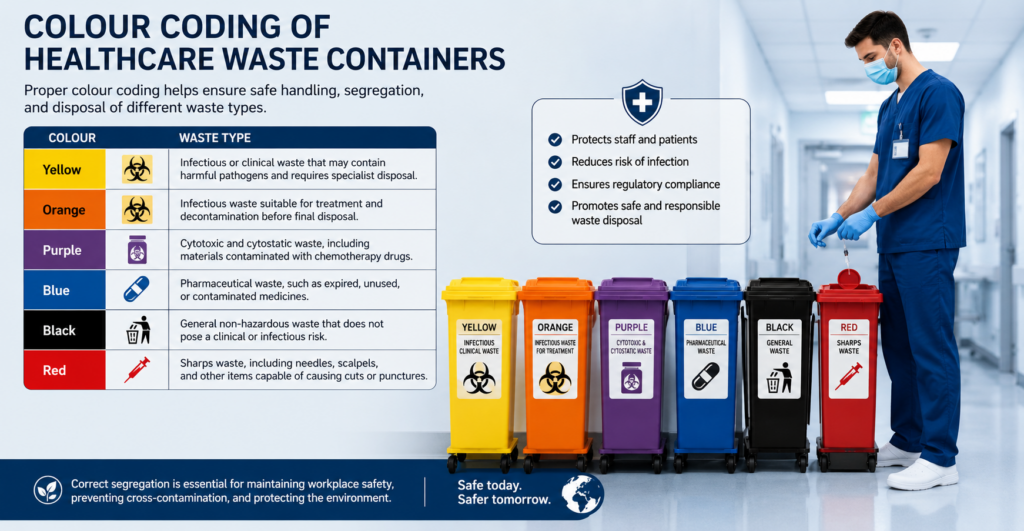
Proper colour coding of healthcare waste containers helps ensure safe handling, segregation, and disposal of different waste types. Healthcare facilities use a standard colour-coding system to reduce contamination risks, protect staff and patients, and comply with waste management regulations.

Colour Waste Type
Yellow Infectious or clinical waste that may contain harmful pathogens and requires specialist disposal.
Orange Infectious waste suitable for treatment and decontamination before final disposal.
Purple Cytotoxic and cytostatic waste, including materials contaminated with chemotherapy drugs.
Blue Pharmaceutical waste, such as expired, unused, or contaminated medicines.
Black General non-hazardous waste that does not pose a clinical or infectious risk.
Red Sharps waste, including needles, scalpels, and other items capable of causing cuts or punctures.

Correct segregation using these colour-coded containers is essential for maintaining workplace safety, preventing cross-contamination, and ensuring healthcare waste is disposed of in an environmentally responsible manner.

Best Practices for Healthcare Waste Management

Effective healthcare waste management is essential for maintaining safety, protecting public health, and ensuring environmental compliance. One of the most important practices is segregating waste at the source, ensuring that different types of waste are separated immediately after generation. Healthcare facilities should also provide regular staff training so that all workers understand waste categories and proper handling procedures.

Using appropriate containers for different waste streams helps prevent leaks, spills, and accidental exposure to hazardous materials. Maintaining accurate documentation allows facilities to track waste from generation to final disposal, ensuring accountability and regulatory compliance. Additionally, conducting regular waste audits helps identify gaps in waste management processes and provides opportunities to improve efficiency, safety, and compliance.

Future Trends in Healthcare Waste

Future Trends in Healthcare Waste Management

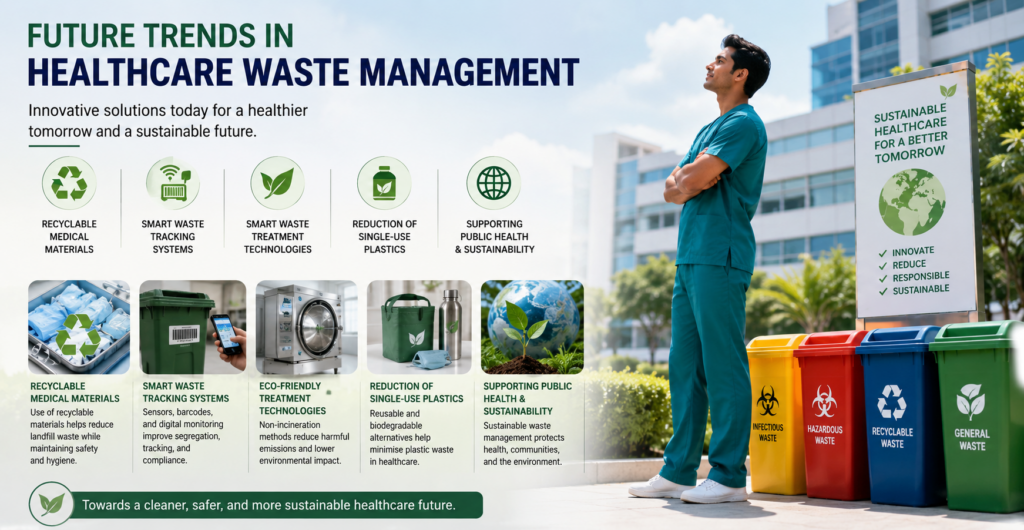
The future of healthcare waste management is focused on sustainability, innovation, and environmental responsibility. Healthcare facilities are increasingly adopting sustainable practices to reduce waste generation while maintaining high standards of patient care.

One emerging trend is the use of recyclable medical materials, which helps minimise the amount of waste sent to landfills. Manufacturers are also developing products that can be safely recycled without compromising hygiene or safety.

Smart waste tracking systems are becoming more common, using technologies such as sensors, barcodes, and digital monitoring to improve waste segregation, tracking, and compliance. These systems help healthcare organisations manage waste more efficiently and reduce operational costs.

Another significant advancement is the adoption of eco-friendly treatment technologies, including non-incineration methods that minimise harmful emissions and environmental impact. In addition, many healthcare providers are working to reduce the use of single-use plastics by introducing reusable or biodegradable alternatives wherever possible.

As these innovations continue to evolve, healthcare waste management is expected to become more efficient, sustainable, and environmentally friendly, supporting both public health and global sustainability goals.

Conclusion

Effective healthcare waste management is essential for protecting healthcare workers, patients, communities, and the environment. By understanding the nine categories of healthcare waste, implementing proper segregation practices, and following safe disposal methods, healthcare facilities can minimise health risks and reduce environmental harm. Compliance with waste management regulations, combined with ongoing staff training, plays a vital role in maintaining safe, efficient, and sustainable healthcare environments.

FAQs — 9 Types of Healthcare Waste and How to Dispose Them

  1. 1. What is healthcare waste?
    Healthcare waste includes any waste generated by hospitals, clinics, laboratories, nursing homes, and other healthcare facilities during medical activities.
  2. 2. Why is proper healthcare waste disposal important?
    Proper disposal helps prevent infections, protects healthcare workers and the public, and reduces environmental pollution.
  3. 3. What are the main types of healthcare waste?
    The main types include infectious waste, pathological waste, sharps waste, pharmaceutical waste, chemical waste, cytotoxic waste, radioactive waste, general waste, and recyclable waste.
  4. 4. How should infectious waste be disposed of?
    Infectious waste should be collected in designated containers and treated through methods such as autoclaving, incineration, or chemical disinfection before disposal.
  5. 5. What are sharps, and how are they disposed of?
    Sharps include needles, scalpels, and broken glass. They should be placed in puncture-resistant sharps containers and disposed of according to local regulations.
  6. 6. Can pharmaceutical waste be thrown in regular bins?
    No. Expired, unused, or contaminated medicines require special disposal methods to prevent environmental contamination and misuse.
Sam Walker

Article by

Sam Walker

Sam Walker is an education specialist and author at One Education, bringing over 4 years of experience in creating practical resources and strategies to support teachers and enhance student learning.

top
Home Courses Search