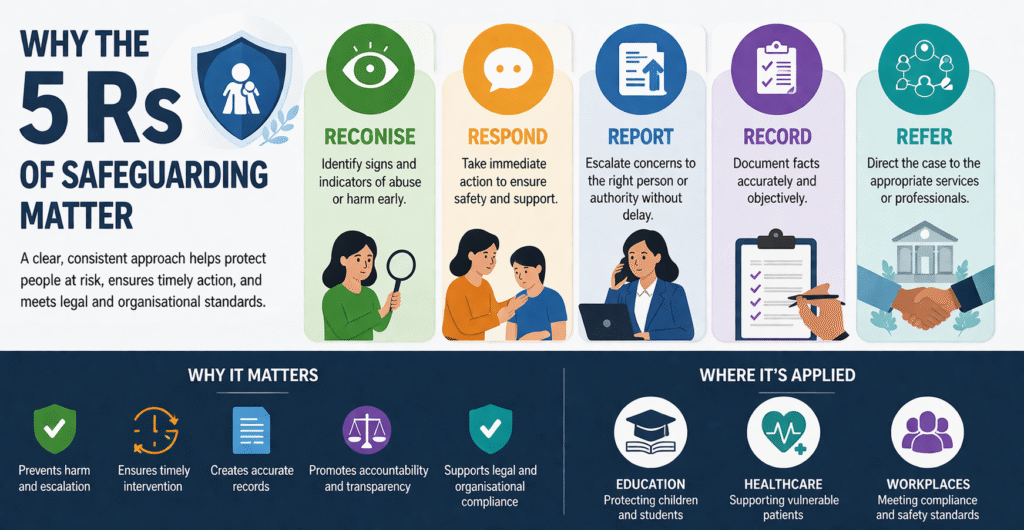
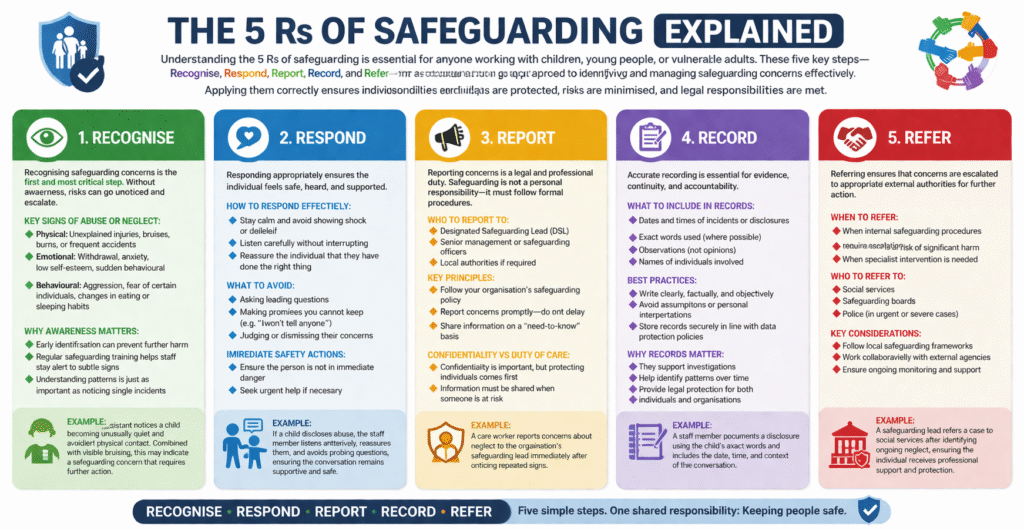
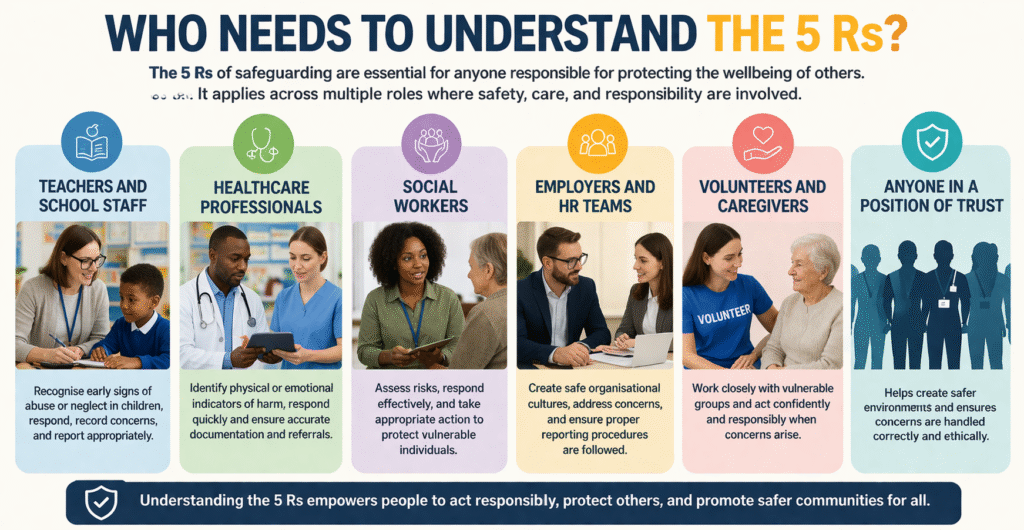
Understanding the 5 Rs of safeguarding is essential for anyone responsible for protecting the wellbeing of others. It is not limited to a single profession; instead, it applies across multiple roles where safety, care, and responsibility are involved.
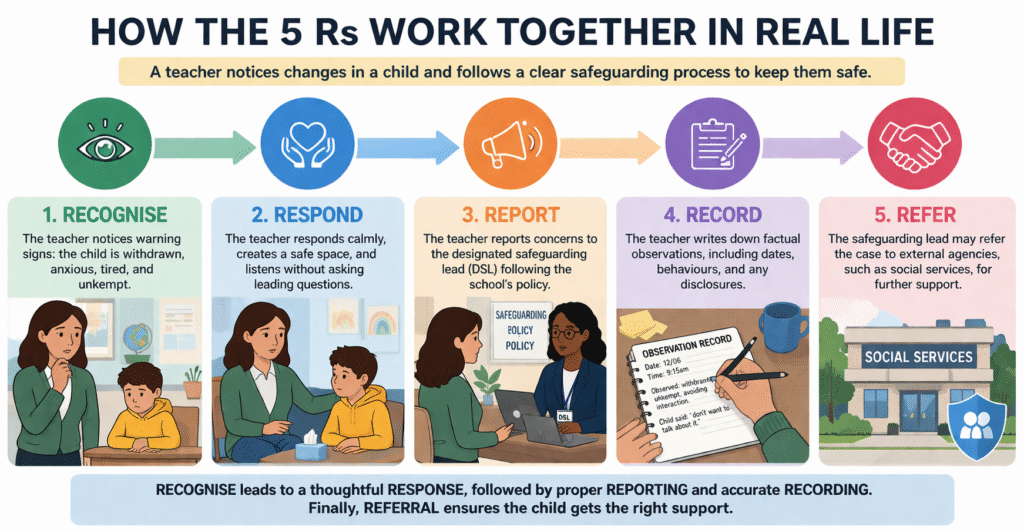
Teachers and school staff play a crucial role in recognising early signs of abuse or neglect in children. Their daily interaction with students places them in a strong position to respond, record concerns, and report issues appropriately.
Healthcare professionals must understand the 5 Rs to identify physical or emotional indicators of harm. From doctors to care assistants, their responsibility includes responding quickly and ensuring accurate documentation and referrals.
Social workers are directly involved in safeguarding processes. They rely heavily on the 5 Rs to assess risks, respond effectively, and take appropriate action to protect vulnerable individuals.
Employers and HR teams also need safeguarding awareness, particularly in workplace environments. They are responsible for creating safe organisational cultures, addressing concerns, and ensuring proper reporting procedures are followed.
Volunteers and caregivers often work closely with children, elderly individuals, or vulnerable groups. Understanding the 5 Rs enables them to act confidently and responsibly when concerns arise, ensuring safety and appropriate support.
Overall, the 5 Rs framework is vital for anyone in a position of trust, helping to create safer environments and ensuring that concerns are handled correctly and ethically.