Top 7 Smart Questions to Ask at a Job Interview 

May 25, 2026 | 10 minutes | 73 Readers

Preparing for a job interview usually means practising answers to common interview questions. However, many candidates overlook one important part of the conversation — asking questions to the interviewer. When employers ask, “Do you have any questions for us?”, they are often looking to see how interested, confident, and prepared you really are. The questions you ask can reveal a lot about your personality and professionalism. Thoughtful questions demonstrate genuine enthusiasm for the role, strong communication skills, and the ability

Preparing for a job interview usually means practising answers to common interview questions. However, many candidates overlook one important part of the conversation — asking questions to the interviewer. When employers ask, “Do you have any questions for us?”, they are often looking to see how interested, confident, and prepared you really are.

The questions you ask can reveal a lot about your personality and professionalism. Thoughtful questions demonstrate genuine enthusiasm for the role, strong communication skills, and the ability to think critically. They also help you learn more about the company, the team, and whether the position is the right fit for your career goals.

A smart question can leave a positive and lasting impression long after the interview ends. In some cases, it may even give you an advantage over other candidates. In this guide, you’ll discover 7 smart and professional questions that can help you stand out and make a stronger impact in your next job interview.

Why Asking Questions in an Interview Matters

Asking questions during an interview is just as important as answering them. It shows genuine enthusiasm for the role and proves that you have prepared well before the interview. Thoughtful questions also help candidates understand the company culture, expectations, and growth opportunities, allowing them to decide whether the role is the right fit.

An interview should be a two-way conversation, not just a one-sided assessment. Engaging with the interviewer helps create a stronger connection and leaves a positive impression. In many cases, hiring managers remember candidates who ask meaningful questions because it demonstrates professionalism, confidence, and a genuine interest in long-term career growth rather than simply securing a job quickly.

The 7 Smart Questions

The 7 Smart Questions

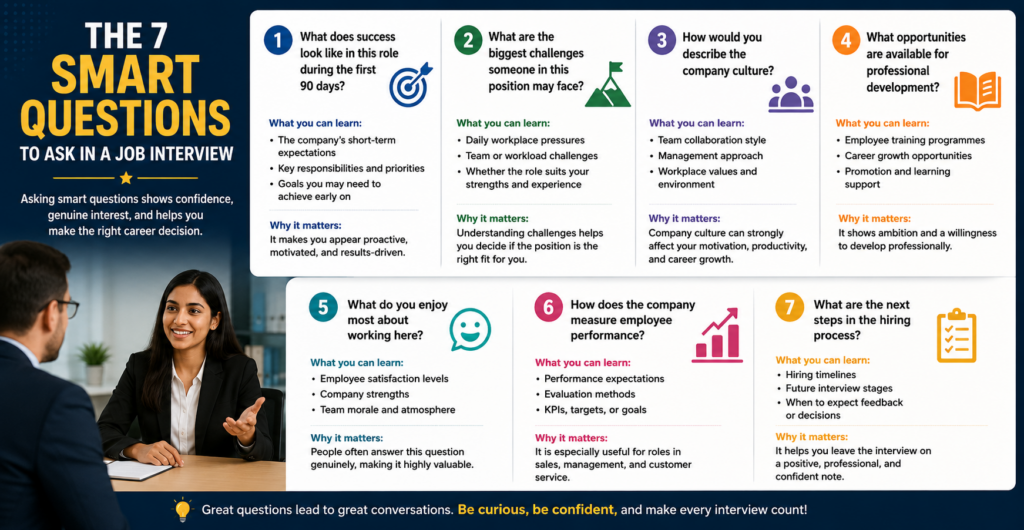
Asking smart questions during a job interview can leave a strong and lasting impression on employers. It shows confidence, professionalism, and genuine interest in both the role and the company. The right questions not only help you understand the job better but also demonstrate your communication skills, career mindset, and willingness to grow. These seven smart questions can help candidates stand out from the competition and make more informed career decisions.

1. “What does success look like in this role during the first 90 days?”

This question shows that you are focused on making a positive impact from the beginning. Employers appreciate candidates who are eager to contribute quickly.

What you can learn:

  • ♦  The company’s short-term expectations
  • ♦  Key responsibilities and priorities
  • ♦  Goals you may need to achieve early on

Why it matters:
It makes you appear proactive, motivated, and results-driven.

2. “What are the biggest challenges someone in this position may face?”

Instead of focusing only on the positive aspects of the role, this question shows maturity and realistic thinking.

What you can learn:

  • ♦  Daily workplace pressures
  • ♦  Team or workload challenges
  • ♦  Whether the role suits your strengths and experience

Why it matters:
Understanding challenges helps you decide if the position is the right fit for you.

3. “How would you describe the company culture?”

A healthy work environment is important for long-term success and job satisfaction. This question shows that you care about fitting into the organisation.

What you can learn:

  • ♦  Team collaboration style
  • ♦  Management approach
  • ♦  Workplace values and environment

Why it matters:
Company culture can strongly affect your motivation, productivity, and career growth.

4. “What opportunities are available for professional development?”

Employers value candidates who are interested in learning and improving their skills.

What you can learn:

  • ♦  Employee training programmes
  • ♦  Career growth opportunities
  • ♦  Promotion and learning support

Why it matters:
It shows ambition and a willingness to develop professionally.

5. “What do you enjoy most about working here?”

This question helps create a friendly and natural conversation with the interviewer while giving you honest insights about the company.

What you can learn:

  • ♦  Employee satisfaction levels
  • ♦  Company strengths
  • ♦  Team morale and atmosphere

Why it matters:
People often answer this question genuinely, making it highly valuable.

6. “How does the company measure employee performance?”

This question demonstrates professionalism and accountability. It also helps you understand how success is evaluated within the company.

What you can learn:

  • ♦  Performance expectations
  • ♦  Evaluation methods
  • ♦  KPIs, targets, or goals

Why it matters:
It is especially useful for roles in sales, management, and customer service.

7. “What are the next steps in the hiring process?”

Ending with this question shows confidence and genuine interest in the role.

What you can learn:

  • ♦  Hiring timelines
  • ♦  Future interview stages
  • ♦  When to expect feedback or decisions

Why it matters:
It helps you leave the interview on a positive, professional, and confident note.

Questions to Avoid Asking

Questions to Avoid Asking

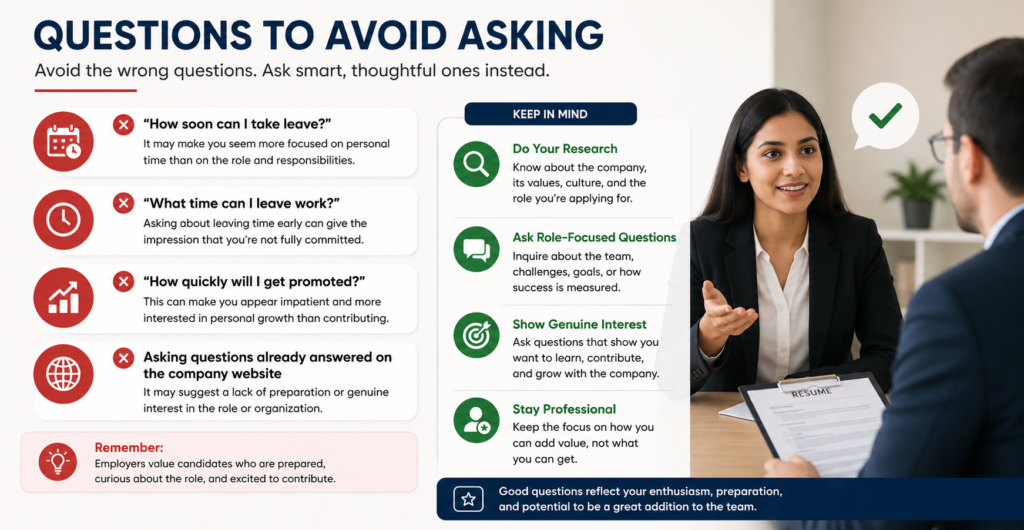
While asking questions during a job interview is important, some questions can leave a negative impression if asked too early or without proper context. For example, questions like “How soon can I take leave?”, “What time can I leave work?”, or “How quickly will I get promoted?” may make a candidate appear more focused on personal benefits than the role itself.

Similarly, asking questions that are already answered on the company website can suggest a lack of preparation or genuine interest. Employers value candidates who research the organisation beforehand and ask thoughtful, role-related questions instead.

Avoiding poor or unnecessary questions helps you appear professional, prepared, and genuinely enthusiastic about the opportunity.

Expert Tips for Asking Questions Professionally

Expert Tips for Asking Questions Professionally

Asking questions professionally during an interview can leave a strong and positive impression on employers. It shows confidence, preparation, and genuine interest in the role. However, it’s important to ask thoughtful questions in the right way.

Keep your questions limited to around 2–4 well-planned questions. Asking too many may make the conversation feel overwhelming, while asking too few may suggest a lack of interest. Listen carefully throughout the interview so you can avoid repeating information the interviewer has already shared.

Good communication manners are equally important. Avoid interrupting the interviewer and wait for the appropriate moment to speak. Maintain natural eye contact and show active engagement while listening and responding. Your body language and tone can make your questions sound more professional and confident.

It is also helpful to adapt your questions based on the flow of the conversation. Instead of asking memorised questions, respond to topics naturally discussed during the interview. This creates a more genuine and engaging discussion.

One of the best ways to stand out is to prepare customised questions for each company. Research the organisation, its values, and the role beforehand so your questions feel relevant and specific. Personalised questions demonstrate real enthusiasm and show employers that you have taken the interview seriously.

Conclusion

A job interview is not just about answering questions — it is also your chance to understand whether the company and role are the right fit for you. Asking smart and thoughtful questions can leave a positive impression on employers, boost your confidence, create meaningful conversations, and improve your chances of success. Preparing a few strong questions before every interview can help you stand out as a professional and genuinely interested candidate.

FAQs — Top 7 Smart Questions to Ask at a Job Interview

1. Why should I ask questions during a job interview?

Asking questions shows confidence, interest, and preparation. It also helps you understand if the role is right for you.

2. What are the best questions to ask an interviewer?

Good questions include asking about company culture, team expectations, growth opportunities, and success in the role.

3. How many questions should I ask in an interview?

It is best to ask 3–5 thoughtful questions to keep the conversation professional and engaging.

4. Can asking smart questions improve my chances of getting hired?

Yes. Smart questions can leave a positive impression and show that you are serious about the opportunity.

5. Should I ask about salary in the first interview?

It is usually better to focus on the role and company first unless the interviewer brings up salary.

6. What questions should I avoid asking?

Avoid questions about basic information already available online or questions that sound negative or unprofessional.

Sam Walker

Article by

Sam Walker

Sam Walker is an education specialist and author at One Education, bringing over 4 years of experience in creating practical resources and strategies to support teachers and enhance student learning.

top
Home Courses Search