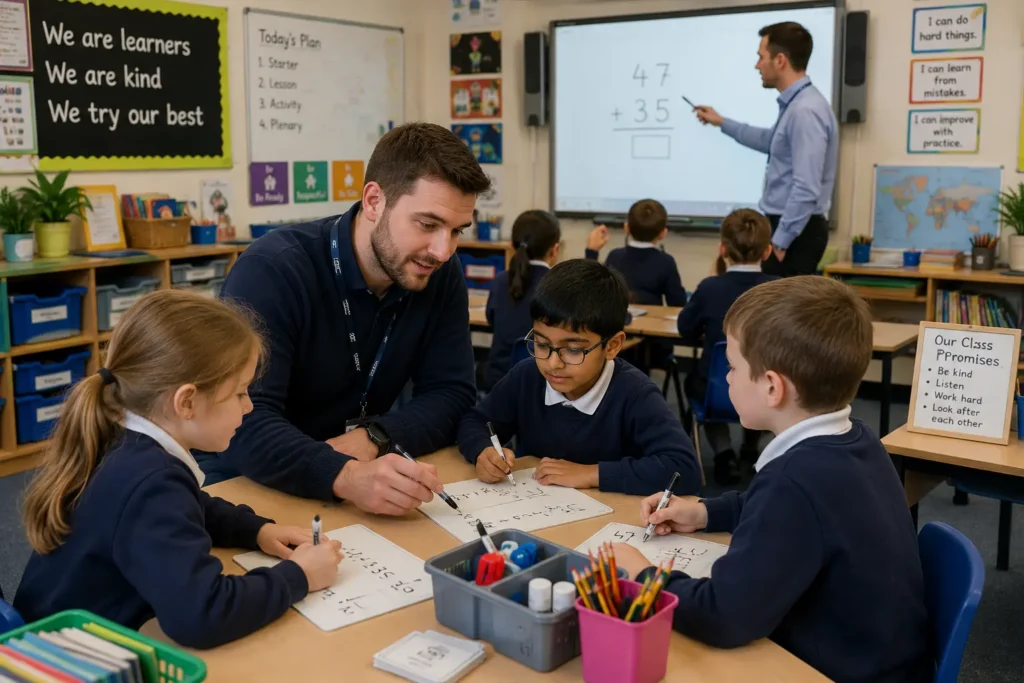
A day as a teaching assistant is busy, varied and centred around helping pupils get the most from their time at school. From preparing classroom resources before lessons begin to supporting children with their learning, teaching assistants work closely with teachers to create a positive and inclusive classroom environment. No two days are exactly the same, which makes the role both challenging and rewarding.
Throughout the school day, a teaching assistant may support pupils during lessons, work with individuals or small groups, assist children with special educational needs and disabilities (SEND), and help manage behaviour. They may also supervise pupils during break and lunchtime, encourage positive social interaction and provide reassurance when children need additional support.

Understanding what a day as a teaching assistant looks like can help you decide whether this career is right for you. In this guide, we explore a typical teaching assistant’s working day, from arriving at school and preparing for lessons to supporting learning, managing classroom challenges and completing end-of-day responsibilities.
What Does a Teaching Assistant Actually Do?
A teaching assistant (TA) supports pupils with their learning while helping the teacher manage the classroom effectively. Their main purpose is to make learning more accessible, provide extra support where needed and help maintain a positive and inclusive learning environment.
Supporting Teachers
TAs work closely with teachers before and during lessons. They may prepare resources, organise equipment, explain instructions and help pupils complete activities. They can also observe pupils’ progress and share useful feedback with the teacher.
For example, while the teacher leads a maths lesson, a TA might work with a small group who need the instructions explained more clearly.
Supporting Pupils
Teaching assistants help pupils build their skills, confidence and independence rather than simply giving them answers. They may:
- Explain tasks in simpler steps
- Support reading, writing, phonics and maths
- Work with individuals or small groups
- Help pupils stay focused and participate
- Provide additional support for pupils with SEND
- Encourage independent learning
The level of support varies depending on each pupil’s individual needs.
Responsibilities Beyond Lessons
The TA role often extends beyond classroom learning. Depending on the school, they may prepare displays and resources, supervise break or lunchtime, support behaviour, accompany school trips and assist with other activities. They may also report relevant observations about a pupil’s learning, behaviour or wellbeing to the teacher.
Does the Role Vary?
Yes. A teaching assistant’s responsibilities can vary between schools, year groups and individual roles. Early Years TAs may focus more on play-based learning and communication, while primary TAs often support reading, phonics and numeracy. Secondary school TAs may work across different subjects or provide targeted SEND support.
Some TAs support the whole class, while others work mainly with small groups or individual pupils. However, the core purpose remains the same: to support teachers and help pupils participate, learn and make progress.
How Does a Teaching Assistant Start Their Day?
A teaching assistant usually arrives before pupils, often around 8:00–8:30 am, depending on the school and contracted hours. This gives them time to speak with the class teacher, check the day’s lessons and prepare the classroom.
Before pupils arrive, the TA may review the timetable, lesson plans and activities with the teacher. They can discuss which pupils need extra help, whether they will provide one-to-one or small-group support, and any changes to the usual routine.
They may also prepare worksheets, books, stationery, phonics cards, maths resources and practical equipment. For pupils with SEND or additional needs, this might include adapted worksheets, visual timetables, sensory resources or simplified instructions.
A Typical Teaching Assistant Morning
| Time | Typical Activity | What It Involves |
|---|---|---|
| 8:00–8:15 am | Arrive and prepare | Get settled and check the day's timetable. |
| 8:15–8:25 am | Speak with the teacher | Discuss lessons, pupil needs and responsibilities. |
| 8:25–8:35 am | Prepare resources | Organise worksheets, books and learning materials. |
| Before pupils arrive | Prepare additional support | Set up adapted resources, visual aids or SEND support. |
| Start of school | Welcome pupils | Help pupils settle and prepare for the first lesson. |
A well-prepared morning helps lessons run smoothly and ensures pupils receive the right support from the beginning of the school day.
What Does a Teaching Assistant Do During Lessons?
During lessons, a teaching assistant (TA) helps pupils understand tasks, stay focused, overcome difficulties and become more independent. They support learning without simply giving pupils the answers.
Helping Pupils Understand
TAs may repeat instructions, use simpler language, break tasks into smaller steps or provide examples and visual prompts. If a pupil struggles, they can ask guiding questions or demonstrate a similar example.
Keeping Pupils Focused
TAs use gentle reminders, encouragement and achievable goals to keep pupils engaged. They may also help pupils organise their work and return their attention to the task when distracted.
Encouraging Independence
Good TAs know when to help and when to step back. They encourage pupils to think, try tasks themselves and use what they have already learned.
Prompt → Encourage → Check → Step back
The aim is to remove barriers to learning while building pupils’ confidence and ability to work independently.
Continue Your Professional Development
Interested in developing your SEN knowledge? Explore our SENCO – Special Educational Needs Coordination course and discover more professional development courses to support your career goals. Browse all courses at One Education.
Do Teaching Assistants Work One-to-One or With Small Groups?
Yes. Teaching assistants (TAs) regularly work both one-to-one and with small groups to give pupils targeted support during the school day. This may include pupils with SEND, EAL, learning gaps, low confidence or difficulties with particular subjects.
One-to-One Support
A TA may work individually with a pupil who needs extra help with reading, maths, concentration or understanding classroom tasks. The aim is to build the pupil’s skills, confidence and independence.
Small Groups and Interventions
TAs often lead reading, phonics, literacy and maths groups. They may also deliver targeted interventions—planned sessions that address specific learning gaps and help pupils catch up.
Supporting and Tracking Progress
TAs can help by explaining concepts differently, breaking tasks into smaller steps and providing extra practice. They may also record achievements, identify difficulties and report progress to the teacher, helping to decide what support the pupil needs next.
How Do Teaching Assistants Support Pupils With SEND?
Teaching assistants (TAs) support pupils with SEND by adapting learning to their individual needs and helping them participate confidently in lessons.
Adapting Learning
TAs may break tasks into smaller steps, simplify instructions, allow extra processing time or use writing frames and practical resources.
Communication and Visual Support
Some pupils benefit from visual timetables, picture cards, symbols, checklists or communication boards to help them understand instructions and routines.
Emotional and Sensory Support
TAs may support pupils experiencing anxiety or sensory overload through reassurance, agreed calming strategies, sensory breaks or access to a quieter space.
Encouraging Independence
Rather than doing tasks for pupils, TAs use prompts, questions and guidance. They gradually reduce support as pupils become more confident and independent.
Working With Teachers and the SENCO
TAs work closely with teachers and the SENCO, following agreed strategies and sharing observations about pupils’ needs and progress.
Every pupil with SEND is different. Effective support is therefore flexible and tailored to the individual, whether they need help with learning, communication, emotions or sensory needs.
What Do Teaching Assistants Do at Break and Lunchtime?
Teaching assistants may continue supporting pupils during break and lunchtime by supervising shared areas, encouraging positive social interaction, supporting wellbeing and helping maintain a safe environment.
Do Teaching Assistants Supervise Break or Lunchtime?
Depending on the school and their role, TAs may supervise the playground, dining hall or other areas. They watch for safety concerns, help pupils follow school rules and notice children who may be struggling socially or emotionally.
How Do They Support Pupils?
TAs encourage pupils to share, take turns, communicate respectfully and include others. If a child feels lonely, anxious or upset, they may listen, offer reassurance and help them join an activity or resolve a minor friendship problem.
How Do They Handle Behaviour Issues?
For minor disagreements, a TA may calm the situation, listen to those involved and reinforce the school’s behaviour expectations. Serious or repeated incidents should be reported and managed according to the school’s behaviour policy.
What About Safeguarding?
Safeguarding responsibilities continue throughout break and lunchtime. TAs should remain alert to bullying, injuries, concerning behaviour or worrying disclosures and report concerns through the school’s safeguarding procedures.
Overall, break and lunchtime are important opportunities for teaching assistants to support pupils’ safety, wellbeing, behaviour and social development.
How Do Teaching Assistants Handle Behaviour and Difficult Situations?
Teaching assistants handle challenging behaviour by staying calm, reinforcing classroom expectations and helping pupils manage their emotions. They remind pupils of rules, give clear instructions and praise positive behaviour to encourage good choices.
If a pupil refuses to participate, a TA will usually try to understand the reason first. The pupil may be confused, anxious or overwhelmed. The TA might explain the task differently, break it into smaller steps or give the pupil a little time to settle before encouraging them to continue.
When a pupil becomes upset, angry or disruptive, TAs can use calm communication, appropriate space and familiar calming strategies to help them regulate their emotions. They should follow the school’s behaviour policy and avoid making the situation worse.
If behaviour becomes unsafe, persistent or goes beyond their responsibility, the TA should involve the teacher or another appropriate member of staff.
Importantly, if a TA notices a safeguarding concern or a pupil makes a worrying disclosure, they should not investigate or promise secrecy. The concern must be reported promptly according to the school’s safeguarding procedures, usually to the Designated Safeguarding Lead (DSL).
Overall, good behaviour support is about being calm, consistent and supportive while knowing when to seek further help.
What Happens at the End of a Teaching Assistant's School Day?
When lessons finish, a teaching assistant’s day may continue with several important tasks.
Helping Pupils Go Home
TAs may help pupils collect their belongings, follow home-time routines and leave safely. Younger pupils or those needing additional support may require extra help getting organised.
Tidying and Resetting the Classroom
After pupils leave, TAs often tidy learning areas, put away resources and reset the classroom so it is ready for the next school day.
Recording Progress
If they have supported one-to-one learning or small-group interventions, TAs may record observations, pupil progress and intervention outcomes. This information helps teachers identify difficulties and plan further support.
Giving Feedback to the Teacher
TAs may update the class teacher on pupils’ learning, behaviour, wellbeing or progress. Any safeguarding concerns should be reported promptly according to school procedures.
Preparing for the Next Day
They may photocopy worksheets, organise equipment, prepare learning activities or adapt resources for pupils who require additional support.
Meetings and Training
On some days, TAs may stay after school for staff meetings, briefings or training on areas such as safeguarding, SEND and behaviour management.
Although responsibilities vary between schools, these end-of-day tasks help ensure pupils are supported, teachers are informed and the classroom is ready for the following day.
What Are the Hardest and Most Rewarding Parts of a Teaching Assistant's Day?
A teaching assistant’s day can be demanding but highly rewarding. One of the hardest parts is supporting several pupils with different needs in a busy classroom. A TA may need to help one pupil understand instructions, keep another focused and support someone experiencing emotional or behavioural difficulties—all while the lesson continues.
Managing Different Needs and Behaviour
Challenging behaviour can be particularly difficult because it may be linked to frustration, anxiety, communication difficulties or additional learning needs. Teaching assistants must stay calm, follow school behaviour policies and adapt their approach to each pupil.
Supporting different learners also requires flexibility. One pupil may need visual prompts, another may need instructions broken into smaller steps, while another simply needs encouragement to work independently.
The Reward of Seeing Progress
The rewarding moments often make these challenges worthwhile. A pupil finally understanding a difficult maths problem, reading independently or completing an activity without help can be a significant achievement.
Small improvements matter too. Greater confidence, better participation and increased independence can show that a teaching assistant’s support is making a genuine difference.
Ultimately, the hardest and most rewarding parts of the job are closely connected. Helping pupils overcome difficulties and watching them gradually succeed can give teaching assistants a strong sense that their work has had a positive impact.
Is Being a Teaching Assistant the Right Career for You?
Yes — a teaching assistant career could suit you if you enjoy working with children, have patience, communicate well and find satisfaction in helping pupils develop confidence and independence. However, the role also requires flexibility, resilience and teamwork.
Ask Yourself:
- ♦ Do I genuinely enjoy working with children or young people?
- ♦ Am I patient when something needs explaining more than once?
- ♦ Can I stay calm when situations change unexpectedly?
- ♦ Am I comfortable working closely with teachers and other school staff?
- ♦ Can I encourage pupils without doing the work for them?
- ♦ Am I willing to learn about SEND, safeguarding and behaviour?
- ♦ Can I manage both the rewarding and challenging parts of the role?
- ♦ Would seeing a pupil gradually become more confident give me job satisfaction?
If you answered “yes” to most of these questions, becoming a teaching assistant could be a good fit. You do not need to know everything from the beginning; many practical skills can be developed through training and school experience.
If you are unsure about some answers, consider volunteering or gaining classroom experience. It can help you understand the day-to-day reality of the role before deciding whether this career is right for you.
FAQs — What does a day as a teaching assistant look like?
1. What does a teaching assistant do on a typical day?
A teaching assistant supports pupils during lessons, prepares learning resources, works with individuals or small groups, helps manage behaviour and shares relevant observations with the class teacher. Duties vary depending on the school and role.
2. What time do teaching assistants usually start work?
Teaching assistants often arrive before pupils to prepare resources and discuss the day with the teacher. Your article gives an example of around 8:00–8:30 am, although actual working hours depend on the school and employment contract.
3. Do teaching assistants teach lessons?
Teaching assistants primarily support teaching and learning. They may lead planned activities, interventions or small-group sessions under appropriate direction, but their responsibilities depend on their role and the school’s arrangements.
4. Do teaching assistants work one-to-one with pupils?
Yes. Teaching assistants may provide one-to-one support or work with small groups, including supporting reading, phonics, literacy, maths and targeted interventions.
5. Do teaching assistants work with the same pupil all day?
Not necessarily. Some teaching assistants provide dedicated support to particular pupils, while others work across the whole class or with different groups throughout the day. The arrangement depends on pupils’ needs and the TA’s role.
6. How do teaching assistants support pupils with SEND?
Teaching assistants may adapt activities, simplify instructions, use visual resources, provide emotional or sensory support and encourage independence. They also work with teachers and the SENCO to follow agreed support strategies.
Article by
Sam Walker is an education specialist and author at One Education, bringing over 4 years of experience in creating practical resources and strategies to support teachers and enhance student learning.
Related Articles
Get a FREE Course
- Learn useful skills online free
- Get CPD accredited certificate
- Add it to your CV today!