Avoiding Food Poisoning: Right Way to Reheat Cooked Chicken

August 23, 2025 | 16 minutes | 14589 Readers

Reheating cooked chicken safely is essential to prevent food poisoning and kill harmful bacteria. This guide explains the correct temperatures, safe methods, and common mistakes to ensure leftovers are both safe and enjoyable.

rating

Bestselling Course

View Details SAVE 94% NOW

Reheating cooked chicken might seem simple, but doing it wrong can lead to serious food poisoning. Harmful bacteria like Salmonella thrive when chicken isn’t reheated to the right temperature or is left sitting too long. This guide breaks down the essential temperature guidelines you must follow to stay safe. It also highlights common mistakes many people make that put their health at risk. Whether you use a microwave, oven, or stovetop, understanding how to reheat chicken properly ensures your leftovers are both tasty and safe to eat every time.

For a complete guide on reheating chicken safely, read our article: How Many Times Can You Reheat Chicken Safely?

Why Safe Reheating Matters

Reheating cooked chicken can be convenient, but it also carries the risk of food poisoning if not done correctly. The goal is not just to make it warm, but to reheat it in a way that eliminates harmful bacteria and ensures the chicken is safe to eat. Many people overlook critical steps, assume the microwave does all the work, or reheat it multiple times. These habits are risky.

Quick Check
How long can cooked chicken safely stay at room temperature?

Below is everything you need to know to reheat cooked chicken the right way — including key temperature guidelines and the most common mistakes that could turn your leftovers into a health hazard.

What Are the Temperature Guidelines to Ensure Safe Consumption?

Cooked chicken must be reheated to an internal temperature of 165°F (74°C) to kill harmful bacteria. Use a food thermometer to check the thickest part, avoiding bones. Reheat evenly by stirring or flipping and hold this temperature briefly for safety. Store cooked chicken properly, refrigerating within two hours and reheating within 3–4 days. Thaw frozen chicken in the fridge before reheating, and never reheat chicken more than once to prevent bacterial growth.

The Danger Zone

Bacteria thrive between 40°F (4°C) and 140°F (60°C). This temperature range is known as the “danger zone.” Cooked chicken should never be kept within this range for more than 2 hours.

The Safe Reheat Temperature

Reheated chicken must reach an internal temperature of 165°F (74°C) to be considered safe to eat. This is the temperature that kills most bacteria, including Salmonella and Campylobacter, the two most common culprits in chicken-related food poisoning.

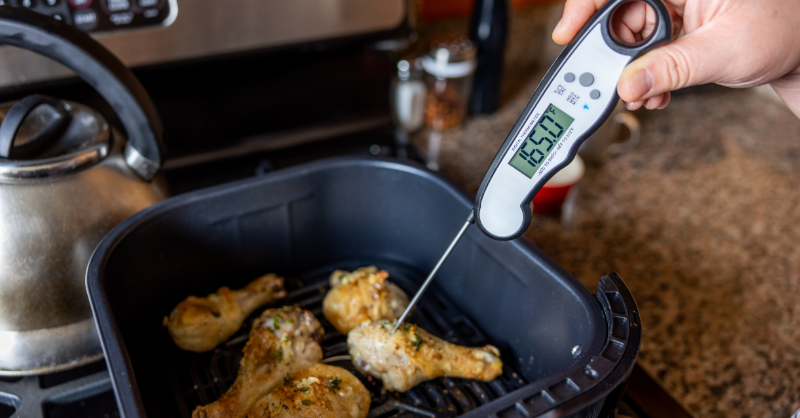
Checking cooked chicken's temperature with a digital thermometer to ensure it reaches 165°F (75°C) for food safety.

Use a Food Thermometer

Never rely on color, steam, or touch to check if your chicken is hot enough. Use a food thermometer. Insert it into the thickest part of the chicken, making sure not to touch any bones. The temperature should read 165°F (74°C) or higher.

Hold Temperature Briefly

It’s not just about reaching 165°F for a split second. Holding that temperature for a few seconds ensures more thorough bacterial elimination. Microwaves heat unevenly, so stir or flip chicken parts during reheating and allow them to rest briefly before consuming.

Storage Before Reheating

Refrigerate cooked chicken within two hours of cooking. Store at or below 40°F (4°C). Consume refrigerated cooked chicken within 3–4 days and reheat only the portion you plan to eat. If frozen, thaw in the fridge — not at room temperature. Once thawed, reheat immediately.

How Long Can Cooked Chicken Stay in the Fridge?

Storage Method Safe Duration
Refrigerator (below 5°C) 3–4 days
Freezer Up to 4 months
Room temperature Maximum 2 hours
Would You Eat It?

Scenario 1

  • 🍗 Chicken cooked 4 days ago
  • ❄️ Stored in the refrigerator
  • 👃 Smells normal
Would you eat it?

Scenario 2

  • 🍗 Chicken cooked today
  • 🌡️ Left on the counter for 3 hours
Would you eat it?

Scenario 3

  • ❄️ Frozen for 2 months
  • Kept continuously frozen
Would you eat it?

Scenario 4

  • 🍗 Refrigerated for 2 days
  • 👃 Sour smell
Would you eat it?

Scenario 5

  • 🍗 Refrigerated for 2 days
  • 🌡️ Reheated to 74°C
Would you eat it?

Only Reheat Once

Every reheat creates another window for bacteria to grow. Reheat cooked chicken only once. If you have leftovers after reheating, discard them. Don’t re-reheat. For a complete guide on when and how to safely reheat leftovers, see our post: “Can You Reheat Chicken?

Use the Right Method for Even Heating

Oven, stovetop, microwave, and air fryer are all valid methods. But each needs attention to ensure even heating:

Oven: Preheat to 160°F–170°Fand cover the chicken with foil to prevent it from drying out. Reheat for 15–25 minutes depending on the size of the pieces, until the internal temperature reaches 75°C (167°F).

Stovetop: Add a small amount of water or broth to keep the chicken moist. Cover and heat on medium heat for 5–10 minutes, turning pieces occasionally until heated evenly and the internal temperature reaches 75°C (167°F).

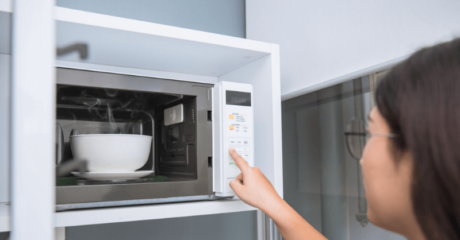
Microwave: Cut chicken into smaller pieces and place them in a microwave-safe container. Cover loosely, heat on medium power for 2–5 minutes, and rotate halfway through to ensure even heating.

Air Fryer: Set the air fryer to 175°C–180°C and reheat for 5–10 minutes. Flip halfway through to restore crispiness and check that the chicken reaches 75°C (167°F) before eating.

Reheating Method Temperature Time Best For
Oven 160°F–170°F 15–25 minutes Whole chicken, large pieces
Microwave Medium power 2–5 minutes Small portions
Stovetop Medium heat 5–10 minutes Chicken pieces, curry
Air Fryer 175°F–180°F 5–10 minutes Crispy chicken

Signs Chicken Is Unsafe to Eat

Knowing when chicken has gone bad can help prevent foodborne illness. Discard chicken if you notice any of these warning signs:

  • Sour or unusual smell: Fresh chicken should have little to no smell. A strong, sour, or unpleasant odour is a sign of spoilage.
  • Slimy texture: Chicken that feels sticky, slippery, or slimy after washing or handling may no longer be safe.
  • Change in colour: Grey, greenish, or unusual discolouration can indicate that the chicken has started to spoil.
  • Mould growth: Any visible mould means the chicken should be discarded immediately.
  • Left unrefrigerated for too long: Chicken left at room temperature for more than 2 hours should not be eaten, as bacteria can multiply quickly.
Temperature Challenge
Drag the thermometer until the chicken reaches the safe internal temperature.
40°C
40°C 50°C 80°C 100°C
🔄 Keep going!

10 Common Mistakes People Make When Reheating Chicken

Many rely solely on microwaves, causing uneven heating and cold spots. Reheating multiple times increases risk. Not checking the internal temperature and reheating straight from the freezer can leave bacteria alive. High heat may dry out chicken while leaving it undercooked inside. Improper storage before reheating and not covering chicken during reheating lead to safety issues. Lastly, letting reheated chicken sit too long or using it cold without proper reheating invites food poisoning.

1. Relying on the Microwave Alone

Microwaves heat unevenly. Cold spots in the chicken can harbor bacteria even if the rest feels hot. Always rotate or stir. Use a thermometer after microwaving to confirm safe temperature.

2. Reheating Multiple Times

Some people reheat the same chicken two or three times. Each round cools and reheats it through the danger zone again. This invites bacteria. Reheat only once. Take only what you need from the fridge or freezer, and leave the rest untouched.

Decision Challenge
You only want half the chicken.

What should you do?

3. Not Checking Internal Temperature

Eyeballing doesn’t work. Chicken can look and feel hot on the outside but still be under 165°F inside. Never skip the thermometer. It’s the most reliable way to ensure safety.

4. Reheating Straight from the Fridge Without Thawing

Jumping from fridge or freezer to heat source without proper thawing causes uneven cooking. Some parts might stay cold. Always thaw frozen chicken in the fridge before reheating. For refrigerated chicken, let it sit at room temperature for 15–20 minutes before reheating to promote even warmth.

5. Using High Heat in a Rush

Blasting chicken on high heat dries it out and doesn’t guarantee even heating. Low and steady works better. High heat might scorch the outside while the inside stays undercooked. The oven and stovetop offer more control.

6. Storing Improperly Before Reheating

Chicken that wasn’t cooled and stored properly isn’t safe to reheat. Leaving cooked chicken out too long before refrigerating allows bacteria to grow. Store in airtight containers in the fridge. Avoid stacking thick pieces in one container.

7. Not Covering Chicken While Reheating

Leaving chicken uncovered can cause moisture loss, making it dry and unevenly heated. Cover chicken with foil, a lid, or a microwave-safe cover.

8. Reheating with Bones

Bones can slow down the reheating process. They retain heat but may cause uneven temperatures in the meat. If possible, remove bones before reheating or ensure the thermometer is used in the fleshiest part away from the bone.

9. Letting It Sit Too Long After Heating

Some people reheat chicken, then leave it sitting on the counter before serving. This cools it back into the danger zone. Serve immediately after reaching 165°F. If it cools, don’t try reheating again — it’s done.

10. Using Reheated Chicken in Cold Dishes

Planning to use reheated chicken in salads or wraps? That’s fine — only if it’s reheated to 165°F first and then cooled quickly. Never skip reheating just because you plan to eat it cold. Cold doesn’t kill bacteria. Heat does.

Can You Eat Cold Reheated Chicken? 

Yes, reheated chicken can be eaten cold if it was heated safely, cooled quickly, and stored correctly. However, cold chicken should not be left at room temperature for extended periods.

Final Thoughts

Reheating cooked chicken is simple. But it has to be done with care. Temperature matters more than anything else. The right number is 165°F (74°C). Anything less invites foodborne illness.

Don’t make the common mistakes. Microwave safely, use a thermometer, and take your time. Chicken can be safe and delicious the second time around — but only if you treat it right.

No shortcuts. Just the right steps, every time.

FAQs

Can you reheat chicken twice?
No. Chicken should ideally only be reheated once to reduce bacterial risks.

How do I know chicken is fully reheated?
Use a food thermometer. The thickest part should reach 165°F (74°C).

Can you reheat frozen cooked chicken?
Yes, but thaw it safely in the fridge before reheating.

Can reheated chicken cause food poisoning?
Yes, if it is stored incorrectly or does not reach a safe temperature.

Is microwave reheating chicken safe?
Yes, if chicken is heated evenly and reaches 165°F internally.

josh ashton

Article by

Josh Ashton

Josh is an education specialist and author at One Education, bringing over 4 years of experience in creating practical resources and strategies to support teachers and enhance student learning.

top
Home Courses Search