
 Take All courses for £49
 1 Year Access
 3715 Students
  10 hours, 11 minutes
Level 7 Diploma in Anatomy and Physiology of Human Body
- Original
The Level 7 Diploma in Anatomy and Physiology of Human Body offers advanced knowledge of human structure and functions, ideal for clinical and health-focused careers.
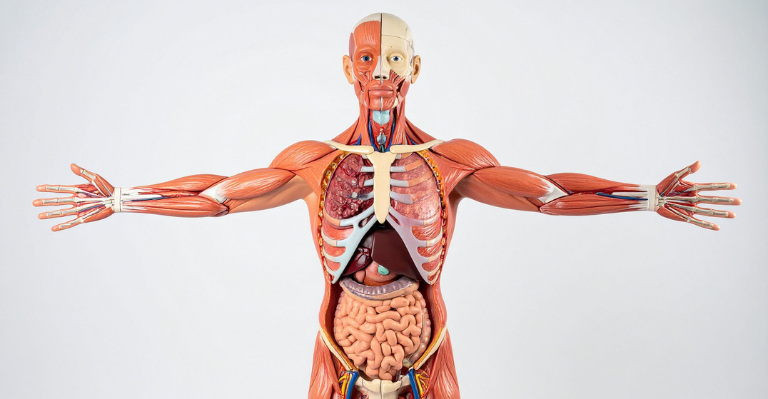



Level 7 Diploma in Anatomy and Physiology of Human Body
Or
 1 Year Access
 -
Level 7
-
3715 Students
-
 10 hours, 11 minutes
Course Curriculum
| Level 7 Diploma in Anatomy and Physiology of Human Body | |||
| Module 01: The Chemistry of Cells | |||
| The Chemistry of Cells | 00:27:00 | ||
| Module 02: Cells | |||
| Cells | 00:16:00 | ||
| Module 03: Cell Division | |||
| Cell Division | 00:19:00 | ||
| Module 04: Replication and Metabolism | |||
| Replication and Metabolism | 00:20:00 | ||
| Module 05: Human Tissues | |||
| Human Tissues | 00:25:00 | ||
| Module 06: Skin | |||
| Skin | 00:16:00 | ||
| Module 07:Human Skeletal System | |||
| Human Skeletal System | 00:21:00 | ||
| Module 08: The Muscular System | |||
| The Muscular System | 00:17:00 | ||
| Module 09: Skeletal Muscle Fibre | |||
| Skeletal Muscle Fibre | 00:22:00 | ||
| Module 10: Nervous System | |||
| Nervous System | 00:31:00 | ||
| Module 11: The Brain | |||
| The Brain | 00:23:00 | ||
| Module 12: Nervous System—Spinal Cord and Spinal Nerves | |||
| Nervous System—Spinal Cord and Spinal Nerves | 00:15:00 | ||
| Module 13: Nervous System - Autonomic Nervous System and Cranial Nerves | |||
| Nervous System – Autonomic Nervous System and Cranial Nerves | 00:31:00 | ||
| Module 14: Nervous System—The Eyes | |||
| Nervous System—The Eyes | 00:15:00 | ||
| Module 15: Nervous System—The Ears, Hearing, and Equilibrium | |||
| Nervous System-The Ears, Hearing, and Equilibrium | 00:14:00 | ||
| Module 16: Nervous System—Memory | |||
| Nervous System—Memory | 00:19:00 | ||
| Module 17: Sensory Systems | |||
| Sensory Systems | 00:23:00 | ||
| Module 18: Cardiovascular System | |||
| Cardiovascular System | 00:25:00 | ||
| Module 19: Blood | |||
| Blood | 00:27:00 | ||
| Module 20: Lymphatics | |||
| Lymphatics | 00:20:00 | ||
| Module 21: Immune System | |||
| Immune System | 00:26:00 | ||
| Module 22: Digestive System | |||
| Digestive System | 00:22:00 | ||
| Module 23: Respiratory System | |||
| Respiratory System | 00:16:00 | ||
| Module 24: Urinary System | |||
| Urinary System | 00:16:00 | ||
| Module 25: Male Reproductive System | |||
| Male Reproductive System | 00:32:00 | ||
| Module 26: Female Reproductive System | |||
| Female Reproductive System | 00:33:00 | ||
| Final Exam - Level 7 Diploma in Anatomy and Physiology of Human Body | |||
| Final Exam – Level 7 Diploma in Anatomy and Physiology of Human Body | 00:20:00 | ||
| Mock Exam - Level 7 Diploma in Anatomy and Physiology of Human Body | |||
| Mock Exam – Level 7 Diploma in Anatomy and Physiology of Human Body | 00:20:00 | ||
| Trustpilot Review | |||
| We Appreciate Your Feedback | 00:00:00 | ||
| Order your Certificate QLS | |||
| Order Your Certificate QLS | 00:00:00 | ||
Level 7 Diploma in Anatomy and Physiology of Human Body