Everything you need to know about the Children’s Acts

September 11, 2025 | 23 minutes | 29973 Readers

The Children Act sets out laws to protect children’s welfare, safety, and rights in the UK. This guide explains its key principles, amendments, and how it supports child protection and wellbeing.

rating

Bestselling Course

View Details SAVE 94% NOW
Everything youo need to know about Children's Acts

Summary:

The Children Act, established in 1989 and amended in 2004, ensures children’s welfare and rights in the UK. It focuses on child safety, health, and well-being, emphasizing parental responsibility and collaboration between agencies. The 2004 amendment strengthened children’s rights, improved child protection, and ensured better coordination of services. Key provisions include adoption, care orders, and support for children in need.

A happy family is an earlier heaven. The Children Act introduces us to the welfare of children. Every parent has responsibilities towards their children. The upbringing of their child affects adulthood. In this blog, we will let you know all the details of the Children Act. The Principles of Children act on how they can enjoy their life without negatively impacting their minds.

Everything you need to know about Children Act

Helping children to become successful and giving them a positive environment is the fundamental principle of the Children Act—the Family Law. The Children Act 2004 is an extension of the act, established in 1989, and after amending, the UK government now follows the 2004 Act of Children Act.

What is the Children Act?

People working in educational or non-educational backgrounds and those working with children need to know about this act and should look in the eye of the law. 

The Children Act 2004 is the amended one from 1989. The 2004 Children Act is an extension of this act. 

The purpose of this Act is to make every place safe and secure for the children in the UK. Also, when a relationship ends, the main concern is the children. The effect of seeing their parents being separated can harm the children; the welfare of this act was created in 1989, and then in 2004, it was utterly amended. 


The framework of Every Child Matters, which aims to improve the well-being of children, is interpreted by this Act. The Children Act has established some principles to maintain the welfare of children. These are 

  • Ensuring the children are healthy 
  • Ensuring the children’s safety 
  • The Enjoyment and Achieving of the Children 
  • Making Positive Contributions 
  • Maintaining Economic Well-being 

This Act also defines protocols for child protection, gives local authorities the authority to step in when there are concerns about a child’s welfare, and deals with matters like adoption, parental disagreements, and children’s rights. Acts that came after, like the 2004 Children Act and the 2014 Children and Families Act. Moreover, This Act works with the ideology of children’s well-being and safety so that no one goes through any negative impact and the future of their lives will be secure.

What is Children Act

When was the First Children Act Introduced?

Though the child curety has been in force since the 1880s in the UK, the Children Act was lawfully introduced and established in 1989. Now, we are following the statutory child protection guidance across the UK.

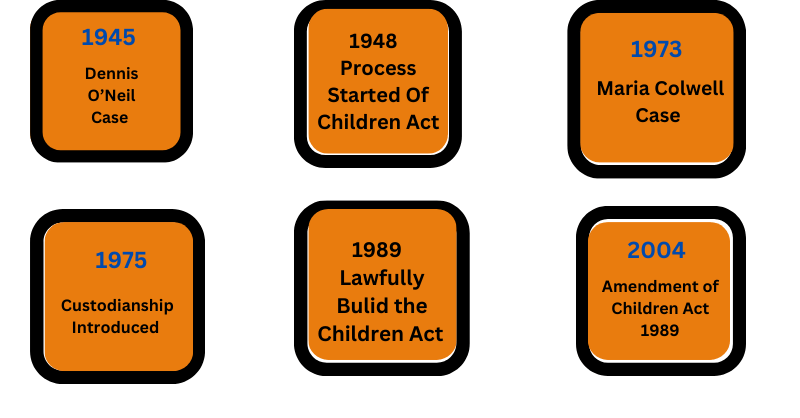
Since 1945, this framework has been developing for today’s child protection system.
The journey of child protection started with the case of Dennis O’Neil, who his foster father killed. That time, Dennis O’Neil was only 12 years old!

After this case, there was an investigation of how the children who couldn’t live with their parents were treated. During this time, the investigation committee thought of developing and creating a Children Act 1948 ( Which was not official). Under this act, local authorities working with children are given the duty to care for the children, think of their welfare and make them safe. Also, to look after the children who cannot live with their parents.

Children Act 1945-2004

In 1973, A girl named Maria Colwell was killed by her stepfather after returning from the foster house. It was found that Maria was not provided with the care of the Children Protection System. To improve the system and make the act more effective, the contributors added more rules that were run into 1975.

The Children Act 1975 was built on the basis and ideology of the Act 1945 and highlighted the Importance of children’s welfare in every educational and non-educational children’s workplace. 

After that, The Children Act of 1989 created the legal foundation for England and Wales’s current child protection system. It lays out the supremacy concept, which states that the court’s primary concern should be the child’s welfare. That was the first time when this act was introduced. 

Then, the moment of child welfare came when the UK Government signed the United Nations Convention on the Rights of the Child (UNCRC), which provides every child in the world the privileges of surviving, participating, growing and fulfilling their dreams. 

In 2004, the Children Commissioner was lawfully amended into the constitution of the UK. 

The Children Act 2004 is the act which is ongoing now. 

What is the Children Act 1989?

The Children Act 1989 is the Child Safety and Protection Act framework, lawfully established in 1989. 

Since 1945, the protection and welfare of children have been exercised in many actions, but officially, it was introduced and lawfully regulated children’s interests in 1989. 

In the Children Act `1989, some parts are mentioned step by step in the constitution. Part 1 represents the introduction, which is the welfare of the child, Parental Responsibility, and the Acquisition of parental responsibility by the father. The Acquisition of parental responsibility by a second female partner is the total concept of the child’s welfare. 


Children Act 1989 and 2004

It established several important ideas, such as parental responsibility, the Importance of a child’s well-being in all decisions and activities, and the idea that raising children in the home is always best. The Act also included provisions for care and supervision orders, child protection orders, and evaluations of children in need, giving the state tools to act when a child is in danger of suffering severe damage. To safeguard the well-being of children, it also emphasized how crucial professional and agency cooperation is. The Children Act of 1989, which placed the child’s best interests first in all decision-making processes, set the groundwork for the UK’s contemporary child protection and welfare system.

Why was the Children Act of 1989 introduced?

Beaten by their foster father and killed by their stepfather in 1945, there are several cases where children were being mistreated, and this mistreatment will affect their minds and ruin their future.
Protecting them from violence and giving them the right to enjoy their life without any breaches is the main motive of the Children Act of 1989.

The Children Act of 1989 was introduced to the UK Legal System to give a comprehensive legal framework for Protecting Children and securing their lives and futures. The goal of this act was to prioritize the children’s Lives and their Best Interests of them. 

  • Best Interest of the Child
  • Parental Responsibility 
  • Child Protection 
  • Care and Supervision Orders 
  • Children Rights 
  • Adaption 
  • Private Law Proceedings 
  • Local Authority Duty 

These are the parameters of the Act, which was introduced to all in 1989. 

Overall, The Children Act of 1989 aimed to ensure that children’s rights and welfare were better safeguarded, that they had a voice in court, and that the legal system had a more child-centred and comprehensive approach to their well-being. It provided the framework for later legislation and policy in the UK about family law and child protection. 

These are the parameters of the Act, which was introduced to all in 1989.
Overall, The Children Act of 1989 aimed to ensure that children’s rights and welfare were better safeguarded, that they had a voice in court, and that the legal system had a more child-centred and comprehensive approach to their well-being. It provided the framework for later legislation and policy in the UK about family law and child protection.
Let’s think briefly: what if this act had not been introduced in 1989? What would the Children suffer?
Being absent from their childhood will always give them a nightmare and can ruin their future, and also, by, they can become more aggressive. So, It is essential to look after all the children’s safety and give them joyful memories that they can recall.

Children Act 1989 Summary

In 1908, the United Kingdom passed its first-ever Children Act. The Children Act 1908 was the name given to it. Early legislation addressed child rights, child welfare, and the defence of children’s rights. It was followed by other legislation, such as the more comprehensive Children Act 1948 and the Children Act 1989, which dramatically reformed and modernized child welfare laws in the UK. It was a crucial step towards recognizing the state’s role in ensuring children’s well-being. In the UK Legislation, the Children Act 1989 has 12 individual parts and also covers the section that introduces the details of Child Safety.

Part 1: Introduction

This part of the legislation introduces the welfare of the Child’s Parental Responsibility and the Acquisition of parental responsibility by the father. The Acquisition of parental responsibility by a second female partner is the total concept of the child’s welfare.

Part 2: Orders With Respect To Children In Family Proceedings

This part refers to the legal orders given by the court to govern various aspects of child arrangements when parents or guardians are in dispute. These orders, which may vary by jurisdiction, include child custody orders, visitation or contact orders, child support orders, specific issue orders, prohibited steps orders, parental responsibility orders, and others. They aim to protect the child’s best interests and cover matters such as custody, visitation, financial support, and decision-making responsibilities. These orders help resolve disputes and provide legal clarity in family matters involving children, prioritizing the child’s welfare and well-being

Part 3: Local Authority Support for Children and Families

In the UK, “Local Authority Support for Children and Families” refers to the help and services that local government authorities offer to guarantee the safety and protection of children and their families within their sphere of influence. Its assistance covers various programmes and services designed to advance child welfare and fortify families.

 The Important aspect of the local authority is Child Protection Services, and they are responsible for Protecting children who might be at risk for harm, abuse, or neglect. Investigating reports of child abuse, determining the needs of children who are at risk, and taking the necessary steps to protect their safety—which may include placing them in foster care or offering family support—are all aspects of these services.

Part 4: Care and Supervision

 Under the Act 1989, “Care and Supervision” grants local authorities the legal authority to take a child into their care and make decisions about their living arrangements, Giving them to foster care. These orders are only issued when the court is satisfied that the child’s welfare demands such intervention. In contrast, “Supervision Orders” allow the local authority to monitor and support children while they live with their parents or guardians. Both Care and Supervision Orders aim to safeguard the child’s well-being, and they come with certain conditions and obligations to protect the child’s best interests. These provisions are central to the Children Act 1989’s framework for child protection and welfare.

Part 5: Protection of Children

This part includes the authority if any crime happens relating to children. The welfare of children is strongly promoted and safeguarded by the Act. It provides measures for child protection by giving local authorities the authority to act when a child needs services and assistance or is at risk of serious harm. The Act describes the duties of local governments and courts in ensuring the safety of children, defines the standards for Care and Supervision Orders, and establishes the framework for child protection processes. The child’s best interests are given priority throughout the Act, which offers a legal framework for handling situations involving child abuse, neglect, or other types of harm to ensure their protection and well-being

Part 6: Community Homes

Community Homes are alternative living arrangements that tend to be operated by local governments or licensed private companies.

The Act ensures that children in Community Homes get the proper attention,        instruction, and support to fulfil their unique requirements. The objective is to give children who may have faced issues or challenges in their family homes a stable and nurturing environment so they can grow and develop in a secure and loving environment.

Part 7: Voluntary Homes and Voluntary Organisations

This part has two provisions one is the Voluntary Homes and the other one is the Voluntary Organisation. Homes indicate that foster homes and organisations are those groups who are voluntarily helping and working for the welfare of children. 

Voluntary Homes– Residential care facilities for children are known as voluntary homes, and charities or non-profits frequently run them. Children in need, including those in the custody of local authorities or who have been placed there voluntarily by their parents or guardians, may receive housing, care, and other services from voluntary homes. These homes are run and managed on a volunteer or charitable basis, frequently to guarantee children’s well-being and development. 

Voluntary Organisations- These groups frequently work on various child welfare projects, such as advocacy, counselling, family assistance, and running voluntary homes and other residential care facilities. To meet the needs of the community’s most vulnerable children and families, voluntary organisations may work with governmental organisations, regional authorities, and other stakeholders. They could also participate in fundraising and outreach activities to support their programmes and services.

Part 8: Registered Children’s Homes

Specialised residential institutions legally licenced and regulated to offer care and housing for children and young people are known in the UK as licenced Children’s Homes. These homes care for a wide range of children, including those in the government’s custody, those adopted privately, and those with special requirements or vulnerabilities. They have staff members who are qualified and trained to offer specialised care plans, educational assistance, and therapeutic services. Strict rules and routine inspections by regulatory authorities are in place to ensure the children’s safety and well-being. Some homes provide transitional assistance to help young people prepare for independent living as adults. These homes are essential to the child welfare system because they offer a safe place. 

Part 9: Private Arrangements for Fostering Children

When individuals or families agree to care for a child in foster care without the direct involvement of a local authority or government agency, this is referred to as a private arrangement. Due to various circumstances, such as the kid’s parents temporarily being unable to give care, the child is often left in the care of private individuals who are familiar to the child or their family in such arrangements. Private fostering arrangements should prioritize the child’s best interests, including their safety, education, health, and emotional well-being.

Children Act 1989 and 2004 (2)

Part 10: Child Minding and Day Care for Young Children

Child minding is the provision of childcare by individuals or small groups of carers in their own homes. The Act created rules to guarantee children’s well-being, protection, and healthy development in specific environments. In addition to defining the credentials and training criteria for childcare providers, health and safety regulations, and child protection measures, it also established the requirements for registering and inspecting such services. These rules sought to support young children’s well-being and early development while giving parents and guardians peace of mind by establishing a safer and more structured environment in home-based and centre-based childcare settings.

What is the Children Act 2004?

The Children Act 2004 is the amended one from 1989. It includes the children’s rights and views of them and ensures their freedom. This legislative Act is established in the framework of the Children Act 1989.

This Act introduces the legal procedure and process of child welfare and is also a vital part of the Children Act.
The “Every Child Matters” theology is one of the basic principles of the Children Act of 2004. The five significant outcomes for children listed in this policy are economic well-being, enjoyment and achievement, making a constructive contribution, being healthy, and remaining safe. By concentrating on these results, the Act sought to enhance the lives of children.
This Act also established the role of the Children’s Commissioner for England, an independent advocate for children’s rights and well-being. The Importance of information exchange between organizations in identifying and resolving issues related to a child’s safety and well-being. To safeguard a person, it created the rule that information should be disclosed when required.

What is Children Act 2004

The Children Act 2004 aimed to strengthen the protection and well-being of children by emphasizing collaborative working among agencies, setting clear outcomes for children, and promoting a holistic approach to child care and support. It built upon the foundation laid by the Children Act 1989 and has significantly impacted child welfare and services in the UK.

Why was the Children Act 2004 introduced?

The Children Act 2004 has strengthened the act more. This act amended Children’s Rights and the proceedings of their welfare. It aimed to address several critical objectives in child protection and well-being. This act improved the Child Matters Policy, where every child has their idea and dreams and their freedom. 

The Act aims to promote a more integrated and coordinated approach by enhancing collaboration between various organizations and experts in children’s services. Creating Local Safeguarding Children Boards (LSCBs) to guarantee efficient cooperation in child protection also strengthened child protection. 

The Children’s Commissioner for England was formed as part of the Act, which also effectively encouraged information exchange to safeguard children’s rights and interests. Additionally, it aimed to improve the oversight and regulation of childcare facilities to guarantee the highest levels of child safety and care. The Children Act of 2004 marked a fundamental shift in the UK’s approach to child welfare by strongly emphasizing well-being, cooperation, and protection.

FAQ

What is Section 17 of the Children Act?

According to the Legislation of UK, Section 17 of the Children Act states that All the local authorities should protect their area’s children. Children’s local rules must cover the child who needs additional support and cannot live with their parents.

What is the significant harm in the Children Act (1989)?

A significant harm standard must be satisfied before local authorities can start care proceedings or request a Care Order. The Act acknowledges that it is up to the courts to determine whether a child is in danger of suffering severe damage and what steps should be taken to ensure their welfare.

What is the Children and Young Persons Act of 2008?

The Act aimed to strengthen child protection measures, improve the youth justice system, and enhance children’s and young people’s well-being. It introduced provisions to ensure better support and protection for vulnerable children and young offenders.

There was also a case that was conducted to build and improve this Child and Young Persons Act in 2008- The Case of Pete Connelly( A one-year-old baby who was abused and neglected by his mother, his mother’s boyfriend and his brother) 

KCSIE 2018

KCSIE 2018 stands for “Keeping Children Safe in Education 2018.” It is a statutory guidance document issued by England’s Department for Education (DfE). KCSIE provides guidelines and sets out the legal duties and responsibilities that schools, colleges, and other educational institutions in England must follow to ensure the safety and well-being of children and young people under their care.

What are the fundamental principles of the Act?

The Key Principles of the Children Act are 

  1. Paramountcy of the Child’s Welfare
  2. Parental Responsibility
  3. No Delay Principle
  4. Least Intervention Principle
  5. Balancing Rights and Responsibilities
  6. Participation of Children
  7. Collaboration and Partnership
  8. Promotion of Stability


What duties does the Act place on local authorities?

This Act established several important ideas, such as parental responsibility, the Importance of a child’s well-being in all decisions and activities, and the idea that raising children in the home is always best. The Act also included provisions for care and supervision orders, child protection orders, and evaluations of children in need, giving the state tools to act when a child is in danger of suffering severe damage. To safeguard the well-being of children, it also emphasized how crucial professional and agency cooperation is. The Children Act of 1989, which placed the child’s best interests first in all decision-making processes, set the foundations for the UK’s existing child protection and welfare system.

What has happened since then?

Establishing and amending the Children Act in 2004 was a process for improving the regulations. The Children Act was a process of many years of preparation following dissatisfaction with children’s legislation. It combined the private and public law. The principle is that the child’s welfare must be paramount and Their interest separately considered. Currently, the Children Act 1989 and 2004 continue without any further amendments. 

How does the Children Act 2004 work in family law

The Children Act 2004 plays a vital role in family law within the United Kingdom, providing a comprehensive legal framework for children’s welfare, protection, and support in family-related matters. It reinforces the Importance of educational attainment, health, and overall well-being when determining child arrangements. It also provides the legal framework for alternative care arrangements, such as foster care or adoption, when necessary to secure a stable and nurturing environment.

Who does the Children's Act apply to?

The Children Act 1989, as amended by subsequent legislation, applies to a wide range of individuals and organizations involved in the welfare and protection of children in the United Kingdom. Here are some of the key parties and entities to whom the Children Act applies:

  • Children
  • Parents and Individuals with Parental Responsibility
  • Local Authorities
  • Courts
  • Educational Institutions
  • Healthcare Professionals
  • Police and Law Enforcement

What is the main principle of the children act 1989/2004?

The main principle of the Children Act 1989/2004 is to prioritize the welfare of children in all decisions concerning their upbringing and care, ensuring their needs are met and they are protected from harm, with the child’s best interests always being the paramount consideration.

Does your criminal record clear after 7 years uk?

Criminal records in the UK do not automatically clear after seven years; instead, the time it takes for a criminal record to be considered “spent” varies depending on the sentence given, and once spent, it no longer needs to be disclosed in most situations, though certain types of employment or roles may require disclosure regardless of time passed.

What is the Every child Matters and the Children Act 2004?

Every Child Matters is a UK initiative ensuring that every child, regardless of background, has the support they need to be healthy, stay safe, enjoy life, achieve, make a positive contribution, and achieve economic well-being, while the Children Act 2004 is the legal framework that underpins this initiative, establishing duties for agencies to work together to protect and promote the welfare of children.

top

Hear What Our Learners Say About Us

Home Courses Search