


Table of Content
Share this Resource


If you’re researching different coaching models, creating plans, or even considering hiring a coach, the GROW coaching style and coaches who employ it should be on your shortlist. This GROW coaching model is an easy-to-understand, easy-to-implement coaching framework that could give you the results you’re looking for.
The GROW coaching model is a popular coaching model applied to different circumstances to train a group or a team. A significant power of the GROW coaching model is that it can lead you to a clearly defined result through four simple phases. It helps to deliver structured coaching to help others achieve their goals or enhance their performance.
Let’s learn more about the GROW coaching model:
What is the GROW Coaching Model?
The GROW model is a popular coaching model that can be applied to different circumstances. For example, the coach and the learner can use this model in their teaching or coaching setting to explore new situations, set goals, and create a plan for the future.
The model is a simple but highly effective coaching framework. So, mentors and performance coaches can use this model to coach their employees and clients. This model is highly appreciated by the coaching community.
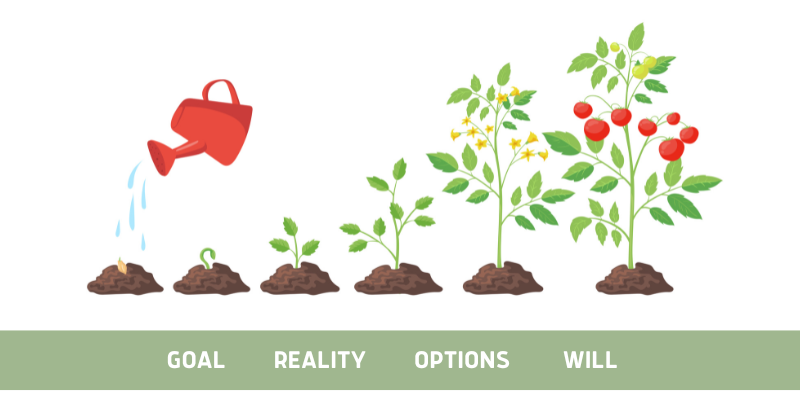
What does GROW Stand for?
GROW is an acronym for Goal, Reality, Options, Will. They include the following steps:
- Goal (aspirations)
- Reality (current obstructions or situations)
- Options (strengths, resources)
- Will (accountability and personal actions)
Who Created the GROW Model?
Famous business coaches Alan Fine, Sir John Whitmore, and Graham Alexander created The GROW coaching model in the 1980s. In 1992, Sir John Whitmore first published the GROW Model in his book ‘Coaching for Performance’. In addition, Sir John Whitmore developed the field of coaching in the UK. And he is best known for his book “Coaching for Performance” and the GROW model.
When to Use the GROW Model?
As a professional coach, leader or teacher, you should know when to use the GROW model. The GROW model is an effective coaching model. And groups working on the same problem or goal can also use the model. Also, it contains all the core elements of an effective coaching structure. You can use this model in different circumstances, such as the following.
How does the GROW Model Work?
GROW, the acronym stands for the four stages of GROW coaching model. The GROW model structure keeps a team or group on track and ensures they leave their coaching sessions with powerful actions. Each step involves answering several coaching questions.
Notably, a leader or coach can quickly create a sense of responsibility with a few influential coaching questions and awareness in each area:
G: Goals and Aspirations;
R: Current situation, Internal and External Obstacles;
O: Possibilities, Strengths and Resources;
W: Actions and Accountability.
How does the GROW Model Help Performance?
The GROW model develops crucial skills to improve a person’s performance. It helps in decision-making, problem-solving, and goal-setting. People can easily find solutions to problems and understand the situation using the model. Additionally, the model allows them to explore their options while boosting their confidence and self-motivation.

Some Examples of GROW Coaching Model
Here are some examples of where GROW coaching model can be applied:
Team or Group
The GROW coaching model is ideal for helping a group of team members gain clarity on reaching goals and motivating them to achieve them. In addition, this structure can also improve morale once they understand how they all uniquely contribute to a joint plan.
Individual
The most frequent use of the GROW coaching model, the process, is used in this setting to help your client meet a personal or professional goal.
Organisation
Any leader or manager must be able to coach those they lead. Undoubtedly, the GROW coaching model is a great structure to help non-professional coaches mentor employees.
Teachers & Parents
Teachers and parents can benefit from the GROW coaching model to help their children reach their goals. GROW coaching can help children improve their communication skills and cognitive listening skills. In addition, when children need help articulating their goals and values, this coaching method may help teachers or parents understand their views.
The 4 Steps of the GROW Coaching Model
The four steps of the GROW coaching model are explained below –
Step 1: Goal
The first step of GROW coaching model is to define the Goal. The Goal is what you want to achieve and is the start of creating a new future. Usually, coaches begin their sessions with a goal-setting exercise.
When setting goals, it is crucial to ensure they are not too vague or too big. For example, you do not want to develop the Goal of losing weight. Instead, you should set a Goal to lose 10 pounds (4.54 kg) by the end of the month.
Likewise, you do not want to set the Goal of becoming a better coach, but you want to set the Goal of attending a coaching seminar next month. For example, here are some questions you can ask in this stage,
- What Goal do you want to achieve?
- What would you like to do in working toward this Goal?
- What will get you to that Goal?
- What do you want to modify or change, and why?
- What would the effects be if you achieved this Goal?
- How will you determine the results and measure the success?
Step 2: Reality
The second step of the GROW coaching model is to describe the current reality. It means explaining where the learner is now and what the situation is now. It is essential to fully describe the current situation so that the coach and the learner can understand the situation and any associated problems.
The more they know about the current situation, the more they can create solutions to solve any issues. Besides, the inner perspective explores the emotions and motivations connected to the desired change.
Coaches use open-ended questions to help the learner describe the problem thoroughly when describing the current situation. Because they want to know about their strengths, weaknesses, thoughts, and feelings. Moreover, they want to know what other people are doing in the situation. Furthermore, they want to know about opportunities & environment.
Some questions to consider in this stage, such as
- What is doing well right now? What is not?
- What can you learn and know from what has not worked?
- What could you do better?
- What are the current changes telling you?
- Where are you now concerning your goal?
- What has helped your success so far?
- What progress have you made so far?
- What steps have you already made towards your goal? What impact has that had?
Step 3: Options
Once we clearly understand the goal and where we currently stand, we can focus on what we need to reach our goal. This stage is referred to as “obstacles” or “options,” with options sounding slightly more favourable. Essentially, obstacles will stop us from getting from where we are now to where we want to go. Otherwise, we would already have reached their goal. In identifying those obstacles, we can find a way of dealing with them to make progress – these are our options.
During this stage of GROW coaching model, we awaken and encourage creativity to brainstorm options and strategies, daring to consider options we would take if all things were possible. Moreover, continue pushing for “what else?” and give space for pondering different ideas. Here are some questions to help explore options and generate solutions:
- Without filtering them, what are the first options that come to mind?
- What are some of the ways you could approach this?
- What do you think you need to do next?
Step 4: Will
The fourth and last step of the GROW coaching model is to determine your will. It means you want to assess your choice or commitment to taking the proposed actions. Finally, you want to commit to taking the steps and making them happen, no matter what.
When determining your will, coaches encourage the learner to tell themselves positive affirmations to help them commit to the action and believe in themselves.
Next, they want the learner to set a goal for themselves, such as “I will go to the coaching seminar next month” or “I will lose 10 pounds by the end of the month.” Then, they want the learner to visualise themselves achieving the goal and feeling the joy of success. Finally, they want the learner to constantly remind themselves of their commitment and why they are doing it.
Below are some questions to help support moving into action:
- What do you think you need to do right now?
- How will you know when you have done it?
- Is there anything else you can do?
- How will you track your progress?
- When are you going to start?
- How will you know that you have been successful?
- What support do you need to get that done?
How to Use the GROW Coaching Model?
You can follow these four steps to use the GROW coaching model properly.
Establish the Goal
First, you and your group member should look at the behaviour you want to change or develop and structure this change as something they want to achieve. Make sure that the Goal is SMART. SMART stands for Specific, Measurable, Attainable, Realistic, and Time-bound.

When doing this, you should ask questions such as –
Examine the Reality
Next, ask your teammates to describe their current reality.
This step is significant. Too often, people try to break a problem or reach a goal without thoroughly considering their starting point. And often, they miss some information they need to get something done effectively.
As your group member tells you about their current reality, the result may start to emerge. Helpful guiding questions in this step include the following:
Explore the Options
Once you and your group members have explored the current reality, it’s time to determine how to reach those goals, how many options you have etc. This stage involves identifying possible ways to accomplish the subject’s purpose, including any obstacles that might get in the way.
Help your teammates communicate numerous good options. It’s significant to guide them in the right direction without actually making opinions. Typically, questions you can use to explore options are as follows:
Establish the Will
Once you examine the current reality and the options, your teammates or group members will better understand how to achieve their ultimate goal. That is great – but in itself, this may not be enough.
So, the final step is getting your team member to commit to the specific conduct to move toward their goal. Again, doing this will help them establish their will and boost their motivation. Here are some questions to ask:
Eventually, decide on a date when you will both review their progress. It will give your team members some responsibility and allow them to change their approach if the original plan is not working.
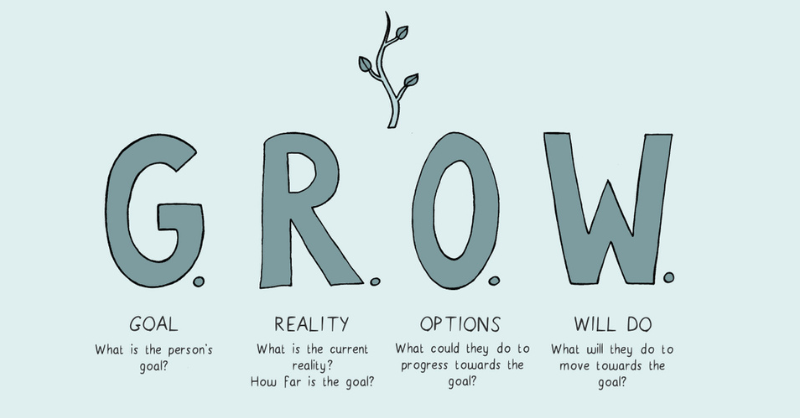
Applying The GROW Coaching Model to
Your Life or Organisation
Applying the GROW model in different coaching situations is an excellent way of improving performance. In addition, it provides a good structure which helps an individual or a team identify what they want to accomplish (Goal). Secondly, where they are now (Reality). Thirdly, what their options are (Options) and finally, what steps they will take (Wrap up/ will/ way ahead).
Here are two examples of applying the GROW coaching model in real life in different situations.
Management / Organisations
Every leader or coach should know some form of coaching skills. The GROW coaching model is tremendous for creating a structure for building employee growth potential. Moreover, the format allows the coach to lead the conversation and lets the manager understand the employees’ connection to goals.
Above all, a coaching culture allows employees to feel heard through improved communication skills. Besides, it develops compatibility and camaraderie within an organisation. As a result, people are more connected and move toward a common goal with better results.
Parenting and Teaching Students
Family communication can be difficult if children can not express or speak up about their concerns. Like managers, teachers and parents should all have coaching skills in their tool bag.
Moreover, some probing questions can allow kids to realise their potential and motivation to achieve personal goals. Also, GROW coaching model allows an easy framework to broaden children’s minds and help parents and teachers better understand children’s attitudes.

How Can I Develop Effective GROW Coaching Skills?
You should know about every step of the GROW coaching process to develop effective GROW coaching skills. In addition, you need to have a thirst for learning. Last but not least, make a habit of facing new challenges and controlling your ego.
Here are two suggestions/tips that may help you to develop effective GROW coaching skills:
Recognise and Address Your Challenges and Barriers
One of the best ways to practice using the GROW coaching model is to face and address your challenges and barriers. By practising yourself, you’ll learn how to solve a particular problem and how to ask the most helpful questions. Then, write down some stock questions for future coaching programs.
Listen, Ask and Learn
Some essential skills for a coach never stop learning mentality and the ability to listen effectively. And the ability to ask good questions.
You should not ask closed questions that call for a yes or no answer (such as “Does it cause a problem?”). Instead, ask open ones, like “What effect does it have?” you need to be prepared with a list of problems and questions for each step of the GROW coaching model.
In addition, if you want to master your coaching skills, you can check out the Coaching & Mentoring course. This popular training will help you develop excellent leadership and team management skills.
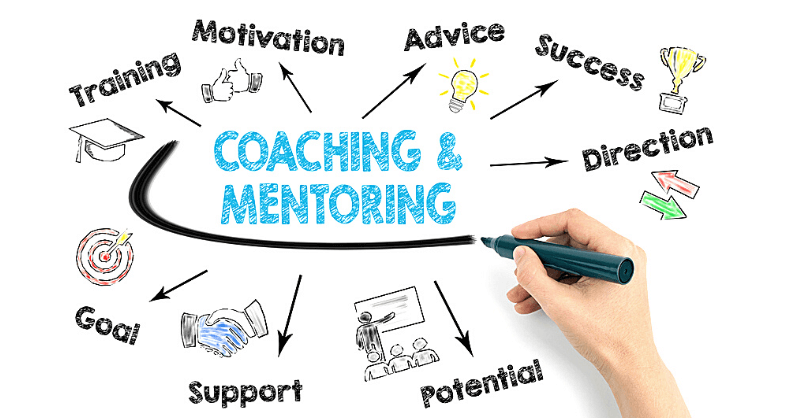
Self-Coaching GROW Exercise
The GROW coaching model is so effective in self-coaching. You can use the GROW model to coach yourself. First, think about something you would want to achieve or solve. Then note down your answers:
Goal
- What goal do you want to achieve?
- When are you going to achieve it?
- What are the pros and cons for you in achieving this goal?
Options
- What options do you have to achieve your goal?
- What is the cost of each option?
- What could be your first step?
Reality
- What is doing well right now? What is not?
- What action have you taken so far?
- What steps have you already made towards your goal?
Will
- Which options will you choose to move on?
- How will you track your progress?
- What support do you need to get that done?
The Impact of GROW Coaching
GROW coaching has impacts in different ways. Indeed, the GROW Model has been seen to generate higher productivity, improve communication and interpersonal relationships and create a better-quality working environment. The GROW Model looks simple, but it’s a powerful framework for structuring your coaching or mentoring conversations. Moreover, GROW coaching skills can unlock potential and increase performance by boosting self-confidence and motivation.
In addition, asking practical questions in a planned and structured way promotes deeper awareness and greater accountability, which leads to reasonable steps to accomplish goals. Also, the GROW Model improves problem-solving, goal-setting, and decision-making and puts learning and enjoyment at the core of performance. Many coaches and leaders around the world appreciate this simple framework.
Flexibility of GROW Model
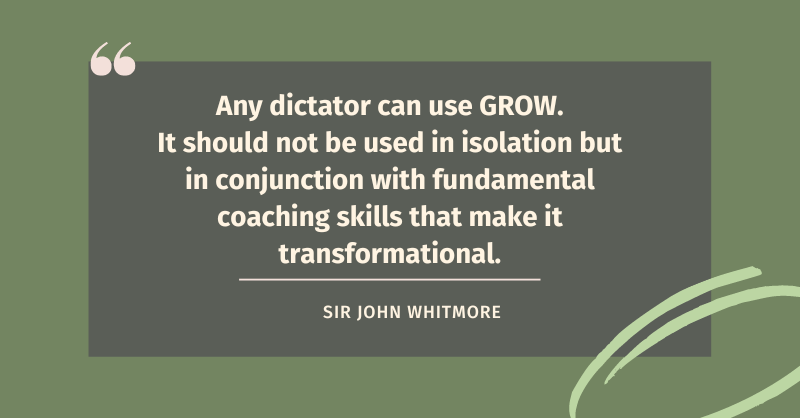
The flexibility of this concept also enables trainees to collaborate and solve problems as a team. However, it is essential to realise that the GROW components do not necessarily occur in that sequence. For example, an effective coaching dialogue typically begins with exploring Goal and Reality but can shift freely between all four parts.
Sir John Whitmore was also concerned that people should not follow the model strictly or dutifully. In addition, it is merely a structure to provide an awareness of which type of question will be the most productive in future incidents. The model will enhance you by developing your interpersonal, leadership, problem-solving and managerial skills.
It should be noted that the model is not rocket science or mathematical formula that you must strictly follow. Take it easy.
How to Get the Most Out of the GROW Model?
Effectively coaching your team members can be a gratifying experience. But, apart from this, helping people reveal what is already inside them. Solving an issue they’re facing is much better than telling them what to do next. And in most circumstances, they are more likely to be successful with a plan of action they come up with versus a method suggested by a manager.
Without a doubt, the GROW coaching model is particularly suited to managers of teams that perform knowledge or service-based work. Even if the manager is not an expert in the individual’s problem or situation, some practices to make the process as smooth and rewarding as possible:
Firstly, get SMART. All the experts interviewed agree that following the SMART criteria — specific, measurable, attainable, relevant, and time-bound — to a particular plan can make all the difference in accountability and follow-through.
Secondly, be prepared to change. You need to be prepared and adapt to different situations or problems. Finally, be dynamic and never stop learning!
What are the Benefits of the GROW Coaching Model?
The main benefit of GROW is that it provides a more suitable coaching structure for the coaches, leaders, and teachers. Besides, the GROW model can generate higher productivity, improve communication and interpersonal relationships and create a better-quality working environment.
Moreover, GROW coaching skills can reveal potential and increase performance by boosting self-confidence and motivation.
What are the Challenges with the
GROW Coaching Model?
Here are some problems regarding the GROW model.
Firstly, goals need to be realistic. A problem with the GROW model regarding goal setting is that both the coach and coachee need realistic goals.
Secondly, the coach might not be aware of the actual realities. If an organisation hires a coach unfamiliar with the exact problem or ground realities, it will definitely cause some difficulties.
Thirdly, applicability. This model is not applicable in every situation. Sometimes coaches need to apply their model or strategy. For example, the GROW model might be suitable for goal-oriented fields such as business or sports, but it is not ideal for life-coaching conversations or psychological aspects.
Also, if a coach always focuses on the GROW model, he might disregard the potential of his employees or clients. Everybody has their potential and skills.
Lastly, coaches don’t need to follow the model every time in every situation. If coaches follow the GROW model every time, it might result in overlooking the employee’s own self-awareness.
FAQ
Find answers to your most asked questions about the GROW coaching model and more.
What is a Coaching Model?
A coaching model is a framework. Mentors and coaches use them to plan their coaching sessions and approach. In addition, the coaching model can help instruct employees more effectively.
Which is the Best Model for Coaching?
The GROW coaching model is probably the best and most widely recognised model for coaching. Indeed, it promotes self-motivation and confidence in staff to boost productivity and personal satisfaction. The process always starts with a goal (what do you want to achieve?), identifies where you currently are (reality) and then chooses the options that will help you meet the goal (your choices.) Lastly, all good journeys begin by committing to complete the journey while preparing for barriers you could face on the way (will).
What is the Purpose of the GROW Model in Coaching?
The GROW Model is an effective four-step process that aims to help you to design coaching and mentoring activities with team members, employees or coachees. You can use the GROW model to help them improve performance along with reaching personal & organisational objectives.
What is the Role of The Coach in The GROW Model?
According to the GROW model, coaches act as a helping hand for their clients or employees. Coaches can use the GROW coaching model to help their teams and employees become more confident and capable.
Notably, a coach does not take final decisions for his clients. Instead, he motivates and leads his clients/ team members. In addition, the coach also acts as a coordinator, helping the client select the best possible options.
Summary
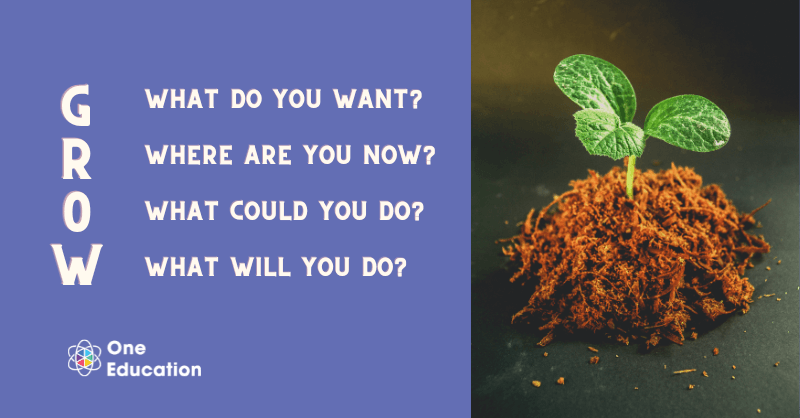
The GROW coaching model is a popular coaching model that can be applied to different circumstances. The 4 steps of the GROW model are defining the goal, describing the current reality, brainstorming possible actions, and determining your will.
Apart from this, each step of GROW model clearly defines what the subject will do in the short term to reach their goal, as well as a process and timeline for evaluation. In addition, the coach and learner can use this technique to explore a situation, set goals, and create a plan.
The model is like a vehicle. The driver must ensure they can use it to its full potential to yield desired results. Likewise, to GROW to be effective, the coach and coachee need to show interest and find the best way forward to set goals, overcome obstacles and find actionable solutions to achieve desired goals. You can check out this course to upgrade your Coaching and Mentoring skills.
Related Articles

 May, 20, 2026

Get a FREE Course
- Learn useful skills online free
- Get CPD accredited certificate
- Add it to your CV today!