How to Become a Flight Attendant at a Top Airline

July 04, 2025 | 10 minutes | 1697 Readers

Becoming a flight attendant or cabin crew member that can be an exciting and rewarding career. It offers the chance to travel, meet new people, and experience life on the go. However, this career isn’t just about serving drinks on a plane. It involves a mix of responsibilities, customer service, and safety training. How to Become a Flight Attendant Becoming a flight attendant is an exciting career choice that combines customer service, travel, and safety responsibilities. This section outlines the

rating

Bestselling Course

View Details SAVE 94% NOW
A professional flight attendant demonstrating safety procedures in an airplane cabin, showcasing the essential skills required to Become a Flight Attendant and ensure passenger safety.

Becoming a flight attendant or cabin crew member that can be an exciting and rewarding career. It offers the chance to travel, meet new people, and experience life on the go. However, this career isn’t just about serving drinks on a plane. It involves a mix of responsibilities, customer service, and safety training.

How to Become a Flight Attendant

Becoming a flight attendant is an exciting career choice that combines customer service, travel, and safety responsibilities. This section outlines the steps needed to start your journey in the aviation industry.

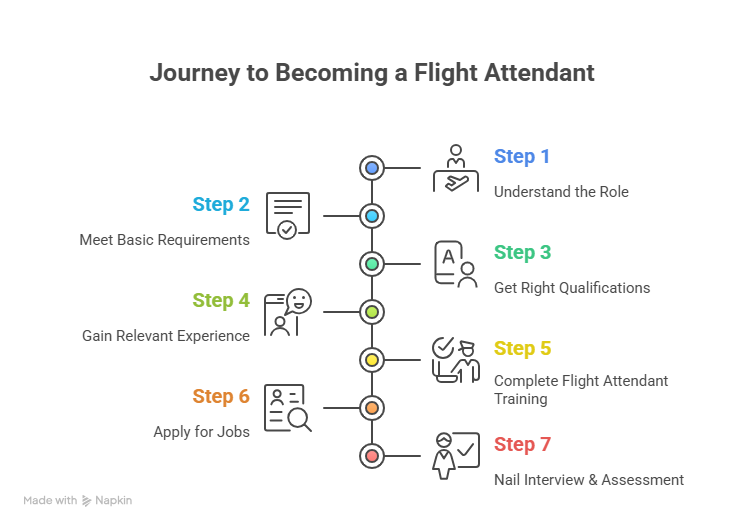
How to Become a Flight Attendant - visual selection

Step 1 – Understand the Role

Understanding the role is crucial before diving into the application process. A flight crew member is tasked with ensuring the safety and comfort of passengers during a flight. Although many think the job mostly involves serving food and drinks, there’s much more to it.

Air hostesses and cabin crew members must be ready to handle emergencies, provide first aid, and ensure passengers follow safety procedures. Customer service is another big part of the job, including dealing with in-flight requests and managing complaints. Gaining a full understanding of the role will help you decide if it’s the right fit.

Step 2 – Meet the Basic Requirements

Some basic eligibility criteria are necessary to become a flight attendant. The age requirement typically ranges from 18-21 years old, depending on the airline.

Physical requirements are also common, including height restrictions. While airlines may vary, the minimum height is often around 5 feet tall. Passing a medical exam, which includes tests for vision, hearing, and overall health, is also mandatory.

You must also be a legal resident of the country where the airline operates. A valid passport is essential, particularly if you’re considering international flights.

Step 3 – Get the Right Qualifications

While there’s no specific degree required to become a steward or cabin crew member, a high school diploma or equivalent is a must. Airlines often prefer candidates with additional education, such as degrees in hospitality, communication, or tourism.

Fluency in multiple languages can be an advantage, especially for international routes. Speaking more than one language boosts your chances of being hired.

Step 4 – Gain Relevant Experience

Experience in customer service, although not always required, is highly beneficial. Working in retail, hospitality, or any other customer-facing job gives you a head start. These roles help develop essential skills like problem-solving, patience, and communication.

Dealing with people from different backgrounds and handling difficult situations will make you a stronger candidate. These experiences show potential employers that you possess the necessary interpersonal skills to thrive as a flight attendant or in-flight service attendant.

Step 5 – Complete Flight Attendant Training

Once hired, airlines provide mandatory training. This training lasts between three to six weeks and involves both classroom learning and practical exercises.

You’ll cover safety protocols, including evacuation procedures, using emergency equipment, and managing medical emergencies. Training also includes customer service techniques and aircraft-specific knowledge. This training equips you with everything necessary to ensure passenger safety and comfort.

Once training is complete, passing a series of tests is required before you can start flying.

Step 6 – Apply for Jobs

After completing training, begin applying for flight attendant positions. Airlines typically post openings on their official websites, but job boards like LinkedIn or Indeed also offer opportunities.

Polish your CV and highlight your customer service experience and relevant skills. Tailor your CV for each airline, focusing on the qualities they value most. A well-crafted CV increases your chances of standing out to recruiters.

Step 7 – Nail the Interview & Assessment

Upon submitting your application, you may be invited for an interview. Airlines generally conduct behavioural interviews to assess how you would handle various situations. You may be asked about dealing with difficult passengers or managing a medical emergency.

Group exercises are also common, where you’ll need to demonstrate teamwork and problem-solving skills. Staying calm, professional, and confident under pressure will help you succeed in these exercises.

Airlines emphasise appearance and professionalism, so dress smartly and present yourself well.

Cabin Crew Course Online
Get a clear picture of the roles and responsibilities of air cabin crew and move fast to that position. Enrol now and start working towards your ideal job.

What Is It Like to Work as a Flight Attendant?

The job involves a mix of safety tasks, customer service, and dealing with unpredictable situations. It’s fast-paced and often requires irregular hours, but it offers the chance to travel and meet new people.

Typical Working Hours

The role of a flight attendant isn’t your typical 9-to-5 job. Flight attendants work varying hours, including weekends, nights, and holidays. Airlines operate 24/7, meaning early morning shifts, late-night flights, and long-haul routes are common.

You’ll often work irregular shifts, and your schedule may change frequently. This requires flexibility and the ability to adjust to different time zones and sleep patterns.

What to Expect:

Shifts: Airline steward roles involve rotating shifts that vary based on flight schedules. Expect work on different days and at different times of the day.

Layovers: A major perk of the job is layovers, where you’ll stay in a hotel at a destination between flights. These layovers can last from a few hours to several days, giving you time to explore new places or rest.

Work Environment

The work environment is dynamic and fast-paced, as you’ll spend most of your time on the aircraft, moving through the cabin and attending to passengers. Staying calm and focused at all times is essential, especially during busy or stressful moments.

Stewards and air hostesses work closely with the rest of the cabin crew to ensure everything runs smoothly. You’ll frequently juggle multiple tasks while maintaining a positive and professional attitude.

Airplane soaring over Koh Samui island, Thailand, showcasing a vibrant tropical landscape in daylight.

What Is It Like to Work as a Flight Attendant?

Key skills include communication, problem-solving, patience, and adaptability. Physical fitness and a professional appearance are also important.

Personal Traits

Several personal qualities help you succeed as a flight attendant. Strong communication skills are a must, as you’ll be interacting with passengers and crew members throughout the flight.

Patience is another essential trait. You’ll encounter many different personalities, and sometimes passengers may be difficult. Remaining calm and managing these situations professionally is key.

Additional qualities include problem-solving skills, adaptability, and a strong sense of responsibility. The job can be unpredictable, making flexibility and quick thinking essential.

Physical and Professional Attributes

The role of a flight crew member is physically demanding. You’ll spend long hours on your feet, carry heavy bags, and navigate narrow aisles. Good health and fitness are necessary to manage the physical aspects of the job.

Airlines also require a polished and professional appearance. There are grooming standards to follow, as representing the airline in a positive light is part of the job.

Find the Course That Suits You!

We create outstanding professionals in Employability, Business, Health Care, Marketing, Language, and Functional Skills. Whether you're starting or advancing your career, we turn your passion into success as the UK’s most trusted e-learning course provider.
5000+ course

What Training and Certifications Are Required?

Training involves safety protocols, first aid, and customer service. You’ll need to pass certification tests to ensure you’re prepared for emergencies and the demands of the job.

Initial Flight Attendant Training

Once hired, you’ll undergo a comprehensive training programme, mandatory for all in-flight service attendants. This training prepares you for tasks like handling medical emergencies, performing safety drills, and providing excellent service to passengers.

Consider a Cabin Crew Preparation Online Course to build your skills before training.

Certifications

Certifications are needed before you can start flying. In the UK, the Civil Aviation Authority (CAA) certifies cabin crew members. This certification ensures you’re prepared to manage emergencies, ensure passenger safety, and provide first aid when necessary.

Do You Need Experience to Become a Flight Attendant?

While customer service experience helps, it’s not mandatory. Many airlines offer training for candidates with little to no experience.

Entry-Level Routes

Although not always required, customer service experience is beneficial. Many airlines hire candidates with backgrounds in hospitality or retail, as these jobs help you develop interpersonal skills.

Useful Background Experience

If you lack direct experience as a steward or airline steward, other customer-facing roles will be helpful. Working in a restaurant, hotel, or retail environment builds problem-solving and communication skills, both of which are needed in this job.

Useful Background Experience

If you lack direct experience as a steward or airline steward, other customer-facing roles will be helpful. Working in a restaurant, hotel, or retail environment builds problem-solving and communication skills, both of which are needed in this job.

What Are the Career Growth Opportunities?

A career as a flight attendant offers various advancement opportunities. This section covers potential career paths and ways to progress in the industry.

Types of Flight Attendants

There are different specialisations within the flight attendant role. These include:

Domestic Flight Attendant: Focuses on short, domestic flights within a particular country.

International Flight Attendant: Works on international routes, often requiring language skills and experience with long-haul travel.

Corporate Flight Attendant: Provides tailored service to private clients, such as business leaders or celebrities.

Career Progression

As experience is gained, you can move into senior roles such as purser (head cabin crew member). Many stewards eventually transition into management or recruiting roles within the airline industry.

How Much Do Flight Attendants Earn?

Salaries for flight attendants can vary depending on experience, location, and airline. In this section, we explore typical earnings and additional benefits associated with the role.

Salary Range

Salaries for cabin crew members vary depending on the airline and experience level. On average, flight attendants in the UK earn between £20,000 and £45,000 annually. Those working on international routes or with more experience often earn more.

Perks and Benefits

Along with salary, flight attendants enjoy several benefits:

Free or discounted flights: Airlines often provide travel benefits for you and your family.

Health insurance and pension plans: These benefits are part of the overall compensation package.

Per diem allowances: These cover meals and accommodation during layovers.

Are There Professional Associations for Flight Attendants?

Yes, organisations like Unite and the International Association of Flight Attendants provide support, training, and advocacy for flight attendants.

Industry Bodies and Unions

Professional organisations like Unite in the UK and the International Association of Flight Attendants (IAFA) advocate for the rights of flight attendants. These organisations provide training, resources, and legal support.

Benefits of Joining

Joining a professional association offers a wealth of resources, networking opportunities, and legal support when necessary. It’s a great way to stay informed about industry trends and advance your career.

Conclusion

Becoming a flight attendant is an exciting and rewarding career choice. With the right training, qualifications, and passion for customer service, starting your journey as a steward or cabin crew member can lead to a fulfilling and adventurous career. Ready to take off? The sky’s the limit!

top

Hear What Our Learners Say About Us

Home Courses Search