How to Become a SENCO for 2026/2027 – A Complete Guide

May 08, 2026 | 14 minutes | 45 Readers

Awareness of special educational needs is growing rapidly across the UK, and with it comes a stronger commitment to creating truly inclusive learning environments. Schools are no longer just places of academic instruction—they are becoming spaces where every child, regardless of their abilities or challenges, is supported to thrive. As a result, the demand for skilled professionals who can lead this change has never been higher. At the heart of this movement is the Special Educational Needs Coordinator (SENCO). A

Awareness of special educational needs is growing rapidly across the UK, and with it comes a stronger commitment to creating truly inclusive learning environments. Schools are no longer just places of academic instruction—they are becoming spaces where every child, regardless of their abilities or challenges, is supported to thrive. As a result, the demand for skilled professionals who can lead this change has never been higher.

At the heart of this movement is the Special Educational Needs Coordinator (SENCO). A SENCO plays a vital role in identifying learning needs, supporting students with additional challenges, and ensuring schools meet their legal and ethical responsibilities for inclusion. From working closely with teachers and parents to developing tailored support strategies, SENCOs are key to shaping positive educational experiences for countless learners.

Choosing to become a SENCO is not simply about stepping into a new role—it is about committing to a career with purpose and impact. It offers the opportunity to make a meaningful difference in students’ lives, influence school-wide practices, and contribute to a more inclusive future in education.

What is a SENCO?

A Special Educational Needs Coordinator (SENCO) is a trained teacher or school staff member responsible for supporting students with Special Educational Needs (SEN). Their main role is to ensure that every child gets the help they need to learn and succeed in school.

Definition

A SENCO oversees and manages the support provided to students with additional learning needs. They act as the key person for SEN within a school, combining planning, coordination, and direct support.

Key Responsibilities

Supporting Students with SEN

  • ♦  Identify students who need extra support
  • ♦  Create and monitor individual support plans
  • ♦  Help improve learning outcomes

Working with Others

  • ♦  Guide teachers on effective classroom strategies
  • ♦  Communicate regularly with parents or carers
  • ♦  Work with external professionals such as therapists or specialists

Ensuring Legal Compliance

  • ♦  Follow national SEN policies and guidelines
  • ♦  Keep accurate records of support
  • ♦  Ensure the school meets its legal responsibilities
SENCO Requirements

SENCO Requirements in 2026/2027

The role of a SENCO is becoming more dynamic, with a stronger focus on inclusion and updated SEND practices. For 2026/2027, schools expect a balance of qualifications, experience, and awareness of evolving policies.

Qualified Teacher Status (QTS)

In most cases, holding QTS is still essential. It ensures a solid understanding of teaching methods and classroom practice, although some academies or independent schools may be more flexible.

Relevant Experience

Experience in teaching or supporting students with special educational needs is highly valued. Schools prefer candidates who can demonstrate practical skills in adapting learning and supporting diverse needs.

Knowledge of SEND Regulations

A strong understanding of SEND laws and frameworks, including the SEND Code of Practice, remains crucial. SENCOs must manage EHCPs, ensure compliance, and coordinate appropriate support.

Focus on Inclusive Education

Post-2025, there is a clear shift towards inclusive education. SENCOs are expected to lead inclusion strategies, support staff training, and ensure all pupils have equal access to learning.

Variation by School Type

Requirements can vary depending on the school. State schools usually follow stricter criteria, while academies and independent schools may offer more flexibility in qualifications and experience.

Overall, the 2026/2027 expectations highlight the need for qualified, experienced, and adaptable professionals who can lead inclusive education effectively.

Step-by-Step Guide to Becoming a SENCO

Step-by-Step Guide to Becoming a SENCO

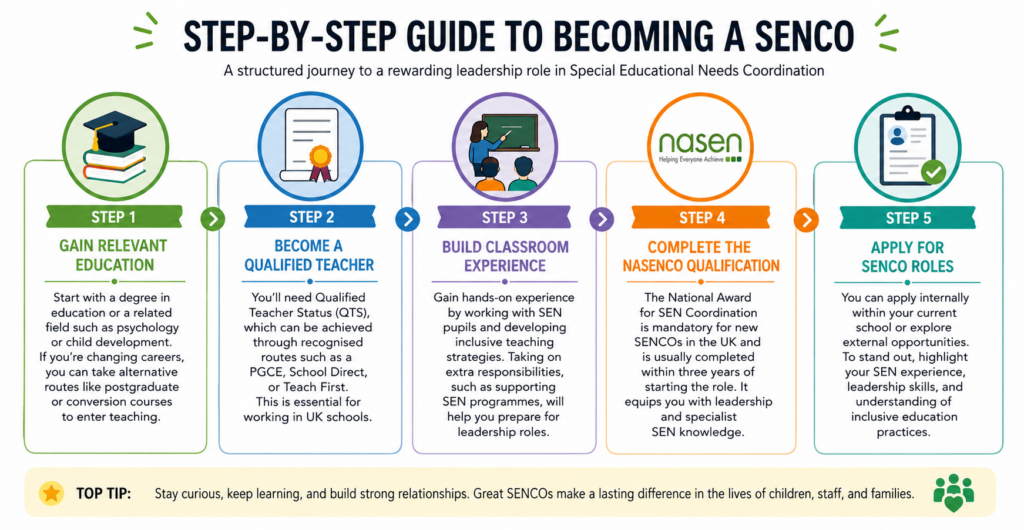
Becoming a SENCO is a structured journey that combines education, teaching experience, and specialised training. Here’s a concise guide to help you get started:

Step 1: Gain Relevant Education

Start with a degree in education or a related field such as psychology or child development. If you’re changing careers, you can take alternative routes like postgraduate or conversion courses to enter teaching.

Step 2: Become a Qualified Teacher

You’ll need Qualified Teacher Status (QTS), which can be achieved through recognised routes such as a PGCE, School Direct, or Teach First. This is essential for working in UK schools.

Step 3: Build Classroom Experience

Gain hands-on experience by working with SEN pupils and developing inclusive teaching strategies. Taking on extra responsibilities, such as supporting SEN programmes, will help you prepare for leadership roles.

Step 4: Complete the NASENCO Qualification

The National Award for SEN Coordination is mandatory for new SENCOs in the UK and is usually completed within three years of starting the role. It equips you with leadership and specialist SEN knowledge.

Step 5: Apply for SENCO Roles

You can apply internally within your current school or explore external opportunities. To stand out, highlight your SEN experience, leadership skills, and understanding of inclusive education practices.

SENCO Training and Courses SENCO Training and Courses

SENCO Training and Courses

Choosing the right SENCO training is essential for building the skills needed for the role while fitting around your schedule.

CPD Courses in Special Educational Needs

CPD courses provide a solid foundation in areas such as inclusive teaching and supporting diverse learners. Although they do not offer formal qualifications, they are widely recognised for professional development and can enhance your CV.

Leadership and Safeguarding Training

SENCOs require strong leadership and a clear understanding of safeguarding. Training in these areas helps develop skills in team management, communication, and ensuring student wellbeing—key aspects of the role.

Online vs In-Person Options

In-person courses offer practical experience and networking, while online learning provides greater convenience and flexibility. Many learners prefer online options as they can study at their own pace.

Flexibility and Accessibility

Modern courses are designed to be flexible and accessible, allowing you to learn anytime, anywhere. This makes it easier to upskill alongside work and progress in your career.

Salary Expectations and Career Progression

Salary Expectations and Career Progression

A career as a SENCO offers both competitive pay and strong opportunities for advancement, particularly within the UK education system.

Average SENCO Salary (UK)

SENCO salaries generally follow the teaching pay scale, with additional allowances:

  • ♦  £28,000 – £35,000 (entry level)
  • ♦  £36,000 – £45,000 (experienced)
  • ♦  £46,000 – £60,000+ (senior/leadership roles)

Many SENCOs also receive a TLR payment, increasing overall earnings.

Factors Affecting Salary

  • ♦  Experience: More experience leads to higher pay and greater responsibilities.
  • ♦  School Type: Secondary schools, academies, and private schools may offer higher salaries.
  • ♦  Location: Areas like London typically offer higher wages due to living costs.

Career Progression

  • ♦  Senior Leadership: Progression to Assistant or Deputy Headteacher roles.
  • ♦  Inclusion Manager: Overseeing whole-school inclusion strategies.
  • ♦  Headteacher Pathway: SENCO experience can lead to becoming a Headteacher.
Challenges of Being a SENCO​

Challenges of Being a SENCO

Being a SENCO is a highly rewarding role, but it also comes with real challenges that are often overlooked.

Workload and Responsibility

SENCOs carry a heavy workload, managing SEND provision, EHCPs, staff support, and compliance with regulations. Balancing meetings, paperwork, and urgent student needs can feel overwhelming, especially in busy schools.

Balancing Administration and Student Support

A major challenge is the balance between admin tasks and working directly with students. While the role involves extensive documentation and coordination, many SENCOs wish they had more time to engage with students and see their progress firsthand.

Emotional Demands

The role can be emotionally demanding. SENCOs support students facing difficulties and work closely with parents who may be worried or frustrated. Handling sensitive conversations and managing expectations requires resilience and emotional strength.

The Rewards That Make It Worthwhile

Despite these challenges, the role is deeply fulfilling.

  • ♦  Making a Difference: Supporting students’ growth and confidence is incredibly rewarding.
  • ♦  Strong Relationships: SENCOs build meaningful connections with students, families, and staff.
  • ♦  Sense of Purpose: Advocating for inclusion and equal opportunities brings lasting professional satisfaction.
Benefits and Rewards of the Role

Benefits and Rewards of the Role

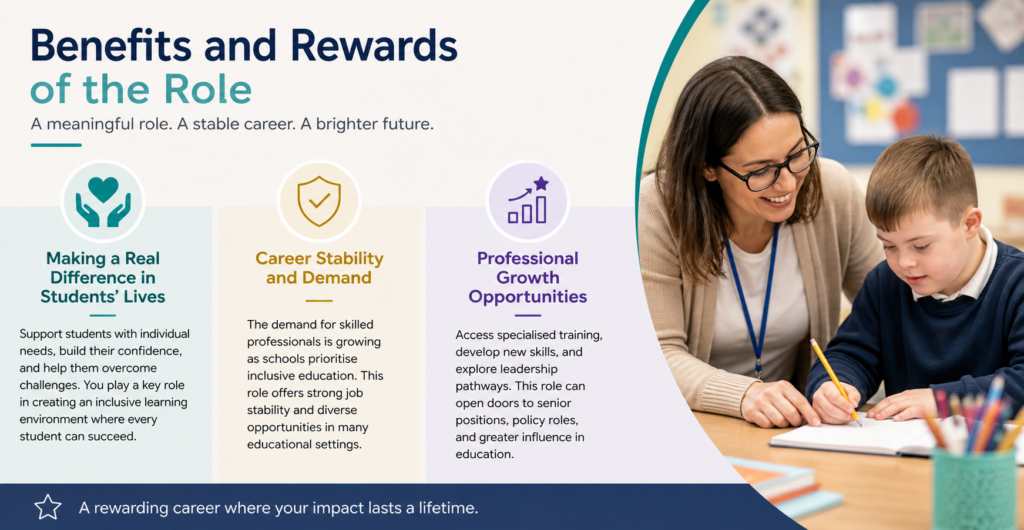
Taking on this role offers far more than just a job title—it provides a meaningful and rewarding career path with long-term value.

Making a Real Difference in Students’ Lives

One of the most fulfilling aspects of the role is the opportunity to positively impact students who need additional support. By identifying individual needs and implementing tailored strategies, you help create an inclusive learning environment where every student has the chance to succeed. Seeing learners grow in confidence, overcome challenges, and achieve their potential can be incredibly rewarding on both a personal and professional level.

Career Stability and Demand

There is a consistent and growing demand for skilled professionals in this field. Schools increasingly recognise the importance of inclusive education, which makes this role both secure and essential. This demand offers strong job stability and a wide range of opportunities across educational settings, making it a reliable long-term career choice.

Professional Growth Opportunities

This role also provides excellent opportunities for continuous development. From specialised training to leadership pathways, you can expand your expertise and progress within the education sector. Many professionals use this position as a stepping stone to senior leadership roles, policy development, or advisory positions, allowing for both career advancement and increased influence in shaping educational practices.

Tips to Stand Out as a Future SENCO​

Tips to Stand Out as a Future SENCO

Standing out as a future SENCO requires a mix of practical experience, current knowledge, and strong people skills. Here are some concise, actionable tips:

Gain Early SEN Experience

Get involved in roles where you can support pupils with special educational needs. This helps you understand real classroom challenges and builds confidence.

Volunteer in SEN Settings

Offer your time to support SEN departments or assist teaching staff. Volunteering shows initiative and strengthens your practical knowledge.

Stay Updated with SEND Legislation

Keep up with the latest policies and guidance from organisations like the Department for Education. Ongoing learning ensures you remain informed and effective.

Develop Strong Communication Skills

Work on clear, empathetic communication with students, parents, and colleagues. This is essential for collaboration and successful support planning.

Future Outlook

Future Outlook: SENCO Role Beyond 2027

The role of a SENCO is expected to grow in importance as education continues to prioritise inclusive and supportive learning environments.

Increased Focus on Inclusion and Mental Health

SENCOs will play a stronger role in promoting inclusion and supporting student wellbeing. Beyond academics, there will be greater involvement in mental health initiatives, working closely with staff and specialists to ensure a holistic approach to student support.

Technology in SEN Support

Technology will become a key part of SEN provision. SENCOs will use tools such as assistive software and personalised learning platforms to enhance accessibility, while also guiding teachers on effective implementation.

Growing Demand Across Schools

Demand for skilled SENCOs will continue to rise as schools recognise the need for dedicated SEN leadership. This will create more career opportunities, including progression into senior roles and wider educational influence.

Overall, the SENCO role beyond 2027 will be more strategic, innovative, and impactful, offering strong career prospects and the chance to make a lasting difference.

Conclusion

Becoming a SENCO in 2026/2027 is a meaningful career choice for individuals who are compassionate, organised, and committed to supporting children with diverse learning needs. It particularly suits those who enjoy leadership, collaboration, and making a real impact within an inclusive school environment. While the journey requires dedication and continuous development, the rewards of helping every child reach their potential are significant. If this path resonates with your values and ambitions, taking the first step—whether through gaining experience or starting relevant training—can set you on a fulfilling and purpose-driven career path.

FAQs — How to Become a SENCO for 2026/2027 – A Complete Guide

1. What is a SENCO?

A SENCO (Special Educational Needs Coordinator) is a qualified teacher responsible for overseeing support for students with special educational needs and disabilities (SEND) within a school.

2. What qualifications do I need to become a SENCO?

You must be a qualified teacher (QTS) and usually need to complete the National Award for SEN Coordination (NASENCO) within three years of starting the role.

3. Can I become a SENCO without being a teacher?

In most schools, SENCOs are required to be qualified teachers. However, some settings may allow experienced support staff with relevant qualifications to take on similar roles.

4. How long does it take to become a SENCO?

It typically takes several years, as you need to gain teaching qualifications, classroom experience, and then complete the SENCO-specific training.

5. What skills are important for a SENCO?

Key skills include communication, leadership, organisation, problem-solving, empathy, and a strong understanding of SEND practices and policies.

Sam Walker

Article by

Sam Walker

Sam Walker is an education specialist and author at One Education, bringing over 4 years of experience in creating practical resources and strategies to support teachers and enhance student learning.

top
Home Courses Search