


Table of Content
Share this Resource


A NEW YEAR means new challenges and new opportunities to overcome them. I don’t believe there is a better way to prepare for this than to consciously develop a unique skill that adds value to you as an individual. With that in mind, I wanted to take a look at what practical skills are and which ones you can benefit the most from.
Why Practical Skills Matter
Practical skills are essential for navigating everyday life, succeeding in the workplace, and becoming more independent. While academic knowledge provides a strong foundation, practical skills enable you to apply what you’ve learned to real-world situations. Developing these abilities can improve your quality of life, increase career opportunities, and help you respond confidently to new challenges.
Increase Employability
Employers value candidates who can communicate effectively, solve problems, work collaboratively, and adapt to changing situations. Practical skills complement technical knowledge and can make you more competitive in the job market.
Improve Financial Independence
Skills such as budgeting, managing expenses, understanding personal finance, and making informed purchasing decisions help you take control of your finances and work towards long-term financial stability.
Build Confidence
Learning and mastering practical skills increases self-confidence. Whether you’re preparing meals, repairing household items, or speaking in public, each new skill helps you become more capable and self-assured.
Solve Everyday Problems
Practical skills allow you to handle common daily challenges efficiently, from organising your time and managing your household to troubleshooting technology and making informed decisions.
Adapt to Technological Changes
Technology continues to evolve rapidly, making digital literacy and the ability to learn new tools increasingly important. Developing practical skills helps you adapt to new technologies and remain effective in both your personal and professional life.
Become More Self-Reliant
Being able to complete everyday tasks independently reduces your reliance on others and promotes greater resilience. From cooking healthy meals to performing basic home maintenance, practical skills empower you to manage life’s responsibilities with confidence.
Developing practical skills is a lifelong investment that benefits your career, finances, relationships, and overall well-being. By continually learning, applying new skills, and working to develop a unique skill, you’ll be better prepared to succeed in an ever-changing world.
Practical Skills 101
To write this blog, I sat down and mapped out how I use the practical skills that I have so that I could figure out which branch of my skill tree to develop next. Now, it’s easy to lose track of the ultimate goal in this process.
So I went back to the drawing board. It seemed like a good idea to read up on what others had to say about practical skills. That’s when I realised “practical skills” has become too vague to mean any particular type of skills.
Some blogs have tons of knowledge on digital skills, while others focus on survivability and handicrafts. I even found one that considered managing laundry as a practical skill, and honestly, I don’t think I have the grounds to dispute it.
After reading enough, I’m under the notion that the practical skill you should develop for the most part depends on where you are in your life and where you want to get to.
Practical Skills Roadmap
| Stage | Skills to Learn |
|---|---|
| Beginner | Cooking, communication, computer literacy |
| Intermediate | Excel, budgeting, driving, public speaking |
| Advanced | Programming, digital marketing, leadership |
Considering the type of personality
Your personality type in the most basic sense is whether you are an introvert or an extrovert. Either one makes certain skills easy to master and others a fumbling necessity. I hope you can see what this means in terms of selecting a practical skill to develop.
To make it simple, I’ll draw a line; if you are an outgoing person who likes to interact with people and actively use his/her body, you’re a physical extrovert. There are tons of skills that I prefer to call physical or raw skills, which are perfect for this personality type.
On the flip side, if you’re someone who enjoys the indoors and seclusion with your thoughts, you are an introvert. If that is the case, knowing soft or digital skills and skills that develop character and nuance seem more appropriate. There are a ton of those as well.
However, to conclude this section, I think I should add that these generalisations are far from what real people are. Extroverts can benefit from soft skills in certain circumstances, while introverts might find themselves needing some physical exertion to keep everything moving. The possibilities are endless, and so are the skills that can be of practical value to you.
Typing out practical skills by discipline
I’ve also found another way to evaluate the practical skills that best suit you. I think you need a combination of soft and raw skills to lead a fruitful and satisfying life, but that’s just me. One thing you can do though is comparing your work life to the time you spend outside of work.
The goal here is to figure out a target skill type based on whether you want it to be work-related or something extracurricular. Thinking in an organised manner is going to make all the difference when it comes to self-development in a demanding world.
22 Practical Skills to have in the Workplaces
Considering the previous discussion, I think it’s better to give you the list of promising practical skills in a couple of neat categories. It’ll make picking the right one easier, I hope.
The categories I consider here are:
- Hard and Soft Skills
- Physical Skills
- People Skills; and
- Creative Skills
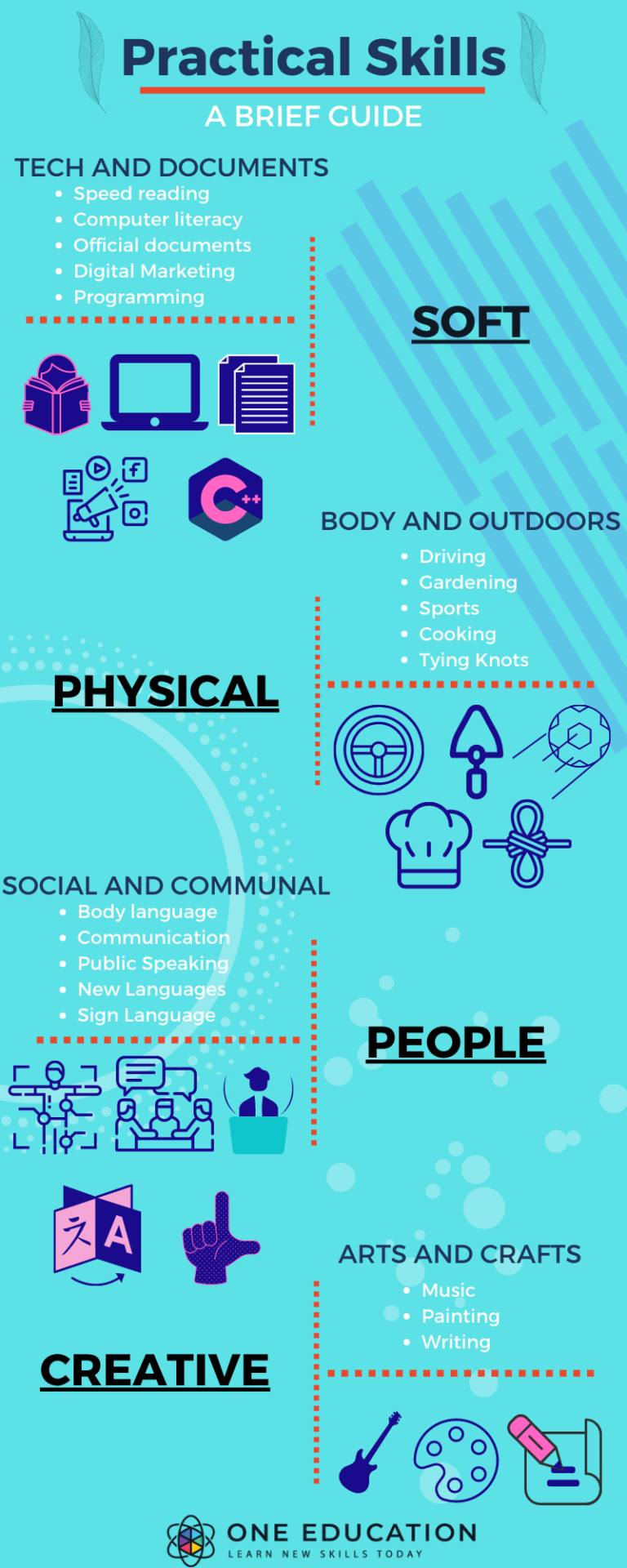
Hard and Soft Skills
Soft skills involve civil society awareness and digital presence in workplaces. And, hard skill covers technical skills for a particular job. If you think you’re better off in the office space than in the outdoors, soft skills can up your playing field significantly. I decided to include some general office work that seems to be overlooked in most discussions.
10 hard and soft skills for professional growth and awareness:
1. Speed Reading

Speed reading is a way to read faster while still understanding the text.
First off, I think you should know the different types of reading. Mainly three types of Speed reading called, Subvocalization, Auditory reading and Visual reading. You can pretty much guess what the latter two mean. I’ll elaborate on Subvocalization. According to Wikipedia, Subvocalization is a form of silent speech. We typically use it when reading; it provides the sound of the word as it is read.
Now whichever type you are you can always benefit from faster reading time and easier comprehension. This is where Speed reading comes to play. It means quite literally what it says. Increasing the speed at which you read.
One of prominent methods is Meta guiding which typically means pointing at the read text with fingers, pens or other indicating objects. The other method is Skimming and Scanning. In it you simply avoid reading a document from top to bottom and instead, scan through for clues of the main idea and only reading a paragraph if the information is relevant to your purpose.
How to increase reading speed? Increase reading speed by reading regularly and focusing on groups of words instead of individual ones. Minimize subvocalization (saying words in your head) and eliminate distractions. Use a pointer or guide to help your eyes move smoothly across the page. Improve comprehension by summarizing what you read as you go.
2. Computer Literacy
Andrew Dunn, Vice President of Marketing at Zentro Internet, emphasizes that digital skills are no longer just practical but necessary for smooth functioning in today’s world. With technology being deeply woven into everyday life, knowing how to use basic tools is crucial. This includes tasks like using an ATM, operating touchpads, and connecting devices like printers or setting up Wi-Fi and Bluetooth.
But the list goes further. You need to understand how to send and receive emails, read digital files like PDFs, and work with programs like PowerPoint. Google tools like Docs, Drive, and Maps have also become essential in daily tasks.
It is also useful to learn simple third-party tools. For example, a PDF editor, file converters, cloud storage, and basic collaboration tools can help you handle documents and complete tasks more easily.
I recommend categorizing these skills. Group them into areas like communication, tools for work, and navigation. Organizing your learning helps you approach digital literacy step-by-step. The more you get familiar with these skills, the better you’ll adapt to the ever-changing tech world around us.
Read now: 21 Basic Computer Skills You Must Have
3. Official Documents
Reading official documents can be helpful in many real-life situations. The goal isn’t to become a legal expert or understand every detail, but to have the ability to read and grasp the main points of official papers.
Every official document follows certain conventions that are generally the same. The key is to get familiar with these conventions so you can easily navigate through the document and draw clear conclusions from it. Understanding how these documents are structured can help you focus on what matters most without getting overwhelmed by the details.
4. Social Media and Digital Marketing
Social media is a part of our everyday lives. It’s everywhere, shaping how we communicate, share, and consume information. If you’re not already active on these platforms, learning to use them well can be a valuable skill. Platforms like Twitter, Snapchat, Instagram, Google, and Facebook are popular for a reason. Knowing how to navigate them can make your life easier and more connected.
If you’re familiar with social media, consider digital marketing. It’s a field with steady growth and many career opportunities. Beyond job prospects, understanding digital marketing helps you spot effective strategies and avoid being swayed by misleading ads. This knowledge can also help you find useful and reliable content quickly, saving you time online.
Social media is essential for everyone, and learning about digital marketing can give you an edge in today’s world. Whether you’re just starting or already engaged, it’s worth exploring further.
5. Taxes
Taxes are payments made to the government. They help pay for things like schools and roads. If you earn money, you need to pay taxes. Filing them can seem hard, but it’s important to do it right.
Learning about taxes helps you save money. The more you know, the easier it is to find ways to pay less. If you don’t understand taxes, it can cause stress. It’s better to learn now than regret it later.
Start by reading simple guides or watching videos. Use tax software to make things easier. Keep your papers and receipts organized all year. The more you do it, the easier it gets.
6. Programming
Learning to program means you can control your devices better. Computer Programming is like learning a new language, just like French or Spanish. It helps you interact with your computer in a way that goes beyond just using apps or websites. It gives you tools to make your computer do exactly what you want.
Being able to program lets you get more out of your computer. It’s not just about typing code; it’s about thinking in new ways. Learning programming improves problem-solving skills and helps you think logically. You start to approach tasks with a clear plan and method.
Start small with simple languages like Python. Focus on easy tasks like making the computer solve math problems or automate simple work. As you practice, you’ll start to see how coding can solve real problems in your daily life. The more you code, the easier it becomes to think like a programmer.
7. Problem-solving Skill
Problem-solving is about finding ways to overcome challenges. It’s not just for programming; it’s a mindset that can apply in any situation. Thinking clearly helps you find solutions to everyday problems. This skill helps you tackle tasks and improve your approach to problems.
Problem-solving saves time and effort. In demanding jobs, being able to solve problems quickly can lead to success. It helps you deal with issues fast, reducing stress. This skill makes you more effective at work and in life. You can move from one challenge to the next with ease.
Break problems down into smaller parts. Look for patterns and simple solutions. Practice thinking through problems step-by-step. Over time, you’ll get better at finding quick, efficient solutions. Focus on clear, simple thinking to solve problems faster.
8. Excel skill
Excel is a powerful tool for managing and organizing data, especially for those who don’t know programming. It allows you to quickly sort and manage large amounts of information. Once you learn how to use it efficiently, Excel can save you a lot of time.
Excel is easy to learn, and there are plenty of tutorials available online. With just a little practice, you can handle most data tasks. It’s a great skill to have in the office because it’s practical and widely used.
Learning Excel doesn’t take much time, and it will make your work more efficient. With its simple tools, you can organize, analyze, and visualize data, all without needing complex software or programming knowledge.
Since we are talking about it, you could check out our Blog on must have excel skills for Professionals for more information.
9. Home Repairs
Making small repairs around the house is something I enjoy. It has two key benefits that I want to share. First, it helps keep my mind sharp. Second, it helps me feel more connected to my home. Doing repairs requires focus and some skill. It also makes me more aware of the little details in my living space.
These repairs can also be a good way to fight homesickness. When you fix something in your home, it feels like you are making the space your own. It helps you become more attached to the place. Taking the time to notice the details of your home can bring a sense of comfort.
10. Videography
Videography is a valuable skill. It plays a key role in many industries, especially marketing and entertainment. Companies use video to attract customers and share stories. Mastering videography helps you advance quickly in these sectors.
Videography is both an art and a career opportunity. You can express yourself creatively in various ways. Whether for passion or profession, it allows you to stand out and bring new ideas. A well-made video captures attention and makes a strong impact.
Success in filmmaking requires experience. Learn technical aspects, such as camera operation and editing. Practice shooting in various settings and styles. The more you hone your craft, the better you’ll get. Videography opens doors to exciting possibilities.
Physical skills
This section is the apparent scenario for extroverts you can imagine. Practical skills that use your body and sensory abilities to get reproducible results. In a rightful sense, you can think of anything being a physical skill. Here I’ve lined up 5 obviously valuable ones.
11. Driving and Reading Maps
Driving skill is as important as breathing in the first world. Not knowing how to drive is going to be a setback throughout your life. It’s one of those skills that you should gain early in life. The best part is you won’t forget it no matter what. That makes it a really good skill to invest in.
Reading a map is a literal lifesaver if you’re a lover of the outdoors. It’s a legitimate practical skill that will not go out of use. Being able to navigate any terrain is an awesome skill if you ask me.
And to add even more benefit to this skill – you don’t have to have a car. When you need to go somewhere, you can simply rent a large car for a big company to your liking and go anywhere.
12. Gardening and Basic Botany
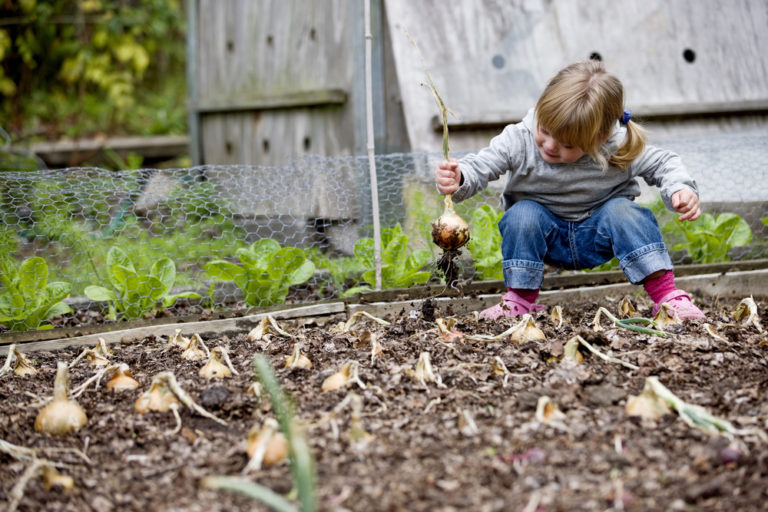
Basic botany is a survival skill for most people. Being able to grow food from the ground is one of the most useful things you could learn.
Gardening is a light hobby that involves some essential knowledge. You need to know exactly what plants work together, how much light or fertilizer each needs, etc. Gardening is a engaging physical activity that requires patience and compassion. I reckon them to be one of the core factors in being human.
13. Sports
Any sort of outdoor sport is good for you. It helps with fitness and motor coordination. Team sports help develop communication and teamwork. Although I think the most important point to playing sports is forming a sense of community. Not to mention the exhilaration of scoring a point or run.
14. Cooking
I’m not even going to explain this one. Every adult should know how to cook. You never know where you might end up. Being able to cook for yourself not only makes you more self reliant, but rather helps develop more familiarity with yourself through your taste buds. I find that to be a very good deal. I started cooking 5 years ago and haven’t gone back ever since.
15. Knots and Sewing
Knots and sewing although may seem very different skills to have, I assure you they are not. Sewing is fundamentally tying knots with smaller ropes (thread). Both help develop eye hand coordination and finger dexterity. Great skill to have when heading out to remote locations where replacing clothes and other articles isn’t as easy.
People skills

16. Communication Skill
If you are like me your idea of good time probably involves being tucked under a blanket, engrossed in a book. As appealing as that may seem, you can’t get by a single day without communicating with fellow beings.
There are certain milestones in life that lie on the other side of being able to properly communicate your thoughts. How your friends perceive you if your boss is going to consider you for the next project, whether you have a good rapport with your neighbours depends largely on your communication skills. It’s more than articulation, really. A lot of it involves understanding the other party.
17. Language skill
Admit it or not, multilingual people do have more fun. It’s an essential skill when you’re touring or working abroad. Now sure, most of us have spent the half of year cooped up. But those of us who know French, German, and a bit of Spanish, had a wider range of movies to watch during this period!
Our world is expanding, and at the same time getting smaller. Being a global citizen in this era entails being fluent in at least a couple languages. And if the learning process seems too daunting to you, don’t worry, we all feel that way initially. However, it is in fact this same practice that will train your brain, making it healthier. The fruit of which you’ll be able to enjoy till old age.
18. Public Speaking
It’s okay to get nervous about giving a best-man speech, or an office presentation; what is not okay is not going prepared. There are those few who savor their time under limelight and dominate the stage. But the rest of us will also have to stand up in front of people and address them, at least at some points of our lives.
So even if it gives you sweaty palms (in fact specially because of that), you’ll benefit a great deal from learning the ways you can hack every time you have to give a speech in public.
19. Body Language
We are such expressive beings, we often give away a lot without saying a word. Which is why it is essential in our culture to be able to pick the cues, interpret what the person in front of you is hinting at. Whether you want to be better at getting a date, or nab the other party while running a negotiation, learning what their body language is saying about the people is going to make you a master of reading others, while masking your own vulnerabilities. Here you’ll find 12 Simple Body Language Tips for Your Next Interview if you are curious enough.
Creative skills

20. Instruments and Music
Learning an instrument may not seem all that practical at first. That notion is clearly out of trend. It’s a scientific truth now that musical knowledge helps to develop cognition. In which case learning an instrument is an interesting and easy way to learn and appreciate the nuances of the art form. It can stimulate unconventional regions of the brain related to mathematical and logical reasoning.
The instrument you choose doesn’t matter all that much. Although some of it depends on the type of sounds you like. I personally love the guitar as an instrument. Learning to play the keyboard can be easier than the violin. Learning to play drums will give you a very different perspective from playing the bagpipe. Whichever you choose will act as your gateway to exploring the musical world.
21. Painting and Arts
Being involved in Painting or other visual artforms has similar benefits to learning an instrument. Painting places a lot of emphasis on how you perceive and coordinate your hands to produce an accurate impression. Painting has been found to help manage certain types of personality disorders and other mental complications. To see just how diverse and varied this niche is, it’s worth browsing paintings online. There will always be demand for these kinds of creative skills, so it doesn’t just have to be about self-expression.
22. Writing
Writing is by far the most basic form of self expression. Even this blog that I’m writing is a way for me to express myself. Writing is incredible because it entails reading by a rule of thumb. The more you read, the more you get better at writing. But that will only work if you write a decent amount too.
Writing gives you the opportunity to put your ideas and thoughts on display. Which means you’ll be more keen on forming concise and factually accurate arguments. Please don’t assume writing only means novels and biographies. You can choose to write anything, from reports to blog and even quotes. Feel free to try each one out. Otherwise, you can always turn to the trust my paper service for help and get advice from the best writers in the USA.
23. Budgeting
Budgeting is one of the most important life skills you can develop. It helps you understand where your money goes, avoid unnecessary debt, and achieve financial goals more quickly. Whether you’re saving for a holiday, buying a home, or simply trying to live within your means, a good budget provides a clear plan for managing your income and expenses.
24. Time Management
Time is one of your most valuable resources, and learning how to manage it effectively can improve every aspect of your life. Good time management helps you prioritise important tasks, reduce stress, and maintain a healthy balance between work, study, and personal life. Small habits, such as planning your day and avoiding procrastination, can significantly increase productivity.
25. Critical Thinking
Critical thinking is the ability to analyse information objectively and make logical, informed decisions. It helps you evaluate different viewpoints, identify misinformation, solve problems, and make better choices in both your personal and professional life. Developing this skill enables you to approach challenges with confidence rather than relying on assumptions.
26. Emotional Intelligence
Emotional intelligence is the ability to recognise, understand, and manage your own emotions while also understanding the emotions of others. It improves communication, strengthens relationships, reduces conflict, and makes you a more effective leader and team member. People with strong emotional intelligence often handle stressful situations more calmly and build stronger personal and professional connections.
27. Negotiation
Negotiation is a valuable skill that extends far beyond business deals. You negotiate when discussing salaries, purchasing a car, resolving disagreements, or even deciding household responsibilities. Effective negotiators communicate clearly, listen carefully, and seek solutions that benefit everyone involved rather than simply trying to “win.”
28. First Aid
Knowing basic first aid can make a significant difference during an emergency. Skills such as treating burns, stopping bleeding, performing CPR, or responding to choking can help protect lives while waiting for professional medical assistance. Every adult should have a basic understanding of first aid because emergencies can happen anywhere and at any time.
29. Financial Literacy
Financial literacy involves understanding how money works, including saving, investing, taxes, loans, insurance, and retirement planning. It helps you make informed financial decisions, avoid costly mistakes, and build long-term financial security. Improving your financial knowledge is one of the best investments you can make in your future.
30. Networking
Networking is the process of building and maintaining meaningful professional and personal relationships. Strong networks can lead to new career opportunities, business partnerships, mentorship, and valuable advice. Successful networking is about creating genuine relationships rather than simply collecting contacts.
31. Research Skills
Being able to find reliable information is more important than ever. Good research skills help you identify trustworthy sources, compare different viewpoints, verify facts, and make informed decisions. Whether you’re studying, solving a problem at work, or making a major purchase, effective research saves time and improves outcomes.
32. Decision Making
Every day involves making decisions, from small routine choices to major life-changing ones. Strong decision-making skills help you evaluate options, weigh risks and benefits, and choose the best course of action. Learning to make thoughtful decisions reduces uncertainty and increases confidence.
33. Conflict Resolution
Disagreements are a normal part of life, but knowing how to resolve conflict constructively can strengthen relationships rather than damage them. Effective conflict resolution involves listening actively, communicating respectfully, understanding different perspectives, and working together to find fair solutions.
34. Stress Management
Stress is unavoidable, but learning how to manage it effectively is essential for maintaining good physical and mental health. Healthy stress management techniques—such as regular exercise, adequate sleep, mindfulness, and effective time management—can improve resilience and help you remain productive during challenging situations.
35. AI Productivity
Artificial intelligence is becoming an essential tool in education, business, and everyday life. Learning how to use AI responsibly can help you write more effectively, analyse information, automate repetitive tasks, generate ideas, and improve productivity. Rather than replacing human skills, AI works best when used to enhance creativity, decision-making, and problem-solving. Understanding how to use AI efficiently is quickly becoming one of the most valuable practical skills in the modern workplace.
Best Practical Skills for Students
Students benefit most from practical skills that improve learning, organisation, and future career prospects. Developing these abilities early creates a strong foundation for academic success and life after education.
✓ Time management: Balance studying, assignments, extracurricular activities, and personal life.
✓ Study and research skills: Find reliable information, evaluate sources, and complete assignments efficiently.
✓ Communication skills: Improve presentations, participate in group projects, and build relationships with teachers and classmates.
✓ Financial literacy: Manage spending, create a budget, and develop healthy money habits from an early age.
✓ Computer literacy: Learn Microsoft Office, cloud collaboration tools, and basic digital troubleshooting.
✓ Critical thinking: Analyse information objectively and solve problems effectively.
✓ AI productivity: Use AI responsibly to improve research, writing, organisation, and learning.
Developing these skills during your education not only improves academic performance but also prepares you for university, employment, and everyday life.
Best Skills for Young Professionals
Starting a career often requires more than technical knowledge. Practical workplace skills help professionals perform effectively, adapt to change, and progress in their careers.
✓ Communication and presentation skills: Build confidence in meetings, presentations, and client interactions.
✓ Networking: Develop valuable professional relationships that can lead to career opportunities and mentorship.
✓ Time management: Prioritise tasks, meet deadlines, and increase workplace productivity.
✓ Leadership: Prepare for management roles by learning to motivate and guide others.
✓ Negotiation: Improve salary discussions, contracts, and workplace communication.
✓ Financial literacy: Manage income, savings, investments, and retirement planning wisely.
✓ AI productivity: Use AI tools to automate repetitive tasks and improve efficiency.
Developing these workplace skills early in your career can accelerate professional growth and improve long-term career prospects.
Best Skills for Parents
Parents rely on practical skills every day to manage their households, support their families, and prepare their children for the future.
✓ Budgeting and financial planning: Manage household expenses and achieve long-term financial goals.
✓ Cooking and meal planning: Prepare nutritious, affordable meals for the whole family.
✓ First aid: Respond confidently to accidents and medical emergencies.
✓ Conflict resolution: Handle disagreements calmly while encouraging healthy family communication.
✓ Time management: Balance work, parenting, household responsibilities, and personal time.
✓ Stress management: Maintain emotional resilience and support overall family well-being.
✓ Communication skills: Build stronger relationships with children, partners, teachers, and healthcare professionals.
These practical skills help parents create a more organised, supportive, and positive home environment for the entire family.
Best Skills for Retirees
Retirement provides an opportunity to learn new skills, remain active, and enjoy greater independence. Developing practical skills can improve quality of life while supporting physical, mental, and financial well-being.
✓ Digital literacy: Confidently use smartphones, computers, online banking, and video calls.
✓ Financial literacy: Manage retirement income, investments, and long-term financial security.
✓ Cooking and nutrition: Prepare healthy meals that support overall well-being.
✓ Gardening or DIY skills: Stay active while enjoying rewarding hobbies and home improvement projects.
✓ First aid: Respond effectively to minor injuries and emergencies.
✓ Stress management and mindfulness: Support emotional well-being and maintain a positive outlook.
✓ Lifelong learning and AI productivity: Continue learning, embrace modern technology, and simplify everyday tasks.
Learning practical skills during retirement encourages independence, keeps the mind active, and helps create a healthier and more fulfilling lifestyle.
Common Mistakes People Make When Learning Practical Skills
Learning practical skills is a long-term investment, but many people struggle because they adopt habits that slow their progress. Recognising these common mistakes can help you learn more effectively and stay motivated throughout the process.
Learning Too Many Skills at Once
Trying to master several new skills simultaneously often leads to overwhelm and slower progress. It’s usually more effective to focus on one or two skills at a time before moving on to the next.
Never Practising
Reading books or watching videos is helpful, but practical skills are developed through consistent practice. The more you apply what you’ve learned, the faster your confidence and ability will grow.
Watching Tutorials Only
Many people spend hours watching tutorials without ever putting the knowledge into action. Tutorials should support learning, not replace hands-on experience. Real improvement comes from doing, making mistakes, and refining your approach.
Ignoring the Fundamentals
It’s tempting to jump straight into advanced techniques, but skipping the basics often creates gaps in your knowledge. Building a strong foundation makes it much easier to learn more complex skills later.
Giving Up Too Early
Every new skill comes with challenges and a learning curve. Progress may feel slow at first, but persistence and regular practice lead to noticeable improvement over time. Consistency is more important than perfection.
Comparing Yourself to Experts
It’s easy to become discouraged when comparing yourself to experienced professionals. Remember that every expert was once a beginner. Focus on your own progress and celebrate small improvements instead of measuring yourself against others.
Avoiding these common mistakes will help you learn more efficiently, stay motivated, and develop practical skills that provide lasting benefits throughout your personal and professional life.
What next?
Wow! Quite a read, eh? I’ve tried to make a list as comprehensive as possible. You’re free to pick and choose and even add more skills that I missed. Once you have made your choice, it’s time to find relevant material to study. There are tons of online courses (free or paid whatever, as long as you get accurate content.) you can try out on almost anything. If you get a certificate, that’s great. If not, don’t sweat it. As long as you learn properly, your skills will do the talking for you.
Ending Notes
The most common phenomenon I have seen is that people who specialise in a specific trade suffer from a narrow field of expertise. Now I’m not one to claim specialisation is bad in general. However, it’s a better decision to have ideas on versatile topics and tasks.
It helps you make informed decisions and assess situations based on proper consideration. For me, the best way is to gain practical skills that complement your day to day life and make you a versatile person. Until next time, happy learning.
Related Articles
 Oct, 09, 2026

Get a FREE Course
- Learn useful skills online free
- Get CPD accredited certificate
- Add it to your CV today!