How to Train as a Teaching Assistant While Working

November 26, 2026 | By Michael Hansen | 23 minutes | 396 Readers

You can train for a teaching assistant role without leaving your job. Compare online courses, part-time qualifications and apprenticeships, and plan study around your working week.

You can start training for a teaching assistant role without leaving your current job. The important part is choosing a course that fits your working hours and knowing when school-based experience will be needed.

Teaching assistant training while working can involve self-paced online study, part-time qualifications or an apprenticeship if you move into paid school employment. For an early introduction to classroom support, One Education’s Teaching Assistant Complete Course offers online study without fixed lesson times. It develops theoretical knowledge rather than awarding a regulated qualification.

Can You Train as a Teaching Assistant While Working Full-Time?

Yes. If you work full-time, you can study online in the evenings or at weekends, or choose a part-time programme that fits your shifts. You do not need to resign just to begin preparing.

The distinction is between studying for a future school role and training while already employed by a school. The first can often fit around another job; the second may involve scheduled workplace training.

The National Careers Service guidance on becoming a teaching assistant identifies college courses, apprenticeships, volunteering and direct applications as possible routes. For the wider career pathway, see our guide to becoming a teaching assistant in the UK.

Which Teaching Assistant Training Route Fits Around Your Job?

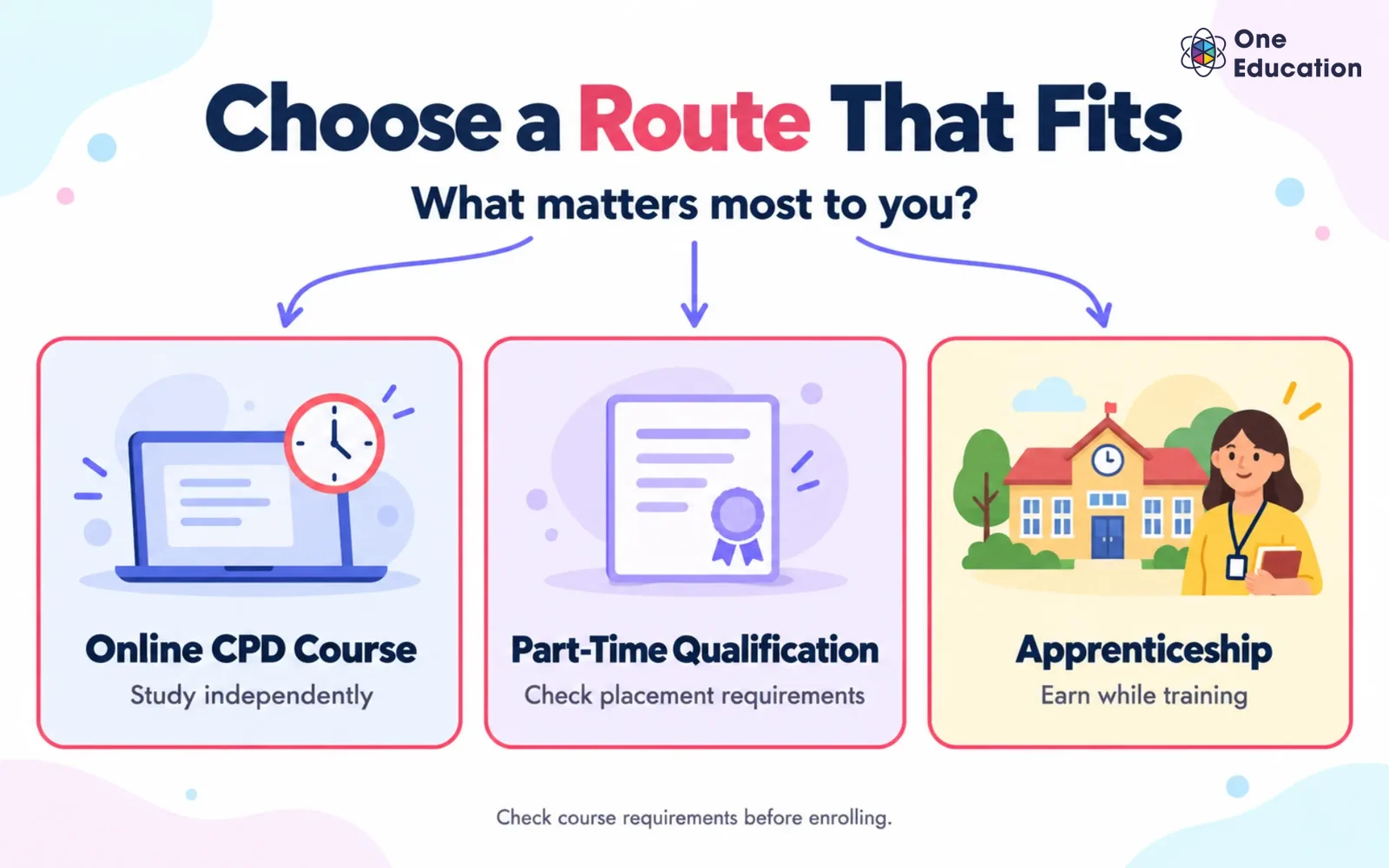
Decision diagram showing online CPD courses, part-time qualifications and teaching assistant apprenticeships as different training routes.

Self-Paced Online Courses

Online courses are often the easiest starting point if your hours change from week to week. You may be able to work through video lessons and assessments when you have time, without attending scheduled classes.

Check what the course awards. A CPD certificate or endorsed course can demonstrate professional development, but it is not automatically a regulated teaching assistant qualification. If formal qualifications are a concern, the options for becoming a teaching assistant without qualifications are covered separately.

Part-Time College Courses and Regulated Qualifications

Some part-time or distance-learning courses lead to regulated Level 2 or Level 3 qualifications. They may combine online work with assessments carried out in a school. That can be difficult to arrange if you cannot take time off during school hours.

Ask whether you need a placement, how many hours of school access are required and who assesses your work. You can check qualification status on the Register of Regulated Qualifications for England and Northern Ireland. Wales and Scotland use separate systems.

Teaching Assistant Apprenticeships

An apprenticeship lets you earn while undertaking structured training in a relevant school role. In England, the Level 3 teaching assistant apprenticeship standard has a typical training duration of around 18 months, with assessment arrangements in addition.

This is different from studying after work in an unrelated job: you would need to secure suitable employment as an apprentice.

Training routeFlexibilityPractical requirements
Self-paced online CPD courseUsually highMay be completed entirely online
Part-time regulated qualificationDepends on providerMay require a school placement or workplace assessment
Teaching assistant apprenticeshipStructured around paid employmentWorkplace training is essential

Loading…

TA training routes at a glance
Self-paced online CPD course
Flexibility
Usually high
Placement
Often none
Good for
Keeping your current job
Part-time regulated qualification
Flexibility
Depends on provider
Placement
May be required
Good for
A formal Level 2 or 3
Teaching assistant apprenticeship
Flexibility
Set by your employer
Placement
Workplace training essential
Good for
Earning while you train

What Should You Check Before Enrolling?

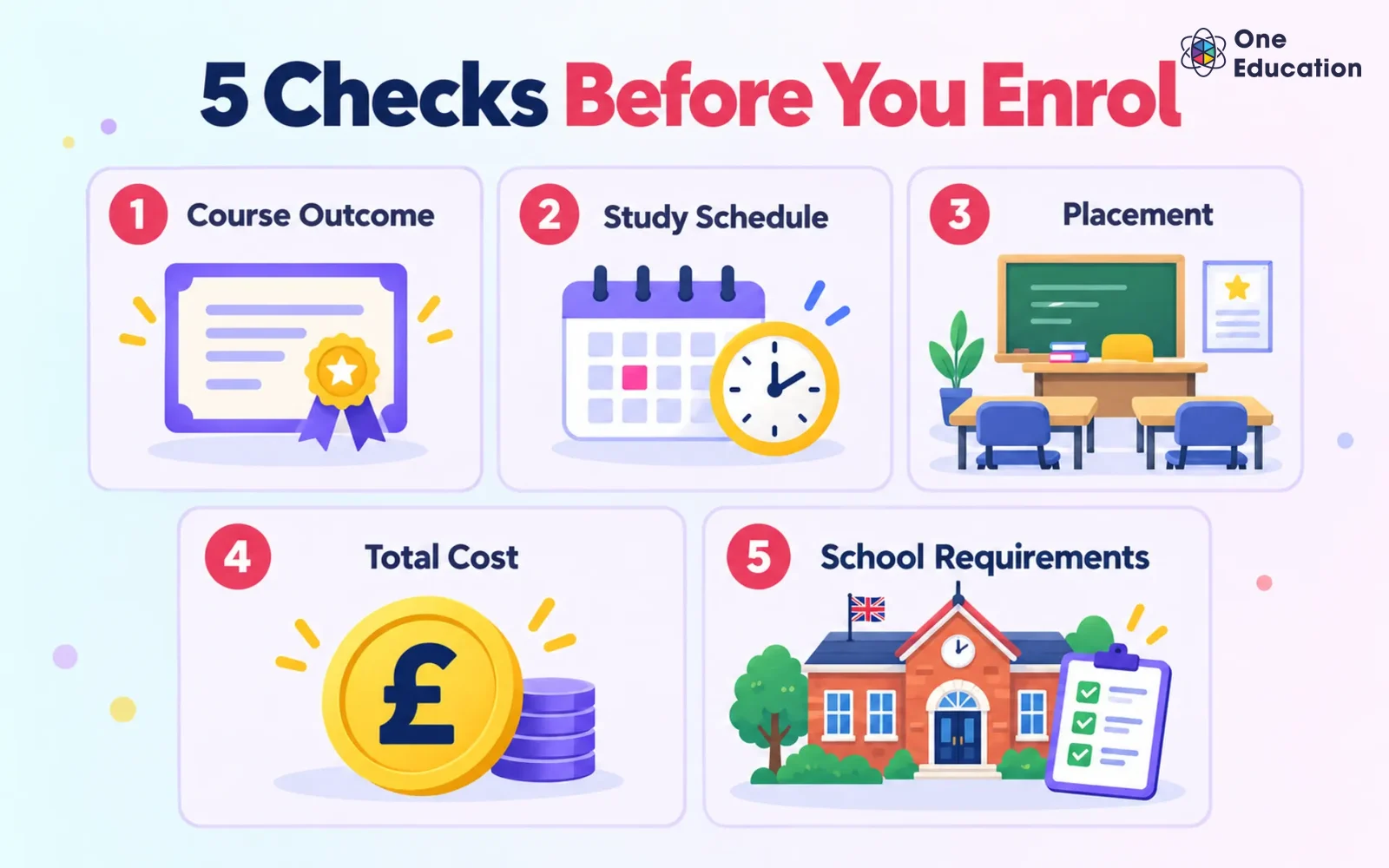
Before choosing a course, confirm five things:

  1. Outcome: Does it offer CPD certification, an endorsed certificate or a regulated qualification?
  2. Timetable: Can you study at your own pace, or must you attend at set times?
  3. Placement: Will you need classroom access or observed practice?
  4. Cost: Are assessments and certificates included in the price?
  5. Job relevance: Does the training match the requirements of schools you may apply to?
Five-point teaching assistant course checklist covering certification, timetable, placement, cost and school requirements.

Some employed adults in England may qualify for publicly funded provision, depending on the course, personal circumstances and regional rules. Check the relevant Adult Skills Fund guidance rather than assuming a course is free.

School expectations also vary. The main considerations are covered in teaching assistant entry requirements in the UK.

93% Discount Offer

Start Your Teaching Assistant Training Around Your Job

For working adults who want to learn classroom support at their own pace, without fixed lesson times or leaving their current role.

  • Around 12 hours of self-paced online study
  • Typically completed within 1 to 3 months
  • Study in the evenings or at weekends

Start Your Teaching Assistant Training Around Your Job
93% OFF£29.00£425.00
Enrol Now for £29.00

How to Fit Teaching Assistant Training Around Full-Time Work

Set a Weekly Study Plan You Can Keep

Start with your actual availability, not the hours you wish you had. Two short sessions during the week and one longer weekend session may be more sustainable than trying to study every night.

DayStudy activityTime
TuesdayComplete an online lesson45 minutes
ThursdayReview notes45 minutes
SaturdayWork through activities90 minutes
SundayRevise and plan ahead30 minutes
Weekly total3 hours 30 minutes
Working adult organising a weekly teaching assistant study timetable at home using a notebook and laptop.

Shift workers or parents with changing commitments may prefer a weekly target rather than fixed days.

Make Progress Without Overloading Your Week

Focus on one subject at a time, such as child development, communication, safeguarding or supporting pupils with special educational needs (SEN). Leave room for assignment deadlines if your programme has them, and keep some evenings free.

If your interests lie in early years classrooms, the EYFS and Phonics Teaching Diploma provides a separate self-paced option covering early development and phonics. It offers CPD certification, not a regulated teaching qualification.

How Can You Gain Classroom Experience While Working?

Trainee teaching assistant discussing classroom activities with an experienced member of staff in a UK primary school.

Online study can develop your knowledge, but time in a school helps you see what classroom support involves. Contact local schools about volunteering and ask what opportunities they can accommodate. Most classroom activities take place during school hours, so you may need to arrange annual leave or adjust your working pattern.

Crucially, volunteering is not always a substitute for a course placement. If a qualification requires assessed workplace practice, confirm its evidence and supervision requirements before enrolling.

Schools also have safeguarding responsibilities. In England, the supervision exemption for relevant regulated activity with children was removed on 1 September 2026. Volunteers undertaking regulated activity need an enhanced DBS check with children’s barred list information, as explained in the Department for Education’s guidance on volunteer checks. The school can advise which checks apply to your proposed role.

What Should You Do When You’re Ready to Apply?

Look at teaching assistant vacancies before finishing your training. This helps you see which qualifications, experience and personal qualities local schools request.

Think about transferable skills from your existing job: clear communication, patience, organisation and teamwork all matter in classroom support. When preparing an application, show examples rather than simply listing course titles. The separate guide to writing a teaching assistant CV with no experience covers this in detail.

Also check contracted hours and actual pay before changing jobs. Many teaching assistant posts are term-time roles, and an advertised full-time-equivalent salary may not match the amount paid annually.

A Flexible Way to Take Your Next Step

You can prepare for teaching assistant work without making an immediate change to your employment. Start by checking which qualification or experience your preferred roles require, then choose a study routine you can sustain.

Considering Self-Paced Training?

One Education’s Teaching Assistant Complete Course has no fixed teaching schedule and covers theoretical classroom knowledge. It is Quality Licence Scheme-endorsed, with CPD certification options, but is not an Ofqual-regulated qualification or a guarantee of employment.

View the Course

Frequently Asked Questions

It depends on the route and your available study hours. Short online courses may take less time than regulated qualifications, particularly where assessed school practice is required. An apprenticeship follows a longer, structured programme.

Yes, if the provider offers self-paced online study. College courses may have timetabled sessions, so check attendance requirements before enrolling.

Some knowledge-based online courses require no placement. Regulated vocational qualifications may require evidence of practical work in a school. Check the specific programme rather than relying on its online label.

You can earn through a paid apprenticeship in a suitable school role. Alternatively, you can keep earning in your current job while completing independent study outside working hours.

It may help you develop relevant knowledge and discuss your interests in an application. Employment depends on the school’s requirements, your experience and your suitability; completing a CPD course does not guarantee a job.

top
Home Courses Search

Chat with us