
What Are Health and Social Care Standards?

January 28, 2025 | 5 minutes | 2179 Readers

Health and social care standards help people live safely and with dignity. Clear rules guide care providers to give good, fair, and safe care. These standards protect people who need help. Knowing the standards helps care providers give better support. What Are Guidelines in Health and Social Care? Guidelines in health and social care provide helpful advice. They help care providers meet care standards and deliver good care. Standards set goals, while guidelines show how to meet them. They offer

Health and Social Care Standards

Health and social care standards help people live safely and with dignity. Clear rules guide care providers to give good, fair, and safe care. These standards protect people who need help. Knowing the standards helps care providers give better support.

What Are Guidelines in Health and Social Care?

Guidelines in health and social care provide helpful advice. They help care providers meet care standards and deliver good care. Standards set goals, while guidelines show how to meet them. They offer clear steps to follow for consistent care.

Two common guidelines are NICE Guidelines and Infection Prevention Guidelines. NICE Guidelines focus on evidence-based care, like mental health and medication. Following these guidelines is especially important when choosing the best EHR for mental health private practice, as they ensure compliance with industry standards.

Infection Prevention Guidelines help reduce infections by focusing on hygiene. Meeting care standards through these guidelines helps keep care up to date and effective.

What Are the 5 Values of Health and Social Care?

Health and social care values guide how care is given. These values ensure care is fair, respectful, and effective. They create a positive, safe environment for everyone. Following these values helps meet the needs of people in care.
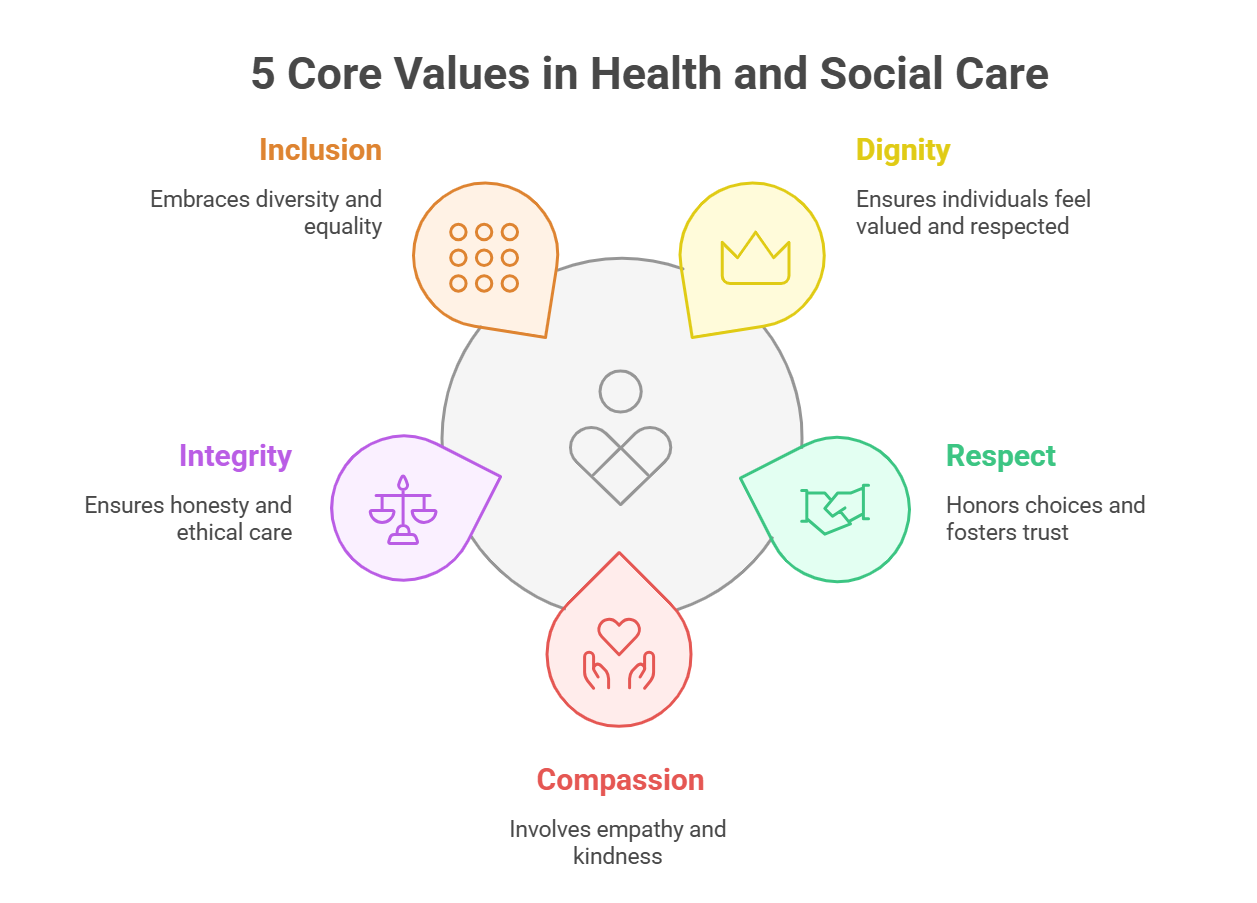
What Are the 5 Values of Health and Social Care_ - visual selection (1)

Dignity

Dignity means treating people with respect. It helps them feel important. Care providers should respect privacy and support independence. Everyone’s uniqueness should be recognized.

Respect

Respect means honoring people’s choices and beliefs. Care should be fair and equal. Providers should listen and involve people in care decisions. Respect builds trust and teamwork.

Compassion

Compassion means being kind and caring. It’s about understanding people’s needs. Compassion helps with both physical and emotional care.

Integrity

Integrity means being honest and following good moral values. Care should be clear and ethical. Providers should act in people’s best interests and keep their information private.

Inclusion

Inclusion means accepting all people. Everyone should get the care they need. This value makes sure everyone feels included and able to participate in care decisions.


Level 3 Diploma in Health and Social Care

Get certified in Health and Social Care Level 3 with our CPD-accredited course. Build your career in this rewarding sector today!

Importance of Adopting Standards in Care

Adopting these standards has many benefits. They help improve the quality of care. They create consistency in how care is delivered.

For individuals receiving care, standards offer reassurance. They ensure their rights are respected. They protect them from neglect or harm.

For providers, standards help maintain trust. They demonstrate accountability and professionalism. This improves relationships between care providers and recipients.

Conclusion

Health and social care standards are essential. They ensure individuals receive care that is safe, respectful, and person-centered. These standards benefit everyone. They protect individuals receiving care. They also help providers maintain trust and accountability.

You can explore the detailed course content and enrol in Health and Social Care Level 3 to understand how to meet care standards and follow guidelines for delivering quality care.

FAQ

Who Sets the Health and Social Care Standards?

Health and social care standards are set by national organizations and governments. Examples include NICE guidelines in England and the Health and Social Care Standards in Scotland.

What Are the Key Values of Health and Social Care?

The key values include dignity, respect, compassion, integrity, and inclusion. These values ensure that individuals are treated with care, kindness, and fairness.

How Do Health and Social Care Standards Benefit Service Users?

These standards ensure service users receive high-quality care. They promote safety, respect, and the well-being of individuals in care.

What Happens if a Care Provider Does Not Meet the Standards?

Care providers who fail to meet standards may face penalties, legal action, or even lose their operating license. Regular inspections help maintain compliance.

How Do Care Providers Ensure They Follow Health and Social Care Standards?

Care providers follow guidelines and undergo regular inspections. They must comply with regulations set by governing bodies to maintain high-quality, safe

Are Health and Social Care Standards the Same Everywhere?

Health and social care standards vary by country or region. However, they all aim to ensure safety, respect, and quality care for service users.

Can Health and Social Care Standards Be Changed?

Yes, health and social care standards can evolve. They are updated to reflect new research, improved practices, and changing societal needs.

josh ashton

Article by

Josh Ashton

Josh is an education specialist and author at One Education, bringing over 4 years of experience in creating practical resources and strategies to support teachers and enhance student learning.

top

Hear What Our Learners Say About Us

Home Courses Search