Career Change at 40 in the UK: Best Jobs, Tips, and Retraining Options

May 23, 2026 | 19 minutes | 292 Readers

Considering a career change at 40 in the UK? Discover rewarding job options, practical retraining paths, and expert tips to build a successful new career with confidence and long-term stability.

Many people in their 40s find themselves feeling stuck, burned out, underpaid, or simply ready for something more meaningful in their professional lives. In the UK, career changes later in life are becoming increasingly common as remote work opportunities, flexible online learning, rising living costs, and changing job markets encourage people to rethink their long-term career paths. Rather than staying in unfulfilling roles, more adults are exploring careers that offer better income, flexibility, and work-life balance.

Despite this growing trend, changing careers at 40 can still feel overwhelming. Many people ask themselves questions such as “Am I too old?”, “Can I retrain at 40?”, or “Will employers hire me?”. While these concerns are understandable, the reality is that age is often an advantage rather than a limitation. Years of work experience help individuals develop transferable skills such as communication, leadership, problem-solving, teamwork, and professionalism — qualities that employers highly value across many industries.

Changing careers at 40 is no longer viewed as a last resort. For many people in the UK, it has become a smart and practical decision for building a more stable, flexible, and rewarding future. With access to affordable retraining options, professional courses, and growing demand in sectors such as healthcare, technology, education, and remote services, starting a new career in your 40s is more achievable than ever before.

Is 40 Too Old to Change Careers in the UK?

No, 40 is not too old to change careers in the UK. In fact, midlife career changes are becoming increasingly common as more people seek better work-life balance, higher job satisfaction, and improved career opportunities.

Under the Equality Act 2010, age discrimination in the UK workplace is illegal, meaning employers cannot reject candidates simply because of their age. Many organisations now value qualities that experienced professionals often bring, such as communication skills, reliability, leadership, problem-solving abilities, and emotional intelligence.

Additionally, many UK industries currently face skills shortages, creating strong demand for mature workers willing to retrain or switch careers. Sectors such as healthcare, education, IT, digital marketing, and social care are actively welcoming professionals with transferable skills and life experience.

Retraining has also become easier than ever due to online learning platforms, flexible courses, and professional certifications that can be completed remotely. The rise of hybrid and remote working has further expanded opportunities for career changers in their 40s.

One major advantage of changing careers later in life is clarity. People in their 40s usually have a better understanding of their strengths, preferred lifestyle, and long-term goals. This often leads to more confident and well-informed career decisions compared to earlier stages of life.

Rather than being a disadvantage, age and experience can become valuable assets when pursuing a new career path.

Signs It Might Be Time for a Career Change

Signs It Might Be Time for a Career Change

Many people around the age of 40 begin reassessing their career goals and personal priorities. Changes in health, family responsibilities, happiness, purpose, and financial stability often lead professionals to question whether their current job still suits their lifestyle and future plans.

Here are some common signs that it may be time for a career change.

You Constantly Dread Mondays

Feeling stressed or unhappy about work every week may indicate that your current role no longer motivates or fulfils you. Long-term dissatisfaction can also affect your mental wellbeing and personal life.

Your Salary Has Stagnated

If your income has stopped growing despite years of experience and hard work, it may suggest limited career progression. Switching careers can create opportunities for better pay and long-term financial security.

You Feel Mentally Exhausted

Constant stress, burnout, and emotional fatigue are important warning signs. Many people in midlife begin prioritising their mental and physical health over workplace pressure.

Your Industry Feels Unstable

Economic uncertainty, automation, and industry changes can make some careers feel less secure. Retraining for a more stable and future-focused profession may offer greater confidence and security.

You Want More Flexibility

Many professionals now value flexible schedules and remote working opportunities. If your job makes it difficult to maintain a healthy lifestyle or spend time with family, a career change may improve your work-life balance.

You Crave More Meaningful Work

As priorities change, many people look for careers that feel more rewarding and purposeful. Meaningful work can improve motivation, confidence, and overall job satisfaction.

You Want a Better Work-Life Balance

A demanding career can leave little time for health, relationships, and personal interests. Around 40, many people start focusing more on balance, wellbeing, and quality of life.

Changing careers at 40 is not about starting over completely. It is often about finding a role that better reflects your experience, values, and future goals.

Best Careers to Start at 40 in the UK

Best Careers to Start at 40 in the UK

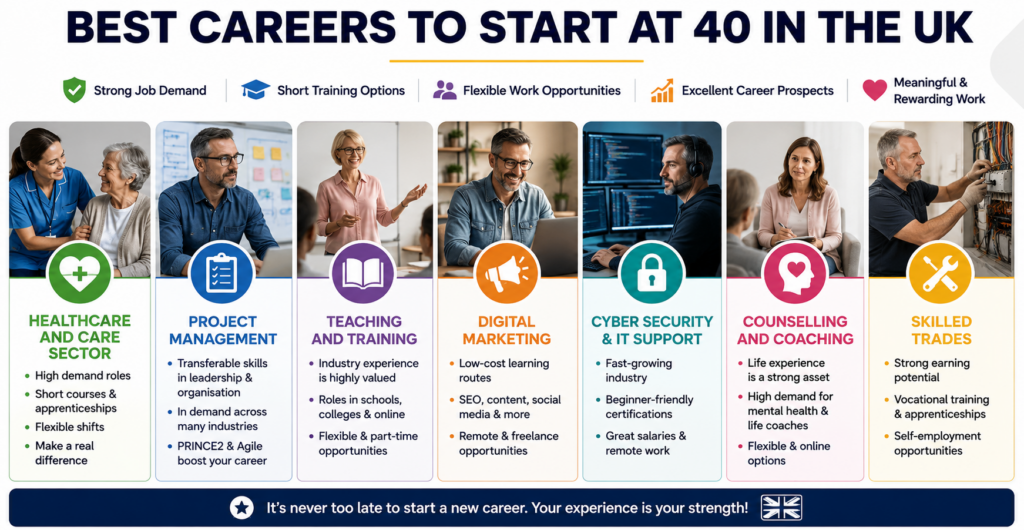
Starting a new career at 40 in the UK is more achievable than ever, with many industries actively welcoming mature workers who bring valuable life and professional experience. Sectors such as healthcare, project management, digital marketing, cyber security, teaching, counselling, and skilled trades offer strong job demand, flexible learning routes, and excellent long-term career prospects. Many of these careers also provide remote working opportunities, self-employment potential, and fast-entry training options, making them ideal for individuals seeking stability, better work-life balance, or a more meaningful profession later in life.

Healthcare and Care Sector

The healthcare and care sector is one of the best career options for people over 40 in the UK. Roles such as Healthcare Assistant, Support Worker, Mental Health Support Worker, and Adult Care Worker are in high demand and often require only short training courses or apprenticeships.

This sector offers strong job security, flexible shifts, and meaningful work where you can make a real difference in people’s lives.

Project Management

Project management is ideal for career changers because it uses transferable skills like leadership, communication, and organisation gained from previous jobs. Project managers are needed across industries including IT, healthcare, construction, and finance.

Qualifications such as PRINCE2 and Agile training can help you enter the field quickly and improve career prospects.

Teaching and Training

Many people over 40 succeed in teaching and training because industry experience is highly valued. Popular roles include Teaching Assistant, Functional Skills Tutor, Online Tutor, and Corporate Trainer.

This career path offers flexible working opportunities, including remote teaching and part-time roles.

Digital Marketing

Digital marketing is a popular career choice due to its flexibility and low-cost learning routes. Key areas include SEO, content writing, social media management, and email marketing.

Many roles can be done remotely or on a freelance basis, making it ideal for people seeking work-life balance or self-employment opportunities.

Cyber Security and IT Support

Cyber security and IT support are growing rapidly in the UK because of the increasing demand for digital skills. Entry-level certifications such as CompTIA, Google IT Certificates, and cyber security bootcamps make the industry accessible for beginners.

The sector offers excellent salary progression, remote work opportunities, and long-term job stability.

Counselling and Coaching

Counselling and coaching are excellent careers for mature workers because life experience becomes a major advantage. Growing mental health awareness and demand for career coaching have created strong opportunities in the UK.

Many professionals choose flexible self-employment or online coaching work after qualifying.

Skilled Trades

Skilled trades such as Electrician, Plumbing, and Gas Engineering continue to offer strong earning potential and long-term stability. Many people over 40 enter these careers through vocational training or apprenticeships.

Trades can also provide self-employment opportunities, flexible working, and reliable demand across the UK job market.

Best Remote Jobs for Career Changers Over 40 Remote work has become a popular choice for people over 40 looking for a fresh career path. These roles often provide flexible schedules, better work-life balance, and reduced commuting stress, making them ideal for those seeking a healthier and more manageable lifestyle. Virtual Assistant Virtual assistants help businesses with tasks such as managing emails, scheduling appointments, and organising documents. This role is ideal for individuals with strong organisational and communication skills. Customer Support Remote customer support jobs involve helping customers through phone, email, or live chat. Mature professionals are often valued for their patience, professionalism, and problem-solving abilities. Copywriting Copywriting offers opportunities to create content for websites, blogs, and marketing campaigns. People with good writing and communication skills can transition into this field successfully. Online Tutoring Online tutoring allows individuals to teach subjects or professional skills remotely. It is particularly suitable for those with teaching, training, or industry experience. Bookkeeping Bookkeeping involves managing financial records for businesses. It is a stable remote career option for organised individuals who are comfortable working with numbers. Recruitment Consultant Remote recruitment consultants help companies find suitable candidates through online interviews and digital hiring platforms. Strong communication and people skills are essential in this role. Data Entry Data entry roles focus on updating records and managing information accurately. These positions are beginner-friendly and often offer flexible working hours. UX Research UX research involves studying how users interact with websites and apps to improve customer experience. Professionals with communication or research skills may find this field rewarding. Remote careers can provide a practical and rewarding opportunity for career changers over 40, allowing them to use existing skills while enjoying greater flexibility and work-life balance.

Best Remote Jobs for Career Changers Over 40

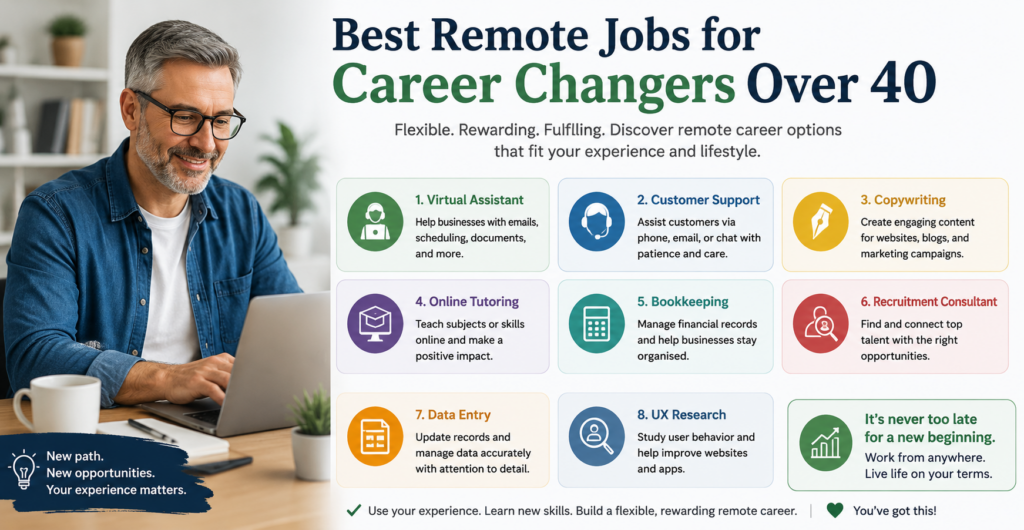
Remote work has become a popular choice for people over 40 looking for a fresh career path. These roles often provide flexible schedules, better work-life balance, and reduced commuting stress, making them ideal for those seeking a healthier and more manageable lifestyle.

Virtual Assistant

Virtual assistants help businesses with tasks such as managing emails, scheduling appointments, and organising documents. This role is ideal for individuals with strong organisational and communication skills.

Customer Support

Remote customer support jobs involve helping customers through phone, email, or live chat. Mature professionals are often valued for their patience, professionalism, and problem-solving abilities.

Copywriting

Copywriting offers opportunities to create content for websites, blogs, and marketing campaigns. People with good writing and communication skills can transition into this field successfully.

Online Tutoring

Online tutoring allows individuals to teach subjects or professional skills remotely. It is particularly suitable for those with teaching, training, or industry experience.

Bookkeeping

Bookkeeping involves managing financial records for businesses. It is a stable remote career option for organised individuals who are comfortable working with numbers.

Recruitment Consultant

Remote recruitment consultants help companies find suitable candidates through online interviews and digital hiring platforms. Strong communication and people skills are essential in this role.

Data Entry

Data entry roles focus on updating records and managing information accurately. These positions are beginner-friendly and often offer flexible working hours.

UX Research

UX research involves studying how users interact with websites and apps to improve customer experience. Professionals with communication or research skills may find this field rewarding.

Remote careers can provide a practical and rewarding opportunity for career changers over 40, allowing them to use existing skills while enjoying greater flexibility and work-life balance.

How to Choose the Right Career at 40

How to Choose the Right Career at 40

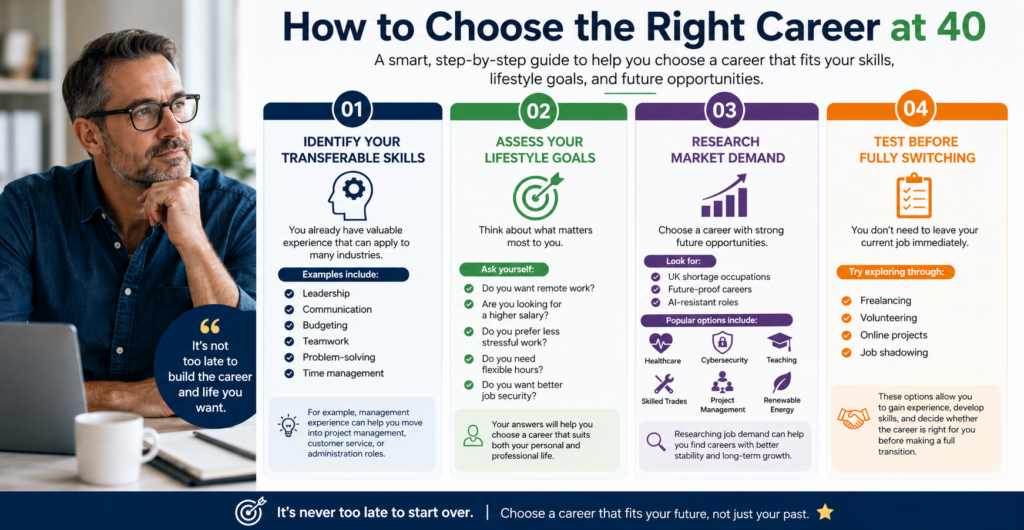
Changing careers at 40 can be a positive step towards better work-life balance, higher income, or more meaningful work. The key is choosing a career that matches your skills, lifestyle goals, and future job opportunities.

Step 1: Identify Your Transferable Skills

You already have valuable experience that can apply to many industries. Transferable skills are abilities gained from previous jobs that remain useful in new careers.

Examples include:

  • ♦  Leadership
  • ♦  Communication
  • ♦  Budgeting
  • ♦  Teamwork
  • ♦  Problem-solving
  • ♦  Time management

For example, management experience can help you move into project management, customer service, or administration roles.

Step 2: Assess Your Lifestyle Goals

Before choosing a new career, think about what matters most to you.

Ask yourself:

  • ♦  Do you want remote work?
  • ♦  Are you looking for a higher salary?
  • ♦  Do you prefer less stressful work?
  • ♦  Do you need flexible hours?
  • ♦  Do you want better job security?

Your answers will help you choose a career that suits both your personal and professional life.

Step 3: Research Market Demand

It is important to choose a career with strong future opportunities. Focus on industries that are growing and likely to remain stable.

Look for:

  • ♦  UK shortage occupations
  • ♦  Future-proof careers
  • ♦  AI-resistant roles

Popular options include healthcare, cybersecurity, teaching, skilled trades, project management, and renewable energy.

Researching job demand can help you find careers with better stability and long-term growth.

Step 4: Test Before Fully Switching

You do not need to leave your current job immediately. Testing a new career first can reduce risk and build confidence.

You can explore new careers through:

  • ♦  Freelancing
  • ♦  Volunteering
  • ♦  Online projects
  • ♦  Job shadowing

These options allow you to gain experience, develop skills, and decide whether the career is right for you before making a full transition.

Retraining Options in the UK for Over-40s

Retraining Options in the UK for Over-40s

Retraining later in life has become increasingly popular in the UK, with many over-40s seeking better career opportunities, improved work-life balance, or greater job satisfaction. Fortunately, there are several flexible and affordable ways to gain new skills and change careers.

Online Courses

Online courses are a popular option because they offer flexibility, affordability, and self-paced learning. Adults can study from home and fit learning around work or family commitments. Many online courses are available in areas such as business, IT, healthcare, project management, and digital marketing, helping learners develop practical skills without attending full-time classes.

Government-Funded Courses

The UK government provides several funded training opportunities for adults looking to retrain.

Skills Bootcamps

Skills Bootcamps offer short, flexible training programmes in high-demand sectors such as digital skills, construction, and engineering.

Free Courses for Jobs

This scheme provides eligible adults with free Level 3 qualifications in industries facing skills shortages, including healthcare and technology.

Adult Education Budget

The Adult Education Budget supports adults through low-cost or free courses that help improve vocational skills, English, maths, and employability.

Apprenticeships for Adults

Many people believe apprenticeships are only for young people, but this is not true. Adults over 40 can also apply for apprenticeships and gain valuable work experience while earning a salary. Apprenticeships are available in sectors such as healthcare, business, IT, accounting, and management, making them a practical retraining route for career changers.

Financial Tips Before Changing Careers

Changing careers can be rewarding, but financial preparation is essential to make the transition smoother and less stressful. Proper planning can help you stay financially secure while building a new career path.

One of the most important steps is building an emergency fund. Saving enough to cover three to six months of living expenses can provide stability if your income changes during the transition.

It is also helpful to reduce unnecessary expenses before leaving your current role. Cutting back on non-essential spending can free up money for training, certifications, or daily living costs while you adjust to a new career.

Before quitting, start learning relevant skills through online courses, workshops, or self-study. This allows you to gain knowledge and experience while still earning an income.

A part-time transition can also reduce financial pressure. Freelancing, volunteering, or working part-time in your new field can help you gain experience gradually before making a full career change.

Keeping your LinkedIn profile updated is equally important. Highlighting transferable skills, certifications, and new experiences can improve networking opportunities and attract potential employers.

Another useful strategy is “career cushioning”, which means preparing a backup plan before leaving a stable job. This may include building savings, developing extra income sources, learning new skills, and expanding your professional network. Career cushioning helps reduce risk and makes career changes feel more secure and planned.

CV and Interview Tips for Career Changers Over 40

CV and Interview Tips for Career Changers Over 40

Changing careers after 40 can feel challenging, but a well-structured CV can highlight the value of your existing experience. Instead of focusing only on previous job titles, emphasise transferable skills such as leadership, communication, problem-solving, and project management. Tailoring your CV to match the role you are applying for and including recent training or CPD courses can also demonstrate your commitment to professional development.

During interviews, confidence and clarity are essential. Employers often value the maturity, reliability, and workplace experience that career changers bring. Prepare examples that show how your previous experience can benefit the new role, even if it comes from a different industry. Focus on achievements, adaptability, and your willingness to learn rather than explaining why you changed careers.

Career changers over 40 should also take time to research employers and practise common interview questions. Demonstrating enthusiasm, professionalism, and a positive attitude can leave a strong impression. By combining life experience with updated skills and a confident approach, candidates can successfully position themselves for new career opportunities.

Realistic Expectations: What Nobody Tells You

Changing careers at 40 can be rewarding, but it often takes longer than expected to see results. Many people assume that previous work experience will immediately open doors in a new industry, but employers may still expect updated skills, certifications, or entry-level experience. It is common to face temporary setbacks, lower salaries, or increased competition while building credibility in a different field.

Another reality that is rarely discussed is the emotional challenge of starting over. Career changers may experience self-doubt, fear of failure, or pressure from family and peers who question the decision. Balancing retraining, job searching, and financial responsibilities can feel overwhelming, especially for those managing mortgages, children, or existing commitments. Patience and consistency become just as important as qualifications.

Despite the difficulties, a career change at 40 can still lead to long-term satisfaction and stability. Many people discover that maturity, transferable skills, and life experience become valuable advantages once they adapt to a new environment. Success often comes gradually rather than instantly, but with realistic expectations and a clear plan, a midlife career transition can open the door to more meaningful and fulfilling opportunities.

Conclusion

Changing careers at 40 in the UK may feel challenging, but it can also be a rewarding opportunity for personal and professional growth. With the right mindset, transferable skills, and access to retraining options, individuals can successfully transition into stable and fulfilling roles across various industries. By researching suitable career paths, improving relevant skills, and staying open to new opportunities, a midlife career change can lead to greater job satisfaction, financial stability, and long-term career success.

FAQs — Career Change at 40 in the UK

1. Is it too late to change careers at 40 in the UK?

No, many people successfully change careers at 40 and beyond with the right planning and training.

2. What are the best careers to start at 40 in the UK?

Popular options include healthcare, teaching, IT, project management, accounting, and skilled trades.

3. Do I need qualifications to change careers?

Not always. Some jobs value transferable skills and experience, while others may require short courses or certifications.

4. Which courses are best for career change at 40?

CPD courses, online certifications, vocational training, and professional diplomas are popular retraining options.

5. Can I retrain while working full-time?

Yes, many online and flexible learning courses allow you to study alongside your current job.

Sam Walker

Article by

Sam Walker

Sam Walker is an education specialist and author at One Education, bringing over 4 years of experience in creating practical resources and strategies to support teachers and enhance student learning.

top
Home Courses Search