


Table of Content
Share this Resource


Artificial Intelligence (AI) continues to reshape the digital landscape, influencing how organisations operate, communicate, and innovate. From intelligent automation in business systems to personalised recommendations in everyday technology, AI is steadily becoming part of modern decision-making. Understanding the top characteristics of Artificial Intelligence helps explain why this technology is advancing so rapidly and how it delivers efficiency, accuracy, and adaptive learning across industries.
Industry analysts project sustained global investment in AI technologies as organisations seek smarter data analysis, improved customer experiences, and faster operational outcomes. These developments make it increasingly important to explore the defining features that enable AI to perceive information, learn from patterns, reason logically, and act with minimal human intervention. This article examines the core characteristics that shape AI’s capabilities and its growing role in the future of technology.
13 Characteristics of Artificial Intelligence
| Category | Key Capabilities |
|---|---|
| Foundations of Intelligent Systems |
1. Learning Capability 2. Adaptability 3. Reasoning 4. Problem Solving 5. Perception |
| Core Functional Capabilities |
1. Automation 2. Data Handling 3. Natural Language Processing 4. Self-Correction 5. Decision-Making |
| Advanced & Responsible Intelligence |
1. Creativity 2. Explainability 3. Ethical Alignment |
Foundations of Intelligent Systems
Foundations of Intelligent Systems explores the principles behind machines that can interpret data, learn from patterns, and make informed decisions with minimal human direction. This area of study combines concepts from computer science, mathematics, and cognitive science to design systems that respond intelligently to changing environments. From automation in everyday technology to advanced analytical tools used in modern industries, intelligent systems continue to shape how information is processed and applied across diverse sectors.
Intelligent systems share several essential features that explain how they function and adapt within digital environments, and these defining elements are outlined below:
1. Learning Capability
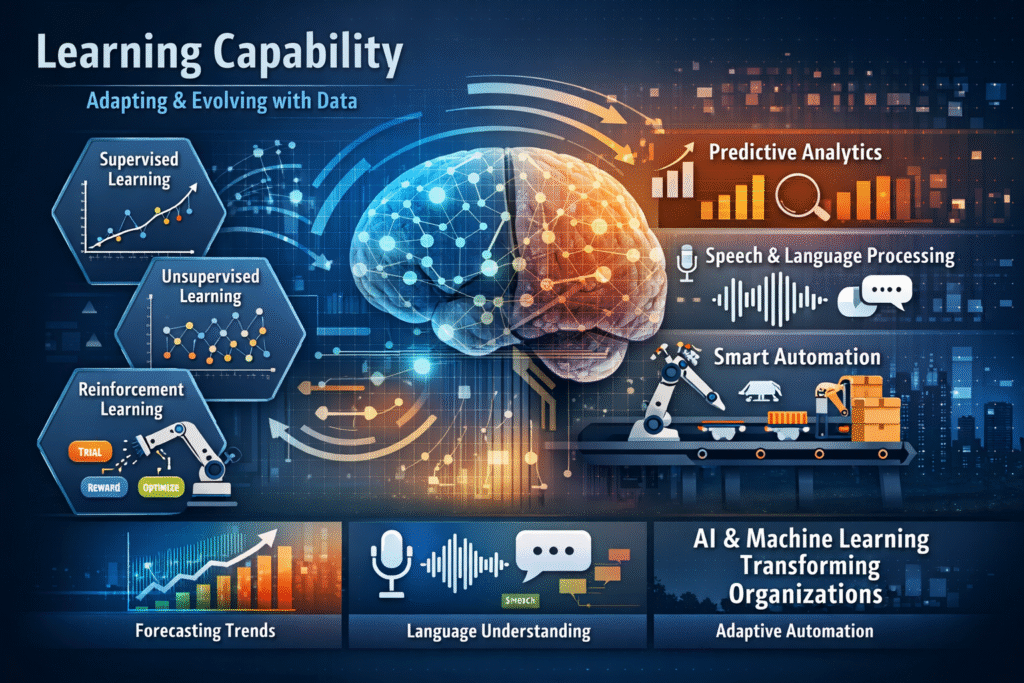
Learning capability represents a core strength of intelligent systems, allowing them to adjust behaviour based on information, feedback, and changing conditions. Rather than relying on fixed instructions, modern models interpret patterns within data and refine their responses over time. This adaptive process supports more accurate predictions, smarter decision-making, and improved efficiency across digital environments where requirements frequently evolve.
Different learning approaches guide how systems develop knowledge. Supervised learning uses labelled examples to map inputs to correct outcomes, while unsupervised learning discovers hidden structures or relationships within unlabelled data. Reinforcement learning, by contrast, improves performance through trial, reward, and optimisation. Continuous exposure to new information enables steady refinement, ensuring that performance does not remain static but progresses with experience. This capability is widely applied in areas such as:
- a) Predictive analytics: Models evaluate historical trends to forecast demand, risk, or customer behaviour.
- b) Speech and language understanding: Systems interpret conversation, sentiment, and intent for digital communication tools.
- c) Smart automation: Adaptive algorithms enhance efficiency in robotics, logistics, and operational workflows.
Discover how intelligent technologies can transform modern organisations by exploring structured learning in Artificial Intelligence and Machine Learning today.
2. Adaptability
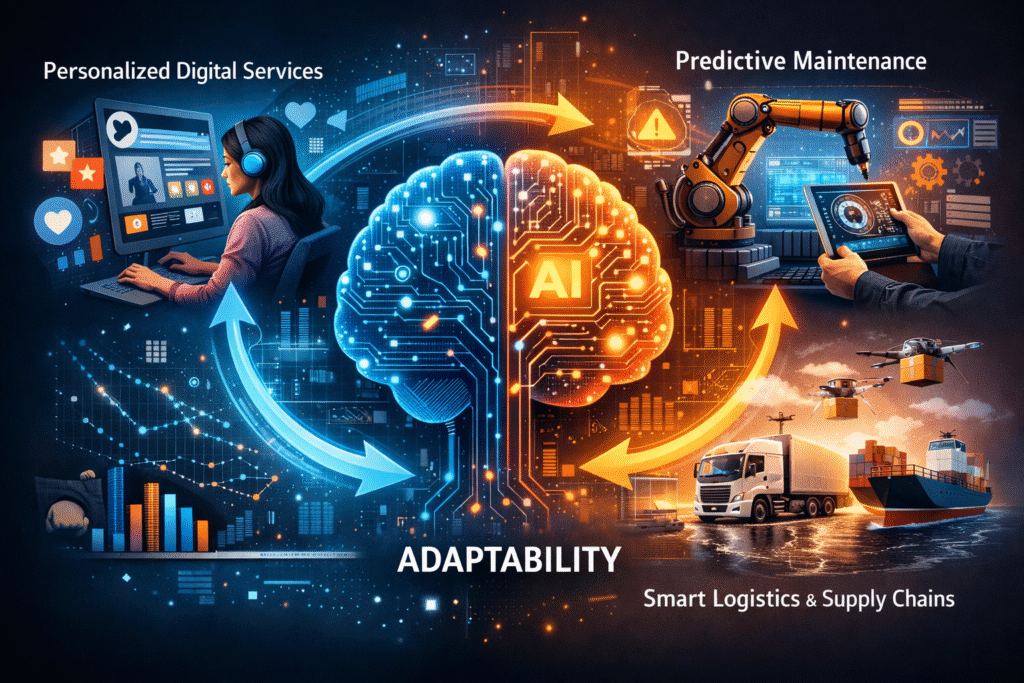
Adaptability represents a defining strength of intelligent systems, allowing them to adjust behaviour when conditions, data, or objectives evolve. Rather than remaining fixed after initial programming, modern AI models refine their responses through continuous input analysis, enabling more accurate outputs and improved decision-making across varied scenarios. This evolving capability supports Artificial Intelligence in Business by helping organisations respond swiftly to shifting customer needs, operational challenges, and emerging trends without requiring constant manual reconfiguration. Through model updating and dynamic learning patterns, AI can maintain relevance even as environments grow more complex or unpredictable.
Such flexibility enables AI technologies to function effectively in diverse real-world contexts where uncertainty is common and rapid interpretation is essential. Systems capable of adaptive reasoning can detect subtle changes, revise internal parameters, and optimise performance over time, making them valuable across industries that depend on precision, efficiency, and responsiveness. Key areas where adaptability plays a significant role include:
- a) Personalised digital services: Intelligent platforms adjust recommendations, interfaces, and content based on evolving user interactions and preferences.
- b) Predictive maintenance: AI monitors equipment performance, learns from sensor data, and anticipates faults before operational disruption occurs.
- c) Smart logistics and supply chains: Adaptive algorithms respond to demand fluctuations, route changes, and resource availability to maintain efficiency.
Discover how adaptive intelligence can transform decision-making, efficiency, and innovation—explore our Artificial Intelligence and Machine Learning Course today.
3. Reasoning
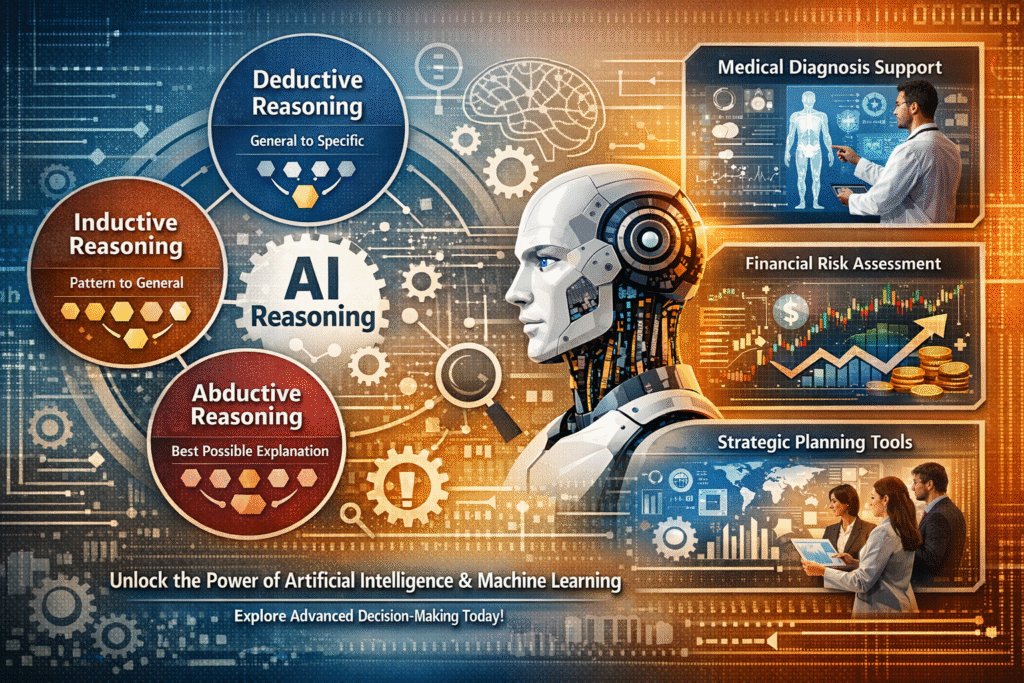
Reasoning forms a central pillar of intelligent systems, enabling machines to interpret information, organise knowledge, and draw meaningful conclusions from available data. Through structured logic and knowledge representation, Artificial Intelligence can move beyond simple pattern recognition to evaluate relationships, test assumptions, and support informed judgement. This capability is particularly valuable in environments where decisions must be consistent, explainable, and aligned with defined objectives.
Artificial Intelligence applies multiple styles of reasoning to approach problems from different perspectives. Deductive reasoning works from general rules toward specific conclusions, inductive reasoning identifies broader patterns from observations, and abductive reasoning selects the most plausible explanation from incomplete evidence. Together, these approaches strengthen decision-support systems by allowing technology to analyse uncertainty, compare alternatives, and recommend logical courses of action. Such reasoning is widely applied in areas including:
- a) Medical diagnosis support: Intelligent systems evaluate symptoms, clinical data, and probabilities to assist healthcare professionals in identifying potential conditions.
- b) Financial risk assessment: Algorithms interpret historical trends and behavioural indicators to guide lending, investment, and fraud detection decisions.
- c) Strategic planning tools: Decision-support platforms organise complex information to help organisations choose effective operational or business strategies.
Advance your understanding of intelligent decision-making and analytical thinking—discover the possibilities within an Artificial Intelligence and Machine Learning course today.
4. Problem Solving
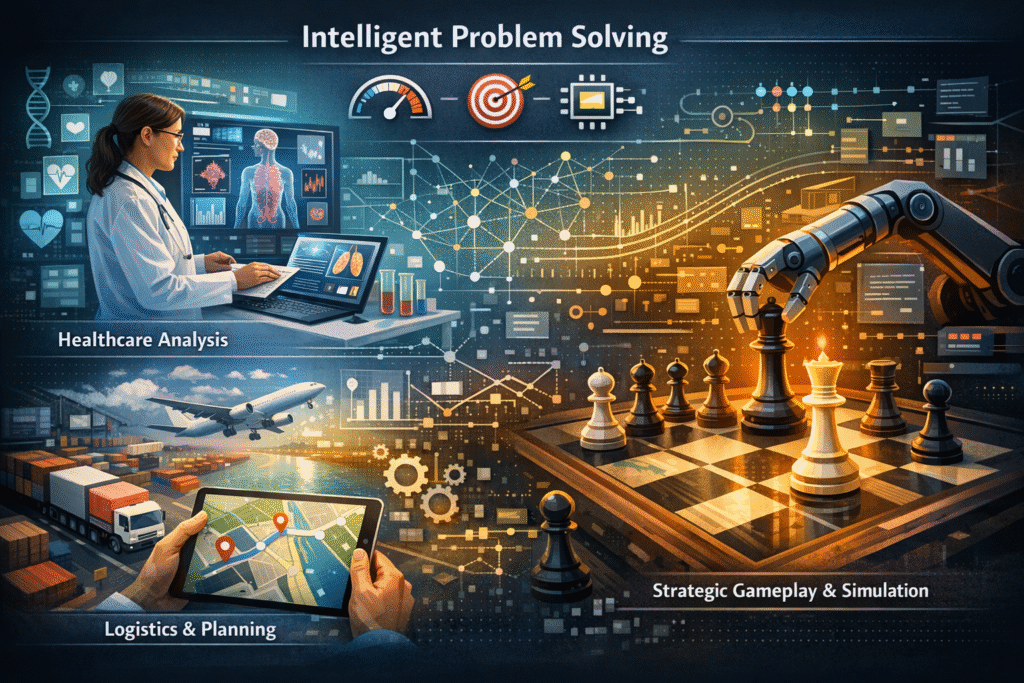
Problem solving within intelligent systems centres on recognising challenges, interpreting available information, and selecting effective pathways towards resolution. Rather than relying solely on fixed instructions, modern computational approaches evaluate patterns, compare possible outcomes, and refine their responses through continuous feedback. Considerations such as speed, accuracy, and resource use play a crucial role, ensuring that solutions are not only correct but also efficient and scalable across different scenarios.
To address complex situations, a variety of structured and experience-based methods are applied:
- a) Healthcare analysis: Data-driven models examine symptoms, histories, and test results to support accurate clinical interpretation and early detection of conditions. In this context, healthcare software development helps connect and structure these data sources for more consistent analysis.
- b) Logistics and planning: Advanced optimisation techniques improve scheduling, routing, and allocation of materials, reducing delays and operational costs across industries.
- c) Strategic gameplay and simulation: Intelligent agents evaluate numerous possible moves, learn from prior outcomes, and adapt strategies to achieve high-level performance in competitive environments.
5. Perception
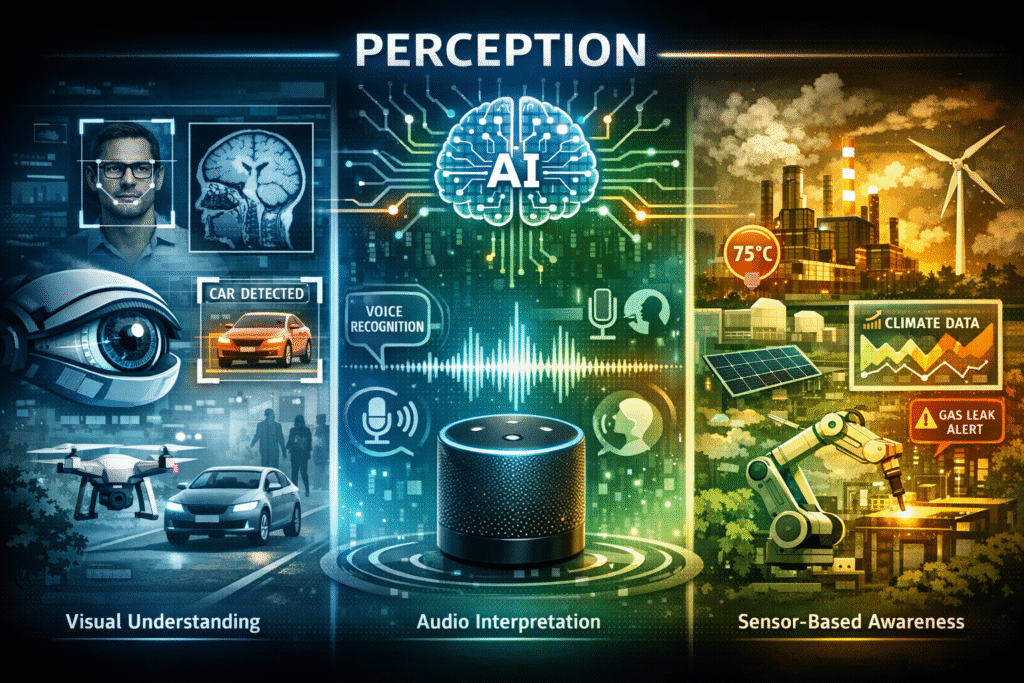
Artificial intelligence relies on perception to gather and understand information from the surrounding world. By analysing visual signals, sounds, and other sensory inputs, intelligent systems can identify meaningful patterns, respond to changing conditions, and support timely decision-making in dynamic environments.
This capability forms the foundation of interactive and adaptive technologies, allowing machines to interpret context, recognise objects or speech, and deliver accurate responses during real-time operations.
- a) Visual understanding: Intelligent models examine images or video streams to detect shapes, movements, and identities, supporting areas such as surveillance, medical imaging, and automated transport.
- b) Audio interpretation: Systems process spoken words and sound patterns to enable voice commands, language transcription, and conversational digital assistants.
c) Sensor-based awareness: Data from environmental or physical sensors is evaluated to monitor conditions, predict changes, and guide automated responses in fields like climate tracking or industrial safety.
Core Functional Capabilities
Core Functional Capabilities represent the fundamental strengths that support effective performance and strategic success. They include clear decision-making, efficient operations, strong communication, and adaptive problem-solving. In a rapidly evolving digital landscape, strengthening these capabilities promotes continuous improvement, sound governance, and sustainable long-term organisational growth.

1. Automation
Automation refers to the use of intelligent systems to carry out defined processes with little or no direct human input. By reducing manual effort, organisations can achieve faster turnaround times, improved accuracy, and more consistent outcomes across routine operations. This capability is especially valuable where high-volume or repetitive activities would otherwise consume significant staff time.
Beyond efficiency, automation also supports structured workflows and measurable productivity improvements. However, responsible oversight remains essential, as automated systems still require monitoring, ethical control, and periodic review to ensure outputs remain reliable and aligned with organisational goals. Common applications of automation include:
- a) Finance and accounting: Automated invoicing, expense tracking, and report generation reduce administrative workload and minimise calculation errors.
- b) Marketing operations: Scheduled campaigns, audience segmentation, and performance analytics enable continuous engagement without constant manual management.
- c) IT and cybersecurity: System monitoring, threat detection, and software updates can run automatically to maintain stability and protection.
2. Data Handling
Datahandling forms the foundation of modern digital operations, enabling organisations to convert scattered information into meaningful knowledge. Effective processes ensure that information is gathered responsibly, organised securely, and refined carefully before being used for analysis or decision-making. Strong governance and validation methods also help maintain accuracy, reliability, and ethical use across every stage of the data lifecycle.
AI-driven and analytical systems support data handling in several important ways:
- a) Intelligent data preparation: Advanced tools organise, clean, and structure incoming information so it becomes suitable for analysis and reporting.
- b) Governance and quality control: Automated monitoring detects inconsistencies, protects sensitive records, and supports regulatory alignment through consistent data standards.
- c) Insight generation: Analytical models interpret structured datasets to reveal trends, forecast outcomes, and guide evidence-based strategic planning.
3. Natural Language Processing
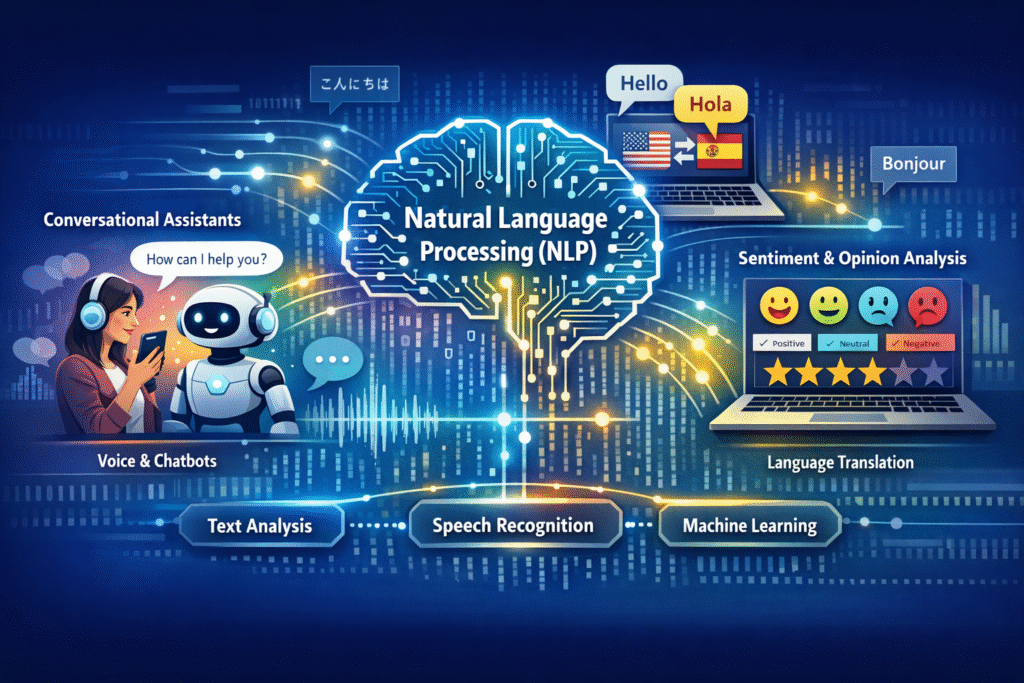
Natural Language Processing (NLP) is a specialised area of artificial intelligence focused on enabling computers to interpret, organise, and respond to human language in meaningful ways. By combining linguistics with machine learning, NLP allows digital systems to process written and spoken communication, recognise context, and generate appropriate language-based outputs. This technology supports smoother interaction between people and machines while improving access to information across digital platforms.
NLP plays an essential role in many modern AI-driven solutions, including:
- a) Conversational assistants: Voice-enabled tools and chat interfaces can understand questions, follow instructions, and deliver helpful spoken or written replies.
- b) Automated translation: Intelligent translation systems convert text or speech between languages while preserving meaning and tone for clearer global communication.
- c) Opinion and emotion detection: NLP techniques examine reviews, feedback, and online discussions to identify attitudes, trends, and customer perspectives.
4. Self-Correction
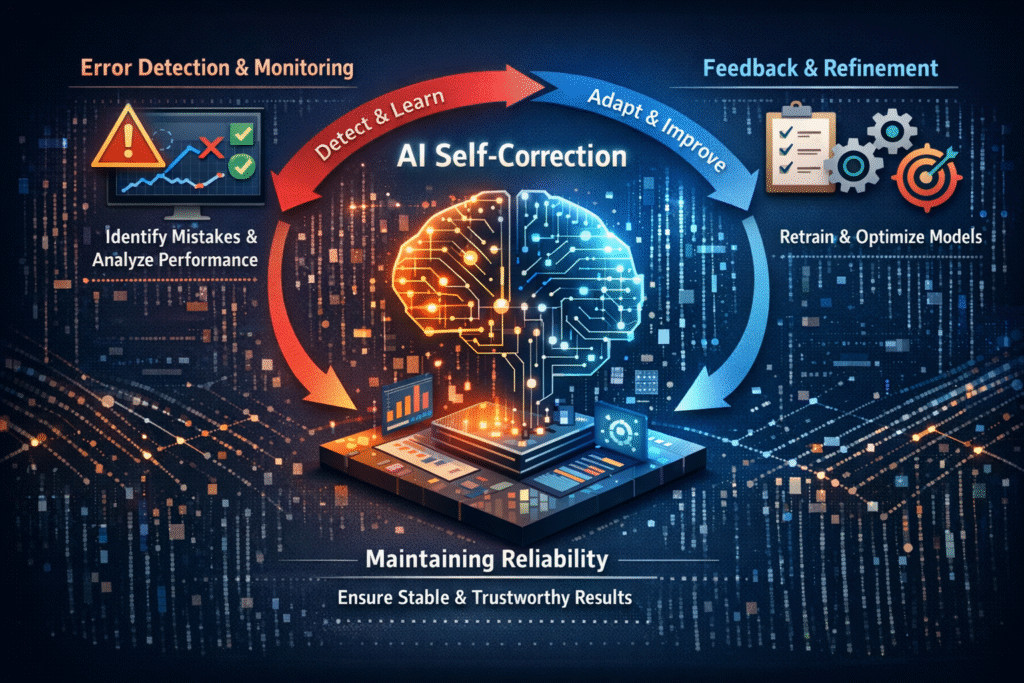
Self-Correction represents a crucial mechanism within modern Artificial Intelligence, enabling systems to recognise mistakes, evaluate outcomes, and adjust behaviour for improved accuracy. This continuous improvement process strengthens trustworthy performance in intelligent applications and supports long-term efficiency across automated decision-making environments. Key elements of Self-Correction in AI include:
- a) Error detection and performance monitoring: Intelligent models observe outputs, compare them with expected results, and identify inconsistencies or deviations that require adjustment.
- b) Feedback loops and model refinement: Structured feedback from data, users, or evaluation metrics allows systems to retrain, fine-tune parameters, and enhance predictive precision over time.
- c) Maintaining reliability over time: Ongoing assessment ensures stability, reduces repeated errors, and supports dependable operation even as data patterns or operating conditions evolve.
5. Decision-Making
Decision-Making represents a central capability within modern intelligent systems, enabling structured choices based on evidence, reasoning, and contextual understanding. Rather than relying on guesswork, advanced technologies support clearer judgement by analysing patterns, forecasting consequences, and assisting human judgement across diverse professional environments.
The ability to leverage advanced decision-making frameworks is critical not only for organisational performance but also for investment analysis, forming part of the broader 2026 private equity themes. AI platforms like Meridian exemplify how intelligent systems can support these evaluations, offering actionable insights, scenario forecasting, and risk assessment to guide both operational strategies and investment decisions.Key areas within this domain include:
- a) Evaluating options using data and logic:
Analytical models compare multiple possibilities by examining measurable information, trends, and predefined criteria, helping individuals select the most suitable course of action with greater confidence and clarity. - b) Risk assessment and outcome prediction:
Predictive techniques estimate potential results, highlight uncertainties, and identify possible challenges before implementation, allowing organisations to prepare mitigation strategies and reduce negative impact. - c) Human-AI collaboration in decisions:
Collaborative decision frameworks combine computational insights with human experience, ethical awareness, and contextual reasoning, ensuring that final judgements remain balanced, responsible, and aligned with real-world priorities.
Advanced and Responsible Intelligence
Advanced and Responsible Intelligence is redefining how intelligent systems are designed, deployed, and governed in modern society. It blends technical capability with ethical awareness, emphasising transparency, fairness, accountability, and human-centred decision-making. As discussions around trustworthy innovation continue to evolve, responsible intelligence encourages organisations to balance performance with social impact, ensuring that emerging technologies contribute positively to individuals, communities, and long-term global progress.

1. Creativity
Creativity represents a vital human capability centred on producing fresh ideas, imaginative solutions, and meaningful expressions across different fields. It supports progress in technology, culture, education, and business by encouraging flexible thinking and thoughtful experimentation. Rather than relying only on originality, effective creativity blends relevance, purpose, and clear communication to ensure ideas deliver genuine value.
This ability influences multiple domains where innovation and expression are essential, including:
- a) Artistic expression: Creative thinking shapes painting, music, writing, and digital media, allowing individuals to communicate emotions and perspectives in distinctive ways.
- b) Scientific discovery: Researchers apply creative reasoning to design experiments, develop theories, and solve complex global challenges through new approaches.
- c) Product and service innovation: Organisations use creativity to design engaging experiences, improve usability, and introduce solutions that meet evolving user needs.
2. Explainability
Explainability represents a vital principle in modern intelligent systems, focusing on making algorithmic decisions understandable to humans rather than hidden behind technical complexity. Clear interpretation of how outcomes are produced strengthens confidence in automated solutions and allows organisations to evaluate whether results are fair, reliable, and aligned with intended objectives. By revealing the reasoning behind predictions or classifications, explainability supports responsible innovation and informed decision-making across sectors that rely on data-driven technology.
Key aspects of explainability within intelligent technologies include:
- a) Interpretable decision pathways: Structured techniques such as feature importance analysis and visual reasoning maps help users trace how specific inputs influence final results.
- b) Transparency and accountability: Open insight into system behaviour enables organisations to justify automated actions, detect bias, and maintain ethical governance in technology deployment.
- c) Communication of model behaviour: Simplified explanations, visual dashboards, and human-readable summaries allow non-technical stakeholders to understand complex analytical processes with clarity.
3. Ethical Alignment
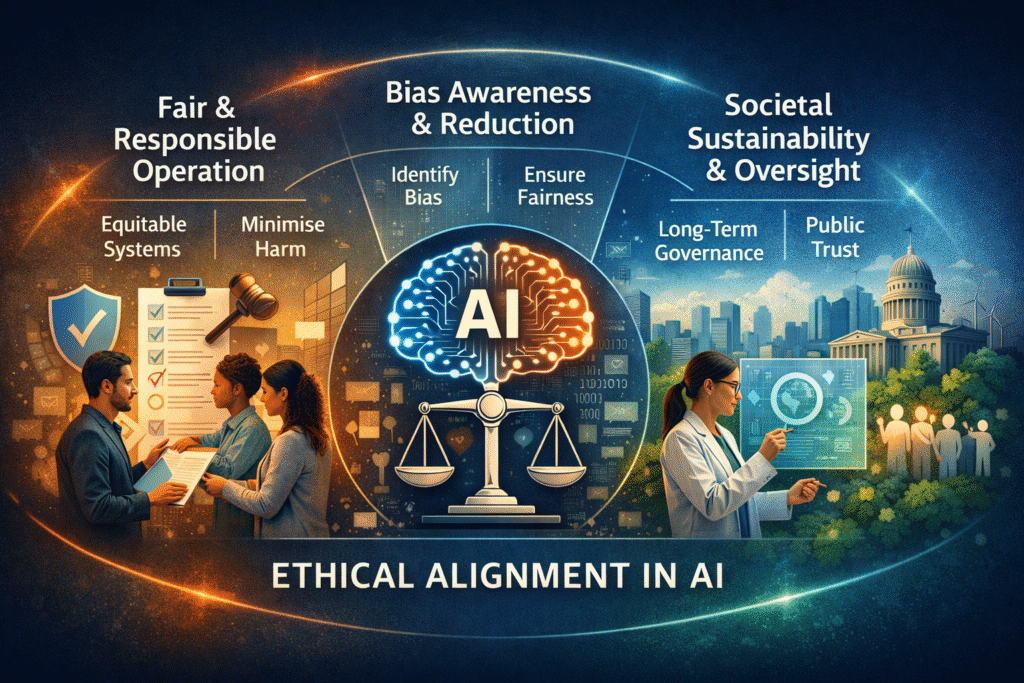
Ethical Alignment in Artificial Intelligence ensures that intelligent systems operate in ways that respect human values, public safety, and social responsibility. Rather than focusing only on technical efficiency, this area emphasises trustworthy design, transparent decision-making, and accountability throughout the lifecycle of AI solutions. Strong ethical alignment helps organisations deploy technology with confidence while protecting individuals, communities, and future societal wellbeing.
Key dimensions of Ethical Alignment in AI include:
- a) Fair and responsible operation: Systems are designed to treat users equitably, minimise harm, and follow clearly defined ethical standards during deployment and everyday use.
- b) Bias awareness and reduction: Continuous evaluation methods identify hidden prejudice within data or algorithms, enabling corrective measures that promote balanced and impartial outcomes.
- c) Societal sustainability and oversight: Long-term monitoring, governance frameworks, and public engagement ensure that AI innovation contributes positively to economic progress, human rights, and collective trust.
Applied Artificial Intelligence
Artificial Intelligence in practice is no longer a distant concept; it is actively shaping how organisations operate, make decisions, and deliver services. From intelligent automation in offices to predictive systems in public services, AI is quietly improving efficiency while opening new opportunities for innovation. This concise guide explores how AI functions in everyday environments, the responsibilities tied to its use, and the direction it is heading next.
Applications across industries
Artificial Intelligence continues to influence multiple sectors by refining processes and improving outcomes:
- a) Healthcare:
Clinical decision support tools analyse medical data to assist diagnosis, forecast risks, and streamline administrative workloads, allowing professionals to focus more on patient care. - b) Finance:
Smart systems monitor unusual transaction behaviour, support credit assessment, and enhance digital banking experiences through responsive virtual assistants and data-driven insights. - c) Education:
Adaptive learning platforms tailor study materials to individual progress, automate feedback, and support educators with performance analytics for improved learner engagement. - d) Retail and e-commerce:
Recommendation engines anticipate customer preferences, demand forecasting improves stock control, and conversational assistants provide instant purchasing support. - e) Logistics and transportation:
Route optimisation, predictive vehicle maintenance, and traffic analysis reduce delays, lower operational costs, and improve overall travel safety.
Ethical considerations
Responsible AI adoption requires careful attention to social and legal implications:
- a) Fairness and bias:
Algorithms trained on incomplete or unbalanced data may produce unequal outcomes, making continuous evaluation and diverse datasets essential. - b) Data protection:
AI frequently processes sensitive information, requiring strict governance, secure storage, and adherence to recognised privacy frameworks. - c) Accountability and explainability:
Clear reasoning behind automated decisions builds public confidence and supports regulatory compliance across industries. - d) Workforce transformation:
While automation can replace repetitive tasks, it also creates demand for new digital, analytical, and supervisory roles, highlighting the importance of ongoing learning.
Future trends
Artificial Intelligence is evolving rapidly, with several developments shaping its future direction:
- a) More capable language and reasoning systems:
Next-generation models are expected to deliver deeper contextual understanding and more reliable decision support. - b) Edge and embedded intelligence:
Processing data closer to the source will improve speed, reduce reliance on central servers, and strengthen privacy protection. - c) Human-AI collaboration:
Tools designed to assist rather than replace professionals will become central to productivity in knowledge-based roles. - d) Governance and international standards:
Clear regulatory frameworks will guide ethical deployment, risk management, and transparent innovation. - e) Sustainability applications:
AI will support energy optimisation, environmental monitoring, and smarter resource management to address global challenges. - f) Scientific discovery and exploration:
Advanced data modelling will accelerate research in medicine, materials science, and space technologies, expanding the boundaries of human knowledge.
Artificial Intelligence in practice is therefore best understood not as a single technology, but as a growing ecosystem influencing everyday life, professional environments, and future innovation.
Conclusion
Artificial Intelligence continues to redefine how technology interprets data, adapts to new information, and supports intelligent decision-making across modern industries. Core attributes such as perception, reasoning, automation, and continuous improvement highlight its expanding role in digital transformation. As discussion around emerging AI themes grows, attention to transparency, governance, and long-term societal impact becomes increasingly important, ensuring innovation develops in a balanced, ethical, and forward-thinking direction.
FAQs – Top 13 Characteristics of Artificial Intelligence
1. What are the main characteristics of artificial intelligence?
Key characteristics include learning from data, reasoning, problem-solving, pattern recognition, automation, and the ability to improve performance without constant human input.
2. Why is learning ability important in artificial intelligence?
Learning enables AI systems to analyse new information, adapt to changing environments, and enhance accuracy over time through experience and data processing.
3. How does problem-solving define intelligent systems?
AI technologies evaluate multiple possibilities, select optimal solutions, and execute decisions efficiently, making them valuable in complex and data-driven environments.
4. What role does automation play in AI functionality?
Automation allows machines to perform repetitive or rule-based tasks with minimal supervision, improving efficiency, productivity, and operational consistency across industries.
5. Can artificial intelligence recognise patterns like humans do?
Advanced algorithms detect trends, relationships, and anomalies in large datasets, often identifying insights faster and more accurately than manual human analysis.
6. Is adaptability a core feature of artificial intelligence?
Modern AI models adjust behaviour based on feedback, environmental changes, and updated data, allowing continuous improvement in performance and decision-making quality.

Article by
Sam Walker is an education specialist and author at One Education, bringing over 4 years of experience in creating practical resources and strategies to support teachers and enhance student learning.
Related Articles

 Aug, 16, 2024

Get a FREE Course
- Learn useful skills online free
- Get CPD accredited certificate
- Add it to your CV today!