Digital Banking

Digital Banking course explains online financial services, mobile payments, security essentials, digital transactions, customer experience, and fintech trends. Learn how modern banking systems operate efficiently in a connected, technology-driven world.
Digital Banking
cpdacree aoth ukrlp 24hs fullonline 14days

Get access to 5000+ courses including this for only £49. Learn More.

Overview of Digital Banking

Digital Banking is transforming how customers access financial services through Online Banking, Mobile Banking, and E-Banking solutions. This course explores the evolution of Banking Technology, Digital Payments, and Digital Finance, helping learners understand how modern financial services are moving beyond traditional banking models.

Explore the rise of FinTech and Financial Technology, including the growth of internet banking, mobile banking, direct banking, and social media in financial services. Learn how innovative Payment Systems are reshaping customer experiences while understanding the impact of IoT, AI, ML, blockchain, and Big Data.

This Digital Banking course also examines the transition towards new-generation banking and the technologies supporting comprehensive digital banks. Discover how FinTech firms and emerging Banking Technology can drive innovation, improve efficiency, strengthen Digital Payments, and support a connected, customer-focused future for Online Banking and Digital Finance.

The course was audited and updated on: 24th August, 2026

Learning Outcomes of Digital Banking

Method Of Assessment​

Learners complete an assignment designed to evaluate their understanding of the course content. The assignment is reviewed by qualified tutors who provide personalised feedback, allowing learners to demonstrate their applied knowledge and skills.

Certification

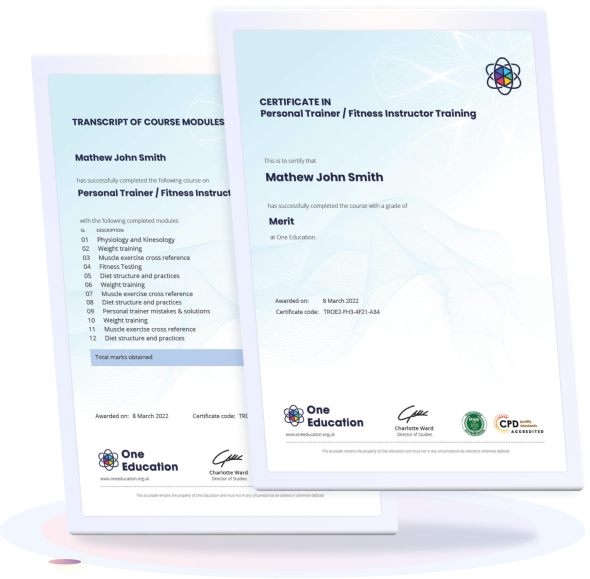
one education Certificate

After completing the Digital Banking course assessment, you will be eligible to receive a CPD-accredited certificate worth £9 from One Education to demonstrate your achievement.

The certificate is also available as a printed hard copy delivered by post for £15.

Why Study This Digital Banking Course?

Digital banking is transforming how individuals and organisations manage payments, transactions and financial services. Studying this course helps learners understand modern banking technologies, digital payment systems and evolving financial practices while developing knowledge relevant to today’s technology-driven financial sector.

As financial institutions increasingly adopt digital solutions, knowledge of digital banking can support professional development across banking, finance and related industries. This course strengthens understanding of digital services, emerging technologies and modern banking operations, adding valuable skills to your CV.

Course Duration

The Digital Banking Course has a total study time of 46 minutes. Learners can complete the course at a pace that suits their schedule, making it easy to develop essential digital banking knowledge while balancing work, study, or other personal commitments.

Requirements

The Digital Banking course has straightforward and flexible requirements, with no previous banking or finance experience needed. Learners should have an interest in digital financial services, basic computer skills, and access to an internet-enabled device. The online format allows participants to study conveniently at their preferred pace from any location.

Career Path

Frequently Asked Questions

What is digital banking?
Digital banking allows customers to access and manage banking services through websites, mobile apps and other digital platforms without visiting a physical branch.

How does digital banking work?
Digital banking uses secure online systems to enable activities such as checking balances, transferring money, paying bills and managing accounts electronically.

Is digital banking safe?
Digital banking is generally secure when appropriate measures such as encryption, strong passwords, multi-factor authentication and fraud monitoring are used.

What are the main benefits of digital banking?
Key benefits include 24/7 accessibility, faster transactions, convenient account management, reduced paperwork and easier access to financial services.

What are the common risks of digital banking?
Common risks include phishing, online fraud, identity theft, data breaches and unauthorised account access. Good cybersecurity practices can help reduce these risks.

What is the future of digital banking?
Digital banking continues to evolve through technologies such as artificial intelligence, mobile payments, open banking, automation and personalised financial services.

Course Curriculum

Digital Banking
Story of Digital Banking -– An overview section
Introduction 00:02:00
Moving from Traditional Banking to New-gen Banking
Moving from Traditional Banking to New-gen Banking 00:08:00
Proliferation of Internet Banking, Mobile Banking and “direct Banking” concept
Proliferation of Internet Banking, Mobile Banking and “direct Banking” concept 00:07:00
Use of Social media in Banking and arrival of Fintech Firms
Use of Social media in Banking and arrival of Fintech Firms 00:09:00
Innovative technologies IOT, AI, ML, Block-chain,, Big data etc
Innovative technologies IOT, AI, ML, Blockchain,, Big data etc 00:10:00
Illustrative “CIO Wishlist” to complement or enable comprehensive digital Bank
Illustrative “CIO Wishlist” to complement or enable comprehensive digital Bank 00:10:00
Order Your Certificate
Order Your Certificate Now 00:00:00
Digital Banking
top