Economics

  • Original

Economics explores how societies allocate limited resources, influence markets, guide policy decisions, and shape prosperity, helping individuals and organisations understand production, consumption, trade, and sustainable growth in an interconnected economy.


Economics
qls cpdacree ukrlp 24hs fullonline 14days

Get access to 5000+ courses including this for only £49. Learn More.

Overview of Economics

Build a strong foundation in Economics Basics and understand essential Economic Principles through this comprehensive course. Explore Economic Theory, the market system, circular flow, Supply and Demand, prices, elasticity, production, costs, and market failures to develop practical economic knowledge.

Develop your understanding of Microeconomics by examining market structures, perfect competition, monopoly, production decisions, and Market Analysis. Learn how money, banking, and financial systems operate while strengthening your ability to apply Business Economics concepts to real-world markets and organisational decision-making.

Explore Macroeconomics through GDP, economic growth, unemployment, inflation, income distribution, poverty, international finance, and Economic Policy. The course also develops practical Economic Decision-Making skills, helping learners understand fiscal policy and evaluate how economic factors influence businesses, markets, governments, and wider society.

The course was audited and updated on: 13th August, 2026

Learning Outcomes of Economics

Method Of Assessment​

Learners complete an assignment designed to evaluate their understanding of the course content. The assignment is reviewed by qualified tutors who provide personalised feedback, allowing learners to demonstrate their applied knowledge and skills.

Certification

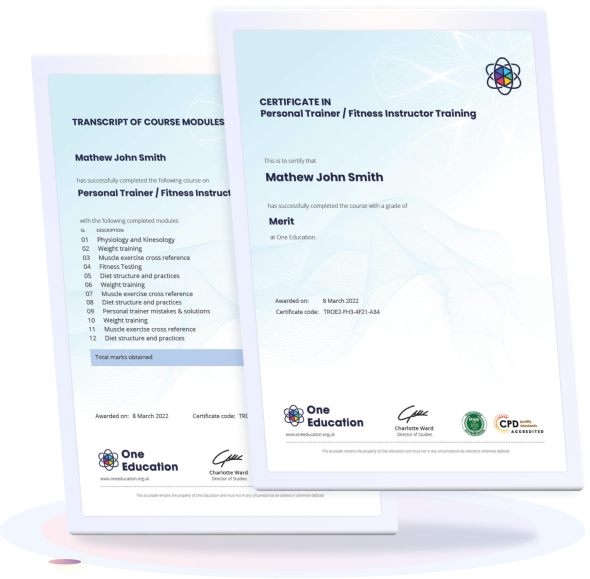
one education Certificate

After completing the Economics course assessment, you will be eligible to receive a CPD-accredited certificate worth £9 from One Education to demonstrate your achievement.

The certificate is also available as a printed hard copy delivered by post for £15.

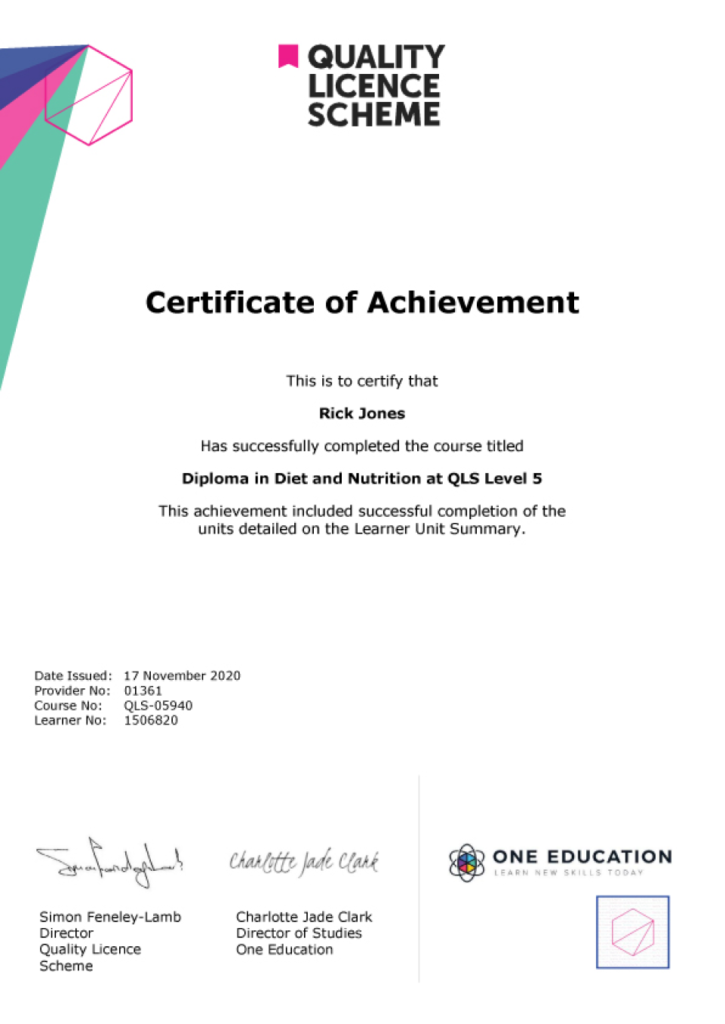
EXAMPLE - QLS Certificate 2020 1

Quality Licence Scheme Endorsed Certificate

Learners also have the option to order a Quality Licence Scheme (QLS) Endorsed Certificate as additional proof of achievement. The QLS Endorsed Certificate can be delivered by post for £119, with an additional £10 postage charge for international students.

Endorsement

This course has been endorsed by the Quality Licence Scheme for its high-quality, non-regulated provision and training programmes. This course is not regulated by Ofqual and is not an accredited qualification. Your training provider will be able to advise you on any further recognition, for example progression routes into further and/or higher education. For further information please visit the Learner FAQs on the Quality Licence Scheme website.

Why Study This Economics Course?

Economics provides a valuable foundation for understanding how individuals, businesses, and governments make decisions about limited resources. This course helps learners explore Economics Basics, Economic Principles, Microeconomics, Macroeconomics, Economic Theory, Supply and Demand, Market Analysis, and Economic Policy.

Studying economics can strengthen analytical and decision-making skills for business and financial environments. Learners can understand market behaviour, analyse supply and demand, explore economic policies, evaluate business decisions, and develop practical knowledge of Business Economics and Economic Decision-Making for academic, professional, and personal applications.

Course Duration

The Economics course has a total study timeframe of 3 weeks, 4 days. Learners can work through the programme at a flexible pace, developing practical knowledge in Economics, Economic Principles, Microeconomics, Macroeconomics, Economic Theory, Supply and Demand, Market Analysis, Economic Policy, Business Economics, and Economic Decision-Making.

Requirements

The Economics course has no formal entry requirements, making it suitable for beginners and learners interested in economic principles and business finance. An interest in economics, microeconomics, macroeconomics, economic theory, supply and demand, market analysis, economic policy, business economics, and economic decision-making is beneficial. Good English, basic numeracy and computer skills, and reliable internet access are recommended for effective online learning.

Career Path

Frequently Asked Questions

What is the Economics course?
The Economics course provides a practical introduction to the fundamental principles used to understand markets, businesses, and economic activity. It covers Economics Basics, Economic Principles, Microeconomics, Macroeconomics, Economic Theory, Supply and Demand, Market Analysis, Economic Policy, Business Economics, and Economic Decision-Making.

Who is the Economics course suitable for?
The course is suitable for beginners, students, business professionals, entrepreneurs, finance learners, and anyone who wants to develop a better understanding of economic concepts, markets, business environments, and Economic Decision-Making.

What will I learn from this Economics course?
You will explore An Introduction to Economics, The Market System and the Circular Flow Model, and other essential economic concepts. The course helps develop an understanding of Economic Principles, Supply and Demand, Market Analysis, Microeconomics, and Macroeconomics.

What is Microeconomics?
Microeconomics focuses on how individuals, households, businesses, and markets make decisions about resources, goods, and services. It examines areas such as Supply and Demand, pricing, competition, consumer behaviour, and business decisions.

What is Macroeconomics?
Macroeconomics examines the economy as a whole and considers broad factors such as economic growth, inflation, unemployment, national income, and government Economic Policy. It helps learners understand wider economic trends and conditions.

What are the benefits of studying Economics?
The course can strengthen your knowledge of Economics Basics, Economic Principles, Microeconomics, Macroeconomics, Economic Theory, Supply and Demand, Market Analysis, Economic Policy, Business Economics, and Economic Decision-Making, providing a useful foundation for further study and understanding economic activity.

Course Curriculum

Module 01: An Introduction to Economics
An Introduction to Economics 00:26:00
Module 02: The Market System and the Circular Flow Model
The Market System and the Circular Flow Model 00:20:00
Module 03: Supply, Demand and Prices
Supply, Demand and Prices 00:32:00
Module 04: Prices
Prices 00:17:00
Module 05: Elasticity
Elasticity 00:34:00
Module 06: Market Failures
Market Failures 00:24:00
Module 07: Production and Costs
Production and Costs 00:25:00
Module 08: Market Structure: Perfect Competition vs Monopoly
Market Structure: Perfect Competition vs Monopoly 00:25:00
Module 09: Money, Banking and the Financial System
Money, Banking and the Financial System 00:28:00
Module 10: Measuring GDP and Economic Growth
Measuring GDP and Economic Growth 00:27:00
Module 11: Unemployment
Unemployment 00:17:00
Module 12: Inflation
Inflation 00:20:00
Module 13: Income Distribution and Poverty
Income Distribution and Poverty 00:14:00
Module 14: International Finance
International Finance 00:15:00
Module 15: Fiscal Policy
Fiscal Policy 00:36:00
Assignment
Assignment – Economics 3 weeks, 4 days
Order Your Certificate
Order Your Certificate QLS 00:00:00
Economics
top